To fix a sunburned plant, follow these four moves in order:
- Move it out of direct light right away, indoors or outdoors.
- Water it slowly and deeply at the base, not from overhead.
- Hold off on fertilizer for several weeks while it heals.
- Trim away only the leaves that are fully brown and crispy leave the rest alone.
The rest of the plant needs time, most sunburned plants bounce back within a few weeks once they’re out of harsh light and given steady, gentle care.
If you’re standing over a sunburned plant with bleached, papery, or crispy leaves right now, take a breath. Learning how to fix a sunburned plant is one of the more manageable plant-care fixes out there, as long as you don’t panic and start chopping off every damaged leaf or drowning the soil in water. Here’s exactly what to do, in order.
How Do You Know It’s Sunburn? (Quick Symptom Check)
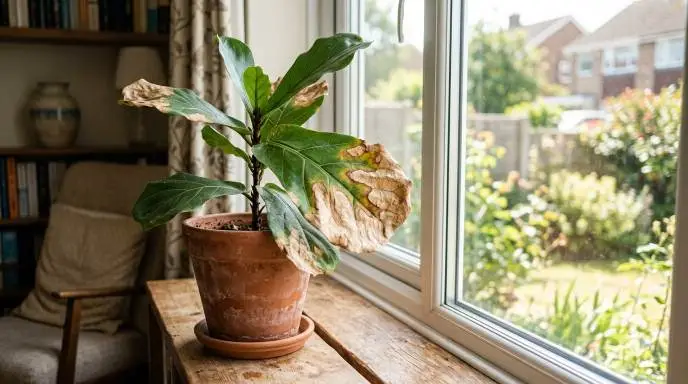
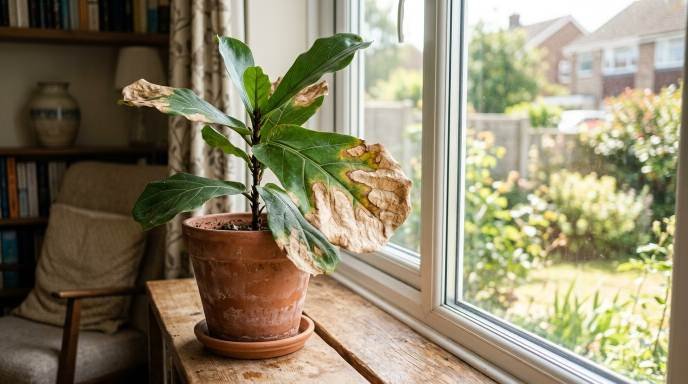
Before jumping into fixes, it’s worth confirming that light is actually the culprit. Sunburn — sometimes called leaf scorch or light stress, tends to show up in a pretty distinct pattern:
- Bleached or white patches on the leaves that once faced the light source directly
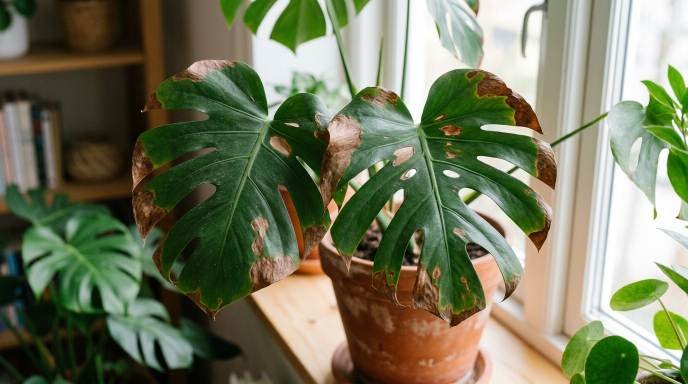
- Crispy, papery brown edges, especially on the tips and outer margins of leaves
- Faded, washed-out color across the whole leaf rather than just the veins
- Damage concentrated on one side of the plant, usually whichever side gets the most sun
The easiest way to tell sunburn apart from other stress is location and texture. Here’s a quick side-by-side:
- Sunburn: damage shows up on the side facing the light, leaves feel crispy and papery
- Overwatering: damage spreads evenly across the whole plant, leaves feel soft and mushy
- Underwatering: leaves droop and curl first, then brown, bleaching usually isn’t the first sign
If you’re still not sure what’s causing the damage, our guide on signs your plant is getting too much light breaks down the full list of warning signs before things get to the sunburn stage.
How Bad Is the Damage? 3 Levels of Plant Sunburn
Not every sunburned plant needs the same fix. Before you start cutting leaves or moving pots around, figure out how severe the damage on your sunburned plant actually is, it changes both what you do next and how long recovery will realistically take.
| Severity | What It Looks Like | Recovery Outlook |
| Mild | Slight yellowing or pale patches; plant is still mostly green and upright | Recovers quickly with light adjustment alone |
| Moderate | Brown, crispy patches on several leaves; rest of the plant looks healthy | Needs pruning plus care adjustments; bounces back over a few weeks |
| Severe | Most leaves are crispy or bleached; stem or stalk shows damage; plant looks wilted overall | Slower recovery; some plants may not fully bounce back |
A quick way to think about it:
- Mild sunburn is really just a warning sign, the plant is telling you to move it, and it’ll likely recover on its own once you do.
- Moderate sunburn needs the full step-by-step process below, but responds well.
- Severe sunburn is a different situation entirely, and it’s worth setting realistic expectations early rather than being surprised later.
How to Fix a Sunburned Plant: Step-by-Step Recovery Guide
Once you know how bad the damage is, fixing a sunburned plant comes down to the same five steps whether it’s a houseplant or a garden plant, mild or severe. The order matters, so work through these in sequence rather than jumping around.
Step 1: Move It Out of Direct Light Immediately
The very first thing to do for a sunburned plant is stop the damage from getting worse.
- Indoor plants: Pull the pot back at least 3 to 4 feet from any south- or west-facing window, since these get the most intense afternoon sun. If you can’t move it far enough, hang a sheer curtain between the plant and the glass instead.
- Outdoor plants: Relocate potted plants to a spot with dappled or filtered morning light, think under a tree canopy or on a covered porch, not full shade, which can shock the plant in the opposite direction.
- In-ground garden plants: Since you can’t move these, rig up 30% to 50% shade cloth over them until they recover.
- Watch for reflected heat too, plants sitting near metal railings, brick walls, or concrete patios can get cooked by reflected light and heat even if they’re technically not in direct sun.
Step 2: Water Deeply, Not More Often
Sunburned plants are dehydrated at the leaf level, but that doesn’t mean you should flood the soil. Overcorrecting here is one of the most common mistakes people make.
- Check moisture about 2 inches down into the soil before watering, if it’s still damp, wait.
- When you do water, do it slowly and deeply so water reaches the full root zone and runs out the drainage holes.
- Water in the early morning if possible. This keeps roots cool and hydrated through the warmest part of the day, rather than watering into already-hot soil.
- Skip watering more frequently than usual. Wet soil combined with a stressed, sun-damaged plant is a fast track to root rot, which is a much harder problem to fix than sunburn.
Step 3: Prune Only What’s Beyond Saving
It’s tempting to cut off every damaged-looking leaf, but restraint matters here.
- If a leaf still has any green tissue, leave it alone. The plant is actively using that green tissue to photosynthesize and recover, removing it slows healing down, not speeds it up.
- Only trim leaves that are fully brown, dry, and crispy at the base, using clean, sharp shears.
- Stick to the 30% rule: never remove more than 30% of the plant’s total leaves in one sitting, even if more look damaged. Removing too much at once sends the plant into further shock on top of the sunburn.
- Wipe your shears with rubbing alcohol before and after pruning. A stressed plant is more vulnerable to disease entering through fresh cuts, so this small step matters more than usual right now.
Step 4: Hold Off on Fertilizer
This is the step people skip most often, and it can undo everything else you’ve done right.
- Pause all fertilizing synthetic or organic, for 4 to 6 weeks after sunburn damage occurs.
- The reason is simple, stressed roots can’t process nutrients efficiently, and feeding a plant while it’s trying to recover can burn already-damaged roots or push growth the plant isn’t ready to support.
- Once you see new, healthy green growth emerging, that’s your signal the plant is ready. At that point, use a fertilizer diluted to about half strength, and go from there.
Step 5: Support the Recovery Environment
The last piece is making the plant’s environment as easy as possible while it heals.
- For outdoor and garden plants, add a 2-inch layer of mulch around the base to keep root temperatures stable and cool.
- For indoor tropical plants, a light misting or a nearby humidity tray can help, since sunburned leaves lose moisture faster and many tropical species recover better in slightly higher humidity.
- Keep the plant in bright, indirect light during recovery, not darkness. A plant that gets too little light while healing will struggle just as much as one that got too much.
How Long Does It Take a Sunburned Plant to Recover?
This depends almost entirely on the severity level you identified earlier:
- Mild damage: Usually 1 to 2 weeks. You’ll often see the plant perk back up almost as soon as it’s out of harsh light.
- Moderate damage: Roughly 3 to 5 weeks. Expect to see new growth start appearing partway through this window.
- Severe damage: 6 to 8 weeks or longer, and in some cases the plant may not fully return to its original fullness.
One thing worth knowing upfront: recovery means new growth, not old leaves turning green again. A leaf that’s already bleached or browned won’t reverse and go back to normal, that tissue is damaged for good. What you’re watching for instead is new leaves coming in healthy, which is the real sign the plant has stabilized.
3 Mistakes That Make Sunburn Worse
A lot of well-meaning plant care actually slows down a sunburned plant’s recovery. These three are the most common ones:
- Cutting off all the damaged leaves at once. Even leaves that look mostly bad are often still contributing some energy. Removing everything in one go on top of sunburn stress can push a plant into a deeper shock than the sunburn itself caused.
- Overwatering to “make up for” the damage. Sunburned leaves losing moisture doesn’t mean the roots need more water. Extra water on top of heat-stressed roots is one of the fastest ways to trigger root rot during recovery.
- Moving the plant into full darkness. It feels like the safe move, but plants still need light to photosynthesize and heal. Full darkness just trades one form of stress for another. Bright, indirect light is the target, not no light at all.
Can a Sunburned Plant Fully Recover? (When to Let Go)
The honest answer is: most of the time, yes. A sunburned plant with mild or moderate damage recovers well with the right care, and it’s genuinely rare for one not to bounce back at all.
That said, there are a few signals that a plant is unlikely to recover, and it’s worth knowing them so you’re not waiting indefinitely:
- The main stem or stalk has turned soft, mushy, or black (this points to rot on top of sunburn, not sunburn alone)
- There’s no green tissue left anywhere on the plant, including the stem
- The plant shows no response, no new growth and continued decline after 8 or more weeks of proper care
If none of these apply to your plant, there’s a good chance it falls into the mild-to-moderate range and just needs time.
Frequently Asked Questions
Quick answers to the most common questions people have about a sunburned plant:
How long does a sunburned plant take to recover?
It depends on severity, mild sunburn typically recovers in 1 to 2 weeks, moderate damage takes 3 to 5 weeks, and severe damage can take 6 to 8 weeks or longer.
Will sunburned leaves turn green again?
No. Once a leaf has bleached or browned from sunburn, that damage is permanent on that specific leaf. Recovery means the plant is producing new, healthy growth, not that the old damaged leaves repair themselves.
Should I cut off sunburned leaves?
Only if they’re fully brown, dry, and crispy. Leaves with any remaining green should stay on the plant, since they’re still helping it recover. Never remove more than 30% of total leaves at once.
Can a sunburned plant be watered right away?
Yes, but check the soil first. Water only if the top 2 inches are dry, and water slowly and deeply rather than more frequently than usual. Overwatering on top of sun stress can cause root rot.
Key Takeaway
If you take one thing away from this guide on how to fix a sunburned plant, let it be this, act early and don’t overcorrect. Quick recap:
- Move the plant out of direct light immediately.
- Water deeply but only when the soil is actually dry.
- Prune sparingly green tissue stays, crispy tissue goes.
- Skip fertilizer for 4 to 6 weeks.
- Give it bright, indirect light and time.
The biggest risk to a sunburned plant isn’t the sunburn itself, it’s overcorrecting with too much water, too much pruning, or too little light while the plant tries to heal.
Once your plant is back on track, it’s worth preventing a repeat. Take a look at our guide on how far plants should be from a window to find the right spot for good light without the risk of scorch.