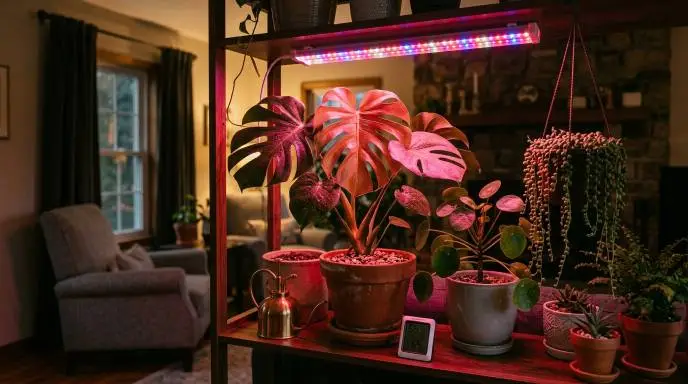
To use grow lights for indoor plants, place a full-spectrum LED 6 to 12 inches above the foliage and run it for about 12 hours a day on an automatic timer, giving plants an equal stretch of darkness to rest. Adjust the distance and hours slightly depending on the light’s strength and what you’re growing, but that combination right spectrum, right distance, consistent schedule, covers the vast majority of houseplants.
If this is your first grow light, the whole setup can feel more technical than it needs to be. It really comes down to four decisions: which light to buy, where to put it, how far away to hang it, and how long to leave it on. Once those four are dialed in, most plants adjust within a couple of weeks.
Why Your Plants Might Need a Grow Light in the First Place
Not every houseplant needs artificial light, so it’s worth checking whether yours actually does before buying anything.
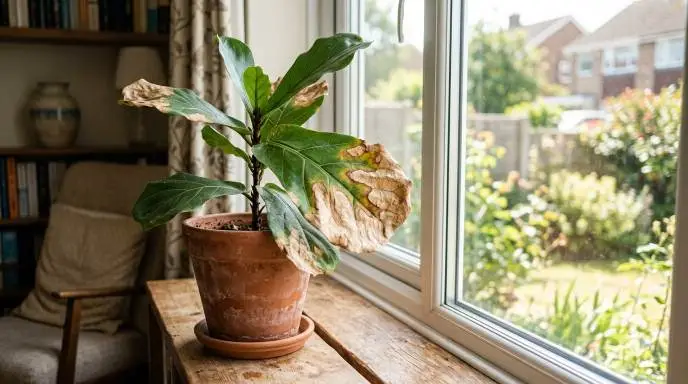
- Leggy, stretched-out growth — long gaps between leaves, stems reaching toward the nearest window
- Leaning hard toward one direction — a plant constantly craning toward the light source
- Noticeably slower growth in fall and winter — normal to some degree, but dramatic stalling is a sign light is the limiting factor
- A room with only north-facing windows or no windows at all — no amount of plant care compensates for a lack of light
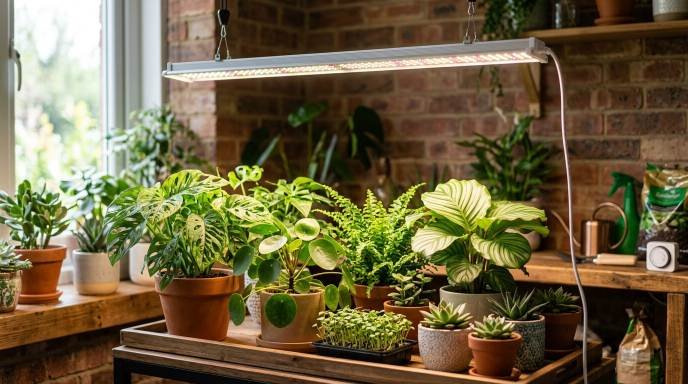
It’s worth separating two different situations here, because the advice differs slightly for each:
- Supplemental light — topping up a room that already gets some natural light but not quite enough, especially in winter
- Sole light source — a windowless room or a spot with no natural light at all, where the grow light is doing 100% of the work
A plant relying entirely on a grow light generally needs more consistent hours and closer placement than one just getting a boost alongside a window. Keep this distinction in mind as you read through the rest of this guide.
Choosing the Right Light Spectrum
Grow lights aren’t one-size-fits-all, and the color spectrum they emit matters more than most people expect when they’re setting one up for the first time.
Full-Spectrum White Light
This is the closest thing to natural sunlight you can buy, and it’s the right default for almost every houseplant. If you’re not sure what to get, start here, full-spectrum white LEDs work for foliage plants, succulents, and most of what people keep indoors, without needing to think about growth stage or plant type.
Blue Light
Blue wavelengths push plants toward leaf and stem development. This matters most during a plant’s active growing phase, when you want it filling out rather than flowering.
Red Light
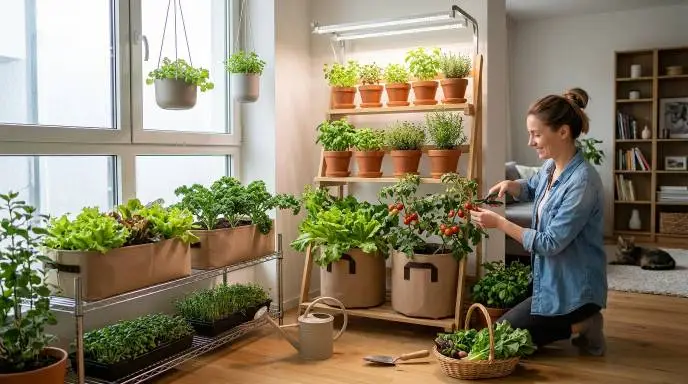
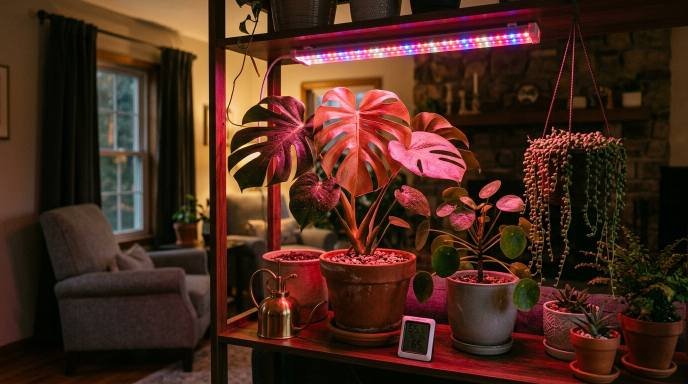
Red wavelengths are what trigger flowering and fruiting. If you’re growing something that blooms or fruits indoors a flowering houseplant or a windowsill herb setup a light with a red component in the spectrum matters more than it does for a plain foliage plant.
Wattage Matters More Than “Equivalent” Numbers
Here’s where a lot of first-time buyers get misled. Product listings often advertise a bulb as “100-watt equivalent,” borrowing a comparison from old incandescent bulbs. That number tells you almost nothing about how much usable light the plant is actually getting.
- Check the actual wattage the light draws, not the equivalent number on the packaging.
- If the listing includes PAR or PPFD (a measurement of usable light for plant growth), that’s a far more reliable spec than wattage alone.
- Growers discussing this in plant communities consistently land on the same conclusion: judge a light by its real output and how evenly it spreads across your plants, not by marketing comparisons to old bulb types.
How Far Should Grow Lights Be From Plants? (Distance Chart)
Distance is one of the most common places people get grow lights wrong, too close scorches leaves, too far leaves plants stretching for light that isn’t reaching them.
| Light Type | Recommended Distance |
| Small desktop/clip lamps | 5 to 8 inches |
| Standard LED panels | 6 to 12 inches |
| High-intensity/full panels | 12 to 24 inches |
Watch the leaves closest to the light over the first week or two. Browning, crisping, or a bleached look means the light is too close or too strong for that distance, the same warning signs that show up when a plant gets sunburned outdoors. If you’ve dealt with that before, the fix is nearly identical: move the light farther away and give the plant time to recover.
How to Set Up Your Grow Light for Even Growth
Once you’ve picked a light and know your distance range, setup comes down to four steps:
- Position the light directly overhead. This mimics how sunlight naturally hits a plant from above and keeps growth even, rather than stretching sideways toward the light.
- Set the distance using the chart above, matched to your specific light type.
- Rotate the pot every few days. Even with a light directly overhead, plants near the edge of the light’s spread can lean or grow unevenly. A quarter turn every few days keeps growth balanced on all sides.
- Check the leaves weekly. Look for the stress signs covered in the next section, and adjust distance or hours before problems get worse.
How Long Should Grow Lights Be On Each Day?
The general baseline is 12 hours of light followed by 12 hours of darkness, run on an automatic timer so the schedule stays consistent day to day.
That said, the right number of hours shifts a bit depending on what you’re growing:
- Flowering plants often do better with 10 to 12 hours of light, too many hours can actually interfere with triggering blooms.
- Leafy greens and herbs tend to tolerate and even benefit from longer exposure, up to 14 to 16 hours.
- General foliage houseplants do well sticking close to the standard 12-hour baseline.
The timer matters more than most people realize. Plants operate on an internal light-dark rhythm, similar to how humans respond to a sleep schedule. Consistent daily cycles, rather than the exact hour count, are what keep growth steady, a plant given 11 hours one day and 14 the next will show more stress than one given a steady 12 hours every single day.
Signs Your Grow Light Setup Needs Adjusting
Even a well-chosen light can be positioned wrong. Here’s how to read what your plant is telling you:
- Leaves browning or crisping → the light is too close or too intense for the current distance
- Leggy, stretched growth reaching toward the light → the light is too far away or too dim for the plant’s needs
- Pale, washed-out, or bleached leaves → too many hours of daily exposure
- No flowering on a plant that should bloom → missing red-spectrum light in the setup
Most of these fixes take a few days to a couple of weeks to show results once corrected, so give any adjustment time before making another change on top of it.
Frequently Asked Questions
How long should grow lights be on for indoor plants?
Most houseplants do well with about 12 hours of light and 12 hours of darkness daily, run on a timer for consistency. Flowering plants often need slightly less (10 to 12 hours), while leafy greens can handle more (up to 14 to 16 hours).
How far should grow lights be from plants?
It depends on the light type: 5 to 8 inches for small desktop lamps, 6 to 12 inches for standard LED panels, and 12 to 24 inches for high-intensity panels. Watch the leaves for browning as a sign the light is too close.
Can grow lights replace sunlight completely?
Yes, a well-placed full-spectrum grow light can serve as a plant’s sole light source in a room with little or no natural light, as long as the distance and daily hours are consistent.
Do I need a different light for flowering plants?
Flowering and fruiting plants generally do better with some red-spectrum light added to the setup, since red wavelengths are what trigger blooming. Foliage-only houseplants can stick with full-spectrum white light alone.
Key Takeaway
Learning how to use grow lights for indoor plants really comes down to four things: pick a full-spectrum light as your default, keep the distance in the right range for that light’s strength, run it on a consistent 12-hour timer, and watch the leaves for feedback along the way. Get those right, and most plants adjust to their new light source within a couple of weeks.
If you’re already familiar with grow lights, check out our complete plant care guide for everything else you need to know.