Yellow leaves on plants usually come down to one of two things:
not enough (or too much) light, or a missing nutrient. The fastest way to tell them apart is to look at exactly where the yellowing shows up and whether the leaf veins are still green. Bottom leaves turning yellow all over point to a light or nitrogen problem. Top leaves turning yellow with green veins point to iron. Bottom leaves yellow between green veins point to magnesium. This article walks through each pattern so you can stop guessing and fix the actual problem.
Why This Mix-Up Happens So Often
Light starvation and nutrient deficiency both slow down chlorophyll production, and chlorophyll is what keeps leaves green. So when either one is missing, the result looks similar at first glance yellow leaves. That’s the whole reason this gets confusing.
The difference isn’t in the yellow color itself It’s in:
- Where on the plant the yellowing starts (top or bottom)
- How it’s patterned (whole leaf, or just between the veins)
- What else is going on with the plant (stretching, soggy soil, recent move)
Once you know what to look for, this takes about thirty seconds to diagnose.
Quick Self-Check: Answer These 3 Questions First
Before reading further, look at your plant and answer these:
- Is the yellowing on the top (newer) leaves or the bottom (older) leaves?
- Are the veins still green, or have they turned yellow too?
- Is the soil currently soggy, bone-dry, or somewhere normal?
Keep your answers in mind. Every section below maps back to one of these three questions, and by the end you’ll know exactly which one applies to your plant.
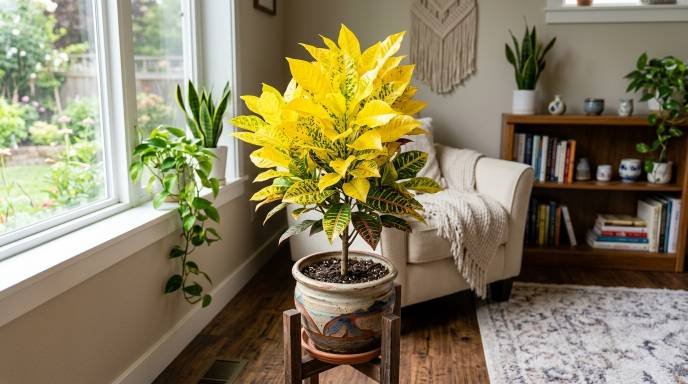
My pothos went yellow last winter and I panicked, dumped fertilizer on it, made it worse. Turned out it was just light-starved, not hungry. One small test:
checking the shadow it cast told me everything fertilizer couldn’t. Sometimes the fix is simpler than we assume.
Diagnosing Light-Related Yellow Leaves on Plant Causes
Light is the first thing worth ruling out, since it’s the easiest cause to confirm just by looking at where the plant sits during the day. It also isn’t a one-direction problem. Too little light and too much light both cause yellowing, and they leave different fingerprints on the leaves.
Too Little Light
- Lower, older leaves turn pale or yellow first, then often drop. The plant is cutting its losses and redirecting energy to the leaves it can still afford to keep alive.
- New growth may come in smaller, thinner, or noticeably paler than the older leaves around it.
- The whole plant may lean or stretch toward the nearest light source. Long, thin, weak-looking stems (often called “leggy” growth) are one of the clearest signs of this.
- Growth slows down overall, even if the plant isn’t actively dropping leaves yet. A plant that hasn’t put out new growth in months, despite regular watering, is often light-starved rather than underfed.
- Leaves may also turn a duller, flatter green well before they start yellowing. This is an early warning sign worth catching before yellowing even begins.
A simple way to check: hold your hand where the plant sits during the brightest part of the day. A sharp-edged shadow means the light is decent. A faint, fuzzy shadow, or no shadow at all, means the spot is dimmer than it looks. Most rooms that feel “bright enough” to a person are still far too dim for a plant that needs direct or strong indirect light.
Too Much Light
- Leaves look bleached, faded, or scorched, usually concentrated on whichever side faces the light directly.
- This is easy to mistake for a nutrient problem because the discoloration is often patchy rather than spread evenly across the leaf, similar to how interveinal chlorosis looks.
- Scorching tends to show up on the outer edges or tips of the leaf first, then spreads inward if the light exposure doesn’t change.
- It shows up most often right after a plant is moved to a brighter spot too quickly, or during summer months when sun intensity increases even if the plant hasn’t moved at all.
- Unlike low-light yellowing, which starts at the bottom, too-much-light damage usually appears on whichever leaves are physically closest to the light source, regardless of their age.
A simple way to check: look at the pattern of the damage. If it’s concentrated on one side or on the leaves nearest a window, and the plant was recently relocated or the season just changed, too much light is the more likely explanation than a nutrient shortage.
Diagnosing Nutrient-Related Yellow Leaves on Plant Causes
Rather than one generic “nutrient deficiency,” there are three specific shortages that each leave a distinct fingerprint. This is the part most articles gloss over, and it’s the part that actually matters for getting the diagnosis right.
Nitrogen Deficiency
- Old, lower leaves turn uniformly yellow, with no particular vein pattern.
- Nitrogen is mobile inside the plant, meaning the plant actively pulls it out of older leaves and sends it to new growth when supply runs short. That’s why the oldest leaves get sacrificed first.
- Usually comes with slower overall growth, not just yellowing.
Iron Deficiency
- New leaves at the top of the plant turn yellow while their veins stay noticeably dark green.
- This vein pattern is the clearest giveaway that separates it from a nitrogen problem.
- Iron deficiency shows up more often in plants growing in alkaline or high-pH soil, since iron becomes harder for roots to absorb as pH climbs. More on this in the soil pH section below.
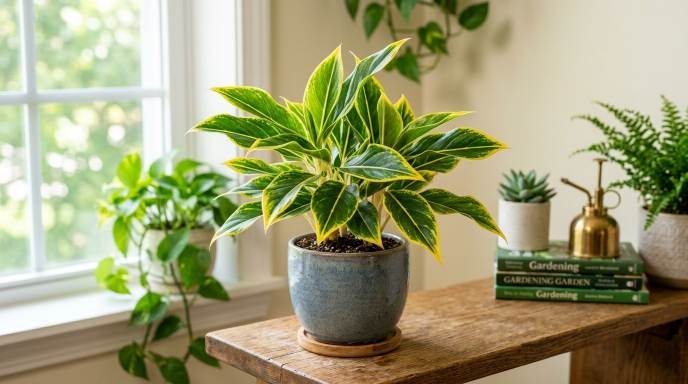
Magnesium Deficiency
- Older, lower leaves yellow specifically between the veins, a pattern called interveinal chlorosis, while the veins stay green.
- Visually, this looks a lot like iron deficiency, but the location gives it away: magnesium shows up on old growth, iron shows up on new growth.
- More common in plants that have sat in the same soil for a long stretch without repotting or feeding, since magnesium gets depleted over time.
Nutrient Deficiency Quick Reference
| Deficiency | Leaf age affected | Vein color | Pattern |
| Nitrogen | Old, lower leaves | Yellow, no clear pattern | Whole leaf yellows evenly |
| Iron | New, upper leaves | Stays green | Yellow tissue, green veins |
| Magnesium | Old, lower leaves | Stays green | Yellow between veins |
Quick Checks Before You Diagnose Further
Two things can mimic or mask a nutrient deficiency even when the soil itself is fine. Rule these out before assuming you need to fertilize.
Check Soil Moisture First
- Soggy, waterlogged soil suffocates roots and blocks them from absorbing nutrients, even if plenty of nutrients are present in the soil.
- Bone-dry soil stops nutrient movement too, since nutrients travel to the roots dissolved in soil moisture.
- If the soil is either extreme, fix the watering routine first. A lot of what looks like a nutrient problem clears up once watering gets back to normal.
Check Soil pH
- Nutrients can be sitting right there in the soil and still be unusable to the plant if the pH is off. This is called nutrient lockout.
- High pH (alkaline soil) is a common trigger for iron lockout specifically, which ties directly back to the iron deficiency pattern above.
- A basic soil pH test, available cheaply at most garden centers or hardware stores, is the only reliable way to confirm this instead of guessing.
Check for a Recent Move or Season Change
- Did the plant get relocated recently? Even a few feet can change light exposure more than people expect.
- Daylight hours drop in winter, and that alone causes lower-leaf yellowing that gets mistaken for a nutrient problem every year. If nothing else has changed except the season, light is the more likely culprit.
Light vs. Nutrients: Full Comparison at a Glance
| What you’re seeing | Most likely cause |
| Bottom leaves yellow, whole leaf, no vein pattern | Nitrogen deficiency |
| Bottom leaves yellow between green veins | Magnesium deficiency |
| Top leaves yellow with green veins | Iron deficiency (check soil pH) |
| Bottom leaves pale or yellow, plant stretching | Too little light |
| Leaves bleached or scorched on one side | Too much light |
| Yellowing plus soggy soil | Overwatering, masking a nutrient issue |
| Yellowing plus bone-dry soil | Underwatering, blocking nutrient movement |
How to Fix Yellow Leaves Once You Know the Cause
If it’s a light problem:
- Move the plant gradually, over a week or two, rather than all at once. A sudden jump from low light to direct sun causes the scorching described above.
- Rotate the plant every couple of weeks so all sides get even exposure instead of just one.
- If natural light in the room simply isn’t enough, a grow light is a straightforward fix, especially through fall and winter.
If it’s a nutrient problem:
- Match the fertilizer to the specific deficiency identified above rather than reaching for a generic feed and hoping.
- If soil pH is suspected as the root cause, correct that first. Adding more fertilizer to soil with a lockout problem won’t help, since the plant still can’t absorb it.
- Stick to the dilution rate on the label. More is not better here. Over-fertilizing causes its own kind of leaf damage, usually showing up as crispy, browned edges rather than yellowing.
How Long Until the Plant Recovers
Leaves that have already turned yellow generally won’t turn back to green. That tissue is done. What you’re watching for instead is new growth: once the actual cause is corrected, new leaves should come in a normal green color within two to four weeks. If it’s been longer than that with no improvement, it’s worth rechecking the diagnosis, since more than one issue can be at play at once.
Frequently Asked Questions
Can a plant have a light problem and a nutrient problem at the same time? Yes. A plant sitting in a dim room is also more likely to be over-fertilized by accident, since it isn’t using nutrients as fast as a well-lit plant would. If yellowing doesn’t fully clear up after fixing one issue, check the other.
Why do my plant’s leaves have yellow spots but the veins stay green? This pattern, called interveinal chlorosis, almost always points to a mineral shortage rather than a light issue. Check leaf age to narrow it down: new growth points to iron, older growth points to magnesium.
Will overwatering make a nutrient deficiency look worse? Yes. Waterlogged soil prevents roots from absorbing nutrients even when they’re present, so an existing deficiency often looks more severe than it actually is until the watering routine is corrected.
How long does it take to fix yellow leaves once I’ve found the cause? Existing yellow leaves stay yellow, but new growth typically shows improvement within two to four weeks of correcting the actual cause.
Does soil pH really affect whether a plant can use fertilizer? Yes. Nutrients can be present in the soil and still be chemically unavailable to the roots if the pH is too high or too low. This is why fertilizing more aggressively doesn’t fix a pH-related deficiency.
The Bottom Line on Yellow Leaves on Plant Causes
Yellow leaves on plant causes almost always trace back to leaf location, vein color, and soil condition. Bottom leaves with no vein pattern usually mean nitrogen or low light. Top leaves with green veins usually mean iron. Bottom leaves yellowing between green veins usually mean magnesium. Run through the three-question self-check at the top of this article, cross-reference it against the comparison table, and the right fix should be clear within a couple of minutes.