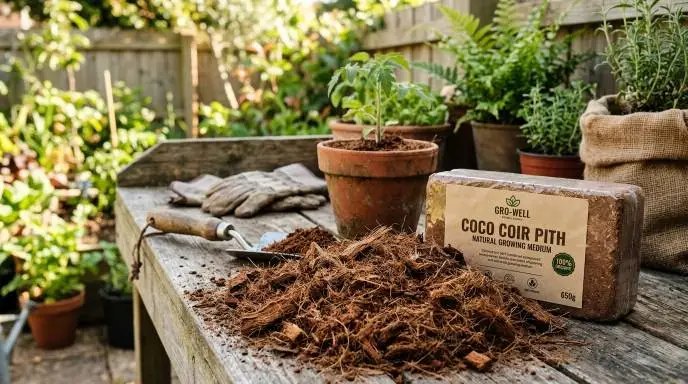
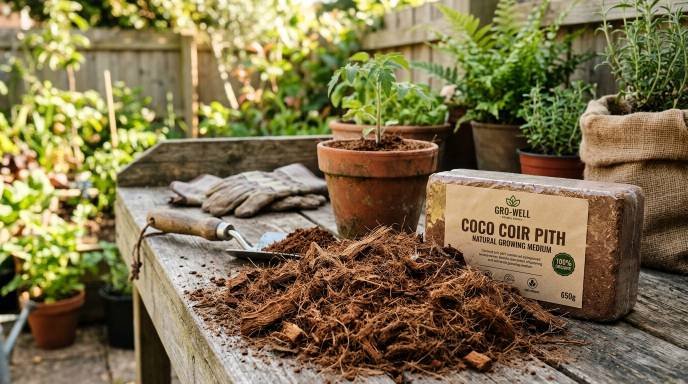
Coco coir vs peat moss comes down to one core trade-off: coco coir is a near-neutral, fast-draining, renewable growing medium, while peat moss is acidic, holds water longer, and comes from a slow-forming bog resource that doesn’t renew on any useful timeline. Both are nutrient-poor on their own, and both need supplemental feeding, the real question isn’t which one is “better,” it’s which weaknesses you’d rather manage.
Getting your growing medium right is one small but important piece of indoor plant care as a whole — this guide focuses specifically on two of the most common bases: coco coir and peat moss.”
Most comparisons stop at listing the differences and leave you to figure out what to do with that information. This one doesn’t. Below is the pH, nutrient, and structural breakdown, followed by a straight answer on which medium fits your actual setup.
I killed three blueberry bushes before a nursery worker asked what I was potting them in. Standard potting mix, I said. She just pointed at the pH meter behind her counter. Turns out blueberries wanted acidic peat, not neutral soil, a five-dollar bag would’ve saved me two years of confused replanting.
Coco Coir vs. Peat Moss at a Glance (Quick Answer)
Coco coir sits close to neutral pH and drains quickly, making it the more forgiving, general-purpose option. Peat moss is naturally acidic and holds significantly more water, which makes it better suited to acid-loving plants and consistent-moisture setups, but harder to rewet once it dries out completely.
| Factor | Coco Coir | Peat Moss |
| pH | 5.5–6.8 (near neutral) | 3.0–4.5 (acidic) |
| Water retention | Moderate, drains fast | High, holds water longer |
| Nutrients | Rich in potassium, low nitrogen/phosphorus | Nearly inert, very low N/P/K |
| Renewability | Renewable (coconut byproduct) | Slow-forming, non-renewable |
| Rewets after drying | Easily | Can become hydrophobic |
pH Differences: Why It Actually Matters for Your Plants
The pH gap between these two isn’t just a number on a spec sheet. It decides whether a plant can actually use the nutrients sitting in its soil.
Coco coir (pH 5.5–6.8):
- Lands close enough to neutral that most general houseplants and vegetables can go into it without any correction at all
- Rarely needs lime or sulfur adjustment for standard garden use
- A big reason it’s become the default base in so many bagged potting mixes over the last decade
Peat moss (pH 3.0–4.5):
- Runs highly acidic, not a flaw, but a feature for the right plants
- Ideal as-is for acid-loving plants like blueberries, azaleas, and rhododendrons
- Works against most other plants unless corrected first with agricultural lime
Here’s why this matters beyond the numbers. Both media connect back to a mechanism called nutrient lockout:
- Nutrients can be fully present in the growing medium
- If the pH sits outside a plant’s tolerable range, roots can’t chemically access those nutrients
- The plant shows deficiency symptoms even though nothing is actually missing from the soil
Getting the pH right isn’t a nice-to-have, it’s what makes every other input actually usable.
Nutrient Content: What’s Actually Feeding Your Plant (Spoiler: Neither, Much)
Here’s the part most comparisons underplay: neither of these is a complete food source on its own.
Coco coir:
- Carries almost no nitrogen or phosphorus
- Naturally high in potassium, sometimes testing near 150 parts per million
- That potassium level can interfere with how well a plant absorbs calcium and magnesium if nothing balances it out
- Unwashed coir can hold residual sodium left over from processing
- Buffered or pre-washed coir is worth paying slightly more for, especially around salt-sensitive seedlings
Peat moss:
- Essentially nutrient-inert
- Functions as structure, not sustenance
- Contributes almost nothing in nitrogen, phosphorus, or potassium
The takeaway that matters most: whichever one you choose, plan to fertilize. Neither medium is doing the feeding job on its own, and treating either one like a finished, ready-to-grow soil is a common reason plants stall out a few weeks after potting.
Structure and Water Behavior: Drainage vs. Retention
The physical structure of each material explains why they behave so differently once water hits them.
Coco coir’s structure:
- Larger macropores, bigger gaps between fibers
- Lets water move through quickly and air reach the root zone
- Rewets easily, even after drying out completely
- More forgiving for anyone who isn’t watering on a strict schedule
Peat moss’s structure:
- Tiny micropores that hold water through capillary action
- Retains far more water for far longer than coco coir
- Can turn hydrophobic if it dries out completely, meaning water runs off the surface instead of soaking back in
- Rewards consistent watering but punishes neglect harder than coco coir does
In practice, this means coco coir tolerates neglect better, while peat moss rewards consistency and punishes it harder when that consistency slips.
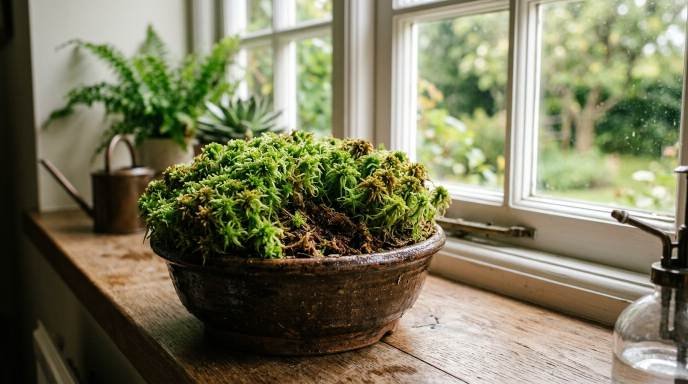
Coco Coir vs. Peat Moss: Which One Should You Actually Use?
Choose Coco Coir If:
- You want a more renewable, byproduct-based option
- You’re growing general houseplants, vegetables, or anything that isn’t specifically acid-loving
- You tend to underwater or forget to stick to a strict schedule
- You’re setting up a hydroponic system or want a reusable growing medium
Choose Peat Moss If:
- You’re growing acid-loving plants like blueberries, azaleas, or camellias
- You want maximum water retention with less frequent watering
- You’re starting seeds and want the moisture consistency peat naturally provides
Why Not Use Both?
Blending coco coir and peat moss is a genuinely common approach in commercial potting mixes, and for good reason they cover each other’s weak points:
- Peat’s water retention balances out coir’s fast drainage
- Coir’s near-neutral pH softens some of peat’s acidity
- The blend ends up more forgiving than either material used alone
If you’ve read our DIY Indoor Potting Mix guide, you’ll recognize coco coir as the base ingredient there. Adding a portion of peat moss to that same recipe is a reasonable adjustment for plants that want more consistent moisture than the standard ratio provides.
Sustainability: Is Coco Coir Really the “Greener” Choice?
The case for coco coir:
- A byproduct of the coconut industry, made from material that would otherwise go to waste
- Doesn’t require destroying a slow-forming natural habitat to produce
The case against peat moss:
- Forms in bogs over centuries
- Currently harvested faster than those bogs can regenerate
- This is the core of the environmental criticism against it
The counterpoint worth knowing:
- Coco coir is often shipped long distances from coconut-producing regions
- That transportation footprint isn’t zero either
Neither option is perfectly clean, it’s a trade-off between land-based harvesting impact and shipping distance, not a simple good-versus-bad split.
Common Problems and How to Fix Them
Peat Moss Won’t Absorb Water (Hydrophobic Soil)
This usually happens after peat dries out completely. A single heavy soak just runs off the surface instead of penetrating, so fix it in stages instead:
- Use warm water rather than cold, it penetrates dried peat more easily
- Apply small amounts at a time instead of one heavy pour
- Repeat over several applications until the peat starts absorbing normally again
Coco Coir Growing Mold
Mold on coco coir is almost always a sign of overwatering or poor airflow, not a defect in the material itself.
- Improve ventilation around the pot or tray
- Cut back on watering frequency
- Avoid switching growing media entirely until airflow and watering are corrected first
Salt Buildup in Unwashed Coco Coir
Unwashed or unbuffered coir can carry enough residual sodium to stress sensitive seedlings.
- Rinse coir thoroughly with clean water before use
- Or buy pre-buffered coir to skip this step entirely
- Either option solves the problem before it affects seedlings
Cost Comparison: Which One Is Cheaper Long-Term?
Peat moss:
- Typically the cheaper option per bag upfront in most regions
- Ready to use straight from the bag, no expansion step needed
Coco coir:
- Usually sold as compressed bricks
- Expands significantly once soaked in water
- A single brick often stretches further than its size suggests, which can even out the cost per usable quart over time
Exact pricing varies too much by region and retailer to state as a fixed number, but for larger or ongoing growing projects, coco coir’s expansion ratio is worth factoring in before assuming peat is the cheaper long-term choice.
FAQs
Is coco coir better than peat moss? Neither is universally better, coco coir suits general-purpose growing and renewability, while peat moss suits acid-loving plants and setups where moisture retention matters more than drainage.
Can I mix coco coir and peat moss? Yes. Blending both is a common practice that balances coir’s drainage with peat’s water retention, and it’s a standard approach in many commercial potting mixes.
Does coco coir raise or lower soil pH? Coco coir sits close to neutral (5.5–6.8), so mixing it into an acidic soil will generally raise the pH slightly toward neutral, though the effect depends on the ratio used.
Why is peat moss bad for the environment? Peat moss forms in bogs over centuries, and current harvesting rates outpace how quickly those bogs regenerate, which is the central environmental concern raised by researchers and gardeners alike.
Do I need to add fertilizer to coco coir? Yes. Coco coir contains almost no nitrogen or phosphorus, so plants grown in it need a regular fertilizing routine to get the nutrients the medium itself doesn’t provide.
Key Takeaways
- Coco coir: near-neutral pH, fast-draining, renewable, still needs fertilizer
- Peat moss: acidic, water-retentive, non-renewable, needs fertilizer and often lime for general use
- Neither medium is a complete growing solution on its own, both require supplemental nutrients
- Blending the two is a legitimate, common approach for a more balanced potting mix