The best soil for snake plants is a loose, fast-draining mix, typically a cactus or succulent blend combined with perlite, pumice, or coarse sand. This combination lets water pass through quickly instead of pooling around the roots, which is exactly what a snake plant’s root system needs to stay healthy. Standard potting soil, peat-heavy mixes, and garden compost hold onto water for too long and are one of the most common reasons snake plants develop root rot.
That’s the short answer. But if you want your snake plant to actually thrive for years instead of just survive, it helps to understand why this plant is so particular about soil in the first place and that starts with where it comes from.
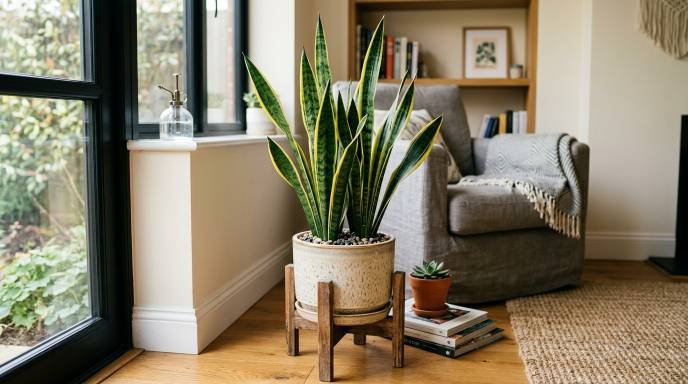
Know about soil is just one piece of keeping your houseplants thrivin, if you’re new to plant care, our Complete Beginner’s Guide to Indoor Plant Care covers everything else you need to know, from watering schedules to light requirements.
What Makes Soil “Right” for a Snake Plant? (Not Just Drainage)
Snake plants (Dracaena trifasciata, formerly Sansevieria trifasciata) originate from the rocky, semi-arid regions of West Africa, including parts of Nigeria and the Congo. In their native environment, they grow in thin, mineral-heavy soil wedged between rocks, not in rich garden loam. That evolutionary background is the entire reason “drainage” gets repeated so often in snake plant care advice, but drainage is only one part of the picture.
Three things are happening at once when soil is “right” for this plant:
- Porosity vs. water retention. These sound similar but aren’t the same thing. Porosity refers to how much air space exists between soil particles, high porosity means water moves through quickly and air can reach the roots. Water retention is how long the soil holds onto moisture after watering. A good snake plant mix needs high porosity and low-to-moderate retention, so roots get a brief moisture window followed by dry air pockets, not constant dampness.
- Soil pH. This is the detail almost every article on this topic skips. Snake plants prefer a slightly acidic to neutral pH, generally in the range of 5.5 to 7.5. Most bagged cactus and succulent mixes fall naturally within this range, but if you’re building your own blend with garden soil or compost, it’s worth checking with an inexpensive pH test strip, since garden soil can swing more alkaline depending on your region.
- Oxygen availability at the root zone. Roots don’t just absorb water, they also need to respire. When soil stays saturated, water fills the air pockets between soil particles and effectively suffocates the roots. This is the actual mechanism behind root rot, and it’s why “well-draining soil” isn’t just a preference; it’s closer to a survival requirement for this species.
The Best Soil Mix for Snake Plants (DIY Recipe)
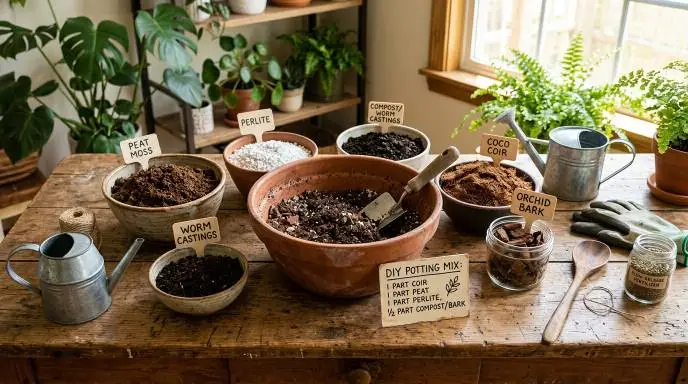
If you want to build your own mix rather than buying one off the shelf, the goal is a lean, gritty blend that drains within seconds of watering.
The Base Ratio
A reliable starting ratio is:
- 2 parts cactus or succulent potting mix
- 1 part perlite or pumice
- 1 part coarse sand or orchid bark
| Ingredient | Purpose | Approximate % of Mix |
| Cactus/succulent mix | Lean, low-nutrient base | 50% |
| Perlite or pumice | Air pockets, faster drainage | 25% |
| Coarse sand or orchid bark | Structure, chunkiness, drainage | 25% |
This ratio isn’t set in stone, if you live somewhere humid, lean slightly heavier on the perlite or pumice; if your home runs dry, you can pull back a little.
Ingredient Breakdown
- Cactus/succulent mix — This is your foundation. It’s already formulated to be leaner and grittier than standard potting soil, so it does most of the work before you even add anything else.
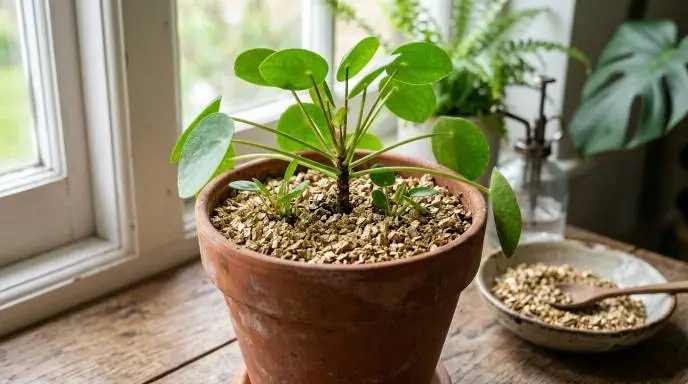
- Perlite vs. pumice — Both create air pockets, but they’re not interchangeable long-term. Perlite is lightweight volcanic glass that can float to the surface over time and compress slightly with repeated watering. Pumice is denser, doesn’t float, and holds its structure for years, which makes it the better long-term choice if you’re not planning to repot annually. Perlite is cheaper and more widely available, so it’s still a perfectly fine option, just know the tradeoff.
- Coco coir vs. peat moss — If your mix calls for a small moisture-retentive ingredient, coco coir is generally the better pick over peat moss. Peat is slow to regenerate as a resource and tends to repel water once it dries out completely, which can create uneven watering. Coco coir rehydrates more evenly and is considered a more renewable material.
- Orchid bark or horticultural charcoal — Bark adds chunky structure that keeps the mix from compacting. Charcoal is worth mentioning because it rarely shows up in snake plant soil advice, yet it helps absorb excess moisture and can reduce odor and bacterial buildup if you tend to overwater occasionally. It’s not essential, but it’s a useful insurance ingredient.
Best Store-Bought Soils for Snake Plants
If mixing your own isn’t appealing, a pre-made cactus or succulent soil works well as long as you check the label for two things: it should list perlite, pumice, or sand as an ingredient, and it shouldn’t list peat moss as the primary component.
When comparing bagged options, three categories are worth knowing:
- Budget-friendly mixes are widely available at most hardware stores and work fine as a base, though you may want to add extra perlite yourself since some budget bags skimp on drainage material.
- Mid-range succulent and cactus blends typically already include a reasonable ratio of perlite or pumice and are ready to use straight from the bag.
- Premium aroid or specialty mixes often include chunkier ingredients like bark and charcoal, which makes them well-suited for snake plants even though they’re marketed toward other houseplants.
Whichever you choose, avoid any bag simply labeled “all-purpose potting soil” or “garden soil”, these are formulated for plants with very different water needs.
What Soil to Avoid for Snake Plants
- Standard potting soil — formulated for moisture-loving plants and holds water far longer than a snake plant’s roots can tolerate.
- Peat-heavy mixes — peat moss absorbs and holds water for extended periods, which works against the fast-drying environment this plant needs.
- Pure compost or garden loam — nutrient-rich, but dense. Over time it compacts, squeezing out the air pockets roots depend on.
- Clay soil — naturally waterlogged and slow to drain, making it one of the worst possible choices for a drought-adapted plant.
Why These Fail (Root Rot Explained Simply)
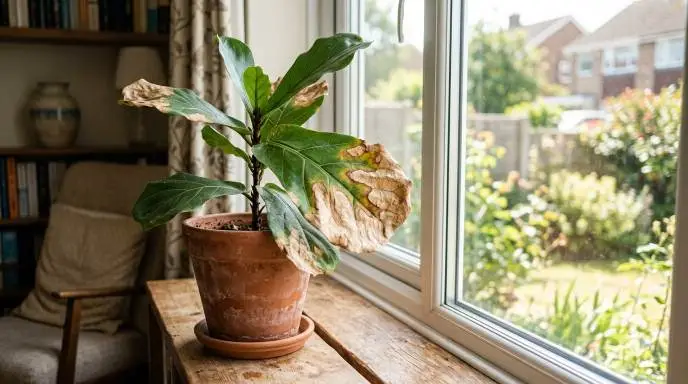
Root rot isn’t caused by water itself — it’s caused by water that has nowhere to go. When dense soil stays saturated, the air pockets around the roots fill with water instead of oxygen. Roots that can’t access oxygen begin to break down, and that damaged tissue becomes an easy entry point for fungal pathogens already present in most soil. The rot then spreads upward from the roots, which is why yellowing often shows up in leaves long before the underlying problem is visible.
Does Pot Material Change What Soil You Should Use?
This is a detail most soil guides skip entirely, but pot material directly affects how fast your soil dries out, which means it should factor into your mix.
- Terracotta — porous and breathable, so moisture evaporates through the pot walls as well as the soil surface. This gives you a little more flexibility, and a mix with slightly more moisture retention won’t cause issues as quickly.
- Ceramic or glazed pots — non-porous, meaning all moisture loss happens through the soil surface and drainage hole. These pair best with the leanest, fastest-draining mix you can put together.
- Plastic nursery pots — also non-porous and typically lighter, which means soil inside them tends to stay damp longer than in terracotta. If you’re using plastic, it’s worth adding a bit more perlite than the base ratio calls for.
Do Variegated Snake Plants Need Different Soil?
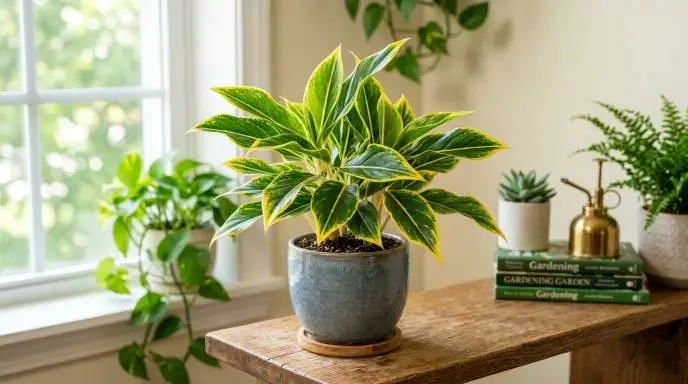
Variegated varieties, such as ‘Laurentii’ or ‘Moonshine,’ have less chlorophyll in their leaves than fully green varieties. Because chlorophyll plays a role in regulating a plant’s overall energy processing, variegated snake plants tend to grow more slowly and are generally considered more sensitive to overwatering than their solid-green counterparts. The same core soil mix applies, but if you own a variegated variety, it’s worth erring toward the leaner end of the ratio, a little more perlite or pumice, a little less water-retentive material and watching moisture levels more closely between waterings.
Seasonal Soil Adjustments
Snake plants go through a genuine growth cycle, and their soil needs shift with it.
- Spring and summer — During active growth, the standard fast-draining ratio works well, and you’ll likely water more frequently as the plant uses more moisture.
- Fall and winter — Growth slows significantly, and the plant’s water needs drop with it. Rather than changing the mix itself, most growers simply water less often during this period. If your plant consistently struggles through winter, going slightly leaner on moisture-retentive ingredients when you repot can help.
Signs Your Current Soil Is Wrong for Your Snake Plant
| Symptom | Likely Soil Issue |
| Yellowing, mushy leaves | Soil is retaining too much moisture |
| Slow growth despite weeks of dry soil | Mix may be too lean, or the pot is oversized for the plant |
| Soil stays visibly wet 5+ days after watering | Needs more perlite or pumice mixed in |
| White, crusty buildup on the soil surface | Mineral salt buildup — flush the soil with water or consider repotting |
| Foul smell coming from the pot | Likely root rot in progress; soil is too dense or watering is too frequent |
How to Repot a Snake Plant Into the Right Soil
- Know when it’s time. Roots growing out of the drainage hole, water running straight through without absorbing, or the plant tipping over from being root-bound are all signs a repot is due, typically every 2 to 3 years for snake plants, which don’t mind being slightly pot-bound.
- Remove the old soil gently. Loosen the root ball by hand and shake or brush off as much of the old soil as possible, especially if you suspect it’s been holding too much moisture.
- Inspect the roots before repotting. Healthy roots are firm and light tan to white. Dark, mushy, or foul-smelling roots indicate rot, trim these away with a clean, sharp tool before repotting.
- Repot into your new mix. Add a base layer of the new soil, center the plant, and fill in around the roots, gently firming the soil so the plant stands upright without compacting it too tightly.
FAQs
Can I use regular potting soil for snake plants if I add perlite? You can, but it requires adding a significant amount of perlite often close to equal parts, to bring the drainage up to an acceptable level. It’s usually simpler to start with a cactus or succulent mix as your base instead.
How often should I change my snake plant’s soil? Every 2 to 3 years, or whenever you repot. Soil breaks down and compacts over time even if you started with a good mix, which gradually reduces drainage.
Is cactus soil the same as succulent soil? They’re very similar and often used interchangeably, but succulent mixes sometimes include slightly more organic material for plants with marginally higher moisture needs. Either works well as a snake plant base.
Can snake plants grow in 100% perlite or pumice? They can survive short-term in nearly pure inorganic mediums, similar to semi-hydroponic setups, but they’ll need more frequent feeding since there’s little to no organic material providing nutrients. For most home growers, a blended mix is more practical.
What’s the best soil pH for snake plants? Somewhere between 5.5 and 7.5, slightly acidic to neutral. Most commercial cactus and succulent mixes already fall within this range.
Quick Reference Summary
- Ideal ratio: 2 parts cactus/succulent mix, 1 part perlite or pumice, 1 part coarse sand or orchid bark
- Target pH: 5.5–7.5
- Avoid: standard potting soil, peat-heavy mixes, pure compost, clay soil
- Repot every: 2–3 years, or sooner if roots show signs of rot
- Pot tip: ceramic and plastic pots need leaner soil than terracotta
Getting the soil right is the single biggest factor in whether a snake plant thrives or slowly declines indoors. Once the mix is dialed in, this is one of the lowest-maintenance houseplants you can own the soil is really the only part that takes any real thought.