There is no single best window direction that works for every plant. It depends on which way your window faces:
- South-facing: Strongest, longest light. Best for succulents, cacti, and citrus.
- East-facing: Gentle morning sun. Best for most tropical houseplants.
- West-facing: Hot, intense afternoon light. Best for hardy, high-light plants.
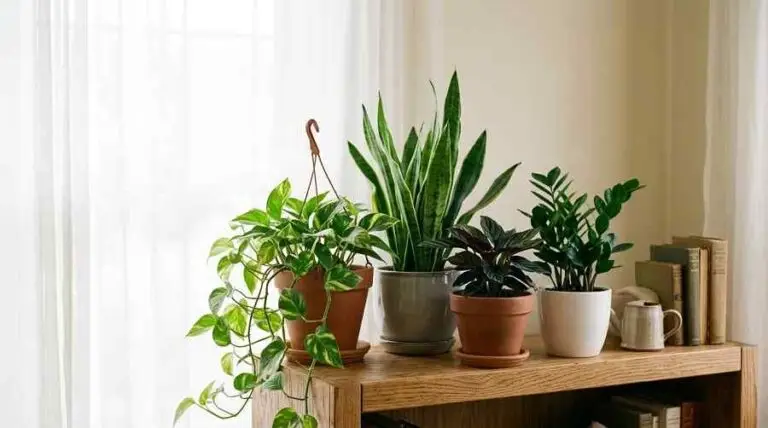
- North-facing: Soft, steady, indirect light with no direct sun. Best for shade-tolerant plants like pothos and snake plant.
The best window direction for your plants depends on the plant you own, not the other way around.
I’ve killed more plants by guessing at light than by forgetting to water them. This guide is the one I wish someone had handed me when I moved into an apartment with only one north-facing window and a stubborn fiddle leaf fig.
Why the Best Window Direction Matters More Than People Think
Most plant care advice starts with watering schedules. That’s backwards. Light is the thing a plant cannot live without, and it’s also the thing most people never actually check.
Here’s why getting this right deserves the first spot in your plant care checklist:
- Watering mistakes are fixable in a day. A missed watering or an overwatered pot can usually be corrected fast.
- Light mistakes take months to show, and months to fix. A plant surviving in the wrong light won’t collapse overnight, but it won’t thrive either.
- Direction decides three things at once: how much light comes in, how long it lasts each day, and how intense it gets at its peak.
Get that match right, and most other care problems shrink. If your plant is in the wrong environment, fertilizer and misting won’t be enough to keep it healthy.
How to Find Out Which Window Direction Your Home Faces
Before any of the advice below is useful, you need to know your actual window direction. A surprising number of people guess wrong, and it throws off everything else.
Option 1: Use your phone’s compass app.
- Open the built-in compass app (every iPhone and most Android phones have one).
- Stand at your window and hold the phone flat against the glass.
- Check which direction the compass points. That’s your window direction.
Option 2: Try the shadow method if you don’t want to use an app.
- If the sun rises on your window’s side of the building, you likely have an east-facing window.
- If the sun is setting on that side in the evening, you’re looking at west.
- If you get strong, high sun in the middle of the day, that’s usually south.
- If you rarely see direct sun at all, you’re probably facing north (in the Northern Hemisphere).
One thing to avoid: Don’t rely on guesses like “it faces the street” or “it faces the backyard.” Streets and backyards exist on every side of a building. That tells you nothing about compass direction, and compass direction is what actually decides where your plants should go.
Light Intensity vs. Light Direction — Why Both Matter for the Best Window Placement
Direction and intensity sound like the same thing. They’re not, and mixing them up is where a lot of plant advice goes wrong.
- Direction tells you the type of light: how bright it gets, at what time of day, and for how long.
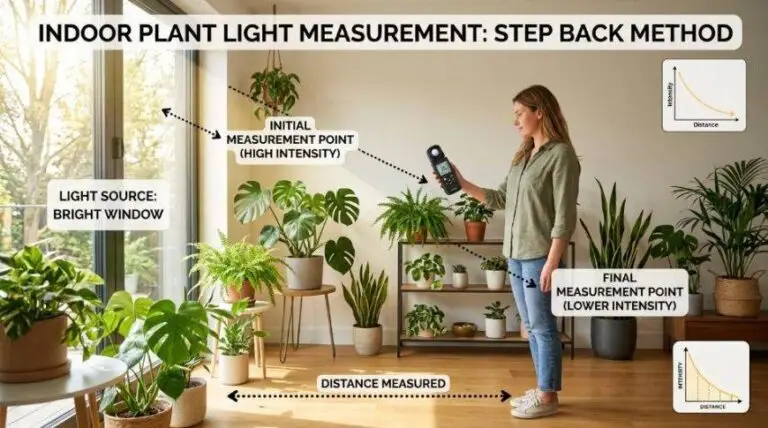
- Intensity is about distance from the glass. A plant sitting right against a south-facing window is getting far more usable light than the same plant six feet back in the room, even though it’s technically in the same “south-facing” space.
This is why a plant can struggle in a south window if it’s tucked in a corner, and thrive in an east window if it’s sitting right on the sill. Direction sets the ceiling. Distance from the glass decides how close you actually get to it.
A Quick Note for Southern Hemisphere Readers on Window Direction
Almost every plant care guide is written from a Northern Hemisphere point of view, and this one starts the same way. If you’re in Australia, South Africa, southern Brazil, or anywhere below the equator, the rules flip:
- North-facing windows get the strongest, most direct light.
- South-facing windows get the softest, most indirect light.
- East and west stay the same in both hemispheres.
If you’re reading this from below the equator, swap “north” and “south” everywhere in this guide, and the advice will still apply correctly to your home.
The Four Window Directions, Broken Down
South-Facing Windows: Often the Best Window Direction for Sun-Loving Plants
Light level: Bright, direct sunlight for most of the day. This is the strongest and longest light exposure of any direction.
Best for:
- Cacti and succulents
- Aloe vera
- Culinary herbs like rosemary and basil
- Citrus trees
- Croton
- Bird of paradise
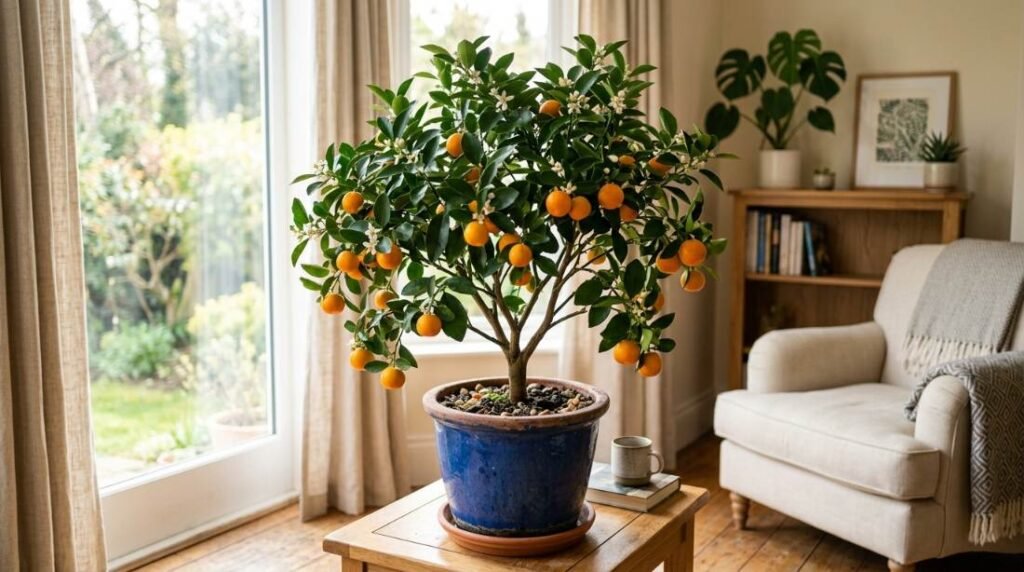
Watch out for: Leaf scorch. Direct summer sun through glass can get hot enough to burn tropical leaves that aren’t built for it. A sheer curtain solves this without cutting too much light.
Seasonal shift most people miss: South light changes dramatically between summer and winter.
- In summer, the sun sits high in the sky, so a south window often gets less direct exposure than you’d expect.
- In winter, the sun sits lower and pours in at a sharper angle, flooding the room with far more direct light.
A plant that looked happy shaded in July might need to move away from the glass by January.
Sign you have too much light here: Bleached, faded, or crispy brown edges on the leaves closest to the glass.
East-Facing Windows: The Best Window Direction for Most Houseplants
Light level: Gentle, direct morning sun, followed by soft indirect light for the rest of the day.
Best for:
- Monstera
- Ferns
- Orchids
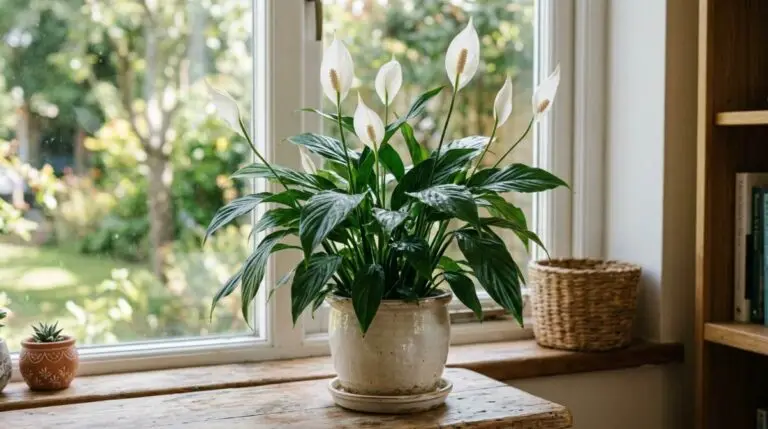
- Peace lily
- African violets
- Calathea
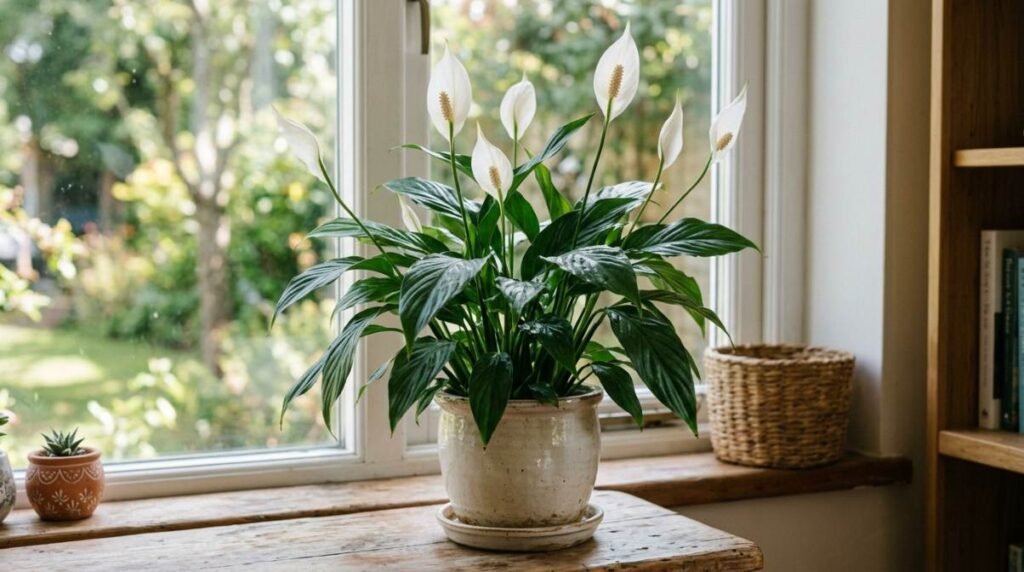
Watch out for: Light that’s noticeably weaker by afternoon, which is actually a benefit for plants that would scorch under stronger conditions.
The insight most guides skip: East-facing windows are often the single best window direction for an all-purpose growing spot in the house. The morning sun is strong enough to satisfy most flowering and foliage plants, but gentle enough that you rarely see scorch or heat stress. If you only had to pick one window for a growing collection, east is usually the safest bet.
West-Facing Windows: A Strong Window Direction for Heat-Tolerant Plants
Light level: Weaker in the morning, building to strong, hot, direct light in the afternoon and early evening.
Best for:
- Croton
- Rubber plant
- Dracaena
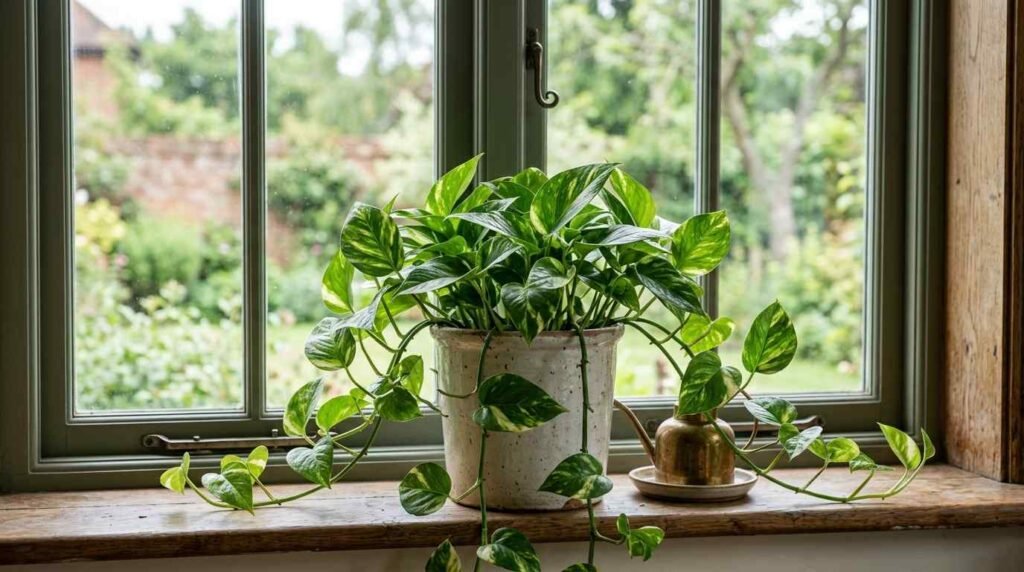
- Pothos
- Other hardy plants that tolerate high light and heat
Watch out for: Heat stress. West windows often run hotter than south windows late in the day, because the glass and surrounding wall have been absorbing heat since noon. Plants sitting right against the glass can cook, especially in summer.
A detail worth knowing: Nearby air conditioning vents or drafty gaps around west-facing windows can stress plants further, swinging them between hot direct sun and a blast of cold air. Keep pots a few inches clear of both the glass and any vents.
North-Facing Windows: The Best Window Direction for Low-Light Plants
Light level: Low, soft, and consistent all day, with no direct sun at all.
Best for:
- Snake plant
- ZZ plant
- Pothos
- Cast iron plant
- Philodendron
- Dracaena
Watch out for: Corners of the room falling into deep shade, far enough from the window that almost nothing will grow well there.
The fix competitors rarely mention: Don’t assume a north-facing room is a lost cause. Moving plants within two to three feet of the glass makes a much bigger difference than people expect, even in a room that feels dim overall. A shade-tolerant plant sitting on the actual sill can do surprisingly well, even though the same plant three feet further back would sulk.
Quick Reference Comparison Table for the Best Window Direction by Plant Type
| Direction | Light Level | Best For | Main Risk |
|---|---|---|---|
| South | Bright, direct, longest duration | Cacti, succulents, herbs, citrus | Leaf scorch in summer |
| East | Gentle direct morning sun, soft rest of day | Monstera, ferns, orchids, peace lily | Weak light by afternoon |
| West | Weak morning, strong hot afternoon | Croton, rubber plant, pothos, dracaena | Heat stress near glass |
| North | Low, soft, indirect all day | Snake plant, ZZ plant, pothos, philodendron | Deep shade in corners |
What’s Blocking Your Light (and Why Window Direction Isn’t the Whole Story)
Two windows facing the same direction can offer completely different amounts of light, depending on what’s outside and on the glass itself. Four things to check:
- Trees, awnings, and overhangs. A mature tree outside a south window can turn it into something closer to a north window for months at a time, especially with full summer leaf cover.
- Neighboring buildings. In cities and dense suburbs, a tall building across the street can block hours of direct sun that would otherwise reach your plants, regardless of which way your window technically faces.
- Sheer curtains and window films. These are useful for softening harsh summer sun, but they do measurably cut light transmission. If your plant seems to be struggling despite a “good” window direction, try pulling the curtain back for a few hours and see if it perks up.
- Dirty windows. This sounds minor, but a layer of grime, pollen, or hard water spots on the glass genuinely cuts down how much light gets through. It’s an easy thing to overlook, and an easy fix.
No Good Window Direction? What to Do in Low-Light Spaces
Not everyone has a south or east window to work with. If you’re stuck with north-only light, or no direct light at all, you still have options:
- Grow lights. A full-spectrum LED grow light, even a small clip-on one, can make up the difference for plants that need more than a dim room provides. You don’t need a greenhouse setup, just consistent supplemental light for several hours a day.
- Rotate plants between rooms. If one room has better light than another, some plants tolerate being moved between spaces on a regular schedule, spending brighter days near the good window and darker stretches elsewhere.
- Adjust your expectations honestly. Some plants simply will not thrive without more light than a dim apartment can offer, and that’s fine. Choosing a plant that’s built for low light, like a ZZ plant or a pothos, will save you far more frustration than trying to force a light-hungry plant to survive somewhere it never will.
How to Test Your Light Without Buying Anything
You don’t need a light meter to get a rough sense of what you’re working with, or to confirm you’ve found the best window direction for a given plant.
The shadow test:
- Around midday, hold your hand about twelve inches above a flat surface near your plant.
- Look closely at the shadow it casts.
Read the result:
- A sharp, well-defined shadow with clean edges means bright light.
- A soft, slightly blurry shadow means medium, indirect light.
- A faint shadow you can barely make out means low light.
This takes ten seconds and tells you more about your actual growing conditions than most window-direction charts alone. If you want a more precise reading afterward, several free phone apps can measure light in lux, though the shadow test is usually enough to guide a decision.
Common Mistakes People Make with Window Direction and Placement
- Assuming every south window behaves the same. Season, hemisphere, and outdoor obstructions all change what “south-facing” actually means in practice.
- Pushing pots directly against cold glass in winter. Leaves touching freezing glass can suffer cold damage even if the room itself feels comfortable.
- Never rotating plants. Plants lean toward their light source over time. A quarter turn every week or two keeps growth even on all sides.
- Confusing bright indirect light with low light. These are two different things, and mixing them up is one of the most common and costly plant care mistakes.
- Bright indirect light means a well-lit room out of direct sun.
- Low light means a genuinely dim space, like a windowless hallway or a spot several feet from any window.
FAQ: Best Window Direction for Indoor Plants
Is a north or south facing window better for plants? Neither is universally better.
- South gives strong, direct light suited to sun-loving plants like succulents.
- North gives soft, steady, indirect light suited to shade-tolerant plants like pothos and snake plant. It depends entirely on which plants you’re growing.
Can plants get too much light from a south window? Yes. Tropical and shade-loving plants can scorch in direct south light, especially in summer. Signs include:
- Bleached patches
- Crispy brown edges
- Leaves that curl away from the glass. A sheer curtain or moving the plant a few feet back usually solves it.
What direction is best for low-light plants? North-facing windows suit low-light plants best, since they offer soft, consistent light without any harsh direct sun. Plants like ZZ plant, snake plant, and pothos handle this well.
Do plants need direct sunlight through a window, or is indirect enough? Most common houseplants, including monstera, pothos, and peace lily, actually prefer bright indirect light over direct sun. Direct sun is really only necessary for a smaller group of plants, such as cacti, succulents, and certain flowering and fruiting plants.
How do I know if my plant isn’t getting enough light? Look for these four signs:
- Slow or stalled growth
- Small new leaves
- Long, leggy stems reaching toward the window
- Leaves that lose their color or turn pale green
The Takeaway: There’s No Universal Best Window Direction
There’s no single best window direction for indoor plants, and anyone who tells you otherwise is skipping half the picture. The right direction is the one that matches your specific plant, adjusted for how close it sits to the glass, what’s blocking the light outside, and which season you’re in.
Three steps to get it right:
- Figure out your actual window direction first.
- Match your plants to it honestly.
- Adjust for distance, obstructions, and season as you go.
Do that, and most of the guesswork in plant care disappears on its own.