The best soil for a vegetable garden is loamy soil, a balanced mix of sand, silt, clay, and organic matter, with a pH between 6.0 and 7.0. This combination holds water and nutrients long enough for roots to use them, while still draining fast enough that roots don’t sit in water and rot.
That’s the textbook answer. But if you’ve ever bought the “right” soil and still watched your tomatoes yellow or your carrots come out stubby and forked, you already know the textbook answer isn’t the whole story. What matters more than the definition is knowing what soil you’re actually starting with, and what to do about it. That’s what this guide covers.
My first raised bed grew nothing but three-inch carrots for two summers straight. I blamed the seeds, the weather, even the squirrels, until a neighbor pointed at my rock-hard soil and asked if I’d ever actually touched it. I hadn’t. One jar test later, I finally understood why.
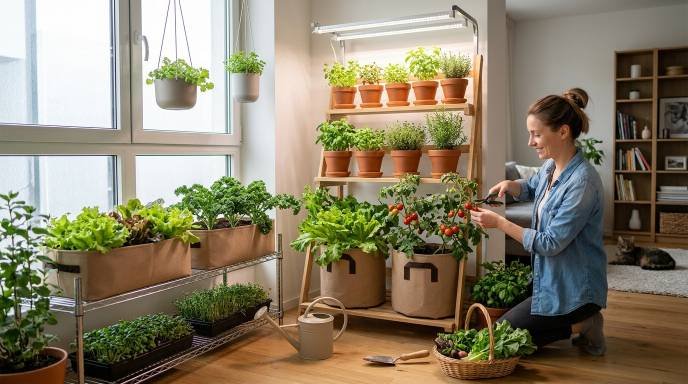
What Is the Best Soil for a Vegetable Garden?
Loamy soil is considered the gold standard for vegetable gardens because it strikes a balance that no single soil type manages on its own:
- Enough structure to hold moisture and nutrients near the roots
- Enough looseness to let excess water drain and oxygen reach the roots
- A slightly acidic to neutral pH (6.0–7.0), which is the range where most vegetables can actually absorb the nutrients already in the soil
Very few gardeners start with perfect loam sitting in their backyard. Most start with something closer to heavy clay or loose sand, and build toward loam over a season or two. The good news is that almost any soil can be improved. You just need to know which direction you’re improving it in.
The 3-Minute Soil Test (Before You Buy Anything)
Before spending money on bagged soil, compost, or amendments, it’s worth spending three minutes figuring out what you’re actually working with. Guessing wastes both money and a growing season.
The Jar Test
This is the simplest way to see the sand-silt-clay ratio in your soil, and it doesn’t require any equipment beyond a jar.
- Dig up a cup of soil from about 4–6 inches deep, removing rocks and roots.
- Fill a clear jar about one-third full with the soil.
- Add water until the jar is nearly full, leaving an inch of air space.
- Add a small pinch of dish soap (this helps the particles separate instead of clumping).
- Shake hard for 1–2 minutes, then set the jar down and don’t touch it for 24 hours.
As it settles, the soil separates into layers by weight: sand sinks first and settles at the bottom within a few minutes, silt settles next over a few hours, and clay, the lightest and finest particle, takes the longest and forms the top layer. Any organic matter usually floats.
- Roughly equal layers, none dominating → you likely have loam
- A thick bottom layer, thin top → sandy soil
- A thick top layer → clay-heavy soil
The Squeeze Test
If you don’t want to wait 24 hours, this gives a rough read in seconds. Grab a handful of moist (not soaking) soil and squeeze it into a ball.
- Falls apart immediately → sandy soil
- Holds a tight ball and doesn’t crumble when poked → clay soil
- Holds its shape loosely, then breaks apart with a light poke → loamy soil
Neither test replaces a lab soil test, but both are enough to tell you which section below applies to you.
Soil Types Compared: Loamy vs. Clay vs. Sandy
| Soil Type | Drainage | Nutrient Retention | How It Feels | Typical Fix Needed |
| Loamy | Balanced | Good | Crumbly, holds shape loosely | Minimal, maintain with yearly compost |
| Clay | Slow, holds water | High, but can lock nutrients up | Dense, sticky when wet, hard when dry | Add coarse compost and organic matter to loosen structure |
| Sandy | Fast, drains quickly | Low, nutrients wash out | Gritty, falls apart, doesn’t hold shape | Add compost and mulch to slow drainage and retain nutrients |
Neither clay nor sandy soil is “bad” soil, they’re just unfinished. Both are common starting points, and both respond well to consistent organic matter over time.
Got Clay or Sandy Soil? Here’s How to Fix It
Fixing Clay Soil
Clay particles are extremely fine, which is exactly why they pack tightly and squeeze out air pockets roots need. The fix is about creating structure, not just adding nutrients.
- Work in 2–3 inches of coarse, well-aged compost across the top 6–8 inches of soil
- Avoid tilling or digging clay soil while it’s wet, it compacts further and can take a full season to recover
- Aged manure and shredded leaves both help break up clay over time, but coarse compost works faster
- If clay is severe, raised beds filled with a purchased blend can be a faster route than amending in place
Fixing Sandy Soil
Sandy soil has the opposite problem: water and nutrients pass through before roots get a chance to use them.
- Mix in 2–3 inches of compost to add water-holding organic matter
- Apply a 2-inch layer of mulch on top to slow evaporation and reduce how often you need to water
- Water more frequently but in smaller amounts, since sandy soil can’t store much at once
- Cover crops like clover, planted during an off-season, can add organic matter naturally if you have the time
Why Soil pH Matters for Vegetables (and How to Check It)
Soil pH isn’t just a number vegetables “prefer”, it directly controls whether nutrients already in the soil are available to plant roots. Outside the 6.0–7.0 range, nutrients like phosphorus and iron can become chemically locked up in the soil, meaning plants can starve even in soil that’s technically nutrient-rich.
You don’t need a lab to get a rough reading:
- Test strips — inexpensive and sold at most garden centers; dip in a soil-water mixture and match the color
- Digital pH meters — pushed directly into moist soil; less precise than a lab test but reusable
- The vinegar and baking soda trick — put soil in two containers, add vinegar to one (fizzing suggests alkaline soil) and add water plus baking soda to the other (fizzing suggests acidic soil); this is a rough indicator, not a precise number, but works in a pinch
If your soil tests too acidic (below 6.0), garden lime raises the pH over a few weeks. If it’s too alkaline (above 7.0), elemental sulfur or additional organic matter lowers it gradually. Either adjustment works slowly, expect to retest after a month, not a week.
In-Ground Beds vs. Raised Beds vs. Containers: Does the Best Soil Change?
The “best soil” principle stays the same across growing methods, but how you get there changes quite a bit depending on where you’re planting.
In-Ground Gardens
Work 2–3 inches of compost or garden soil into the top 6–8 inches of your existing yard soil. This blends amendments with your native soil rather than replacing it, which keeps the bed connected to the ground’s natural drainage and microbial life.
Raised Beds
Raised beds give you more control since you’re not working with existing yard soil. Two common approaches:
- A 50/50 mix of native soil and rich compost
- A purchased raised bed mix formulated to be lighter than straight garden soil but denser than potting mix
Containers
Containers need something entirely different from both of the above: a light, fluffy potting mix, never straight garden soil. Garden soil compacts inside a container’s limited space, cutting off drainage and suffocating roots in a way that doesn’t happen in the ground. If you’re deciding between the two for a container project, our full comparison of Potting Soil vs. Garden Soil breaks down exactly why they aren’t interchangeable.
Regional Soil Considerations (Quick Notes)
Native soil composition varies significantly by region, and it’s worth knowing the general tendency of your area before assuming your “bad” soil is unusual:
- Parts of the Midwest and Southeast tend toward denser clay soils
- Coastal and sandy-plain regions often lean sandy and fast-draining
- Mountain and high-desert regions frequently run more alkaline
None of this changes the target loam, pH 6.0–7.0, but it does change how much amending you’ll likely need. If you’re gardening in the same spot for years, a local cooperative extension office (most U.S. states have one through their state university) can run a proper lab soil test for a small fee, which is far more precise than any at-home method.
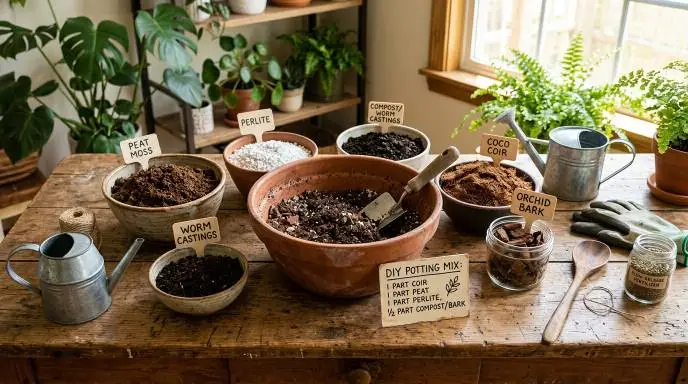
Bagged Soil vs. DIY Mix: Which Is Worth It?
Bagged soil or purchased mix:
- Convenient and consistent from bag to bag
- No guesswork on ratios
- Costs more per square foot, especially for larger beds
DIY blend (native soil plus compost and amendments):
- Cheaper over time, especially for larger gardens
- Requires testing and adjusting rather than a ready-made formula
- More labor upfront, but builds soil that improves year over year
As a rough guideline: a single small raised bed or a handful of containers usually isn’t worth the labor of a DIY blend, bagged mix is simpler. A full backyard garden or multiple raised beds is where the cost of bagged soil adds up fast enough that a DIY blend pays for itself within a season or two.
if you’re new to plant care, our Complete Beginner’s Guide to Indoor Plant Care covers everything
FAQs
Can I use topsoil for a vegetable garden? Topsoil can be used as a base, but it isn’t the same as garden soil or a finished growing mix. Topsoil varies widely in quality and often needs compost mixed in before vegetables will thrive in it.
How often should I replace vegetable garden soil? In-ground and raised bed soil doesn’t need full replacement, refresh it with a 1–2 inch layer of compost each planting season instead. Container potting mix breaks down faster and typically needs replacing or refreshing every 1–2 years.
Is potting soil the same as vegetable garden soil? No. Potting soil is formulated to stay light and well-draining in the confined space of a container, while garden soil is meant to blend with the ground. Using one in place of the other usually leads to drainage problems. See our Potting Soil vs. Garden Soil guide for the full breakdown.
What’s the cheapest way to improve garden soil? Compost, whether homemade from kitchen scraps and yard waste, or purchased in bulk, is the lowest-cost way to improve nearly any soil type, since it addresses drainage, nutrients, and structure all at once.
Key Takeaways
- The best soil for a vegetable garden is loamy soil with a pH between 6.0 and 7.0
- Test your soil with the jar test or squeeze test before buying anything or adding amendments
- Clay soil needs coarse organic matter to loosen it; sandy soil needs organic matter to help it hold water and nutrients
- Match your soil approach to your growing method, in-ground, raised bed, and container gardens each need a different strategy
- Compost is the single most useful, lowest-cost amendment for almost any soil problem