Most houseplants need roughly half as much water in winter as they do in summer, generally once every 10 to 21 days depending on the plant. Growth slows down as light levels drop, so roots pull up moisture more slowly and soil stays wet longer between waterings. The exact number still depends on the plant type, your home’s heating, and how much light the spot actually gets, which is why a fixed calendar alone can lead you wrong in either direction.
That’s the quick version. Winter watering trips people up more than any other season because the habits stop working. A schedule that kept a plant thriving all summer can quietly drown it by January if nothing changes. This guide breaks down why the slowdown happens, how to actually judge when to water instead of guessing by date, and what changes depending on your home’s heating and climate.
A friend of mine kept watering her fiddle leaf fig every Sunday through winter, same as always. By February, the leaves had gone soft and the soil never fully dried between waterings. Cutting back to once every two weeks brought it back within a month.
If you’re just getting comfortable with the basics of houseplant care, our indoor plant care guide for beginners is worth reading alongside this one.
Why Plants Need Less Water in Winter
The core reason comes down to light, not temperature.
- Shorter days mean less light: Fewer daylight hours and a lower sun angle mean plants receive noticeably less light energy overall, even sitting in the same spot they were in during summer.
- Less light slows photosynthesis: With less energy coming in, most houseplants shift into a slower growth phase, sometimes close to dormancy, rather than actively producing new leaves and roots.
- Slower growth means slower water uptake: Roots that aren’t actively growing pull moisture from the soil far more slowly, so the same amount of water that dried out in five days during summer might take two or three weeks to be absorbed in winter.
This is the piece most people miss. It’s not that plants “need” less water in some abstract seasonal sense. It’s that they’re physically using it up at a slower rate, so watering on the old schedule means adding water faster than the plant can take it in.
The Hidden Variable Most Guides Skip: Indoor Heating and Humidity
Nearly every winter watering guide gives the same 10 to 21 day range and stops there. What most of them leave out is that indoor heating can push a plant right back toward its summer watering needs, even in the dead of winter.
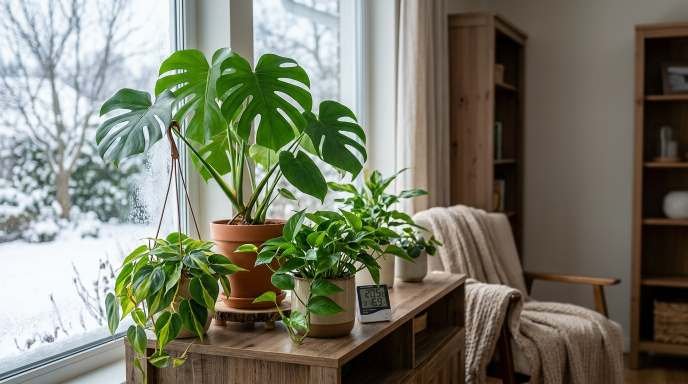
- Forced-air heating dries out soil fast: Central heating systems pull moisture out of the air, which speeds up evaporation from the soil surface, sometimes fast enough to offset most of the seasonal slowdown.
- Radiators and wood stoves behave differently: These tend to create more localized dry zones rather than drying the whole room evenly, so a plant sitting near one can dry out much faster than a plant across the room.
- Placement matters as much as the calendar: A pothos sitting six feet from a heating vent and an identical pothos on the far side of the same room can end up needing water on completely different timelines, even though they’re the “same” plant in the “same” season.
The fix isn’t a better formula. It’s checking soil more often for any plant near a heat source, rather than trusting the general schedule to apply evenly across your whole home.
How to Tell When It’s Actually Time to Water
A date on a calendar is a starting point, not a rule. These checks tell you what’s actually happening in the pot. Winter changes how pots behave. Ceramic pots can get cold near windows, affecting root temperature and water uptake. Our Guide to choosing ceramic pots for indoor plants in all seasons helps you choose pots that work year-round.
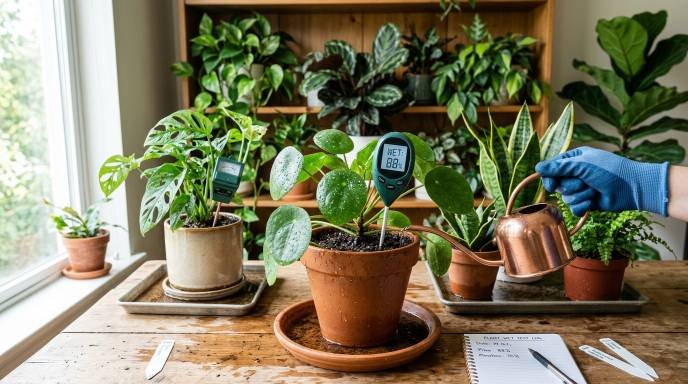
- The finger test: Push a finger into the soil up to the second knuckle. If it feels dry at that depth, it’s time to water. If it’s still cool or damp, wait.
- The pot-weight test: Lift the pot. A noticeably light pot usually means the soil has dried out, while a heavy pot still holds moisture.
- A moisture meter: These are especially useful in winter, when visual cues like slight leaf softening are easy to miss or misread. Insert it near the root zone rather than just the surface. Learn about the best moisture meters from this article.
- Watching the plant itself: Slight leaf softening is an early, low-risk signal worth checking on. Waiting for visible wilting means the plant has already been under stress for a while.
Winter Watering Schedule by Plant Type
These ranges are a solid starting point, though your specific home conditions can shift them earlier or later.
| Plant Type | Examples | Winter Watering Frequency |
|---|---|---|
| Tropical foliage | Pothos, monstera, philodendron | Every 10–14 days |
| Moisture-loving tropicals | Ferns, calatheas | Every 7–14 days, soil kept lightly damp |
| Hardy greens | ZZ plant, snake plant | Every 3–8 weeks |
| Succulents and cacti | Jade, aloe, most cacti | Every 4–6 weeks, or once leaves start looking thin |
A few notes on using this table:
- Plants near heating vents or radiators will likely need water closer to the shorter end of their range.
- Plants in cooler rooms or away from direct heat sources can often stretch to the longer end.
- If you’re unsure which category a specific plant falls into, check the soil directly rather than guessing from the table alone.
Winter conditions can invite spider mites. Here’s how to identify and treat an infestation.
Use Room-Temperature Water (And Why It Matters More in Winter)
This small detail gets skipped constantly, but it matters more once temperatures drop.
- Cold water straight from the tap can shock roots that are already growing slowly, adding unnecessary stress during a period when the plant has less energy to recover from it.
- Let tap water sit out for about 24 hours before using it. This brings it to room temperature and lets some of the chlorine dissipate.
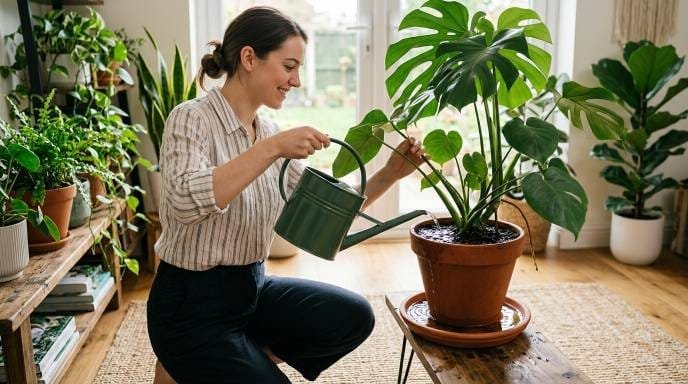
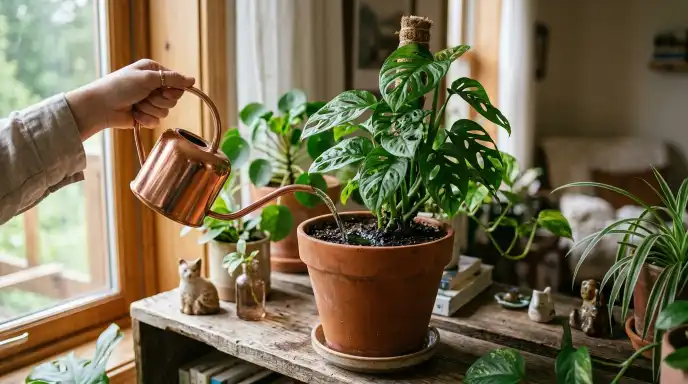
- If you water multiple plants regularly, keeping a filled watering can nearby means it’s always ready without extra planning. Learn about long sprout watering cans from this article.
Common Winter Watering Mistakes
Most winter plant deaths trace back to one of these, not the cold itself.
- Watering on the same schedule as summer out of habit:
This is the single biggest cause of winter overwatering, and it happens almost automatically if you’re not paying attention. - Assuming dry topsoil means the whole pot is dry:
Topsoil dries out faster than the root zone in winter, so checking only the surface can lead to watering too early. - Using cold water straight from the tap:
Small on its own, but combined with slower root activity, it adds avoidable stress. - Placing plants directly on or near heat vents without adjusting watering:
This creates a mismatch between the “general winter schedule” and what that specific plant actually needs. - Fertilizing on a normal schedule during dormancy:
This isn’t a watering mistake directly, but it compounds stress on roots that are already adjusting to a slower pace, often making watering mistakes worse.
If your plant is already showing signs of too much water, our overwatered plant recovery checklist walks through exactly how to fix it. If it’s gone the other direction and the soil has dried out completely, the bone-dry plant rehydration checklist covers that instead.
Does Watering Change by Climate or Region?
Winter doesn’t look the same everywhere, and neither should your watering routine.
- A home in a humid coastal climate with mild indoor heating will generally hold soil moisture longer than a home in a dry, cold climate running heat constantly.
- As a rough guide: the drier and more heavily heated your home is, the closer you’ll likely land to the shorter end of each range in the table above.
- The more humid and coolly kept your home is, the closer you’ll likely land to the longer end.
There’s no single number that works everywhere, which is exactly why the soil and pot-weight checks matter more than the calendar.
What Happens If You Get It Wrong
Winter symptoms can be easy to misread, since both overwatering and underwatering can show up as droopy or yellowing leaves.
- Overwatering in winter:
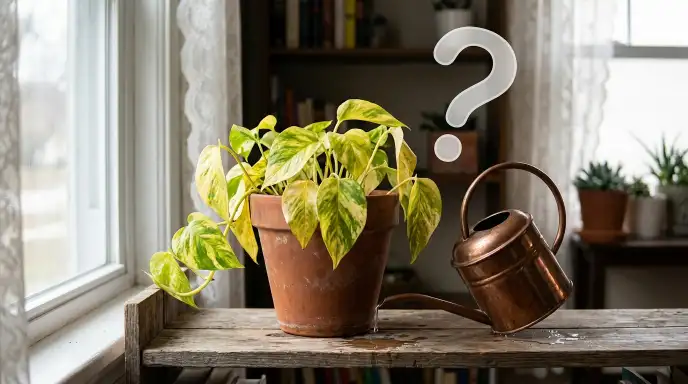
Often looks like soft, yellowing leaves and soil that never seems to dry out between waterings. Roots sitting in wet soil for too long during a slow-growth period are especially prone to rot. - Underwatering in winter:
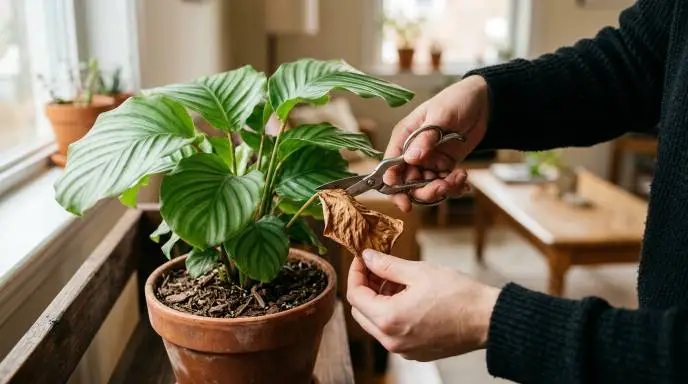
tends to show up as crispy leaf edges, soil pulling away from the pot sides, and a noticeably light pot.
Because winter dormancy already changes how plants look and behave, it’s worth checking the soil directly rather than assuming based on appearance alone. For step-by-step recovery, see the overwatered plant recovery checklist depending on which direction the problem went. For the correct watering method going forward, our deep watering guide for houseplants covers the technique in full.
Frequently Asked Questions
How often should you water indoor plants in winter?
Most houseplants need water roughly every 10 to 21 days in winter, though this varies by plant type, home heating, and light levels. Checking the soil directly is more reliable than following a fixed schedule.
Should you stop watering houseplants completely in winter?
No. Even dormant plants still need occasional water, just far less often than in the growing season. Stopping entirely can lead to the soil drying out completely and damaging the roots.
Why is my plant’s soil still wet a week after watering in winter?
Slower growth means roots absorb water more slowly, so soil naturally stays damp longer in winter. If it stays wet for several weeks with no sign of drying, drainage may also be a factor.
Do succulents need water at all in winter?
Yes, but far less often, typically every 4 to 6 weeks. Wait until the soil is fully dry and the leaves start looking slightly thin before watering again.
Should I mist my plants more in winter instead of watering?
Misting can help with humidity for some tropical plants, but it isn’t a substitute for watering the soil. Roots still need direct moisture at the root zone to stay healthy. Know about all types of humidifiers in this guide.
Final Thoughts
Watering less in winter is the general rule, but the exact frequency depends on your specific plant, your home’s heating, and how much light each spot actually gets. Check the soil and pot weight rather than relying purely on a calendar, and pay closer attention to any plant sitting near a heat source. Once the seasonal adjustment becomes a habit, winter plant care gets a lot easier, and a lot less guesswork.