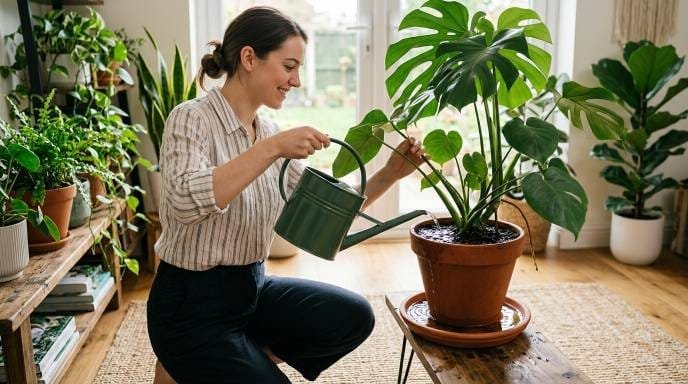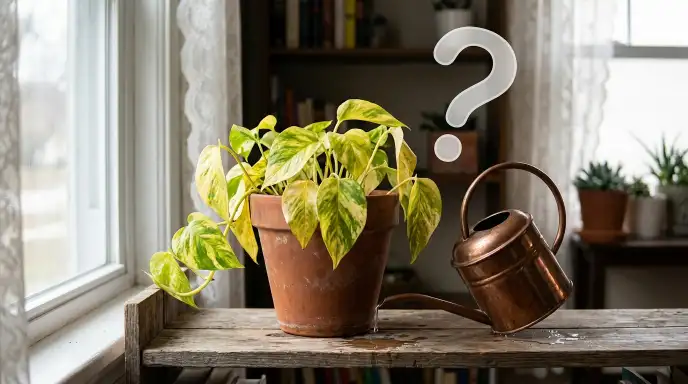
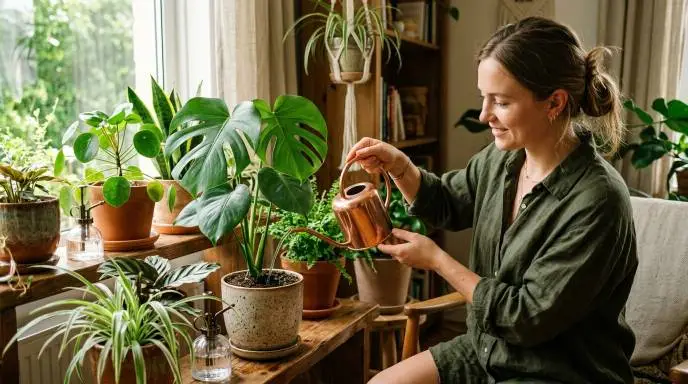
The correct way to how to water houseplants is simple but rarely followed: soak the entire root ball until water runs freely from the drainage holes, empty the saucer after 15–20 minutes, and only water again when the top 1–2 inches of soil feel dry. Shallow, frequent splashes create dry pockets, weak roots, and root rot. Deep, thorough watering does the opposite.
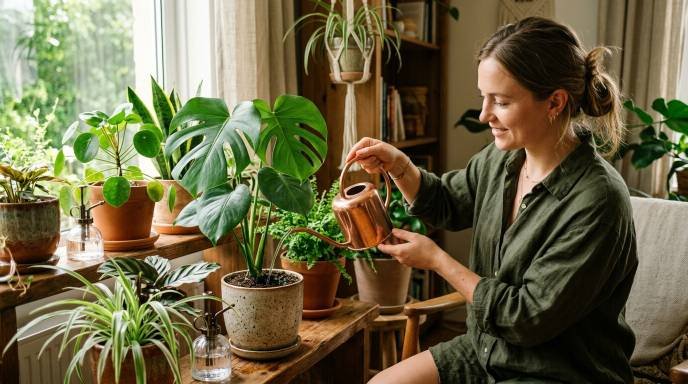
Years ago I nearly killed a large Monstera by giving it small sips every couple of days. The leaves looked fine until they suddenly yellowed. When I slid the plant out, the outer roots were healthy, but the center was a black, smelly mess. That one mistake taught me more than any book. If I had used a self-watering pot back then, my plant might still be alive.
Why Most People Get How to Water Houseplants Completely Wrong
Most of us treat watering like a daily chore. We see dry surface soil or a slightly drooping leaf and reach for the watering can. The result is the exact opposite of what plants need.
Missouri Botanical Garden notes that overwatering and underwatering often produce the same visible symptoms, yellowing or wilting leaves, because damaged roots cannot take up water properly either way.
Shallow watering wets only the top layer. Roots stay near the surface where they dry out faster and become more vulnerable. Over time, the plant develops a weak, shallow root system. At the same time, the lower soil can stay either bone-dry or waterlogged, depending on how the water moves. Both extremes stress the plant.
The calendar habit makes it worse. A plant in a bright, warm window in summer may need water twice a week. The same plant in a cool, low-light corner in winter may go two or three weeks. Fixed schedules ignore light, temperature, humidity, pot material, and soil mix. Follow this guide to measure the light your plants need
The Science Behind Proper How to Water Houseplants Technique
Roots need both water and oxygen. Soil is a mix of solid particles, water, and air spaces. When you flood those air spaces and leave them full of water for too long, roots begin to suffocate. Fungi that cause root rot thrive in low-oxygen conditions.
Deep watering saturates the whole root zone at once, then allows excess water to drain away. This creates a cycle of wet-to-moist-to-slightly-dry that encourages roots to grow throughout the pot instead of clustering at the surface. A long sprout watering can helps to water deeply. Know about the best long sprout watering can from this guide.
Soil choice strongly influences how often and how deeply you need to water. Learn how to care for plants in our Complete Beginner’s Guide to Indoor Plant Care.
Soil composition controls how this cycle plays out:
- Peat moss holds a lot of water but becomes hydrophobic (water-repellent) when it dries completely. Water then runs down the sides of the pot and leaves the center dry.
- Coco coir retains moisture well and rewets more easily than peat.
- Perlite and bark create air pockets and speed drainage.
- Fine mixes stay wet longer; chunky aroid mixes dry faster.
Know about perlite dust from this guide.
NDSU Extension points out that saturating soil fills the air spaces and can lead to rot, while shallow daily watering encourages weak surface roots. Deep, less frequent watering is the better approach.
Step-by-Step Deep Drenching Method for How to Water Houseplants
- Check moisture first. Push a finger 1–2 inches into the soil. If it feels dry at that depth, water. If it feels cool or damp, wait.
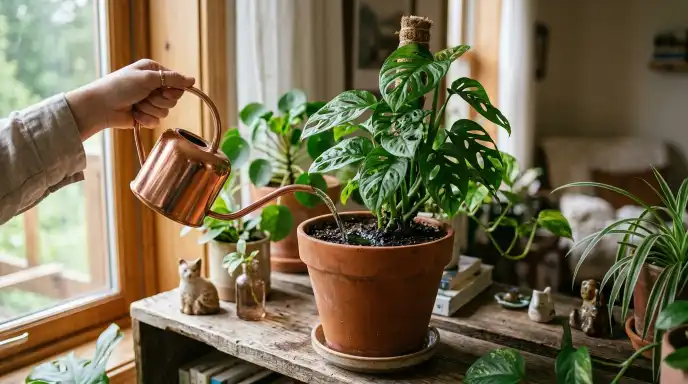
- Water slowly and evenly over the entire soil surface. Move the spout around so every part of the surface receives water.
- Keep going until water flows freely from the drainage holes. This usually takes more water than most people expect.
- Let the pot sit and drain for 15–20 minutes.
- Empty the saucer. Never leave the pot standing in water.
- Return the plant to its spot.
For large or densely rooted plants, a second light pass after the first drain can help eliminate any remaining dry pockets.
Bottom Watering – When and How to Use It for How to Water Houseplants
Bottom watering works well for plants that dislike wet leaves (African violets) or for pots where the soil has started to pull away from the sides.
Place the pot in a basin or sink with water about one-third of the way up the side of the pot. Leave it for 15–30 minutes. The soil wicks moisture upward. Then remove the pot and let it drain fully.
Bottom watering does not flush salts the way top watering does. Use it as a supplement, not the only method. Every few waterings, give a thorough top soak so excess fertilizer salts can leave the pot.
How to Fix Hydrophobic Soil – The Forgotten Step in How to Water Houseplants
When peat-based soil dries out completely, it resists water. You pour, and the water sits on top or races down the sides.
The fix is simple:
Submerge the entire inner pot in a bucket or sink of room-temperature water. Hold it under until air bubbles stop rising. This can take 10–30 minutes. Then lift it out and let it drain thoroughly.
After this reset, return to normal deep watering and try not to let the soil go bone-dry again. Adding a bit of coco coir or extra perlite at the next repot helps prevent the problem from returning as quickly.
Moisture Assessment Beyond the Finger Test
The finger test is still the most reliable free tool. Other useful methods:
- Lift the pot. A dry pot feels noticeably lighter.
- Use a wooden skewer or chopstick. Leave it in the soil a minute, then check if it comes out damp or with soil stuck to it.
- Moisture meters can help once you learn how they read in your specific soil mix. They are not perfect and need calibration against the finger test.
Adjust for conditions:
- Bright light and warm temperatures dry soil faster.
- Terra cotta and unglazed clay lose moisture through the pot walls.
- Plastic and glazed ceramic hold moisture longer.
- Winter indoor air is often drier, yet plants use less water because light levels drop.
Special Cases and Controversial Methods in How to Water Houseplants
Succulents and cacti want the soil to dry almost completely between thorough waterings. Ferns and prayer plants prefer more consistent moisture but still need drainage. Orchids in bark mixes dry quickly and often do best with a full soak, then complete drain.
Ice cubes for orchids remain debated. They provide slow water release but can chill roots. Most experienced growers prefer room-temperature water and full saturation of the bark.
Self-watering pots can work for consistent moisture lovers if the reservoir is monitored. They become dangerous when the soil stays permanently wet.
Water quality matters more than many realize. Hard water and high fluoride can leave deposits. Letting tap water sit overnight helps chlorine dissipate. Rainwater or filtered water is ideal when available.
Signs You’re Watering Wrong + Rapid Recovery Protocols
Underwatering signs:
crispy leaf edges, dry and pulling-away soil, very light pot, dull leaves.
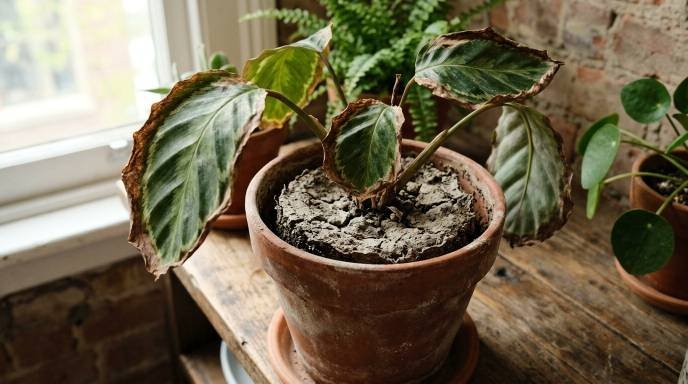
Overwatering signs: yellowing lower leaves, soft stems, soil that stays wet for days, fungus gnats, foul smell when you check the roots. Overwatering or cold damage: check the symptoms and how to fix from this guide.
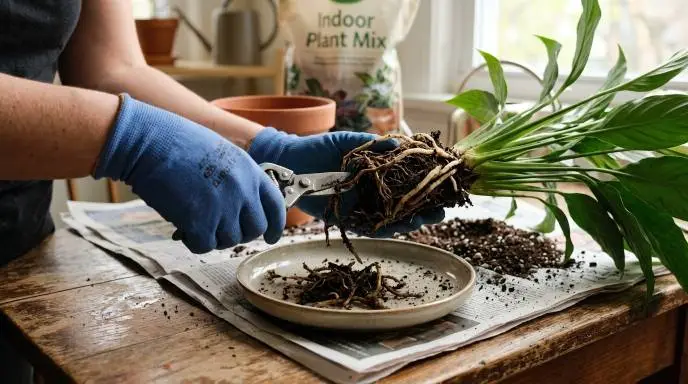
If you suspect root rot, gently remove the plant. Trim black, mushy roots with clean scissors. Repot into fresh, well-draining mix and water lightly at first. Keep the plant in bright indirect light and resist the urge to water again until the new soil has partially dried.
Building a Personalized How to Water Houseplants Routine
Observation beats any app or schedule. Keep a simple note of when you watered and how the plant responded. Group plants with similar needs together. In winter, most plants slow down; water less. In summer growth spurts, they may need more.
Soil composition, pot type, light, and temperature together decide the interval. Check the plant, not the calendar.
Common Myths About How to Water Houseplants Debunked
- “Water every Sunday.” Conditions change. The plant decides.
- “Misting replaces watering.” Misting raises humidity briefly. If you want to learn about the best misting humidifier, it does not wet the roots.
- “More water makes plants grow faster.” Excess water starves roots of oxygen.
- “Drainage holes are optional.” Without them, water has nowhere to go, and roots rot.
FAQ
How often should I water houseplants?
Only when the top 1–2 inches of soil are dry. Frequency depends on light, temperature, pot, and soil.
Is bottom watering better than top watering?
Neither is always better. Top watering flushes salts. Bottom watering keeps leaves dry and can rewet hydrophobic soil gently. Many growers use both.
What is the best time of day to water indoor plants?
Morning is ideal so any moisture on leaves can dry during the day, but indoor plants are less sensitive to timing than outdoor ones.
Can I use ice cubes to water houseplants?
Not recommended as a regular method. Cold water can shock roots. Room-temperature water is safer.
How do I know if my plant has root rot from overwatering?
Yellowing leaves, persistently wet soil, and a sour smell are clues. Confirm by checking the roots, healthy roots are firm and white or light-colored; rotted ones are black or brown and mushy.
Should I water houseplants with cold or warm water?
Room-temperature water is best. Cold water can shock roots; very hot water can damage them.
Conclusion
Mastering how to water houseplants comes down to one shift: stop watering on a schedule and start watering when the soil tells you it is time. Soak thoroughly, drain completely, and let the roots breathe between waterings. Pay attention to your soil mix, pot, and the conditions in your home. The plants will respond with stronger growth, fewer problems, and longer lives.
Healthy roots are the foundation. Everything else- bigger leaves, new growth, resilience- follows from getting the water right. If you want to know water schedule in winter, follow the guideline: How Often Should You Water Indoor Plants in Winter?