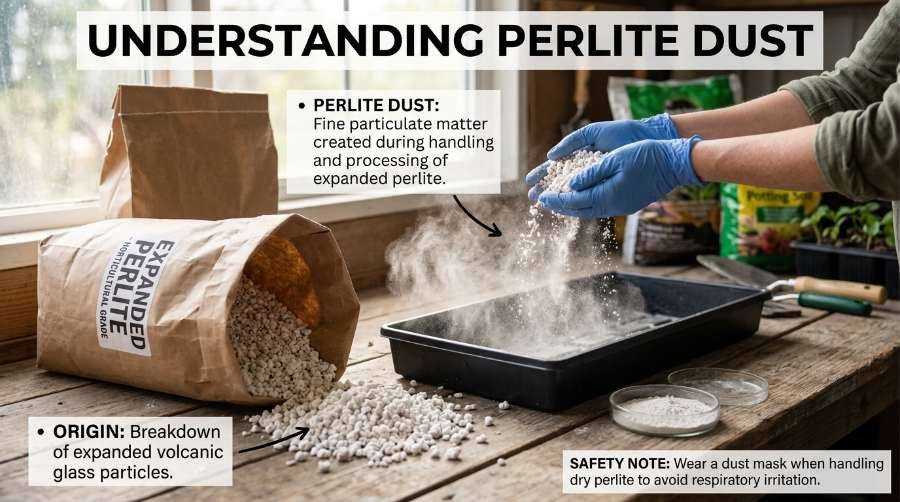
Perlite dust is the fine, powdery residue left behind when expanded perlite granules get crushed, jostled, or broken down during handling. It’s non-toxic, made of the same natural volcanic glass as the granules themselves, but it can still irritate your eyes, nose, and throat if you breathe in enough of it. is perlite bad to breathe? read this guide to know about it.
I opened a fresh bag of perlite indoors once, gave it a quick shake to loosen it up, and got hit with a small white cloud that sent me into a coughing fit for a few minutes. Nothing serious happened, but it was enough to make me start pre-wetting every bag since.
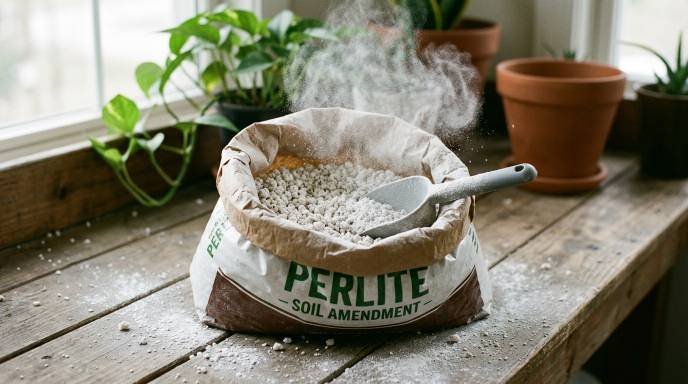
This guide breaks down exactly what perlite dust is, where it comes from, whether it’s something to worry about, and how to keep it from becoming a problem when you’re potting, cleaning up, or working with it in other settings. Follow our other guide to learn How Much Perlite to Add to Potting Soil. Also read how to sterilize perlite in this guide.
What Is Perlite Dust?
- It starts as volcanic glass. Perlite is a naturally occurring rock, mined from the ground like any other mineral.
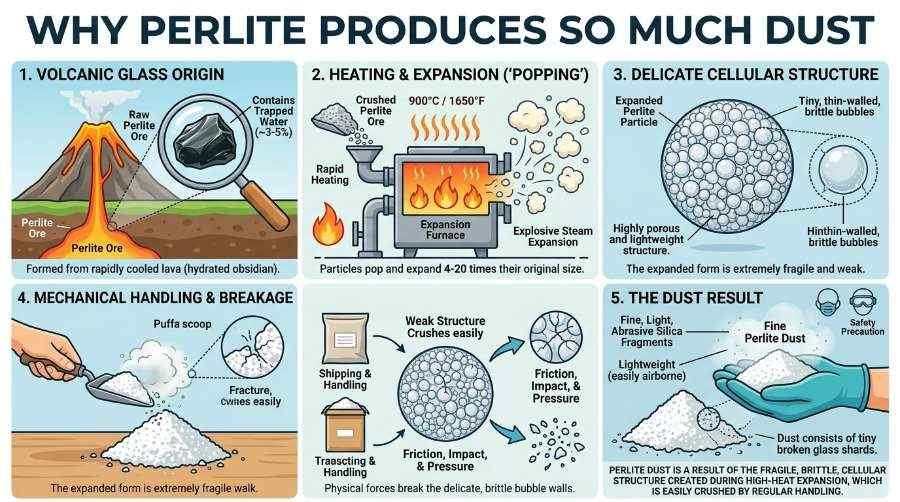
- It gets heated to expand. Manufacturers heat the raw rock to around 1,600°F, causing trapped water inside to turn to steam. This makes the rock “pop,” much like popcorn, expanding it into the lightweight white granules gardeners recognize.
- The dust is leftover residue. Perlite dust is the fine, powdery material that breaks off those expanded granules during shipping, bagging, pouring, or mixing.
- It’s lightweight by design. The whole point of perlite is that it’s full of tiny air pockets, so the dust it sheds is just as light. Instead of settling quickly like sand or soil dust, it tends to float and hang in the air.
- It’s most airborne when disturbed. Shaking a bag, squeezing it, or dumping it out from a height kicks up the most dust.
Is Perlite Dust Something to Worry About?
- Perlite contains no toxic chemicals, heavy metals, or hazardous compounds.
- It’s essentially inert glass, and breathing it in doesn’t poison you or introduce anything harmful into your bloodstream.
- It falls into a category called nuisance dust, the same broad category as sawdust from cutting wood or dust kicked up when sweeping a dry floor.
- Nuisance dust doesn’t cause chemical harm, but it can physically irritate soft tissue in your eyes, nose, throat, and airways just by being present.
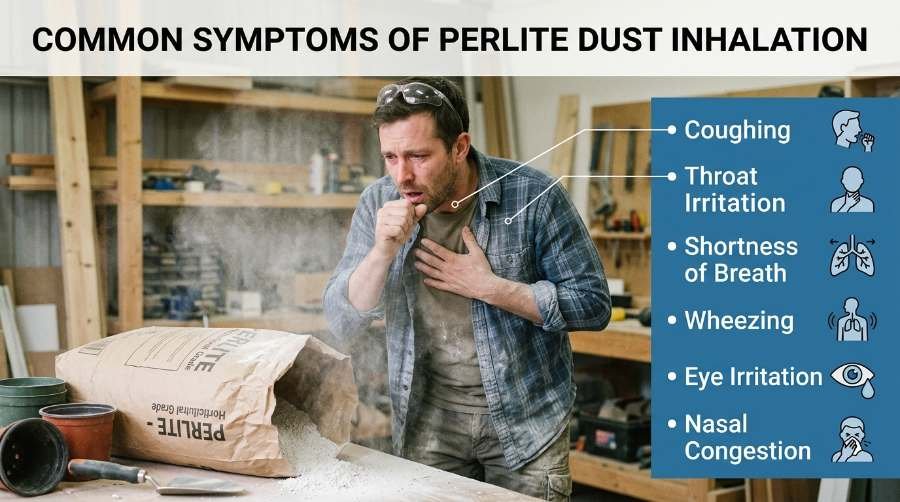
Common symptoms from breathing in a cloud of it:
- A scratchy or tickly throat
- Watery, itchy, or red eyes
- Mild coughing or sneezing
- A stuffy or irritated nose
For most people, these clear up quickly once you’re away from the dust and out in fresh air.
What Do Health and Safety Agencies Actually Say?
Rather than relying only on gardening sites or the perlite industry’s own materials, it helps to look at how occupational safety bodies classify this kind of dust.
- NIOSH and OSHA both classify nuisance dust as particulate matter that doesn’t produce significant organic disease or toxic effects, but can still cause physical irritation to eyes, skin, and the respiratory tract at high exposure levels.
- These agencies distinguish nuisance dust from hazardous dusts like silica or asbestos, which carry documented long-term disease risk even at lower exposure levels.
- Workplace exposure limits exist for “particulates not otherwise regulated,” the category nuisance dusts like perlite typically fall under, and these limits are set with sustained, repeated occupational exposure in mind, not the occasional bag opened at home.
- The practical takeaway for home gardeners: the exposure most people experience while potting a few plants is well below the level where any agency raises concern. The caution around perlite dust is a comfort and irritation issue for casual use, not a regulatory red flag.
Where Perlite Dust Shows Up Beyond Gardening
Gardening is where most people first run into perlite dust, but it isn’t the only place it turns up.
- Greenhouse and nursery work. Staff handling large volumes of perlite daily for seed starting or bulk soil mixing encounter far more dust exposure than a home gardener repotting a few plants a year.
- Construction and building materials. Perlite is also used in lightweight concrete, plaster, and loose-fill insulation, meaning contractors and insulation installers can be exposed to it in a completely different context than gardening.
- Industrial processing. Workers at facilities that mine, crush, or expand raw perlite ore face the highest and most sustained exposure levels of anyone in the supply chain, which is where most of the formal occupational health data on perlite dust actually comes from.
- Why this matters for gardeners: most safety guidance and dust exposure limits are written with these higher-exposure settings in mind. Applying industrial-level caution to a home potting session is more caution than the situation calls for, but it explains why safety sheets sound more serious than the actual risk of a weekend gardener opening one bag.
Why Perlite Produces So Much Dust
- Its structure is fragile. The expansion process that makes perlite useful- all those tiny trapped air bubbles- also makes it easy to crush and crumble.
- Handling breaks it down further. Every time a bag gets moved, squeezed, poured, or shipped, a small amount of the granules break apart into finer particles.
- Dry conditions make it worse. Perlite that’s been sitting in a warm garage or exposed to open air for a long time tends to shed more dust than perlite fresh out of a sealed bag.
- Fine grades produce more dust than coarse grades. Horticultural perlite sold in coarse or “chunky” grades generally creates less airborne dust than the finer grades sometimes used in seed-starting mixes.
How to Reduce Perlite Dust When Using It
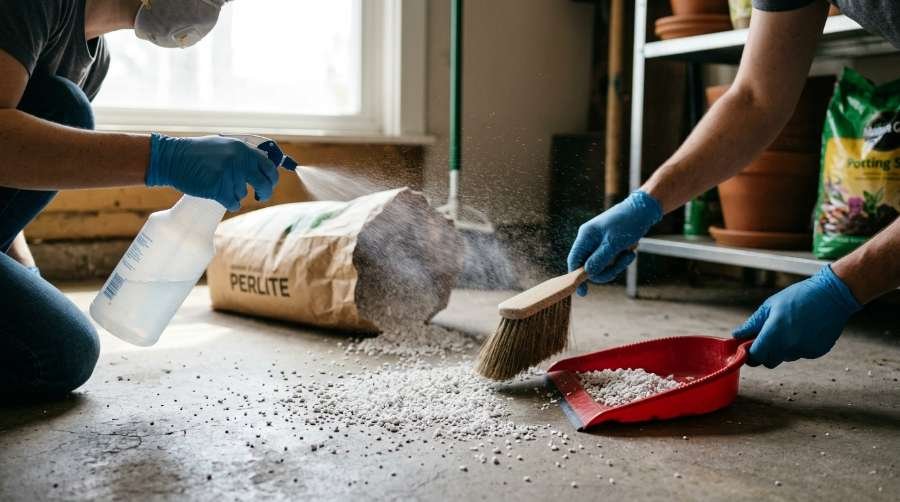
- Pre-wet it before use. Lightly mist dry perlite with water from a spray bottle before scooping or mixing it into soil. This is the most effective fix, damp dust simply doesn’t become airborne the way dry dust does.
- Work outdoors or somewhere ventilated. Opening a new bag on a porch or balcony, or at least near an open window, gives any dust that escapes somewhere to go besides your lungs.
- Open bags slowly and close to the ground. Cutting a bag open gently and keeping it low, rather than shaking it out or dumping it from height, cuts down significantly on how much becomes airborne.
- Wear a simple dust mask for bigger jobs. Not necessary for scooping a small amount here and there, but worth it if you’re mixing large batches of soil or handling several bags in one session.
- Reseal opened bags. Perlite exposed to open air for a long time can dry out further and shed more dust over time. Folding the bag shut or transferring leftovers to a sealed container helps.
How to Clean Up Spilled Perlite Dust
Spills happen, especially with a bag that’s already partly dry. A few steps make cleanup easier and safer.
- Don’t dry-sweep it. Sweeping dry perlite dust just kicks it back into the air. Lightly mist the spill with water first to weigh it down.
- Use a damp cloth or mop to gather the dampened dust rather than a broom, especially on hard flooring.
- Vacuum only after it’s damp, and only if your vacuum has a sealed filter system. Vacuuming dry, fine dust with a standard vacuum can blow some of it right back into the room through the exhaust.
- Ventilate the room by opening a window for a few minutes after cleanup, particularly if a decent amount became airborne before you noticed the spill.
- Check nearby surfaces, since fine dust settles slowly and can land on counters or shelves well outside the immediate spill area.
Is Perlite Dust Different From Perlite Itself?
Not really, they’re the same material. A few points worth understanding:
- Perlite dust isn’t a separate substance or a byproduct with different properties, it’s just smaller pieces of the same expanded volcanic glass.
- Because it’s chemically identical to the granules, it carries the same non-toxic profile, just in a form small enough to float and get inhaled.
- Once perlite dust settles or gets mixed into damp soil, it behaves the same as the rest of the material, inert and stable, with no ongoing risk to people, pets, or plants.
Perlite Dust vs Other Garden Dust
It helps to know where perlite dust fits next to other dust concerns gardeners sometimes hear about.
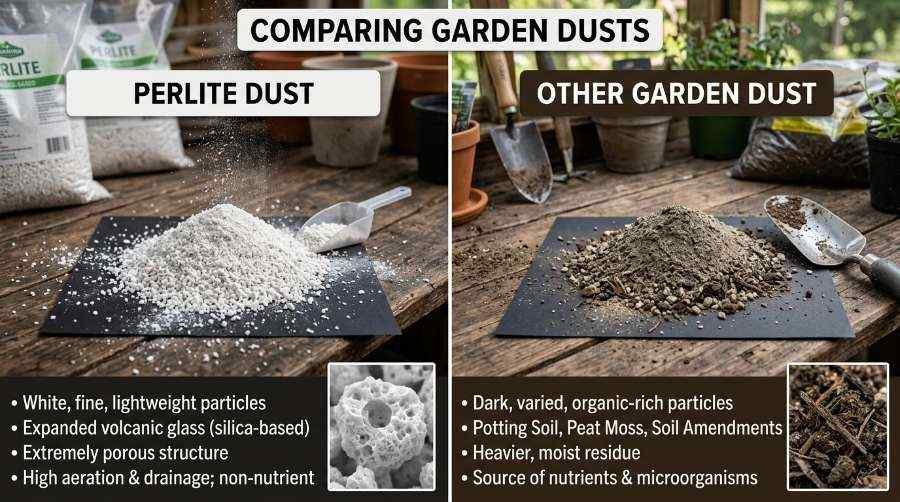
- Silica dust: produced by cutting stone, concrete, or certain industrial materials. This is a legitimate long-term health hazard tied to serious lung disease with repeated heavy exposure. Perlite dust does not fall into this category under normal home gardening use.
- Vermiculite: has a more complicated history. Some vermiculite mined before the 1990s, particularly from one now-closed Montana mine, was contaminated with asbestos, a genuine and serious health hazard. Modern vermiculite products sold today are tested and don’t carry that same risk, but it’s the reason vermiculite sometimes gets side-eyed alongside perlite, even though perlite itself was never connected to that issue.
Frequently Asked Questions
Is perlite dust the same as regular perlite?
Yes. It’s the same volcanic glass material, just broken down into finer particles small enough to become airborne.
Is perlite dust toxic?
No. It contains no toxic chemicals. It can act as a mild physical irritant to your eyes, nose, and throat if inhaled in quantity, but it isn’t poisonous.
How do I stop perlite from being dusty?
Mist it lightly with water before scooping or mixing it into soil. Damp perlite doesn’t produce airborne dust the way dry perlite does.
Is perlite dust bad for pets?
It’s non-toxic to pets in the same way it’s non-toxic to people, though you’d still want to avoid letting a pet dig around in it or inhale a cloud of any kind of dust.
The Bottom Line
- Perlite dust is just perlite broken into finer particles, non-toxic but capable of mild eye, nose, and throat irritation if inhaled in quantity.
- It happens because perlite’s lightweight, air-filled structure is fragile and breaks down easily during normal handling.
- Occupational safety agencies classify it as nuisance dust, a category well below hazardous materials like silica, and most industrial exposure guidance doesn’t reflect the much smaller scale of home gardening use.
- Pre-wetting it before use, handling bags gently, and cleaning spills with a damp cloth instead of dry-sweeping take care of the issue almost entirely.