Potting soil isn’t just “dirt.” For plants grown in containers, the structure of the soil determines whether they thrive or slowly suffocate from root rot. Among the various soil amendments available, perlite and pumice are the two undisputed heavyweights of drainage and aeration.
While they are both sterile, volcanic minerals with a neutral pH, they behave very differently once mixed into a pot. Using the wrong one can lead to floating soil, tipped-over pots, or premature soil compaction.
This guide breaks down the real science, physical behaviors, and plant-specific rules of perlite and pumice to help you choose the perfect amendment for your indoor and outdoor garden.
The Quick Answer (AI Overview & Search Hook)
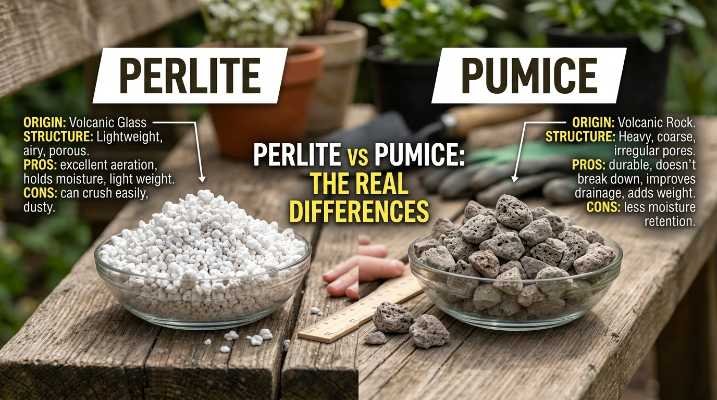
The main difference between perlite and pumice is that perlite is an ultra-lightweight, processed volcanic glass that provides budget-friendly aeration but easily floats to the surface, while pumice is a heavier, natural volcanic rock that offers permanent soil structure and balanced moisture without shifting or degrading.
- Choose perlite: for budget-friendly seed starting, temporary propagation mixes, and lightweight hanging baskets.
- Choose pumice: for succulents, cacti, bonsai, heavy specimen plants, and long-term soil mixes where durability and stability are essential.
1. What Is Perlite? Origin and Key Characteristics
Perlite is not a synthetic material or plastic; it is a naturally occurring volcanic glass. It forms when lava cools rapidly and traps trace amounts of water (roughly 2% to 5%) inside its molecular structure. Read details about what is perlite from this guide.
To turn this raw ore into the white material we see in potting bags, manufacturers crush the rock and expose it to extreme temperatures around 900°C (1,650°F). This intense, rapid heating vaporizes the trapped water molecules inside the glass. The resulting steam forces the glass to expand up to 16 times its original size in a process nicknamed “volcanic popcorn.”
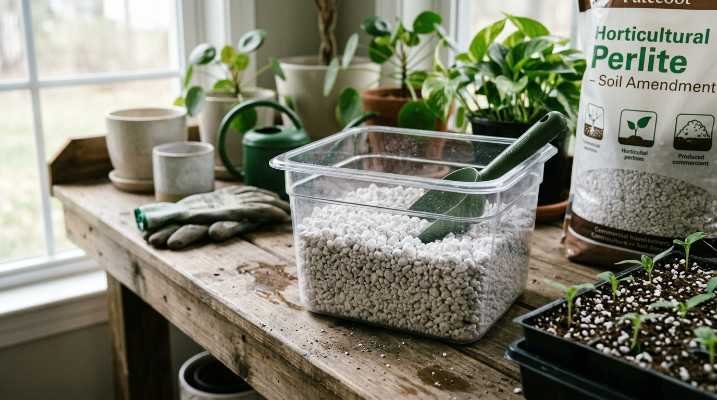
Key Characteristics of Perlite:
- Ultra-Lightweight: A liter of perlite weighs approximately 100 grams, making it exceptionally easy to handle and mix.
- Closed Internal Pockets: Because the expansion process seals its internal air pockets, perlite does not absorb water into its structure. Instead, it features a rough, micro-cracked surface that holds thin films of water on the outside.
- Brittle Structure: The expanded glass walls are very thin and fragile. Over time, physical pressure from roots, watering, and handling will crush these particles.
- High Accessibility: It is incredibly cheap, widely available at every garden center, and a standard component in commercial potting soils.
2. What Is Pumice? Origin and Key Characteristics
Pumice is a raw, unprocessed igneous rock created during highly explosive volcanic eruptions. When superheated, pressurized rock is ejected from a volcano, it experiences a sudden, violent drop in pressure. This causes dissolved gases to expand rapidly and bubble through the lava as it cools.
As the molten lava solidifies, it traps these gas bubbles, leaving behind a highly porous, sponge-like rock filled with thousands of open, interconnected cavities called vesicles.
Unlike perlite, pumice requires no industrial heating or processing. It is simply mined, crushed, sifted, and graded into different particle sizes.
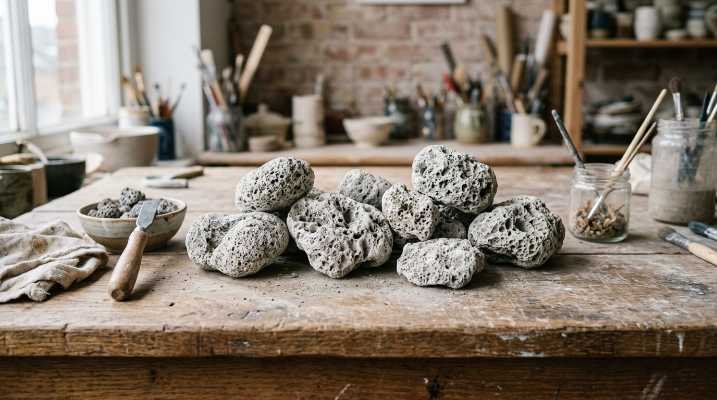
Key Characteristics of Pumice:
- Moderate Weight: A liter of horticultural pumice weighs between 500 and 700 grams (five to seven times heavier than perlite).
- Open Cavity Absorption: The open vesicles of pumice allow water and dissolved nutrients to be absorbed directly into the rock’s structure, acting as a natural moisture buffer.
- Indestructible Durability: Because it remains in its natural rock state, pumice does not compress, crack, or dissolve. It retains its physical shape and structural integrity indefinitely.
- Limited Local Sourcing: Due to its weight, shipping pumice is expensive. It is highly abundant and cheap in volcanic regions (like the western United States), but can be harder to find locally or more expensive in non-volcanic areas.
3. Head-to-Head Comparison: Physical Properties
To understand how these amendments affect your potting soil, look at their technical specifications side-by-side:
| Physical Property | Horticultural Perlite | Horticultural Pumice |
|---|---|---|
| Material Class | Expanded Volcanic Glass | Natural Igneous Rock |
| Bulk Density | ~100 grams per liter (Ultra-lightweight) | ~500 to 700 grams per liter (Moderate weight) |
| Water Retention | Surface-level film only; dries out very quickly | Cavity absorption; holds roughly 2x more water by volume |
| Durability | Brittle; collapses into fine dust in 18–24 months | Indestructible; maintains structure indefinitely |
| Soil Movement | High surface migration; floats and separates during watering | Zero migration; stays anchored and evenly distributed |
| Average pH | Neutral (7.0 to 7.5) | Neutral to slightly alkaline (7.0 to 7.8) |
| Relative Cost | Inexpensive and universally available | Moderately expensive; varies heavily by geographical region |
| Best Uses | Hanging pots, seed starting, cheap DIY soil amendments | Heavy containers, succulents, cacti, bonsai, permanent mixes |
The first time I repotted my top-heavy jade plant in a cactus mix that was mostly perlite, it tipped over three times. I finally replaced some of the perlite with pumice, and the extra weight kept the plant stable. It may seem like a small difference, but it is something you notice in everyday use, not just on paper. Read this guide to know how to handle perlite safely.
4. Why the Real Differences Matter in a Pot
While both materials excel at providing drainage and aeration, their physical differences change how your plants grow over time.
Weight and “Surface Migration” (The Floating Problem)
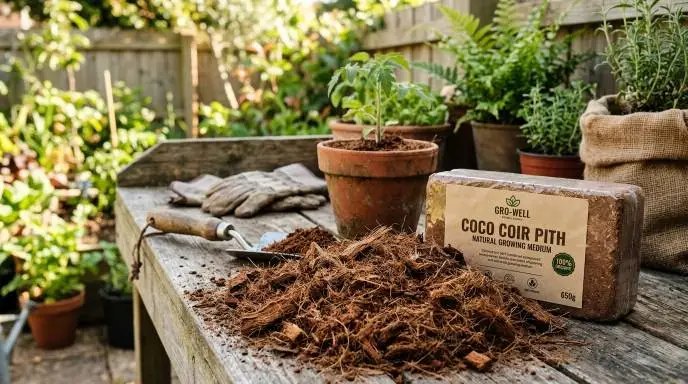
If you top-water a pot amended with perlite, you will quickly notice a major annoyance: the white perlite particles float. Because perlite is lighter than water, repeated watering cycles cause it to separate from the organic peat or coco coir.
Over a single season, the perlite migrates to the surface, forming a thick white crust on top of the pot. Below this crust, the organic soil compacts into a dense, airless, waterlogged layer.
Pumice, being five to seven times heavier, stays exactly where you mix it. It remains evenly distributed throughout the root zone, ensuring that the bottom of the pot receives identical aeration and drainage to the top.
Structural Longevity (The Breakdown Phenomenon)
Soil compaction is the silent killer of potted plants. Perlite is structurally weak. As plant roots grow and exert pressure, and as pots are handled or repotted, the fragile glass walls of expanded perlite collapse.
Within 18 to 24 months, perlite breaks down into a fine, powdery dust. This dust fills the air spaces between soil particles, actually worsening soil compaction and choking off root oxygen.
Pumice is solid rock. It does not compress, crack, or break down under root pressure or environmental changes. It provides the exact same drainage and aeration five years after potting as it did on day one.
Water and Nutrient Management: Surface Film vs. Sponge Cavities
Perlite holds moisture only in the microscopic crevices on its rough outer surface. Water cannot penetrate the sealed glass bubbles. This makes perlite perfect for rapid dry-down cycles, as the surrounding soil dries out extremely fast.
Pumice acts like a mineral sponge. Its open vesicles absorb water directly into the rock, holding roughly twice as much water as perlite by volume. It stores moisture and dissolved nutrients, releasing them slowly back to the roots as the soil dries. This sponge-like behavior keeps the root zone consistently and evenly moist without leaving it waterlogged.
5. Which Amendment Is Best for Your Specific Plants?
To prevent issues like root rot and dehydration, you should match the mineral to your plant’s natural root environment.
Cacti and Succulents: Use Pumice
Desert plants require highly aerated soils that dry down evenly. Pumice is the gold standard here, mixed at 30% to 50% by volume. Its gritty, coarse structure mimics desert soils, and its weight provides crucial counter-ballast to prevent top-heavy, fleshy succulents or tall cacti from tipping over.
Aroids (Monsteras, Philodendrons, Alocasias): Use Pumice (or Both)
Aroids thrive in coarse, chunky potting media that allow their thick, climbing roots to breathe. Pumice is excellent for maintaining these wide macro-pores over several years. However, a hybrid blend of both pumice and coarse perlite works beautifully to keep these large pots from becoming too heavy to move easily. How to make aroid mix learn from this guide.
Hoyas: Use Either (or a 50/50 mix)
Hoyas demand a highly open, free-draining medium. Perlite works well to keep the potting mix light and airy, while pumice provides greater long-term structure. Choose perlite if you grow Hoyas in hanging baskets, and pumice if you grow them in tabletop pots with climbing trellises.
Orchids: Use Pumice
While orchids rely primarily on orchid bark for their chunky structure, adding pumice helps introduce a stable mineral element that holds its shape, anchors the aerial roots, and provides some moisture buffering without rotting like bark eventually does.
Hanging Baskets: Use Perlite
When growing plants in hanging containers, every gram counts. Heavy soil can strain wall brackets, ceiling hooks, and chains. Perlite’s ultra-light weight is unmatched for keeping hanging baskets structurally safe.
Seed Starting and Rooting Cuttings: Use Perlite
For starting seeds or rooting cuttings, mix perlite at 50% volume with peat moss or coco coir. The soft, sterile, highly aerated texture of perlite is exceptionally gentle on delicate, newly forming roots, and its light weight makes transplanting seedlings painless and damage-free.
Bonsai: Use Pumice
Bonsai culture depends on carefully graded, non-degrading mineral particles to maintain precise aeration and drainage over years without repotting. Because perlite breaks down into dust, it is never used in serious bonsai mixes. Coarse pumice is a fundamental ingredient in professional bonsai substrates.
6. How to Substitute and Mix Perlite and Pumice
Can You Substitute One for the Other?
Yes, but with caveats. Because both materials are sterile and pH-neutral, you can make a 1-for-1 swap in a general houseplant mix without causing immediate harm. However, you must monitor the watering frequency and structural stability:
- If you swap perlite in place of pumice, watch out for top-heavy plants tipping over, and be prepared to replace or refresh the soil mix every two years as the perlite degrades.
- If you swap pumice in place of perlite, your pots will be significantly heavier, and the soil will retain slightly more moisture, meaning you may need to water less frequently.
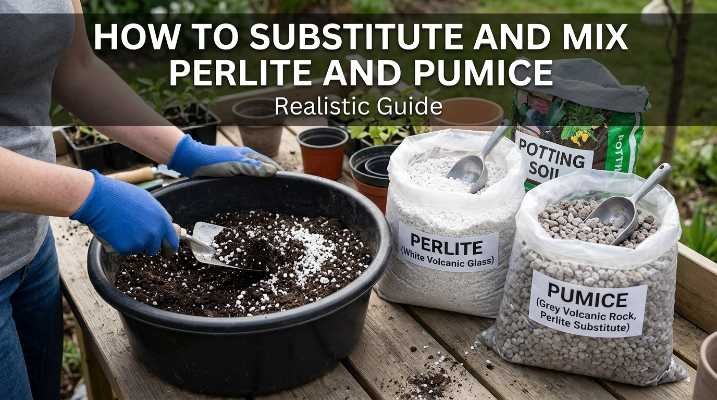
The Hybrid Approach: Mixing Them Together
You do not have to choose just one. Many professional growers mix perlite and pumice together to capture the benefits of both: perlite provides inexpensive, lightweight aeration, while pumice anchors the mix and ensures long-term structure.
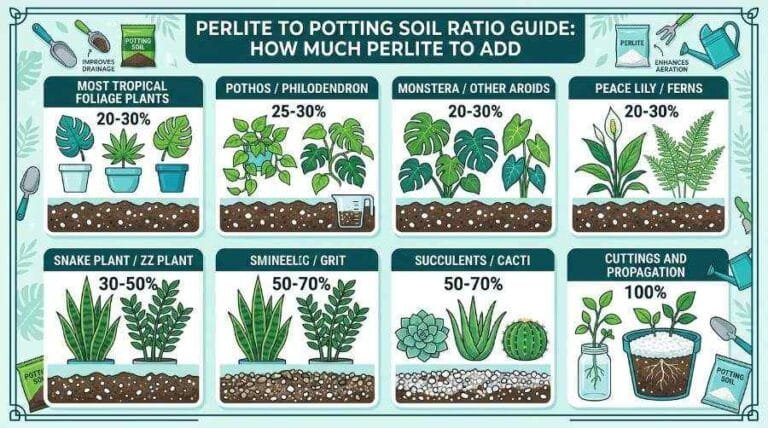
If you don’t use the right ratio, perlite may not work well. Learn the correct ratio in this guide.
Also read our another guide of how to mix perlite step by step.
A Versatile, All-Purpose Houseplant Soil Recipe:
- 60% Base potting mix (peat moss or coco coir)
- 20% Horticultural pumice (medium grade)
- 10% Horticultural perlite (coarse grade)
- 10% Orchid bark (for organic chunkiness)
Note: Always adjust your potting ratios based on your specific microclimate. A plant in a hot, dry, sunny room will need a more moisture-retentive mix than the same plant in a cool, humid, low-light room.
7. Myths vs. Realities: What They Can and Can’t Do
Myth: Adding Perlite or Pumice Automatically Fixes Overwatering
Reality: Neither mineral is a magic cure-all for a bad watering routine. If you water your plants too frequently, grow them in pots without drainage holes, or keep them in low-light conditions, adding drainage minerals will not prevent root rot. You must address the underlying environmental issues and watering habits first.
Myth: Pumice Provides Direct Plant Nutrients
Reality: Pumice is mined volcanic rock, and while it contains trace elements, it is highly stable and does not break down to release nutrients in a bioavailable form for plants. It should never be used as a replacement for high-quality organic fertilizer. Its value is entirely structural and physical, not chemical.
8. Safety and Handling Rules
Both materials require minor safety precautions during handling to protect your health:
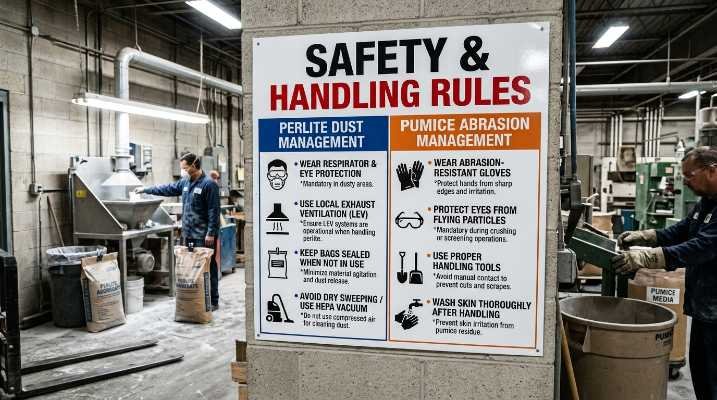
Perlite Dust Management
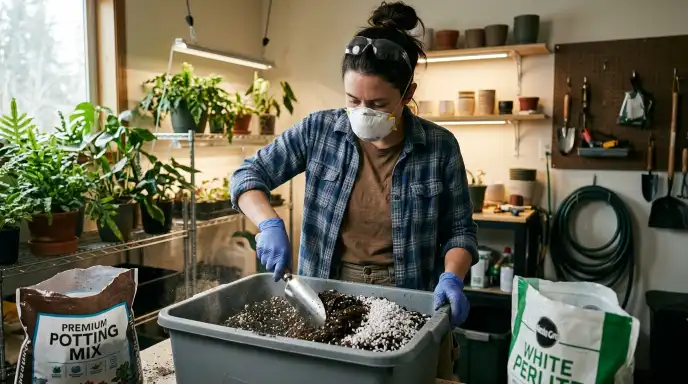
Dry perlite generates a very fine white dust. This dust contains crystalline silica, which can irritate your respiratory tract and eyes if inhaled. Know about perlite inhalation dust, read this guide.
- The Fix: Before pouring or mixing perlite, always open the bag and pour in a small cup of water. Gently shake the bag to moisten the perlite. Moist perlite produces zero airborne dust, making it perfectly safe to handle indoors.
Pumice Abrasion Management
Pumice does not produce highly airborne dust, but it is a coarse, glassy, abrasive rock.
- The Fix: Wear sturdy gardening gloves when mixing large quantities of coarse pumice to protect your hands from scrapes, cuts, and dry skin.
9. Frequently Asked Questions
Why does my perlite turn yellow or brown?
Because perlite has a highly porous outer surface, it acts like a wick. Over time, it absorbs minerals, salts, and organic compounds from your tap water and fertilizers, staining the white particles yellow, brown, or even green (from algae). This is normal and harmless.
Can I reuse perlite or pumice?
Pumice can easily be washed, sterilized with boiling water or a diluted bleach solution, and reused indefinitely. Reusing perlite is much more difficult because it is fragile and likely to crumble into dust when handled or washed.
Does perlite or pumice contain fluoride?
Some gardeners worry that perlite contains fluoride, which can harm sensitive plants like Dracaenas or Spider Plants. While raw perlite contains trace fluorides, horticultural-grade perlite is generally safe, especially if the soil pH is kept neutral. If you are highly concerned about fluoride sensitivity, pumice is a safer, completely fluoride-free alternative.
Why is pumice so hard to find in some local garden stores?
Pumice is heavy and expensive to ship long distances. If you live far from volcanic mining deposits (such as in the eastern US, UK, or parts of Europe), local garden centers may only carry perlite because it is cheaper to transport. In these areas, online specialty nurseries are often the best source for pumice.
The Verdict: Which One Should You Buy?
To make your buying decision as simple as possible, use this checklist:
Buy Perlite If:
- You are on a budget: Perlite is highly economical and widely available.
- Weight is a concern: You want to keep hanging baskets or large, movable planters as lightweight as possible.
- You are propagating cuttings: You need a soft, sterile, highly aerated medium for newly developing roots.
- You are using short-term mixes: The plants will be repotted or shifted within two years anyway.
Buy Pumice If:
- You want maximum durability: You are planting slow-growing specimen plants, cacti, or bonsai that will stay in the same soil for years.
- You hate floating soil: You want a clean, uniform soil mix where the drainage particles stay put.
- You are growing top-heavy plants: You need structural weight to anchor heavy succulents and tall container plants.
- You want a moisture buffer: You want a medium that absorbs water and dissolved fertilizer, releasing them slowly over time.
See another guide to learn about differences between perlite and vermiculite. Soil structure affects plant health, but it’s not the only factor. How to Diagnose Indoor Plant Problems covers pests, diseases, and other common issues.