Most indoor plants need 12 to 16 hours of light a day, but how much of that light needs to be direct, indirect, or artificial depends entirely on the plant. A snake plant will survive fine in a dim corner that would slowly starve a monstera. The real issue isn’t just hours, it’s intensity, and most homes deliver far less of it than people assume.
Here’s the thing nobody tells you when you bring a new plant home: the human eye is a terrible judge of light. A room can look bright to you and still be dramatically underlit for a plant that evolved under a rainforest canopy or open desert sun. That mismatch is the number one reason houseplants stall out, stretch, or slowly decline even when watering and humidity are perfect.
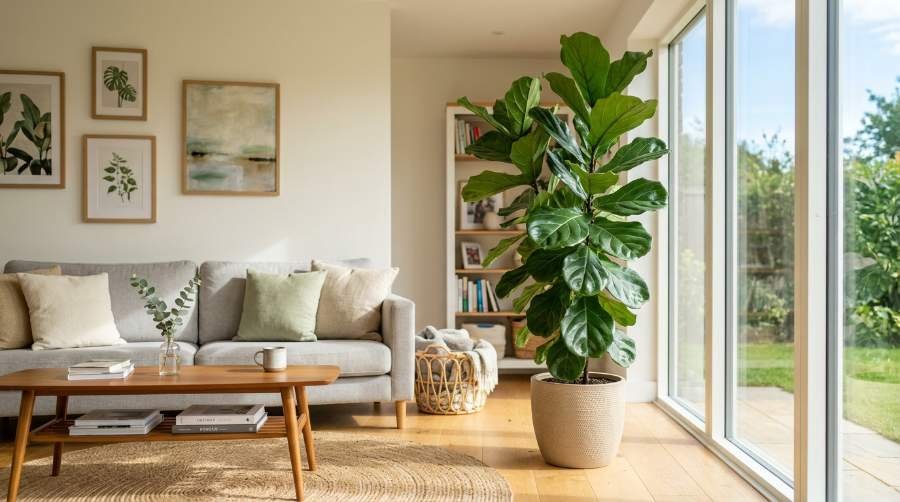
I learned this the hard way with a fiddle leaf fig I kept in what I was sure was a “bright” living room. It dropped leaves for months. Turned out the spot was eight feet from the nearest window, technically low light. Once I moved it two feet closer, new growth came back within weeks.
This guide breaks down exactly how much light your plants need, how to measure it without guessing, and how to fix it when something’s off.
Why Indoor Light Is So Different From Outdoor Light
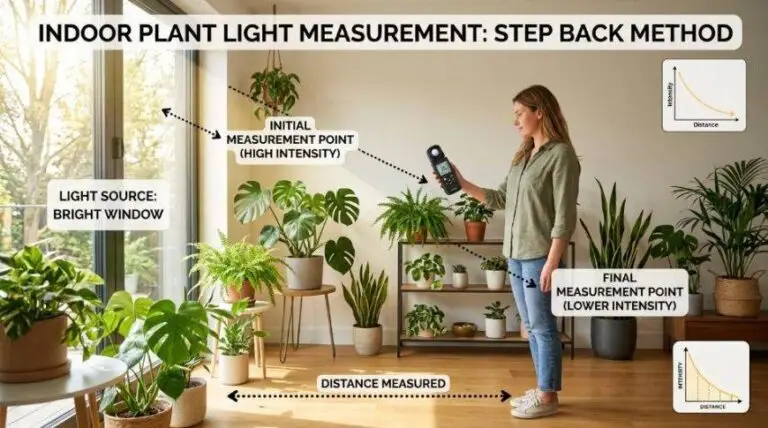
Direct sunlight outdoors ranges from 32,000 to 100,000 lux on a clear day, according to lighting researchers at the University of Minnesota Extension. Step just a few feet back from a window, and that number can drop by 90% or more. Light intensity falls off fast as you move away from its source, a principle physicists call the inverse-square law: double the distance from a light source, and the intensity drops to a quarter of what it was.
This is why “a sunny room” and “bright light for plants” are not the same claim. A room can get direct sun for two hours a day and still register as medium or even low light everywhere except within a few feet of the window. Distance from the glass matters more than most people expect.
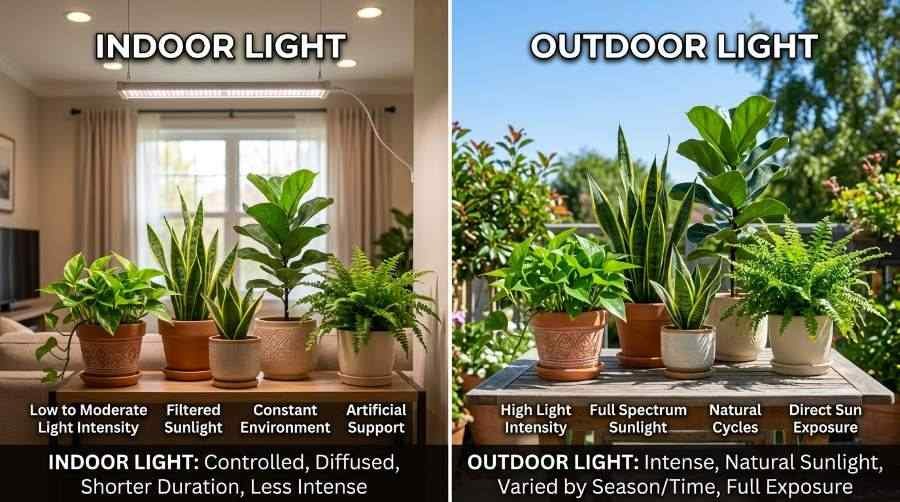
The 4 Types of Indoor Light Levels
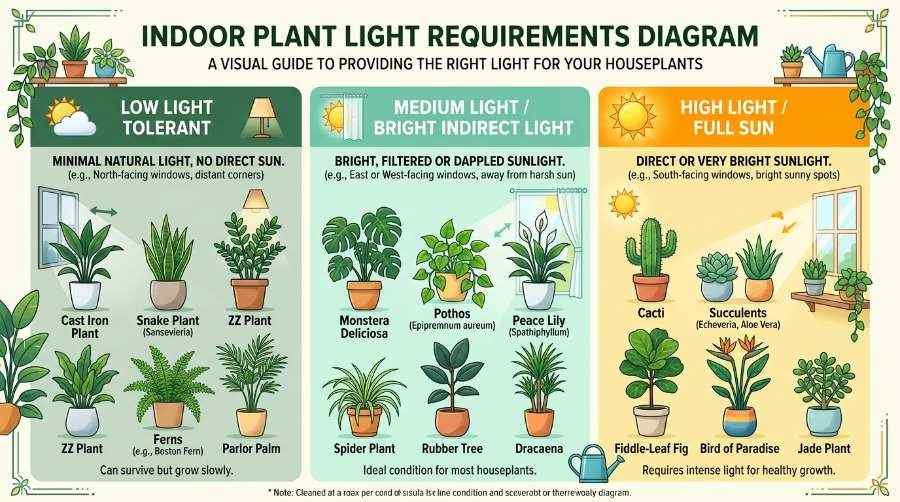
Growers and horticultural extensions typically sort houseplant light into tiers based on lux (a metric unit) or foot-candles (the US equivalent). Here’s how they break down, pulled from horticultural lighting guides and cross-checked against extension office data.
| Light Level | Foot-Candles | Lux | Where You’ll Find It | Example Plants |
|---|---|---|---|---|
| Low Light | 200–500 fc | 1,000–5,000 lux | North-facing windows, interior corners, a few feet from any window | Snake plant, ZZ plant, pothos, peace lily |
| Medium Light | 500–750 fc | 5,000–10,000 lux | East-facing windows, a few feet back from an unshaded window | Spider plant, philodendron, dracaena |
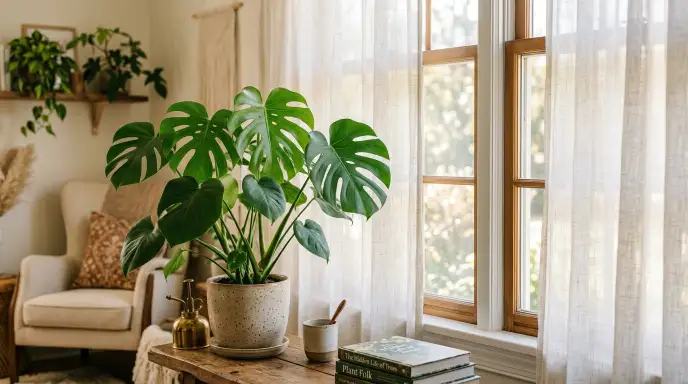
| Bright Indirect | 750–2,000 fc | 10,000–25,000 lux | Near south- or west-facing windows, often behind a sheer curtain | Monstera, rubber tree, fiddle leaf fig |
| Direct Sun | 2,000+ fc | 25,000+ lux | Unfiltered south- or west-facing exposure, several hours of direct rays | Succulents, cacti, citrus trees |
A quick way to sanity-check which tier you’re in: look at the shadow your hand casts on a piece of paper in that spot around midday. A sharp, clearly defined shadow usually means bright or direct light. A soft, fuzzy shadow or no shadow at all usually means low or medium light.
How to Measure Light in Your Home (No Meter Required)
You don’t need to buy anything to get a reasonably accurate read on your home’s light levels.
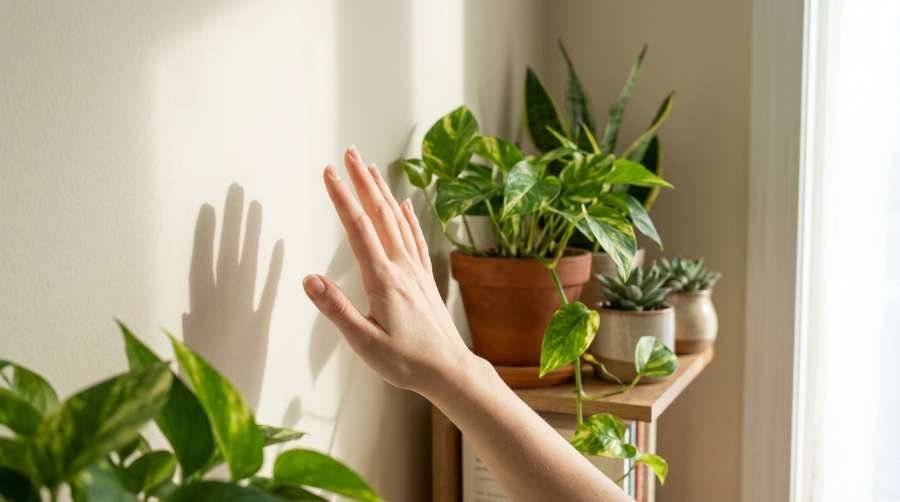
- The shadow test. Hold your hand about a foot above a surface around midday. A crisp shadow edge signals bright light. A blurry or absent shadow signals low light.
- Free lux meter apps. Several free smartphone apps use your phone’s camera sensor to estimate lux. They’re not lab-accurate, phone sensors are calibrated for photography, not horticulture, but they’re consistent enough to compare one spot in your home against another.
- A cheap physical lux meter. If you’re serious about plant collecting or setting up a grow tent, a basic lux meter runs about $15 to $20 and gives a far more reliable number than any app.
Whichever method you use, take the reading where the plant’s leaves actually sit, not from across the room. Light drops off fast with distance, so a reading taken at the windowsill won’t reflect what a plant three feet away is receiving.
Signs Your Plant Is Getting the Wrong Amount of Light
Plants are fairly direct about telling you when the light is off, once you know what to look for. Light-stressed plants are more susceptible to pests like spider mites. Here’s how to identify an infestation.
Signs of too little light:
- Leggy, stretched-out stems reaching toward the nearest window
- New leaves noticeably smaller than older ones
- Slow or stalled growth, even during the growing season
- Loss of variegation on plants that are supposed to have patterned leaves
- Leaning hard and consistently in one direction
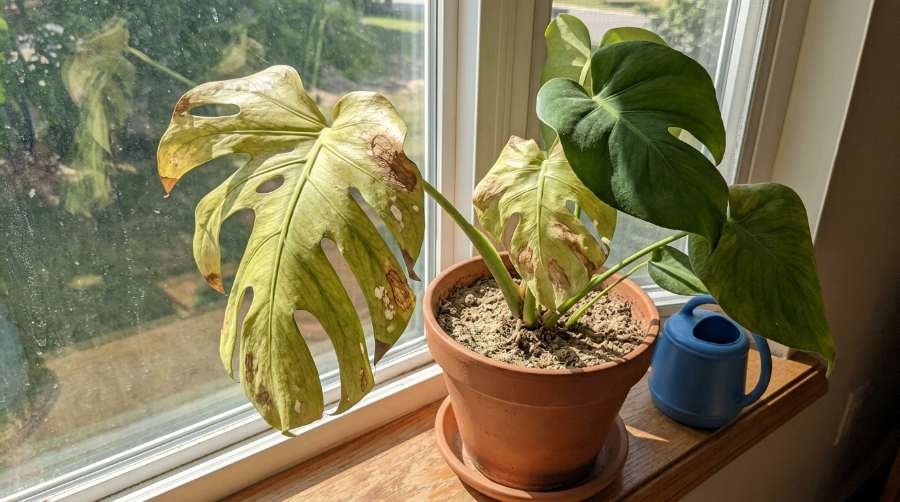
Signs of too much light:
- Scorched or bleached patches on leaves facing the sun
- Crispy, brown edges that weren’t there before
- Faded or washed-out leaf color
- Drooping around midday even when the soil is moist
Learn about heat stress in houseplants from this guide.
| Symptom | Likely Cause |
|---|---|
| Small, sparse new leaves | Too little light |
| Bleached or pale patches | Too much direct sun |
| Leaning toward window | Not enough ambient light |
| Crispy brown edges | Sunburn or low humidity, check both |
| Loss of leaf pattern/variegation | Insufficient light |
Light Needs by Common Houseplant Type
Use this as a quick reference for matching plants to the spots you already have.
| Plant | Light Tier Needed | Tolerates Low Light? | Safe in Direct Sun? |
|---|---|---|---|
| Snake plant | Low to bright | Yes | Yes, tolerates it |
| ZZ plant | Low to medium | Yes | No |
| Pothos | Low to bright | Yes | No |
| Peace lily | Low to medium | Yes | No |
| Spider plant | Medium to bright | Somewhat | No |
| Philodendron | Medium to bright | Somewhat | No |
| Monstera | Bright indirect | No | No, scorches easily |
| Rubber tree | Bright indirect | No | Tolerates morning sun |
| Fiddle leaf fig | Bright indirect | No | No |
| Succulents (general) | Bright to direct | No | Yes |
| Cacti | Direct sun | No | Yes |
| Citrus (indoor) | Direct sun | No | Yes |
| Fern (most types) | Low to medium | Yes | No |
| Dracaena | Low to medium | Yes | No |
| Aloe vera | Bright indirect to direct | No | Yes, once acclimated |
Using Grow Lights for Indoor Plants
When a home doesn’t have enough natural light for what you want to grow, artificial lighting can fill the gap.
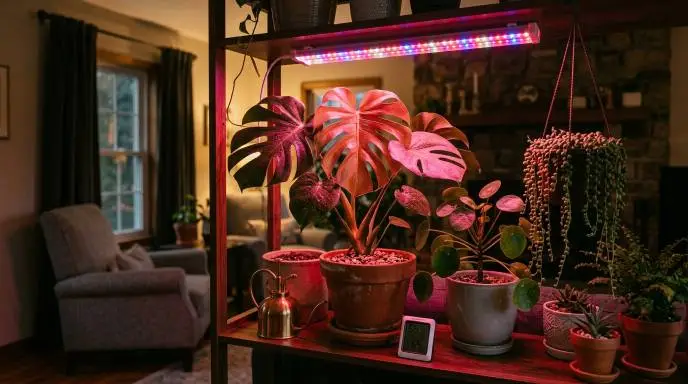
- Duration: Run grow lights for 12 to 16 hours a day. A plug-in timer keeps this consistent, which matters more than hitting an exact hour count every single day.
- Distance: Position LED or fluorescent grow lights 6 to 24 inches above the top of the plant’s canopy. LEDs run cooler and can sit closer without risk of heat damage; fluorescents may need a bit more distance.
- Bulb type: Choose full-spectrum white LED grow lights over regular household bulbs. Standard bulbs are tuned for human vision and don’t emit enough of the red and blue wavelengths plants actually use for photosynthesis.
Grow lights work best as a supplement to whatever natural light a space already gets, not a total replacement, unless you’re growing in a windowless room by design. Learn about the best grow lights from this guide.
Does Light Need Change by Season?
Yes, and this is one of the most overlooked reasons plants that were thriving in summer start struggling in winter.
As days shorten and the sun’s angle drops in the Northern Hemisphere, a spot that qualified as medium light in July can quietly become low light by December. The sun simply isn’t reaching as far into the room, and there are fewer daylight hours overall. Readers in the Southern Hemisphere should flip this logic, their shorter, lower-angle season falls around June through August.
Two practical responses to this shift:
- Move sun-loving plants closer to the brightest window available during the darker months.
- Supplement with a grow light on a timer from roughly October through February if natural light is consistently falling short.
Common Light Mistakes to Avoid
- Judging light by eye instead of measuring it. Human vision adjusts automatically to dim rooms, which makes almost every space look brighter than it actually is to a plant.
- Placing a sun-loving plant too far from the only bright window. A few feet of distance can shift a plant from the light tier it needs into one it can’t thrive in.
- Moving a plant into direct sun too fast. Plants need to be acclimated gradually over one to two weeks, or their leaves can scorch even if direct sun is technically what they want long term.
- Assuming more light fixes every growth problem. Slow growth is often blamed on light when the real cause is being root-bound or a nutrient deficiency. Rule those out before rearranging your whole plant shelf.
Frequently Asked Questions
How do I know if my plant is getting enough light?
Check for steady new growth, leaf size consistent with older leaves, and no stretching toward the window. Stalled growth or legginess usually points to insufficient light.
Can houseplants survive with no natural light at all?
A small number of very low-light-tolerant plants, like ZZ plants and pothos, can survive for extended periods under artificial light alone, but “survive” isn’t the same as thriving. Most plants need at least some natural or supplemental light to grow well long-term.
Is morning light or afternoon light better for plants?
Morning sun is generally gentler and less likely to scorch leaves, since afternoon sun tends to be more intense and comes with more heat. East-facing windows are often a sweet spot for plants that want bright light without the harshness of direct afternoon sun.
Do all plants really need 12 hours of light a day?
Most do best somewhere in the 12 to 16 hour range, mimicking natural day length, but the intensity of that light matters just as much as the duration. A low-light plant getting 14 hours of dim light is still in the right zone; a sun-loving plant getting 14 hours of dim light is not.
Bottom Line:
Matching your plant to the right light tier, checking it against a real measurement rather than a guess, and watching for the early symptoms above will solve the majority of houseplant light problems before they become serious. If you’re working with a genuinely dark space, a roundup of the best low-light plants or a grow light setup guide is the next place to look.
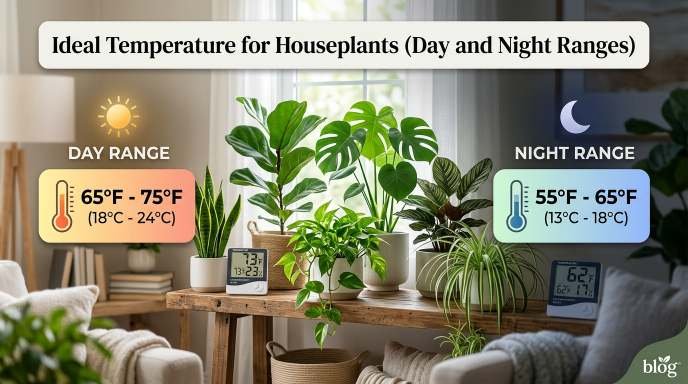
Light is only one part of keeping houseplants healthy. If you’re new to indoor plant care, our Complete Beginner’s Guide to Indoor Plant Care covers watering, humidity, soil, temperature, fertilizing, and other essential care practices.