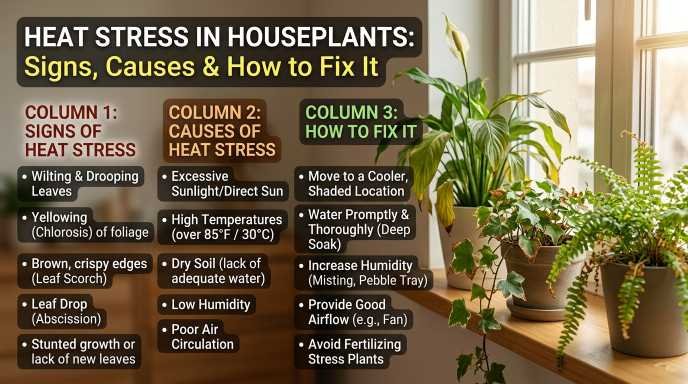
Heat stress in houseplants occurs when excessive heat causes the plant to lose water faster than its roots can replace it. Common signs include wilting, curled or rolled leaves, crispy brown edges, scorched or bleached foliage, leaf drop, and stalled growth.
The quickest way to help a heat-stressed houseplant is to reduce intense heat and direct sunlight, check the soil before watering, and restore a stable growing environment. Do not automatically add more water just because the leaves are drooping; heat stress, underwatering, overwatering, and sunburn can produce similar symptoms. Learn exactly how to tell overwatering and underwatering apart with our side-by-side guide
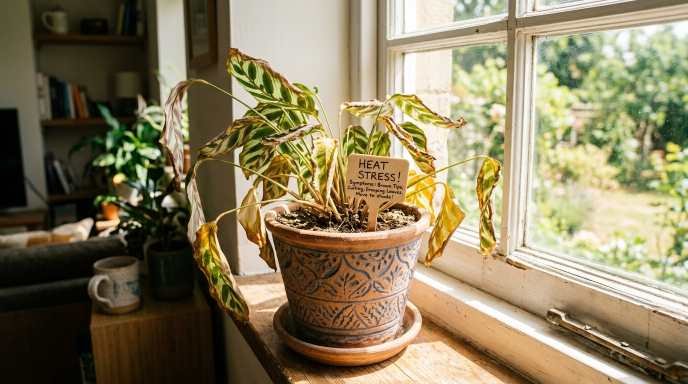
What Is Heat Stress in Houseplants?
Heat stress is a physiological response that occurs when high temperatures interfere with a plant’s ability to maintain normal water balance and growth.
Plants continuously lose water through transpiration, which occurs through microscopic openings called stomata in their leaves. When temperatures rise, water loss can accelerate. If the roots cannot replace that water quickly enough, leaves may wilt, curl, or develop dry and damaged tissue.
High temperatures can also slow photosynthesis and other normal plant processes. Extension guidance notes that many plants grow best between about 59°F and 86°F (15°C–30°C), while sustained temperatures above 90°F (32°C) can slow growth and cause heat stress in many plants.
For houseplants, however, temperature alone does not determine whether a plant will become stressed. A plant beside a hot, sunny window may experience considerably more heat and light exposure than another plant in the same room. Learn about summer plant care tips from this guide. Heat-stressed plants are magnets for spider mites; learn to treat and prevent spider mites.
How Hot Is Too Hot for Houseplants?
There is no single temperature that is too hot for every houseplant. From our ideal temperature for houseplants, learn about temperature.
A useful warning point is around 85–90°F (29–32°C) when temperatures remain elevated for an extended period, particularly if the plant is also exposed to direct sunlight, dry air, or dry soil.
But this should not be treated as a universal cutoff.
A tropical plant accustomed to warm conditions may tolerate heat better than a plant that prefers cooler, stable conditions. Exposure duration also matters: several hours of warmth is very different from several consecutive days of extreme heat.
When assessing heat stress, consider:
- Temperature: How hot is the room or plant’s immediate environment?
- Duration: How long has the heat lasted?
- Light: Is the plant receiving strong direct sunlight?
- Humidity: Is the surrounding air unusually dry?
- Soil: Is the root zone dry, adequately moist, or waterlogged?
- Airflow: Is hot or dry air blowing directly onto the foliage?
- Species: Does the plant naturally tolerate warm conditions?
This whole-environment approach is more reliable than diagnosing heat stress from temperature alone.
Signs of Heat Stress in Houseplants
1. Wilting During Hot Conditions
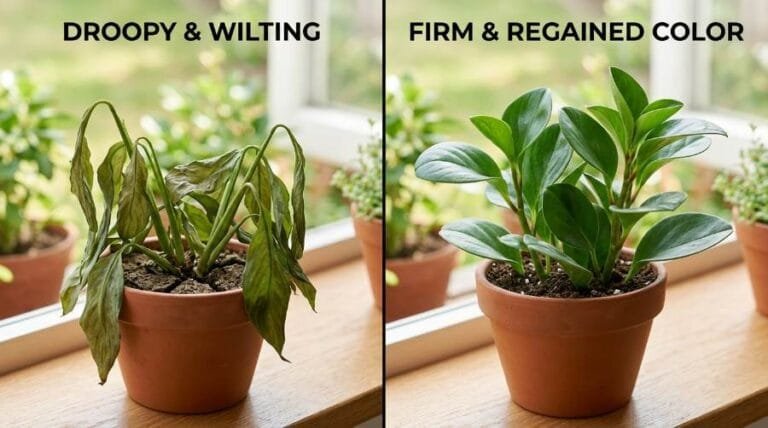
Wilting is one of the most recognizable signs of heat stress. Sunburned leaves are a common sign of heat stress. Learn exactly how to fix a sunburned plant and help it recover.
When leaves lose water faster than the roots can replace it, they lose the internal pressure that keeps them firm.
One useful clue is timing. If a plant repeatedly wilts during the hottest part of the day and becomes firmer again in the evening or early morning, heat stress is a strong possibility.
However, wilting can also result from underwatering or root damage caused by excessive moisture.
That is why the soil should be checked before watering.
2. Curling or Rolling Leaves
Heat-stressed plants may curl or roll their leaves to reduce exposed surface area and limit water loss.
This response is particularly useful as a diagnostic clue when leaf curling appears during a period of unusually high temperature.
If the curling begins suddenly after moving a plant closer to a sunny window, investigate both heat stress and excessive light.
3. Brown or Crispy Leaf Edges
Brown, dry edges can occur when foliage loses moisture faster than the plant can replace it.
Heat is only one possible cause.
Low humidity, underwatering, root problems, excessive fertilizer salts, and intense light can produce similar symptoms. The surrounding conditions therefore matter more than the brown edge itself. Discover other culprits for crispy leaves beyond just heat stress.
4. Scorched or Bleached Leaves
Scorched, bleached, or brown patches can develop when intense heat and sunlight damage exposed foliage.
This is particularly common when a plant sits directly against a bright window or is suddenly moved from lower light into strong sunlight.
Leaf scorch can be permanent, so preventing additional exposure is more important than trying to repair already-damaged tissue.
5. Leaf Drop
Severe heat stress can cause a plant to drop leaves.
A plant may shed foliage when it cannot maintain adequate water supply to all of its leaves.
Sudden leaf drop should not automatically be blamed on heat, however. Rapid changes in light, watering problems, root damage, pests, and other environmental stresses can produce the same response.
6. Stalled Growth
Heat-stressed plants may temporarily stop producing new growth.
As temperatures rise beyond a plant’s preferred range, photosynthesis can become less efficient while respiration continues to consume stored resources. Prolonged extreme heat can therefore reduce growth and weaken the plant. Not sure if your plant’s symptoms are from heat stress or something else? Use our complete symptom diagnosis guide to identify the root cause.
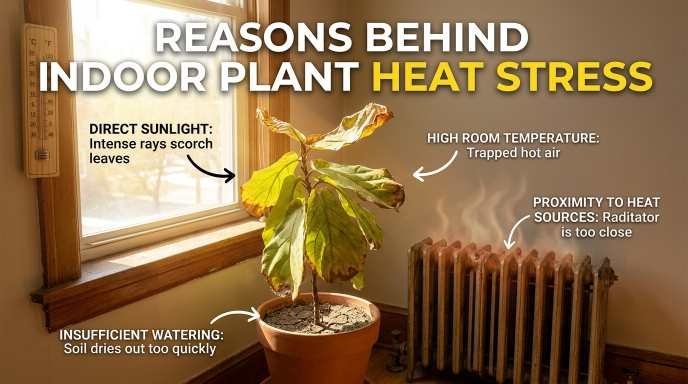
What Causes Heat Stress in Indoor Plants?
Direct Sunlight Through a Window
A sunny window can create a much hotter microclimate than the surrounding room.
This is especially important during strong afternoon sunlight. A plant that tolerates bright indirect light may struggle when its leaves receive several hours of intense direct sun through glass.
The combination of heat + direct radiation + rapid water loss can be much more damaging than room temperature alone.
High Indoor Temperatures
Extended periods of high temperature increase the plant’s water demand.
If the temperature remains elevated for days, the plant may not have enough opportunity to recover between periods of high water loss.
This is why a short warm afternoon may cause temporary wilting while a prolonged heat wave can produce leaf damage and growth problems.
Low Humidity
Dry air can increase moisture loss from foliage.
Humidity is especially important for tropical houseplants that naturally grow in environments with moist air.
Low humidity does not automatically mean a plant is suffering from heat stress, but high temperature combined with low humidity can increase the rate at which foliage loses moisture. Learn how to increase humidity from this guide.
Dry Soil
Heat and drought frequently occur together.
When temperatures rise, plants need more available water. If the potting mix is already dry, the roots may not be able to supply enough moisture to replace what the leaves are losing.
This can turn temporary heat stress into more serious dehydration.
Poor Environmental Conditions
Heat stress rarely occurs in isolation.
Light intensity, soil moisture, humidity, temperature, airflow, and fertilizer conditions can interact with one another. Iowa State Extension specifically recommends examining the complete growing environment because multiple factors often contribute to houseplant problems.
Heat Stress vs. Underwatering vs. Sunburn
These problems can look remarkably similar, so diagnosis should focus on the pattern of symptoms and environmental conditions, not one symptom alone.
| Symptom or Clue | Heat Stress | Underwatering | Sunburn |
|---|---|---|---|
| Primary cause | Excessive heat and accelerated water loss | Insufficient moisture available to roots | Excessive direct sunlight |
| Soil condition | May be dry, normal, or even moist | Usually noticeably dry | Can be either dry or moist |
| Wilting | Common, especially during hot periods | Very common | Usually not the main symptom |
| Leaf curling | Common | Possible | Less characteristic |
| Brown crispy edges | Common | Common | Possible |
| Bleached patches | Possible, especially with intense light | Uncommon | Common |
| Scorched areas | Possible | Uncommon | Common |
| Where damage appears | Can affect much of the plant | Often widespread | Frequently strongest on sun-facing leaves |
| Typical trigger | Heat wave, hot room, hot window | Missed watering or rapid soil drying | Sudden or excessive exposure to strong light |
| Best first check | Temperature, light, humidity, and soil | Root-zone moisture | Light exposure and plant location |
| First response | Reduce heat and intense light | Water if the root zone is genuinely dry | Reduce direct sunlight |
| Can they occur together? | Yes | Yes | Yes |
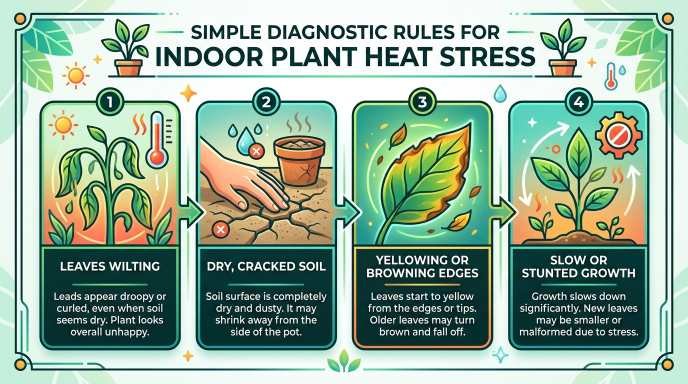
A simple diagnostic rule
If the plant wilts mainly during the hottest part of the day but the soil is still moist, heat stress becomes more likely.
If the soil is genuinely dry and the plant improves after thorough watering, underwatering is more likely.
If brown or bleached patches appear mainly on the leaves facing a bright window, excessive sunlight or sunburn deserves closer attention.
Several problems can occur simultaneously. A plant beside a hot window may experience heat stress, sunburn, and faster soil drying at the same time. Learn about the best window direction from this guide.
Heat Stress vs. Sunburn: What’s the Difference?
Heat stress and sunburn are related but different.
Heat stress is primarily a response to excessive temperature and the resulting water and physiological stress.
Sunburn is direct tissue damage caused by excessive light exposure.
For example, a plant positioned against a hot south-facing window may experience both problems. Its leaves are exposed to intense radiation while the temperature around the foliage rises.
A useful clue is the distribution of damage. If damage is concentrated on the window-facing side, excessive light is more likely to be contributing.
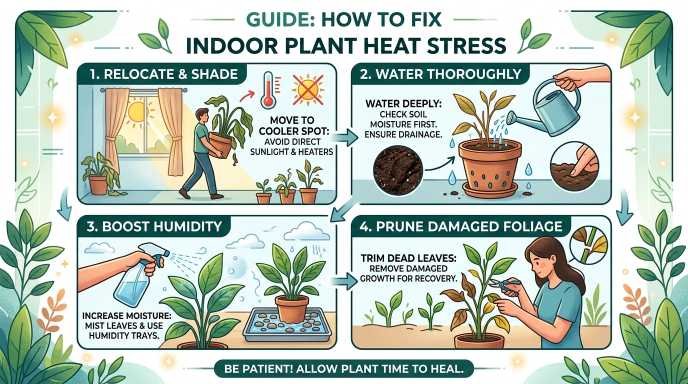
How to Fix Heat Stress in a Houseplant
1. Move the Plant Away From Intense Direct Sun
This is often the quickest environmental adjustment.
Move the plant away from hot glass or intense afternoon sunlight and place it somewhere with appropriate bright indirect or filtered light.
Do not move every heat-stressed plant into a dark room. The goal is to reduce excessive heat and radiation without creating a severe lack-of-light problem.
2. Check the Soil Before Watering
Never use wilting alone as a reason to water.
Check the moisture in the root zone. Learn about the best moisture meter to check the moisture from this article.
If the soil is dry:
Water thoroughly until the root zone is evenly moistened and excess water can drain from the pot.
If the soil is already wet:
Do not keep adding water.
Overly wet soil can damage roots, and damaged roots cannot supply water efficiently to foliage. This can cause wilting even though the potting mix is wet.
3. Restore Appropriate Humidity
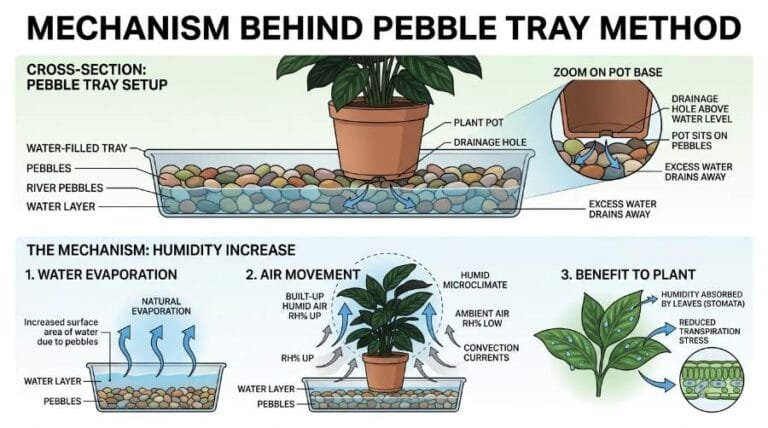
If the room is hot and dry, increasing humidity can help some tropical houseplants reduce excessive moisture loss.
A humidifier is generally more consistent than occasional misting. Want to know about a humidifier? Then read our article Best Humidifier for Plants.
However, do not assume that maximum humidity is always better. Match humidity to the plant’s needs and maintain reasonable air circulation.
4. Improve Gentle Air Circulation
Good air movement helps prevent stagnant conditions.
But avoid placing a powerful fan directly against the foliage for long periods. The goal is gentle room-wide circulation, not continuous strong airflow across the leaves.
5. Use Temporary Shade
If moving the plant is impossible, filter intense sunlight with:
- Curtains
- Blinds
- Sheer window coverings
- Temporary shade
This can be particularly helpful during the hottest afternoon hours.
When plants are heavily shaded for long periods, monitor their light levels so they do not become excessively stretched or weak.
6. Pause Fertilizing During Severe Heat
Do not try to force a stressed plant to grow faster.
During intense heat, wait for conditions to stabilize before applying fertilizer. Extension guidance specifically recommends delaying fertilization during extreme heat because stimulating new growth is not ideal when plants are already under environmental stress. Know the best time of year to fertilize plants from this guide.
7. Avoid Aggressive Pruning
Brown leaves will not become green again, but immediately removing large amounts of foliage is not always necessary.
Allow the plant to stabilize first.
Once conditions improve, remove completely dead or severely damaged leaves using clean pruning tools. Also learn about the best gardening tool kits from this article.
What Not to Do During Heat Stress
Don’t keep watering wet soil
Wilting does not always mean the plant is thirsty. Learn about a watering schedule in a heatwave from this guide. Also learn about the connection between root rot and heat stress in this guide.
Don’t place the plant in complete darkness
Reduce excessive light rather than eliminating light.
Don’t blast the plant with a strong fan
Continuous strong airflow can increase moisture loss.
Don’t fertilize heavily
Wait until the plant is actively recovering. Read our how-to fertilize plants to learn about fertilizing methods.
Don’t spray pesticides or other treatments casually during extreme heat
Some chemical treatments can damage foliage when temperatures are high. Always follow the product label, especially regarding temperature restrictions. Oregon State Extension notes that some plant-protection products can injure plants during high temperatures.
Don’t assume every brown leaf is heat damage
Brown leaves can result from underwatering, overwatering, low humidity, excessive light, fertilizer problems, pests, disease, or root damage.
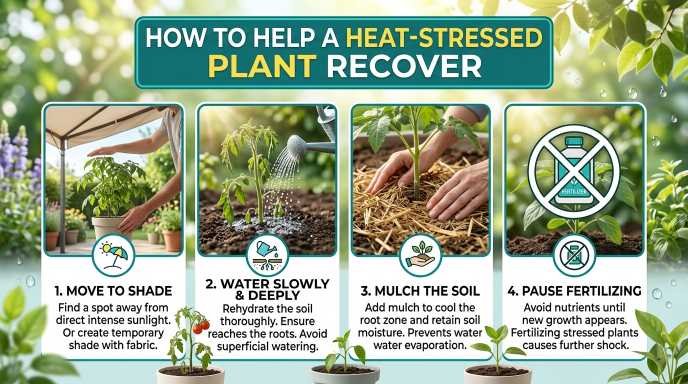
How to Help a Heat-Stressed Plant Recover
Once the main source of stress has been corrected, give the plant time to recover.
Maintain:
- Appropriate temperature
- Suitable light
- Consistent soil moisture
- Appropriate humidity
- Gentle air circulation
Do not repeatedly move the plant from one extreme environment to another.
Signs of recovery include:
- Leaves becoming firmer
- Less frequent wilting
- Normal leaf positioning
- No new scorch marks
- Stable soil moisture
- Healthy new growth
Existing brown or scorched tissue will not turn green again. Recovery is measured by the health of the remaining living tissue and new growth, not by the damaged leaves returning to their original appearance.
Which Houseplants Are More Sensitive to Heat?
Heat tolerance varies significantly between species.
Some tropical houseplants tolerate warm temperatures but still struggle when heat is combined with intense sunlight or dry air.
Plants that deserve closer monitoring during hot weather include:
- Calatheas
- Marantas
- Ferns
- Fittonias
- Some begonias
- Peace lilies
- Other moisture-sensitive tropical plants
Recent University of Minnesota guidance also identifies plants such as Calathea and Fittonia as sensitive species that often prefer stable indoor conditions rather than intense summer exposure.
Always prioritize the care requirements of the individual species.
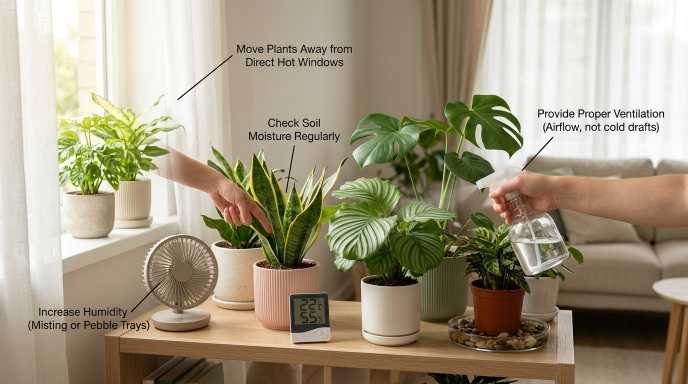
How to Prevent Heat Stress in Indoor Plants
Prevention is easier than recovery.
During periods of hot weather:
- Keep sensitive plants away from hot window glass.
- Filter strong afternoon sunlight.
- Check soil moisture more frequently.
- Keep indoor temperatures reasonably stable.
- Maintain appropriate humidity.
- Keep plants away from hot HVAC or appliance airflow.
- Use gentle air circulation.
- Monitor plants in bright windows every day during heat waves.
- Avoid sudden changes in light exposure.
- Group plants according to similar environmental requirements.
The goal is to control the combination of temperature, light, water availability, and humidity rather than focusing on temperature alone.
A Real Heat-Stress Problem I Experienced
One summer, I noticed one of my houseplants wilted almost every afternoon even though I was watering it regularly. I first thought it needed more water, but the soil was already moist. I moved it a few feet away from the sunny window and improved the room’s airflow. Within several days, the afternoon wilting stopped, and the leaves became firmer. The problem wasn’t underwatering; it was excessive heat and intense window light.
When Is Heat Stress Serious?
Take action quickly when you notice:
- Rapid or persistent wilting
- Widespread leaf curling
- Extensive scorching
- Sudden leaf drop
- Rapid deterioration during a heat wave
- Symptoms continuing after the plant is moved to a cooler location
Investigate further if:
- Soil remains constantly wet
- Roots are brown, soft, or mushy
- Stems become soft or discolored
- New growth continues dying
- The plant keeps declining after temperature and watering are corrected
These signs can indicate root damage, pests, disease, or another environmental problem rather than heat stress alone.
Frequently Asked Questions
Can houseplants get heat stress indoors?
Yes. Indoor plants can suffer heat stress when high temperatures combine with direct sunlight, dry air, dry soil, or other unfavorable conditions.
What does heat stress look like on houseplant leaves?
Common signs include wilting, curling or rolling leaves, crispy brown edges, scorched or bleached patches, leaf drop, and slowed growth.
Should I water a heat-stressed plant?
Check the soil first. If the root zone is dry, water thoroughly and allow excess water to drain. If the soil is already wet, investigate temperature, light, humidity, and root health before watering again.
Should I mist a heat-stressed houseplant?
Misting may provide only temporary humidity. For plants that need higher humidity, a humidifier generally provides more consistent environmental control. Avoid keeping foliage constantly wet in poorly ventilated conditions.
Can a heat-stressed plant recover?
Yes. Many plants recover when excessive heat, light, and water stress are corrected early. Damaged leaves may remain brown, but healthy roots, stems, and growing points can produce new growth.
What temperature is too hot for houseplants?
There is no universal cutoff. Many plants should be monitored carefully when temperatures remain around 85–90°F (29–32°C), particularly when direct sunlight, low humidity, or dry soil are also present. Plant species and exposure duration matter.
Can heat stress and underwatering happen together?
Yes. High temperatures increase water demand while dry soil limits water availability. A plant can therefore experience both heat stress and dehydration at the same time.
Final Takeaway
Heat stress in houseplants is rarely caused by temperature alone. It usually develops from a combination of high heat, intense light, rapid water loss, dry soil, low humidity, or other environmental stressors.
The best response is to reduce excessive heat and direct sunlight first, then check the soil before watering. Restore appropriate moisture, humidity, and airflow without making several drastic changes at once.
Most importantly, diagnose the environment rather than treating a single symptom. Wilting, brown edges, curling leaves, and leaf drop can have several causes. Identifying what changed around the plant is usually the fastest route to the correct solution.