Extreme summer heat can be hard on houseplants, even when they are growing indoors. Hot windows, intense sunlight, faster soil evaporation, low humidity and air conditioning can cause plants to wilt, develop brown leaves, curl their foliage or stop growing. Getting watering right is step one. Here’s how to spot other issues. If your plant is showing these signs, our symptom-by-symptom plant care guide can help you pinpoint the exact problem.
The best way to care for houseplants during extreme heat is to control their environment rather than simply watering more. Check the soil before watering, protect sensitive plants from harsh afternoon sunlight, keep them away from hot glass and direct AC airflow, maintain suitable humidity, and provide gentle air circulation.
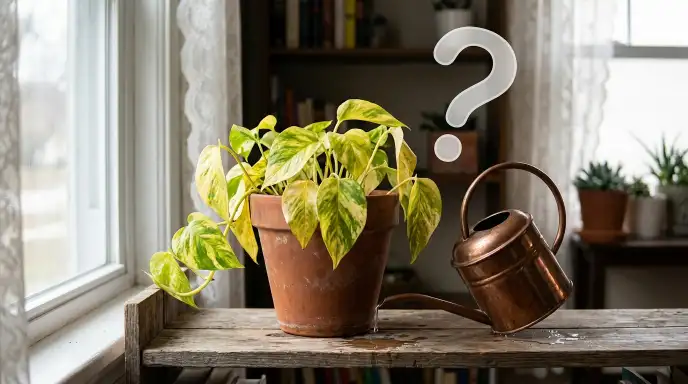
Most importantly, don’t assume every wilted plant is thirsty. A plant can wilt because of heat stress even when its soil is wet.
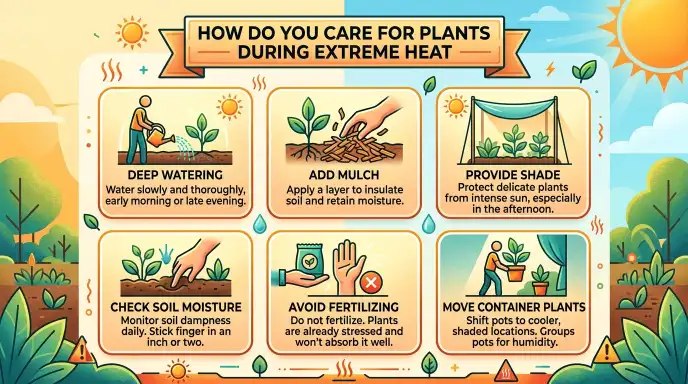
Quick Answer: How Do You Care for Plants During Extreme Heat?
During extreme heat, check your plants more frequently but avoid automatic daily watering. Water thoroughly when the soil has actually dried enough for that plant, protect sensitive foliage from intense afternoon sunlight, move plants away from hot windows, maintain suitable humidity, and keep air circulating gently. Learn how to water in heatwave from this guide.
Avoid heavy pruning, repotting and fertilizing severely heat-stressed plants until conditions improve.
For outdoor containers, temporary shade and deep watering can help reduce heat and moisture stress. For indoor plants, controlling window heat and dry air is often more important than increasing watering frequency.
Why Extreme Heat Causes Plant Problems
Summer heat changes several parts of a plant’s growing environment at once.
As temperature rises, plants can lose water through their leaves more quickly. At the same time, moisture can evaporate from the potting mix faster. Learn the ideal temperature for plants from this guide.
This creates greater demand on the roots.
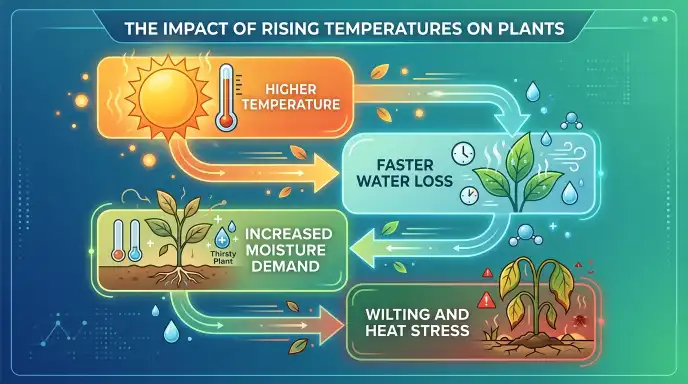
The basic process is:
Higher temperature → faster water loss → increased moisture demand → wilting and heat stress
Intense sunlight can create another problem. A sunny windowsill may become considerably hotter than the rest of the room, especially during the afternoon.
This means a plant can be sitting in a room that feels comfortable to you while experiencing much higher temperatures near the leaves and pot. Learn the best window direction for plants in this guide.
Recent summer-care guidance also emphasizes that hot-weather plant care is not simply a matter of adding more water. Soil moisture, sunlight, humidity, airflow and plant location all need to be considered together.
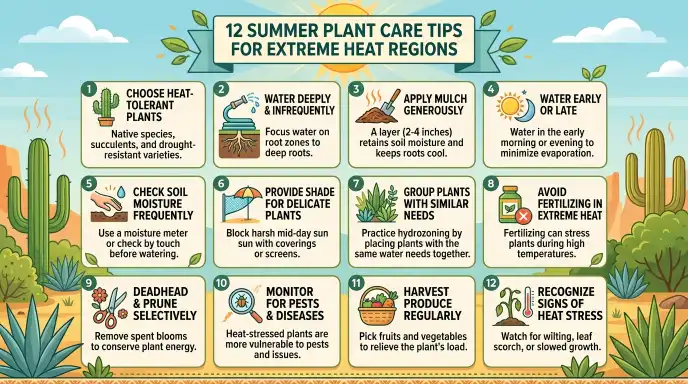
12 Summer Plant Care Tips for Extreme Heat Regions
1. Move Sensitive Plants Away From Hot Windows
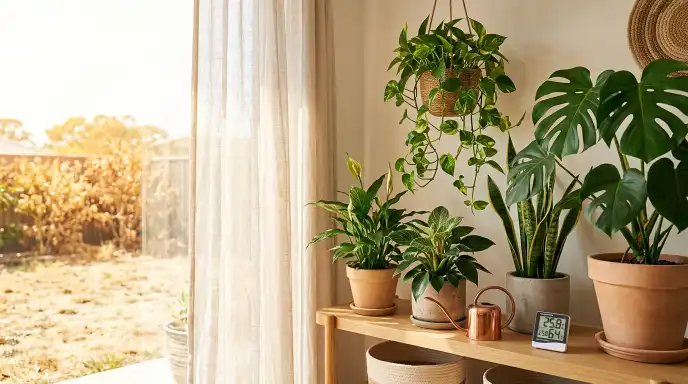
A bright window can become one of the hottest locations in your home during summer.
The combination of direct sunlight and heated glass can raise leaf temperatures and cause scorching.
Look for:
- Brown or crispy patches
- Bleached areas
- Curling leaves
- Sudden drooping
- Faded foliage
- Damage concentrated on the side facing the window
You don’t necessarily need to move the plant into a dark room.
Instead, try moving it several feet away from the glass or placing a sheer curtain between the plant and direct afternoon sunlight.
Best approach
Bright indirect light + filtered afternoon sun is often safer than intense direct sunlight during extreme heat. Know what is bright indirect light from this guide.
This is especially important for plants that naturally prefer filtered or indirect light.
2. Check the Soil Before You Water
One of the biggest summer plant-care mistakes is following a fixed watering schedule.
“It’s hot, so I should water every day” sounds logical, but it can quickly lead to overwatering.
Different plants dry at different speeds because of differences in:
- Pot size
- Soil composition
- Plant size
- Root density
- Pot material
- Sun exposure
- Air movement
- Humidity
Before watering, check the soil.
A simple check
Push your finger into the potting mix and feel below the surface.
You can also lift the pot. A container that has become noticeably lighter is often a useful sign that moisture has been lost. Know how to measure soil moisture without a meter.
For larger containers, a soil moisture meter can provide another reference point.
Water according to soil moisture and plant requirements—not the calendar.
How Often Should You Water Plants in Extreme Heat?
There is no single watering schedule that works for every houseplant.
A small plant in a terracotta pot may dry out much faster than a large plant in a plastic container.
Use this guide instead:
| Situation | What to do |
|---|---|
| Soil still moist | Wait and check again |
| Soil sufficiently dry | Water thoroughly |
| Small container | Check frequently |
| Hanging basket | Check very frequently |
| Hot sunny window | Monitor more often |
| Large container | Check moisture before watering |
| Wilted plant with dry soil | Water thoroughly |
| Wilted plant with wet soil | Investigate before watering again |
During extreme heat, container plants may need substantially more frequent monitoring because moisture can disappear quickly. Extension guidance recommends checking soil moisture and watering deeply rather than relying on an automatic schedule.
3. Water Thoroughly When the Plant Needs It
When a plant needs water, don’t simply add a small amount to the surface.
For most container plants, water slowly and thoroughly until some water begins draining from the bottom. For this condition self watering pots will help. Know about the best self watering pots from this guide.
This helps wet the root zone rather than only the upper layer of soil.
Watering tips for extreme heat
- Check the soil first.
- Water slowly.
- Saturate the root zone.
- Allow excess water to drain.
- Empty standing water from saucers when appropriate.
- Check smaller pots again later because they can dry quickly.
For outdoor plants, early-morning watering is generally preferable because it gives the plant time to hydrate before the hottest part of the day and reduces evaporation losses. Learn about root rot risk in summer in this guide.
4. Protect Plants From Harsh Afternoon Sun
Not all summer sunlight is equally intense.
Morning sunlight may be perfectly suitable for a plant that struggles under direct afternoon exposure.
If your plant receives strong afternoon sunlight through a south- or west-facing window, try:
- Sheer curtains
- Window blinds
- Temporary shade
- Moving the plant farther from the glass
- Filtering direct sunlight with another plant
Signs that sunlight is too intense
- Bleached leaves
- Brown scorch marks
- Crispy patches
- Curling
- Faded foliage
Increasing watering will not repair sunburned leaves.
If the problem is excessive light and heat, change the plant’s location first.
5. Keep Humidity at a Suitable Level
Hot weather can become particularly difficult when indoor air is also dry.
Dry air increases moisture loss from foliage and can contribute to:
- Brown leaf tips
- Crispy edges
- Curling leaves
- Wilting
- Premature leaf drop
Tropical plants such as ferns, calatheas and some philodendrons can be particularly sensitive to dry conditions. How to increase humidity without humidifier learn from this guide.
Ways to increase indoor humidity
Use a humidifier
This provides the most consistent control. Learn about the best humidifier from this article.
Group plants
Keeping plants together can create a slightly more humid microenvironment. Learn about humidity loving plants from this article.
Use a pebble tray
Keep the plant pot above the water rather than sitting directly in water. Read this article to know pebble tray work or not.
Use naturally humid rooms
Bathrooms and kitchens may provide more humidity than air-conditioned bedrooms or living rooms. Read this article to know how to increase humidity naturally.
However, avoid creating a constantly damp, stagnant environment.
Humidity without airflow can create another set of problems.
6. Keep Plants Away From Direct AC Airflow
Air conditioning creates an unusual summer problem.
The room may be comfortable, but the air directly coming from an AC vent can be much colder and drier than the surrounding environment.
Avoid positioning sensitive plants directly under:
- AC vents
- Portable air conditioners
- Strong fans
- Cold-air outlets
You don’t need to keep plants away from an air-conditioned room entirely.
Instead, aim for stable room conditions without direct blasts of cold, dry air.
7. Provide Gentle Air Circulation
Airflow becomes increasingly important when plants are grouped together during summer.
Gentle circulation can help prevent stagnant air and reduce excessively humid pockets around leaves.
A small fan can be useful.
But don’t point a powerful fan directly at your plants all day.
Too much airflow can increase moisture loss.
The goal is:
gentle movement, not strong wind.
Good circulation can help with:
- Temperature management
- Leaf drying
- Stagnant air
- Fungal pressure
- Overall plant health
8. Stop Fertilizing Severely Heat-Stressed Plants
Extreme heat is not the right time to force a stressed plant to produce new growth.
A heat-stressed plant is already dealing with increased water loss and environmental pressure.
Adding fertilizer can create additional stress, particularly when the root system is struggling.
Recent horticultural guidance continues to recommend avoiding fertilization during severe heat and allowing stressed plants to stabilize first. Know the best time to fertilize plants from this guide.
Instead, focus on:
- Correcting the light exposure.
- Stabilizing moisture.
- Reducing excessive heat.
- Improving airflow.
- Monitoring recovery.
Once temperatures return to a more suitable range and healthy growth resumes, return to your normal feeding routine.
9. Don’t Repot a Plant During a Heat Wave
Repotting disturbs the root system. Know the best time to repot plants from this guide.
Extreme heat already puts additional pressure on water movement between roots and leaves.
Combining both stresses unnecessarily can slow recovery.
Unless there is an urgent problem such as severe root rot or a dangerous drainage issue, postpone major repotting until conditions become more stable.
The same principle applies to heavy pruning.
Stabilize first. Reshape later.
10. Watch for Spider Mites and Other Summer Pests
Hot and dry conditions can create favorable conditions for certain pests, especially spider mites.
Check the undersides of leaves and new growth regularly.
Look for:
- Tiny moving dots
- Fine webbing
- Speckled leaves
- Pale foliage
- Bronze discoloration
- Sticky residue
- Distorted new growth
Other pests to watch include:
- Aphids
- Thrips
- Scale
- Whiteflies
A quick inspection once or twice a week can catch an infestation before it spreads throughout your collection.
11. Learn the Difference Between Heat Stress and Overwatering
This is where many summer plant-care routines go wrong.
A wilted plant does not automatically need more water.
Heat stress, drought, root damage and overwatering can all cause drooping.
| Sign | Heat or underwatering | Overwatering/root problems |
| Soil | Dry | Remains wet |
| Leaves | Wilted or curled | Drooping and often yellowing |
| Leaf texture | Often dry/crispy | Can become soft |
| Roots | Usually firm | May become brown or mushy |
| Soil smell | Normal | May smell sour |
| After watering | Often improves | May remain weak |
| Drainage | Usually normal | Often poor |
The rule to remember
Check the soil before treating the leaves.
If the plant is wilted but the soil is saturated, adding more water may make the underlying problem worse.
Recent heatwave guidance similarly warns that wilting does not always mean a plant needs additional water.
12. Don’t Ignore the Pot and Soil
The container itself can influence summer watering.
Terracotta pots
Terracotta is porous and can lose moisture more quickly.
Plastic pots
Plastic generally retains moisture longer.
Ceramic pots
Glazed ceramic containers often retain moisture better than unglazed terracotta.
Small containers
They can dry rapidly because there is less soil to hold moisture.
This is why two plants sitting next to each other may require completely different watering schedules. Learn about best indoor plant pots from this guide.
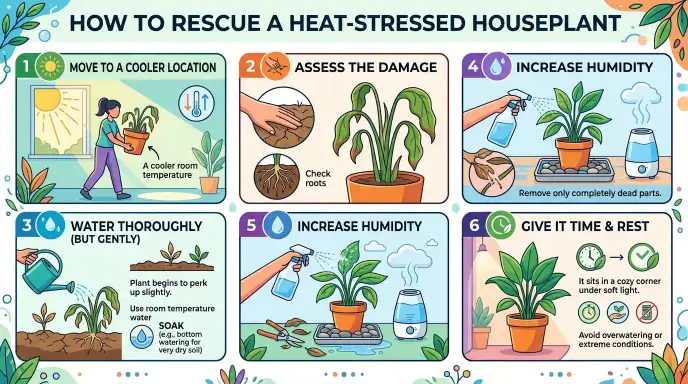
How to Rescue a Heat-Stressed Houseplant
If your plant is already showing severe heat stress, don’t immediately start changing everything.
Use this sequence.
Step 1: Check the soil
Is it dry, moist or saturated?
Step 2: Check the roots if necessary
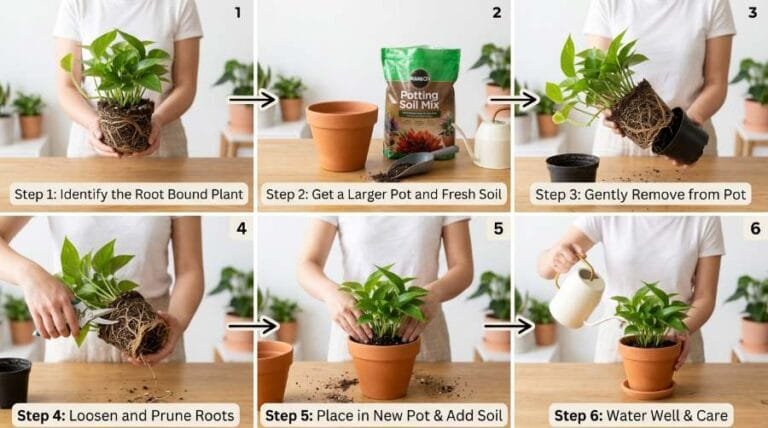
If the soil remains wet for an unusually long time and the plant continues wilting, inspect the roots. Learn what is root bound from this guide.
Step 3: Reduce intense sunlight
Move the plant away from hot glass or filter the strongest light.
Step 4: Stabilize temperature
Keep the plant away from heat sources and direct AC airflow.
Step 5: Correct watering
Water thoroughly if the soil is genuinely dry.
Do not water simply because the leaves are drooping. Read this article to learn how to water plants correctly.
Step 6: Improve gentle airflow
Avoid stagnant conditions without creating strong wind.
Step 7: Leave the plant alone
Don’t immediately repot, fertilize, prune and relocate it all at once.
Give it time to recover.
What Do Brown Leaves Mean in Summer?
Brown leaves have several possible causes. Learn to distinguish heat stress from bacterial and fungal leaf spots.
| Symptom | Possible cause |
| Brown crispy edges | Dry air, moisture stress or heat |
| Bleached patches | Excessive sunlight |
| Soft brown leaves | Root or tissue damage |
| Brown tips with wet soil | Root problems or other stress |
| Speckled leaves | Possible pests |
| Sudden scorch on window-facing side | Excessive sunlight/heat |
The location of the damage is useful.
If only the side facing the window is damaged, excessive light and heat become more likely.
If the entire plant has crispy edges, consider moisture and humidity.
If leaves are yellow, soft and continually wet, investigate the roots.
What to Do During an Extreme Heat Wave
Before the heat wave
- Check soil moisture.
- Move sensitive plants away from hot windows.
- Prepare sheer curtains or shade.
- Check drainage holes.
- Inspect plants for pests.
- Make sure your watering equipment is ready.
- Identify plants that are particularly sensitive to heat.
During the heat wave
- Check soil more frequently.
- Water only when necessary.
- Protect sensitive foliage from harsh afternoon sun.
- Maintain suitable humidity.
- Keep plants away from direct AC airflow.
- Provide gentle air circulation.
- Avoid major pruning and repotting.
- Monitor for spider mites.
After the heat wave
- Inspect leaves for scorch.
- Check plants that continue wilting.
- Examine roots if the soil remains excessively wet.
- Remove completely dead foliage when appropriate.
- Gradually return plants to their normal location.
- Resume feeding when healthy growth returns.
Best Summer Conditions for Common Houseplants
| Houseplant | Preferred summer light | Main heat concern |
| Pothos | Bright indirect light | Harsh afternoon sun |
| Heartleaf philodendron | Bright indirect light | Dry soil |
| Snake plant | Moderate to bright indirect light | Overwatering |
| ZZ plant | Moderate to bright indirect light | Excess moisture |
| Peace lily | Bright indirect light | Dry soil and low humidity |
| Spider plant | Bright indirect light | Hot direct sunlight |
| Calathea | Filtered light | Dry air |
| Boston fern | Bright indirect light | Moisture and humidity |
| Monstera | Bright indirect light | Hot afternoon window |
| Succulents | Bright light | Poor drainage and overwatering |
These are general guidelines. Individual species and cultivars can have different requirements.
7 Summer Plant Care Mistakes to Avoid
1. Watering every day automatically
Check the soil first.
2. Giving a wilted plant more water without investigating
Wilting can occur even when the soil is wet.
3. Leaving plants against hot window glass
The glass can intensify heat and sunlight.
4. Fertilizing severely stressed plants
Stabilize the environment before encouraging new growth.
5. Repotting during extreme heat
Avoid unnecessary root disturbance.
6. Creating high humidity with no airflow
Stagnant, wet conditions can create additional problems.
7. Assuming every brown leaf has the same cause
Heat, sunlight, water, humidity, roots and pests can all produce different types of damage.
My Hands-On Summer Heat Lesson
One summer, I found one of my plants drooping badly even though I had watered it the previous evening. My first instinct was to water it again, but the soil was still damp. I moved the plant several feet away from the hot window and filtered the afternoon sunlight instead. Within days, the deterioration stopped. The problem wasn’t simply a lack of water, it was the plant’s location.
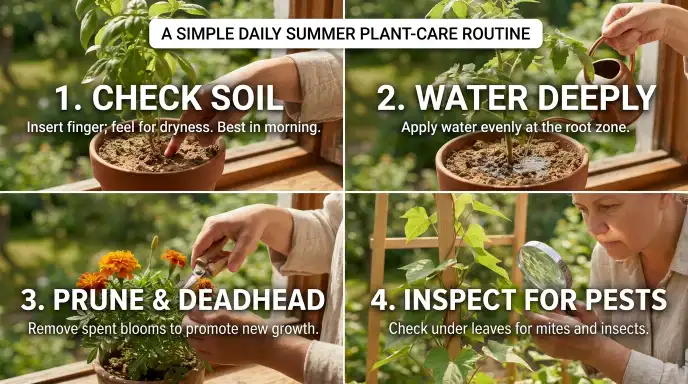
A Simple Daily Summer Plant-Care Routine
You don’t need to spend hours checking your plants.
A short morning inspection is usually enough.
Morning
Check the soil.
Water plants that actually need it.
Check the leaves.
Look for wilting, scorch, pests and curling.
Check the light.
Protect sensitive plants before afternoon sun becomes intense.
Afternoon
Check vulnerable plants again.
Small pots can dry rapidly.
Reduce window heat.
Use curtains or temporary shade where necessary.
Check airflow.
Avoid stagnant, overheated corners.
Evening
Inspect stressed plants.
Compare their condition with the morning.
Don’t automatically water again.
Check the soil first.
This routine is much safer than following a rigid “water every two days” schedule.
Frequently Asked Questions
How often should I water houseplants during extreme heat?
Check the soil rather than following a fixed schedule. Small pots may need checking every day, while larger containers can remain moist for longer. Water thoroughly when the plant actually needs moisture.
Should I move my plants away from windows during summer?
Sensitive plants should be moved away from intense afternoon sunlight, especially if they are sitting directly against hot glass. Moving them several feet back or using a sheer curtain can reduce heat and light stress.
Can heat make a plant wilt even when the soil is wet?
Yes. Heat can increase water loss from leaves, while damaged or stressed roots may struggle to supply enough water. If the soil is wet, investigate heat, light, airflow and root health before adding more water.
Should I mist plants during extreme heat?
Misting can provide temporary surface moisture but is not a substitute for proper watering or humidity control. In poorly ventilated conditions, repeatedly wet foliage can also create problems.
Should I fertilize during a heat wave?
Avoid fertilizing severely heat-stressed plants. Stabilize temperature, moisture and light first. Resume normal feeding after the plant has recovered and active growth has returned.
What temperature is too hot for houseplants?
There isn’t one temperature that is automatically dangerous for every houseplant. Heat tolerance depends on the species, humidity, light intensity, airflow and root moisture. A hot sunny window can be more damaging than the same room temperature in filtered light.
Why are my plant leaves turning brown during summer?
Common causes include excessive sunlight, heat stress, underwatering, low humidity, root problems and pests. Check the soil, light exposure and roots before changing your watering routine.
Can I put indoor plants outside during summer?
Some houseplants can spend summer outdoors, but they should be acclimated gradually. Moving an indoor plant directly from filtered indoor light to intense outdoor sunlight can cause severe leaf scorch.
Final Takeaway
The best summer plant care strategy for extreme heat is not simply watering more.
Instead, manage the conditions that cause plants to lose water and overheat:
- Protect sensitive plants from harsh afternoon sunlight.
- Keep plants away from hot window glass.
- Check soil before watering.
- Water thoroughly when necessary.
- Maintain suitable humidity.
- Avoid direct AC airflow.
- Provide gentle air circulation.
- Watch closely for pests.
- Avoid fertilizer, heavy pruning and unnecessary repotting during severe heat stress.
And remember the most important rule:
If a plant is wilting, diagnose before you water.
A wilted plant may be thirsty—but it may also be overheated, sunburned, poorly rooted or sitting in waterlogged soil. Learn how to fix a sunburned plant from this guide..
That small distinction can be the difference between helping your plant recover and making the problem worse. To know details about the complete indoor plant care guide read this article.