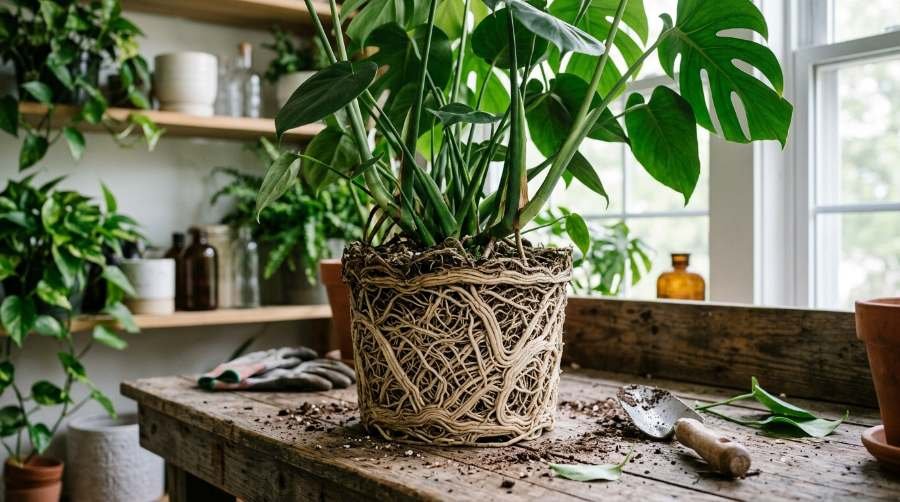
A root-bound plant is one whose roots have filled every bit of space inside the pot and begun circling the container walls instead of spreading outward as they normally would. It’s one of the most common issues in houseplant care, and it’s rarely fatal on its own, but left unaddressed for too long, it can quietly stall a plant’s growth for months.
This guide covers what root-bound actually looks like, why it happens in the first place, whether it’s always something to worry about, and exactly how to fix it without shocking your plant.
I once pulled a spider plant out of its pot for a routine check and found a solid wall of roots pressed against the plastic, no soil visible anywhere. I’d had no idea it had gotten that bad, and that surprise is exactly why this guide exists.
If you’re brand new to plant care in general, our Complete Beginner’s Guide to Indoor Plant Care covers light, soil, and watering alongside fertilizing, so you’ve got the full picture in one place.
What Does Root Bound Actually Mean?
Roots grow outward in search of space, water, and nutrients. Inside a pot, that growth eventually hits the container’s interior wall. Since roots can’t push through plastic or ceramic, they instead grow along the edge, and that’s where the circling pattern of a root-bound plant begins.
Over time, those circling roots pack tightly against each other near the pot’s perimeter, leaving little to no loose soil left in the container. This is the actual mechanism behind the term; it’s not simply “a lot of roots”; it’s roots that have run out of room to grow the way they’re meant to.
The circling itself is the real problem, more than the sheer volume of roots. If left uncorrected, those tightly wound roots can eventually press against each other and the plant’s base tightly enough to restrict water and nutrient flow, even after the plant is moved into a bigger pot, unless the circling pattern is physically interrupted first.
Signs of a Root-Bound Plant
A root-bound plant usually shows a combination of these signs rather than just one:
- Roots growing out through the drainage holes at the bottom of the pot.
- Roots visible circling along the surface of the topsoil.
- Water running straight through the pot without soaking into the soil.
- Soil drying out noticeably faster than it used to.
- The plant becoming top-heavy or tipping over easily.
- Growth stalling or slowing significantly during what should be an active growing season.
- The plant feeling stiff or unusually difficult to slide out of its pot, since the roots have taken on the container’s shape.
Any one of these on its own isn’t necessarily a red flag, but two or three together are a strong signal that a plant is root-bound and due for attention.
What Causes a Plant to Become Root Bound?
The most straightforward cause is simple, a plant outgrowing its pot faster than it gets repotted. But a few specific factors make this happen sooner than most people expect.
Growth speed plays a big role. Fast growers like pothos, spider plants, and philodendrons can become root-bound within a single growing season, while slow growers like snake plants and ZZ plants might take a year or more to reach the same point.
One cause that rarely gets mentioned is simply leaving a plant in its original nursery pot too long after bringing it home. Nursery pots are often sized for shipping and shelf display, not for long-term growth, so a plant can start circling its roots within just a few months of purchase if it isn’t moved into a properly sized pot early on.
Read our repotting mistakes and how to fix them guide to learn about root-bound causes.
Why Some Growers Keep a Plant Root Bound on Purpose
Not every plant with tightly bound roots got that way by accident. A few specific styles of growing rely on it deliberately.
Bonsai trees are the clearest example. Keeping the root system confined is part of what keeps the whole plant miniature, so bonsai growers root-prune on a schedule rather than letting the plant simply spread. Container trees and certain terrarium plants work the same way, restricting root space is an intentional method for controlling overall size, not a sign of neglect.
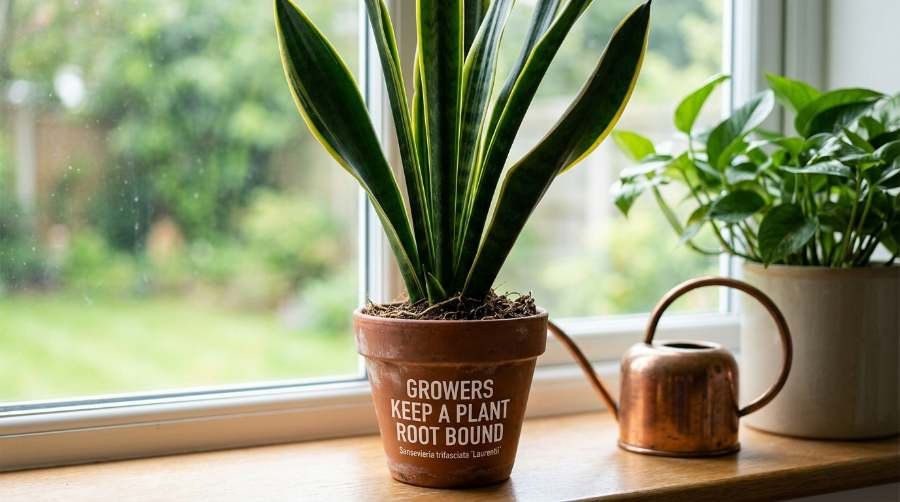
The distinction that matters here is control. A bonsai grower who root-prunes on purpose is managing the plant’s growth deliberately. A plant that got tightly bound by accident, sitting forgotten in the same nursery pot for two years, is just running low on room, water, and nutrients. Both look similar from the outside, but only one is intentional.
Root Bound vs. Pot Bound: Is There a Difference?
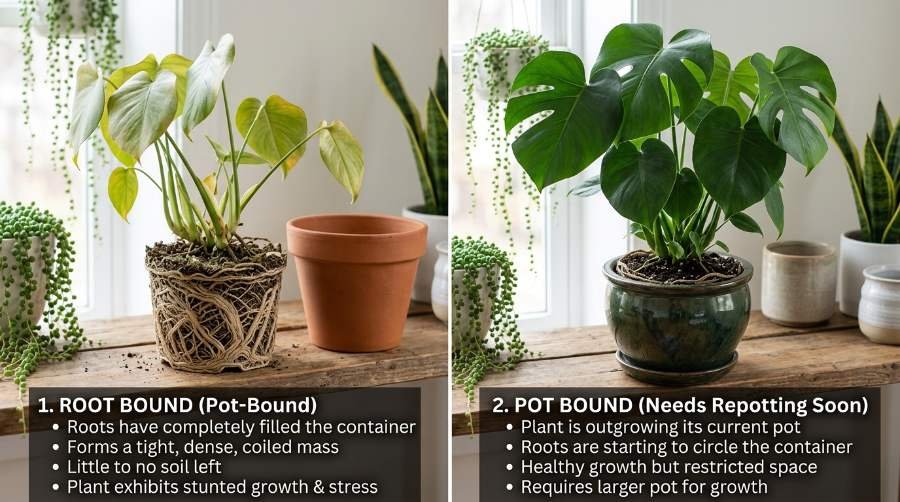
These two terms get used interchangeably by most gardeners, and for the most part, they mean the same thing. Both describe a plant that has outgrown its container.
If there’s a subtle distinction, it’s this: “root bound” more specifically refers to the circling root pattern itself, roots wound tightly around the inside of the pot, while “pot bound” is sometimes used a bit more loosely to describe any plant that has simply gotten too big for its current container, roots included. In everyday use, though, you’ll see gardeners use both terms to describe the same situation, and neither is technically more correct than the other.
Is Being Root Bound Always Bad for a Plant?
Not always, and this is where a lot of care advice oversimplifies things.
Mild cases are often harmless. Some plants, particularly certain flowering varieties like orchids, actually tend to bloom better when their roots are slightly snug in the pot. A plant that’s just starting to show a few roots at the drainage holes isn’t in crisis, it just has a few months of runway before it needs a bigger home.
Severe cases are a different story. When roots have formed a dense, tightly wound mat with no visible soil left, water and nutrients struggle to reach the plant evenly, and the tightly packed roots can eventually restrict the plant’s own circulation at the base. That’s the point where it’s worth addressing rather than waiting.
The honest takeaway is that “root bound” exists on a spectrum, not as a single yes-or-no condition, and how urgently it needs fixing depends on how far along that spectrum the plant actually is.
How to Fix a Root-Bound Plant, Step by Step
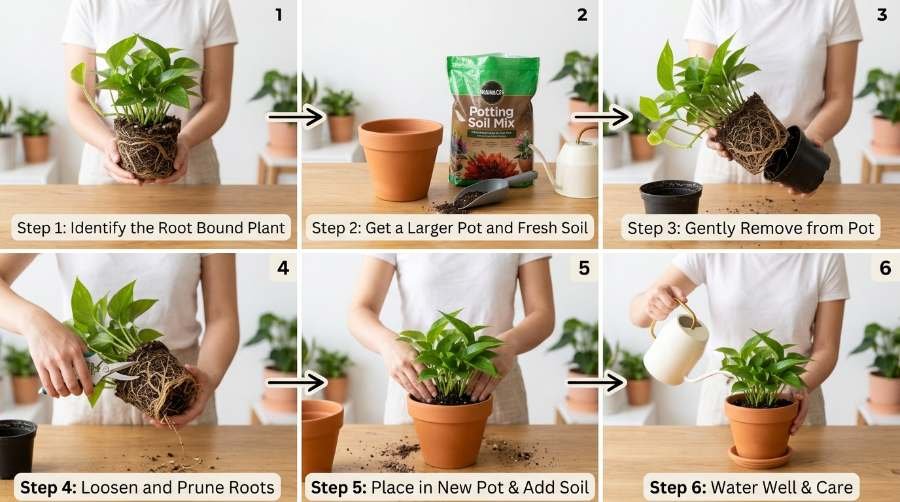
Fixing a root-bound plant is a straightforward process, even though it can feel intimidating the first time you’re staring at a dense mass of roots.
- Remove the plant carefully:
Squeeze the sides of a flexible pot or gently tap the bottom to loosen it, rather than pulling on the stem, which can damage both the roots and the base of the plant. - Loosen the outer roots by hand:
Use your fingers to gently tease apart the roots circling the outside of the root ball. This alone is often enough for a mildly bound plant. - Score or cut if the root ball is solid:
For a tightly packed root ball, make three or four shallow vertical cuts down the sides of the roots with a clean knife or pruners. This interrupts the circling pattern and encourages roots to branch outward into the new soil instead of continuing to spiral. - Trim dead or damaged roots:
Snip away anything black, mushy, or clearly dead. Healthy roots are firm and typically white or light tan. - Choose the right new pot size:
Go 1 to 2 inches wider in diameter, not more, though a severely root-bound plant sometimes needs to go slightly larger to give the roots enough room to actually spread. For a full breakdown of how to get this right, see our guide on choosing the right pot size for houseplants. - Repot with fresh, fast-draining soil:
Place a layer of soil at the bottom first. If the pot’s drainage holes are large enough that soil falls through, line the bottom with rocks or mesh to hold it back, or a layer of charcoal and rocks if the pot has no drainage at all. Keep the plant sitting at the same soil depth it was at before, don’t bury the stem deeper than it was originally, and leave a bit of space between the soil line and the rim of the pot so watering doesn’t overflow. - Water thoroughly to settle the soil:
A deep watering right after repotting helps eliminate air pockets left behind by the disturbed roots, which matters more here than after a routine repot since the root structure has just been physically altered.
To do all these steps, you need a good gardening tool kit. Learn about the best gardening tool kits from this article.
The Root-Cutting Debate: How Much Should You Actually Trim?
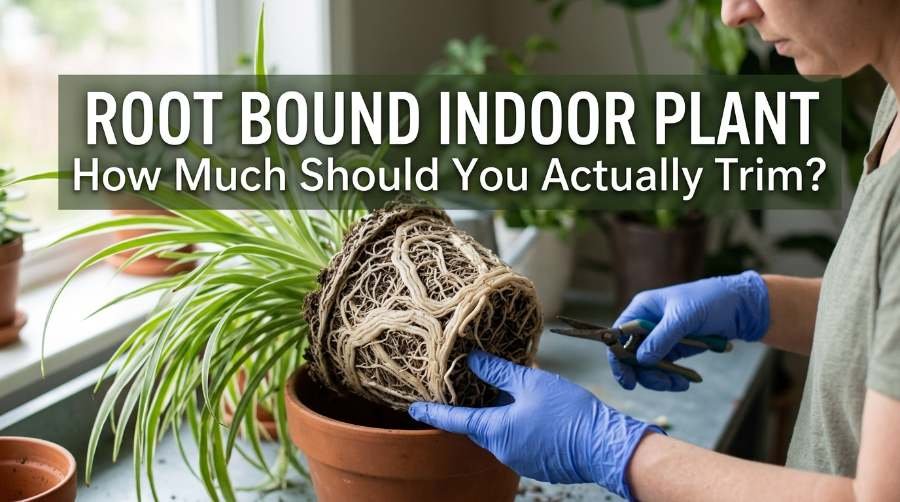
Ask ten experienced plant owners how aggressively to cut a bound plant’s roots, and you’ll likely get more than one answer. This isn’t a case of one group being wrong, it reflects a genuine difference in approach.
Some growers favor an aggressive trim, cutting back up to a third of a severely bound root ball to force fresh, outward growth, particularly for fast-growing plants that recover quickly. Others prefer a much gentler tease, loosening roots by hand and avoiding cuts altogether whenever possible, especially for slower growers or more sensitive species that don’t bounce back from root disturbance as easily.
In practice, the right approach depends on two things: how severely bound the roots actually are, and how fast that particular plant tends to grow. A lightly bound snake plant rarely needs cutting at all. A pothos with a rock-hard root ball that hasn’t seen a new pot in two years is a much stronger candidate for a more aggressive trim.
Quick Answer Recap
- A root-bound plant has roots that have filled the pot and started circling instead of spreading outward.
- Common signs include roots at the drainage holes, fast-draining water, and stalled growth during the growing season.
- Fast growers become root-bound sooner than slow growers, and nursery pots often accelerate this.
- Mild cases aren’t urgent, but a dense, tightly wound root ball should be addressed.
- Fixing it involves loosening or cutting the roots, sizing up only 1 to 2 inches, and repotting in fresh, fast-draining soil.