Barely, and mostly not in the way people hope. Real hygrometer tests put the boost from a pebble tray at roughly 1 to 4 percentage points in typical indoor conditions, with slightly higher readings, sometimes 5 to 6 percent, only in the inch or two of air right above the water surface. By the time you measure at leaf height on most houseplants, six to twelve inches up, the effect is usually undetectable. So when people ask do pebble trays work, the evidence-backed answer is: technically yes, practically not enough to matter for most plants.
This is one piece of a bigger picture. If you’re newer to plant care overall, our Complete Beginner’s Guide to Indoor Plant Care covers watering, light, and soil basics alongside humidity.
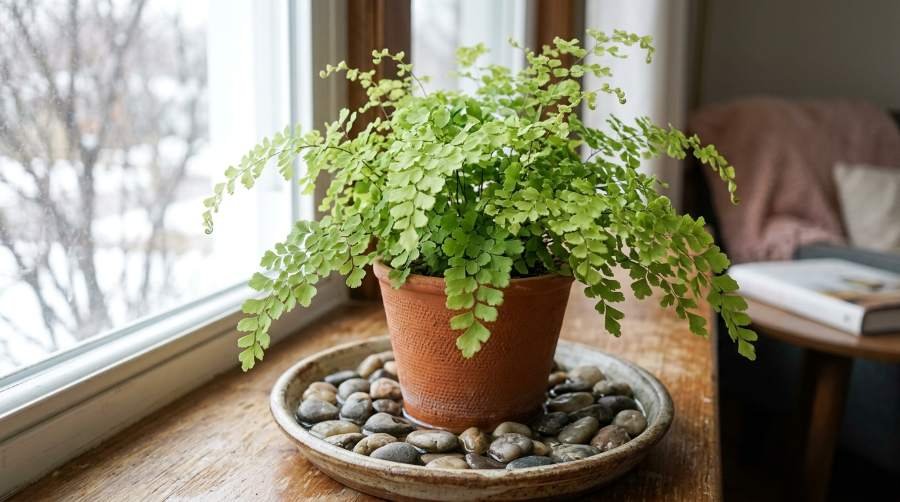
My own pebble tray sits under a fussy maidenhair fern that used to crisp up every winter. It didn’t transform my living room’s humidity, but that one plant stopped browning at the edges, and that was enough to earn the tray a permanent spot on the windowsill.
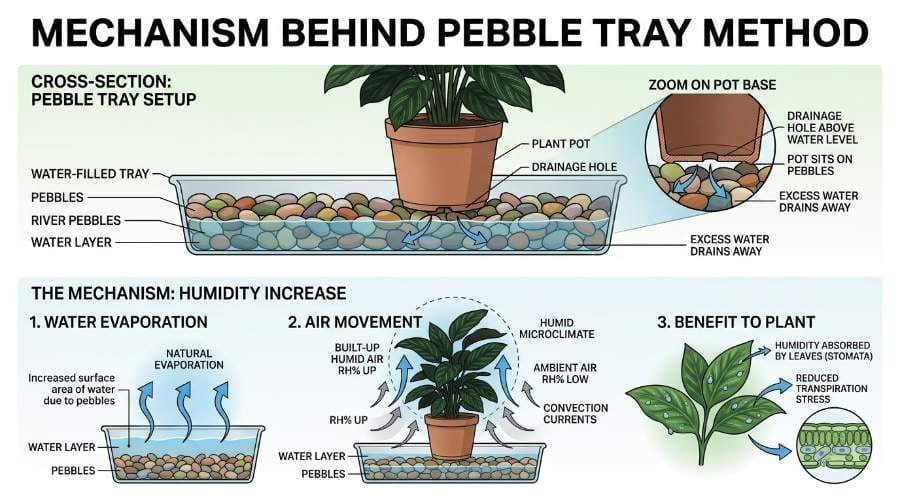
How Do Pebble Trays Work? The Mechanism Behind the Method
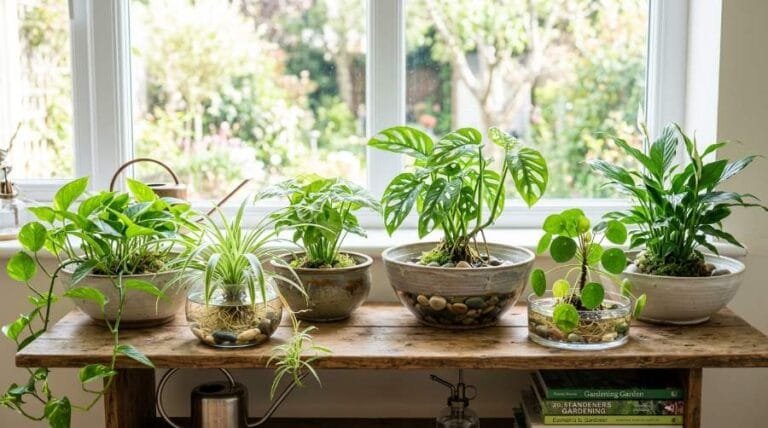
A pebble tray is about as simple as plant care gets, and understanding the setup helps explain why the do pebble trays work question has such a nuanced answer: a shallow dish filled with pebbles, topped with water that sits below the top of the pebbles, with the pot resting on top. Three things happen at once.
- Evaporation. Water in the tray slowly evaporates, adding moisture to the air in the few inches directly above it.
- Elevation. The pebbles keep the base of the pot above the waterline, which protects roots from sitting directly in water. This is a real, separate benefit from the humidity itself, and it’s arguably the more reliable reason to use one.
- Microclimate stacking. Grouping several plants on or near the same tray adds their own transpired moisture to the mix, slightly compounding the small effect.
That elevation benefit is worth pausing on, because most articles blur it together with the humidity claim. A pebble tray can genuinely help prevent root rot by keeping a pot’s drainage holes out of standing water, even on days when its humidity effect is doing almost nothing. This is part of why do pebble trays work is really two separate questions, one about humidity and one about drainage.
Do Pebble Trays Work? What the Actual Numbers Say
The most useful answer to do pebble trays work isn’t a yes or no, it’s a set of real measurements. Controlled hygrometer comparisons, tray versus a control spot a few feet away, over 48-hour stretches, typically show only a 1- to 2-percentage-point difference. Vertical measurements taken at different heights above the water tell an even clearer story: the boost is a few points strong within about 2 centimeters of the surface, drops to 1 to 2 points by mid-canopy, and disappears entirely higher up, closer to where most leaves actually sit.
Some setups report higher localized numbers, in the 5 to 12 percent range, but only under near-ideal conditions: still air, a wide tray, frequent refills, and a low-growing plant sitting almost directly on top of the water. Horticulturists who’ve studied this, including work associated with WSU extension specialist Linda Chalker-Scott and the Garden Myths research site run by soil scientist Robert Pavlis, both describe the effect as confined to a thin boundary layer of air that rarely reaches a plant’s actual leaf surface, let alone its stomata, where the moisture would need to matter.
Part of why the number stays so small comes down to basic physics. A typical tray only evaporates a few tablespoons of water per day in a still, room-temperature space, and that’s a tiny volume of vapor compared to the total air in an average room. It’s the key nuance missing from most answers to do pebble trays work: it’s not that the tray does nothing, it’s that what it does is small by design.
When Do Pebble Trays Work Best (If Ever)?
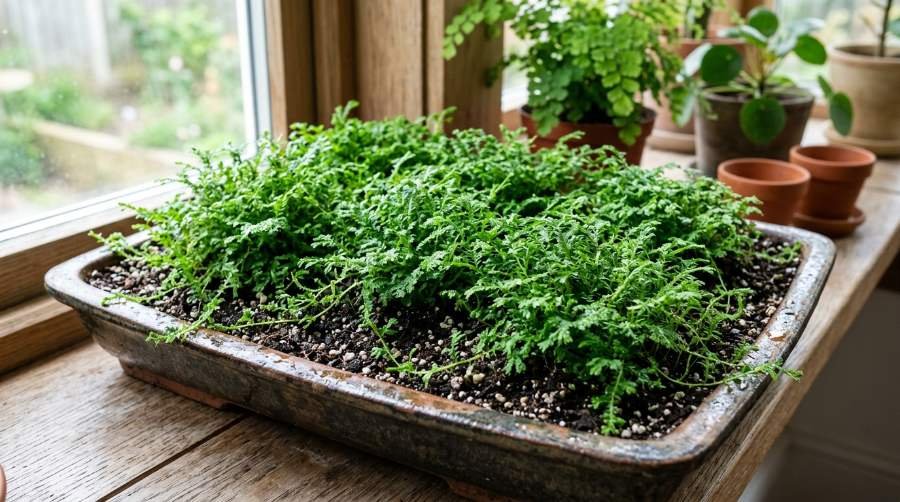
The evidence does leave room for a few genuine exceptions, rather than a flat no across the board. Low-growing or trailing plants, things like fittonia or selaginella that naturally sit close to the soil line, benefit more than a tall plant simply because their leaves are already inside that thin humid layer the tray produces. Grouping several of these smaller plants close together adds their own transpired moisture on top of the tray’s, which compounds the effect more than any single tray can on its own.
Enclosing the whole setup changes the math entirely. Put a tray under a humidity dome or inside a terrarium, and the vapor that would normally disperse into the room instead stays trapped, multiplying the effect dramatically compared to an open shelf. That’s really a different method wearing the same name, closer to a mini greenhouse than a standard pebble tray.
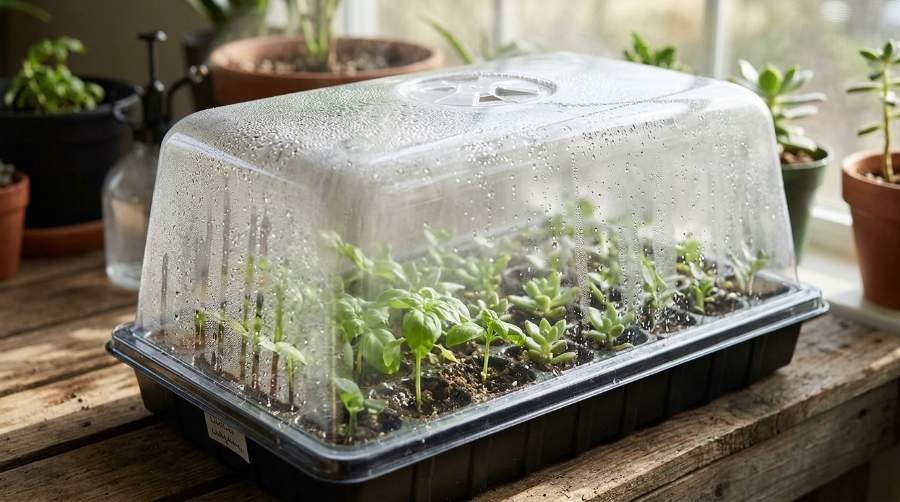
For a tall plant sitting in an open room with normal air circulation, none of that applies, which is the scenario most people actually have in mind when they ask do pebble trays work.
Do Pebble Trays Work in a Whole Room? Why the Effect Doesn’t Spread
This is the part almost no article explains clearly, and it’s the actual reason pebble trays get a mixed reputation. Humid air doesn’t stay put. Room airflow from HVAC vents, ceiling fans, an open window, or even someone walking past constantly mixes and disperses that thin layer of moist air before it can spread.
Think of it the way steam rises off a hot cup of coffee. That steam is real and briefly humid, but it disperses within a foot or two, not across the whole kitchen. A pebble tray behaves the same way. It’s not that the science is wrong, it’s that a small, steady source of moisture is no match for a room’s normal air movement. That’s the honest technical answer buried inside every simplified do pebble trays work headline.
Do Pebble Trays Work Better Than Misting or a Humidifier?
| Method | Humidity Boost | How Long It Lasts | Room Coverage |
|---|---|---|---|
| Pebble tray | ~1-4%, up to 5-6% right at the surface | Ongoing, but confined to a thin layer | A couple inches around the pot |
| Misting | Brief spike | A few minutes | A few inches, briefly |
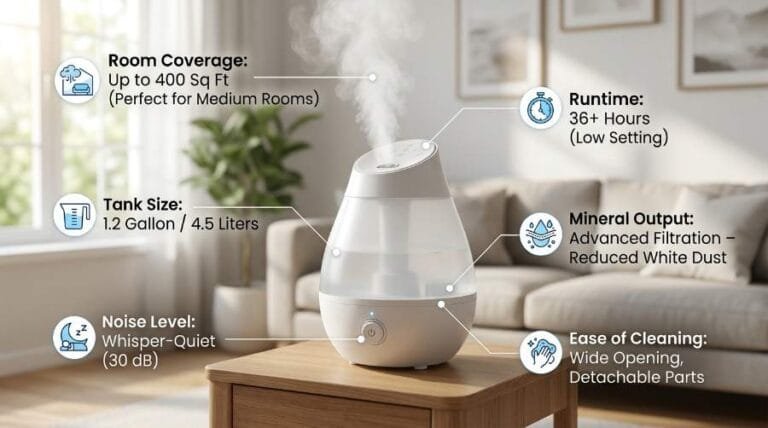
| Electric humidifier | 20%+ possible | Continuous while running | Whole room |
The table makes the actual tradeoff obvious once you stop treating “does it work” as a single yes-or-no question. Pebble trays and misting rely on the same physics, evaporation off exposed water, so it makes sense they land in the same tier for total impact. The real difference between them isn’t effectiveness, it’s labor. A tray keeps evaporating on its own for days at a time, while misting only helps for as long as you remember to keep doing it, which is a maintenance advantage more than a humidity one. An electric humidifier sidesteps the whole limitation, since it’s actively pushing moisture into the air rather than waiting for it to evaporate passively, which is the mechanical reason it can cover a full room and the other two can’t. Once you see the three side by side, the do pebble trays work debate stops being about yes or no and starts being about scale.
So Do Pebble Trays Work Well Enough to Use?
Here’s the honest, nuanced verdict on do pebble trays work in practice, since most articles either fully dismiss pebble trays or oversell them.
Use one if:
- You mainly want the elevation benefit, keeping a pot’s roots out of standing water, and see any humidity boost as a bonus
- You’re growing a low, trailing plant that sits close to the tray’s surface, like fittonia or selaginella
- You’re pairing it with grouped plants or an enclosed setup, like a dome or terrarium, where the effect actually compounds
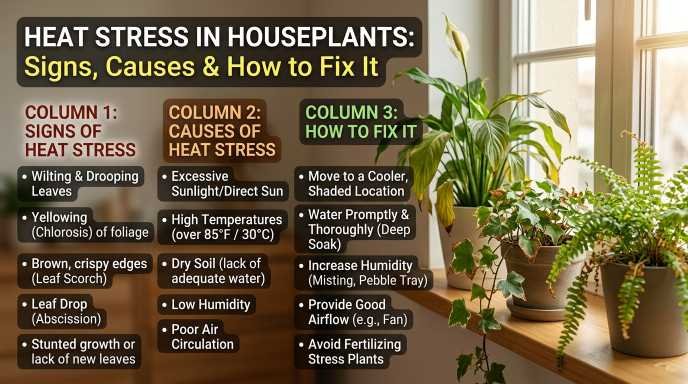
Our full guide on how to increase humidity for indoor plants found that, when ranking every method by real effectiveness, a pebble tray lands as a solid supporting player, not a standalone fix.
Don’t rely on one if:
- You’re trying to raise humidity for an entire room or a large plant collection
- You have a taller plant in an open room with normal air circulation, since almost none of the tray’s effect reaches leaf height in that setup
- You’re hoping to skip a humidifier entirely for a genuinely dry home
That second point echoes what our full guide on how to increase humidity for indoor plants found when ranking every method by real effectiveness, a pebble tray lands as a solid supporting player, not a standalone fix.
How to Set Up a Pebble Tray So It Actually Works
If you’ve decided the answer to do pebble trays work is worth testing for yourself, getting it right takes a few minutes.
- Choose a shallow, waterproof tray a bit wider than your pot’s base
- Fill it with pebbles, gravel, or clay pebbles until they’re a couple of inches deep
- Add water until it sits just below the top of the pebbles, never touching the bottom of the pot
- Set the pot on top and check the water level every few days as it evaporates
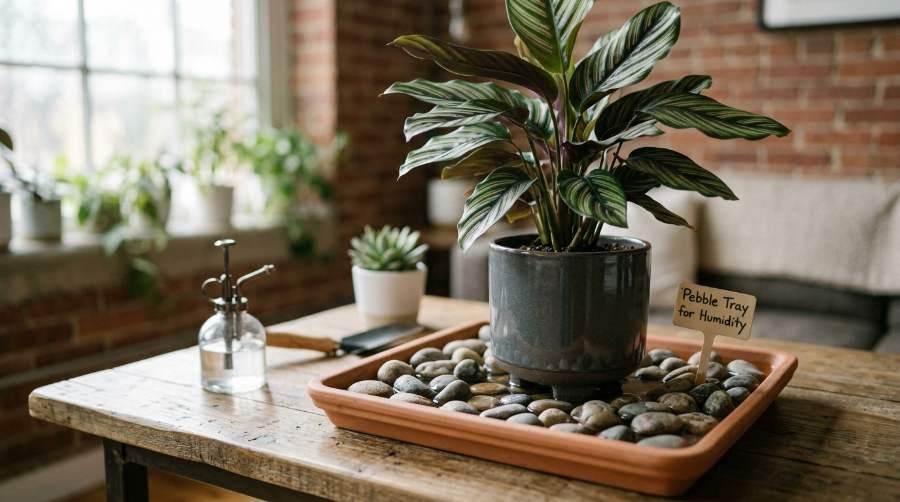
Clay pebbles are worth the small upgrade over smooth decorative stones. Because they’re porous, they hold onto water and release it more gradually, which stretches out the evaporation window between refills, and they’re light enough that even a small side table can hold one without strain. The tradeoff nobody mentions upfront: any tray of standing water left sitting in a warm, bright spot for weeks will eventually grow a bit of algae or mold, so it’s worth an occasional rinse rather than treating it as fully maintenance-free. Plant size matters too. Wider pots, like a mature monstera in a large container, simply won’t fit most off-the-shelf trays, so measure your pot’s base before buying one rather than assuming a standard size will work.
FAQs:
Do pebble trays actually work for humidity?
Only marginally for most setups, and this is the clearest version of the do pebble trays work answer: real hygrometer tests show a 1 to 4 percentage point increase, with slightly higher readings only in the inch or two right above the water, not at leaf height for most plants.
How much humidity does a pebble tray add?
Typically 1 to 4 percentage points based on controlled measurements, occasionally up to 5 to 6 percent right at the water’s surface under near-ideal conditions, though the exact number depends on tray size, water level, and room airflow.
Do pebble trays help with root rot?
Indirectly, yes. By keeping the pot elevated above the waterline, they prevent roots and drainage holes from sitting in standing water, which is a separate benefit from the humidity effect itself.
Is a pebble tray better than misting?
They’re roughly comparable in effect, both localized and modest, but a pebble tray works passively without needing daily attention, which makes it the lower-effort option.
Can I use a pebble tray instead of a humidifier?
Not if your goal is raising a whole room’s humidity. A humidifier remains the only method that changes ambient humidity across an entire space rather than just around one pot.
Key Takeaways: Do Pebble Trays Work for Indoor Plant Humidity?
Pebble trays do something measurable, just far less than most plant care advice suggests: real tests show a 1 to 4 percentage point boost that stays confined to a thin layer of air near the water and rarely reaches leaf height. They’re genuinely useful for keeping roots elevated above standing water, and can help low-growing plants or enclosed setups a bit more, but they were never designed to replace a humidifier for whole-room humidity, and horticultural researchers who’ve tested the claim generally agree. For the full ranked breakdown of every method, our guide on how to increase humidity for indoor plants covers where a pebble tray fits alongside grouping plants, reducing airflow, and using a humidifier. If you take one thing away from the do pebble trays work question, let it be this: small effect, mostly incidental, worth using for the drainage benefit more than the humidity one. Learn more about humidity loving plants from this guide.