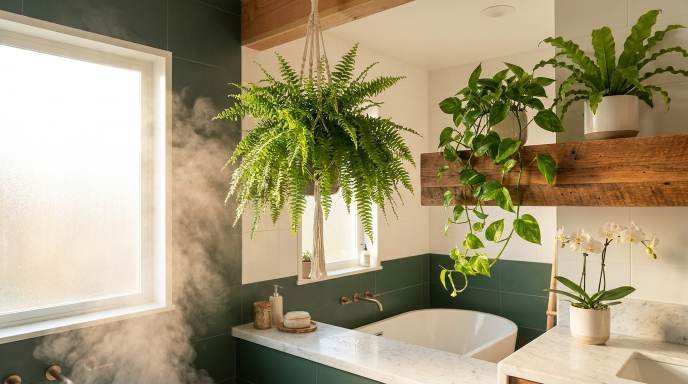
The best humidity-loving plants include Boston fern, bird’s nest fern, peace lily, pothos, heartleaf philodendron, spider plant, prayer plant, calathea, orchids, and air plants. Many of these plants come from tropical and subtropical regions where the air is naturally more humid than in most homes. Many humidity-loving plants are also spider mite magnets; learn how to identify and treat spider mites. That makes bathrooms and kitchens great places to grow them. However, light is still more important than humidity. Even a humid room will not keep a tropical plant healthy if it does not get enough light.
Table of Contents
Quick Answer: Which Plants Love Humidity?
| Plant | Humidity Needs | Light | Best Room | Care Level |
|---|---|---|---|---|
| Boston fern | High | Medium to bright indirect | Bathroom | Moderate |
| Bird’s nest fern | High | Medium to bright indirect | Bathroom | Moderate |
| Peace lily | Medium to high | Low to medium indirect | Bathroom or kitchen | Easy to moderate |
| Pothos | Medium to high | Low to bright indirect | Bathroom or kitchen | Easy |
| Heartleaf philodendron | Medium to high | Low to bright indirect | Bathroom or kitchen | Easy |
| Spider plant | Medium to high | Medium to bright indirect | Bathroom or kitchen | Easy |
| Prayer plant | High | Medium indirect | Bathroom | Moderate |
| Calathea | High | Medium indirect | Bathroom | Moderate to difficult |
| Orchid | Medium to high | Bright indirect | Bathroom or kitchen | Moderate |
| Air plant | High | Bright indirect | Bathroom or kitchen | Moderate |
Why Do Some Houseplants Love Humidity?
Most humidity-loving houseplants evolved in tropical forests, where moisture sits in the air almost year-round. Higher humidity slows down how quickly a plant loses water through its leaves, a process called transpiration. That matters most for plants with thin or delicate foliage, including ferns, calatheas, and prayer plants, since thin leaves lose moisture faster than thick, waxy ones. Learn the process of increasing humidity in a room naturally from this guide.
One point trips up a lot of new plant owners: humid air does not mean wet soil. A plant can sit in perfectly humid air and still develop root rot if the potting mix stays soggy. Drainage matters just as much in a steamy bathroom as it does anywhere else in the house.
What Makes Bathrooms Good for Humidity-Loving Plants?
A bathroom creates its own small microclimate. Shower or bath steam, warmer temperatures, higher humidity, and often softer, diffused window light combine into something close to a mini tropical pocket, at least for part of the day.
The Royal Horticultural Society notes that bathrooms can mimic parts of a tropical habitat, but only when there’s enough natural light reaching the plant. A windowless bathroom does not automatically become plant-friendly just because it fills with steam.
Bathroom humidity isn’t constant
This is the part most generic plant lists skip over. A bathroom isn’t humid all day long. Right after a hot shower, humidity spikes. Once the fan runs or the door opens, that moisture clears out fast, and the room can turn dry again within an hour.
That’s why the right bathroom plant isn’t just one that “likes humidity” in general. It needs to tolerate the swings, not just the peak. A bathroom used daily by a family behaves very differently from a rarely used guest bathroom, so the same plant list won’t necessarily work for both.
The 10 Best Humidity-Loving Plants
1. Boston Fern
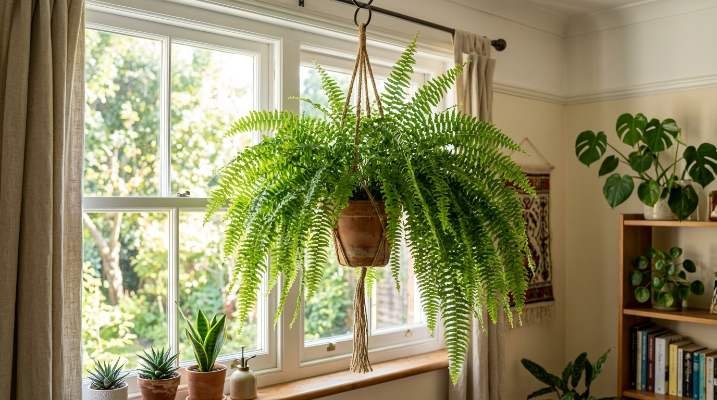
Boston fern (Nephrolepis exaltata) is the classic pick for a genuinely steamy bathroom.
- Humidity: High
- Light: Medium to bright indirect
- Water: Keep the mix evenly moist, never soggy
- Best Placement: Near a bright bathroom window
- Care level: Moderate
It rewards a bathroom that’s already naturally humid. In a dark bathroom, though, no amount of steam will make up for the missing light.
2. Bird’s Nest Fern
Bird’s nest fern (Asplenium nidus) grows broad, upright fronds instead of the long trailing ones you’d see on a Boston fern, which makes it a better fit for a small shelf rather than a hanging basket.
It likes indirect light and higher humidity, but keep it out of direct sun. The broad leaves scorch easily.
Best Placement: bright bathrooms, humid kitchens, shelves near frosted glass, warm rooms with filtered light.
3. Peace Lily
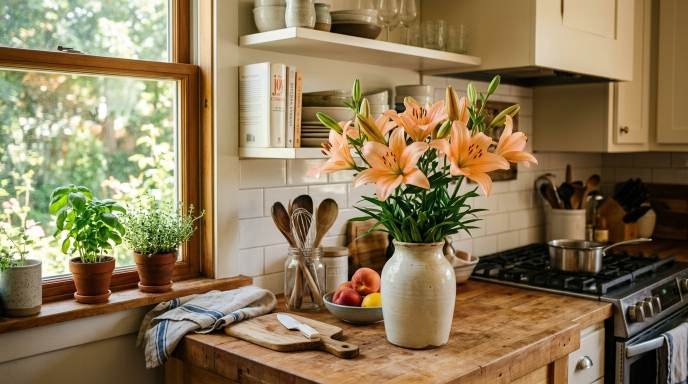
Peace lily (Spathiphyllum) pairs attractive foliage and white blooms with a solid tolerance for humid indoor air.
- Humidity: Medium to high
- Light: Low to medium indirect
- Water: When the top of the soil starts to dry out
- Best Placement: Bathroom or kitchen
- Care level: Easy to moderate
One useful trait: peace lilies droop noticeably when thirsty, so the plant basically tells you when it needs water. One caution, though: peace lilies are toxic to cats and dogs, so think twice about placement if you have pets.
4. Pothos
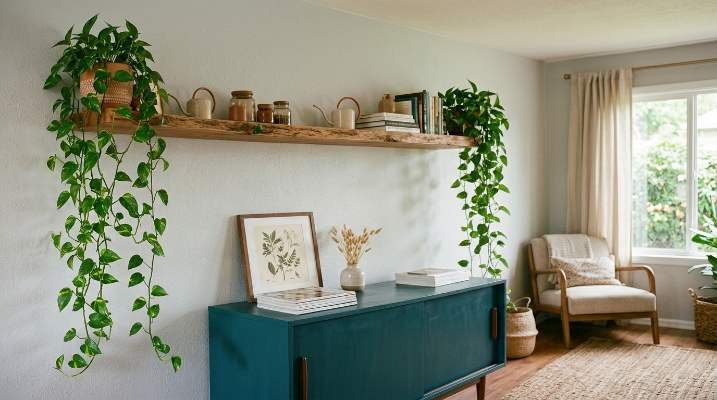
Pothos (Epipremnum aureum) is about as forgiving as houseplants get, and it’s usually the first recommendation for anyone new to humidity-loving plants.
It grows in low to bright indirect light and handles a wide range of humidity levels. It doesn’t strictly need high humidity, but it looks better with it.
Where it works well: trailing off a bathroom shelf, in a hanging planter, cascading from a kitchen cabinet, or sitting on a plant stand near a window.
5. Heartleaf Philodendron
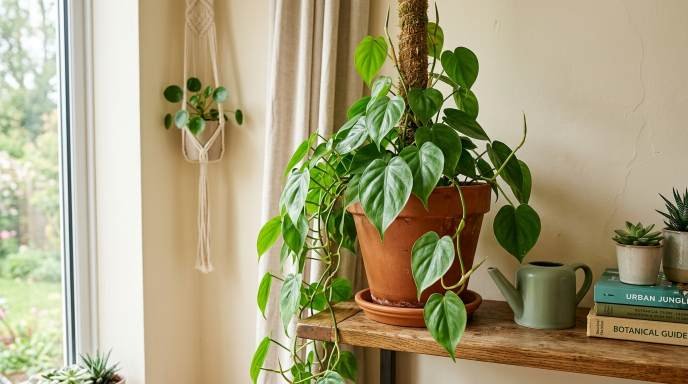
Heartleaf philodendron (Philodendron hederaceum) is another easy tropical vine, and it tolerates lower light better than most decorative tropical plants.
- Humidity: Medium or higher
- Light: Low to bright indirect
- Soil: Well-draining potting mix
- Temperature: Warm indoor rooms
- Watering: Moderate
Higher humidity improves how it looks, but don’t treat a humid room as an excuse to water more often. That’s a common mistake.
6. Spider Plant
Spider plant (Chlorophytum comosum) is one of the easiest choices for both kitchens and bathrooms.
It handles humidity well, tolerates a broad range of indoor light, and produces small offshoots called spiderettes that you can propagate into new plants. The RHS lists it among its recommended bathroom plants, and it’s also considered non-toxic to cats and dogs, which makes it a common pick for pet owners.
7. Prayer Plant
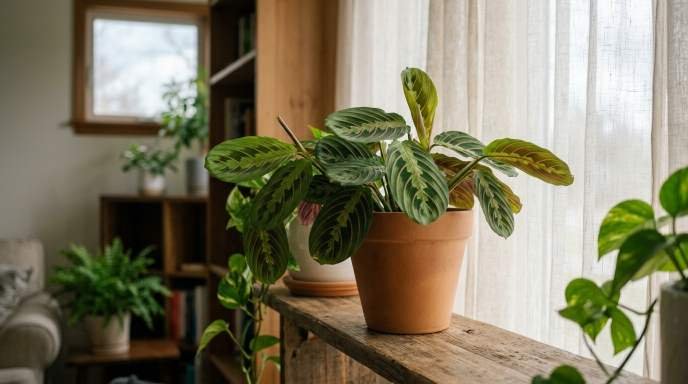
Prayer plants (Maranta species) genuinely need higher humidity to look their best, and their patterned leaves are part of the appeal.
- Humidity: High
- Light: Medium indirect
- Water: Even moisture, not soggy
- Temperature: Warm
- Sun exposure: Avoid harsh direct light
A bright, filtered bathroom window suits them well. A dark bathroom doesn’t.
8. Calathea
Calathea is known for striking, patterned foliage and a strong preference for humid air, but it’s less forgiving than pothos or spider plant.
If you notice brown leaf edges, curling, crispy patches, or sudden leaf damage, the cause is usually one of these:
- Humidity that’s too low
- Inconsistent watering
- Too much direct light
- Sudden temperature swings
- Tap water quality (calatheas are sensitive to fluoride and chlorine in some cases)
Choose calathea only if you’re willing to keep conditions fairly consistent. If your humidity-loving plant has brown tips, start with this guide.
9. Orchids
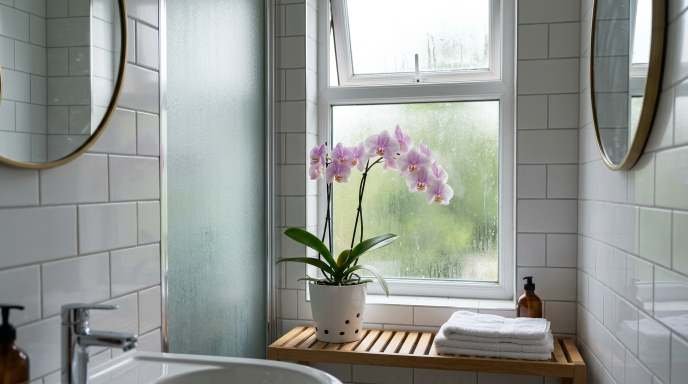
Orchids, especially the commonly sold Phalaenopsis type, can thrive in a bright, humid bathroom.
The biggest mistake people make is assuming high humidity means wet roots are fine. Orchid roots need airflow. Grow them in an actual orchid mix and a container with good drainage, never in regular potting soil.
Best bathroom setup: a window, filtered or indirect light, decent ventilation, and moderate to high humidity.
10. Air Plants
Air plants (Tillandsia species) don’t grow in soil at all. They’re epiphytes, meaning they naturally attach to other plants or surfaces in the wild.
They benefit from humid air, but they still need airflow and proper drying time. A bathroom that stays wet and stuffy without ventilation isn’t actually good for them. Think of air plants as tolerant of humidity, not dependent on constant steam.
Best Humidity-Loving Plants for Different Light Levels
When choosing a bathroom or kitchen plant, light should be your first filter and humidity your second.
Bright indirect light
Choose:
- Boston fern
- Bird’s nest fern
- Orchid
- Spider plant
- Pothos
- Heartleaf philodendron
What is bright indirect light? Know the details from this guide.
Medium indirect light
Good choices include:
- Peace lily
- Prayer plant
- Calathea
- Pothos
- Philodendron
- Spider plant
Low light
Consider:
- Pothos
- Heartleaf philodendron
- Peace lily
- Snake plant
- ZZ plant
But there’s an important difference between low light and no light. Learn more about low-light plants from this article.
A plant advertised as “low-light tolerant” still needs light to photosynthesize.
Can Plants Grow in a Windowless Bathroom?
Not permanently without a source of usable light.
This is one of the biggest mistakes people make when choosing bathroom plants.
A windowless bathroom may become warm and humid after a shower, but humidity cannot replace sunlight or artificial grow lighting.
If your bathroom has no window, you have three practical options:
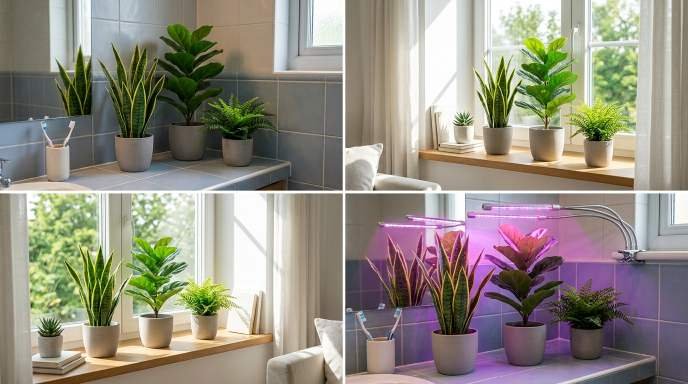
- Install a suitable grow light.
- Rotate plants between the bathroom and a brighter room.
- Use artificial plants.
Know about the best grow lights in this article. The Royal Horticultural Society similarly emphasizes that bathroom plants need appropriate growing conditions, with light remaining a critical factor. Learn details about grow light usage; read this article.
What About the Kitchen?
Kitchens can work well for humidity-loving plants too, thanks to boiling water, dishwashing, and general cooking steam. But kitchens come with their own hazards:
- Direct heat from the stove
- Hot air from the oven
- Grease buildup on leaves
- Temperature swings near doors and windows
- Cold drafts
- Smoke exposure
Good kitchen plants (with bright indirect light): pothos, spider plant, heartleaf philodendron, orchid, peace lily, Boston fern, and even culinary herbs like basil or mint if the light is strong enough.
Keep the plant close enough to benefit from the humidity, but far enough from the stove that heat and grease don’t damage the leaves.
Bathroom vs. Kitchen: Which Wins?
| Factor | Bathroom | Kitchen |
|---|---|---|
| Humidity | Often high after showers | Variable |
| Light | Often limited | Usually better |
| Temperature | Fairly stable | Can swing |
| Steam source | Shower or bath | Cooking |
| Grease exposure | Low | Higher |
| Best for ferns | Excellent with enough light | Good |
| Best for pothos | Excellent | Excellent |
| Best for orchids | Excellent with bright light | Good with bright light |
| Best for herbs | Usually poor | Excellent with light |
In short: bathrooms tend to win for humidity-loving foliage plants, while kitchens tend to win for anything that needs brighter light.
Does Misting Help Humidity-Loving Plants?
Misting can temporarily increase moisture around leaves, but it is not a substitute for appropriate ambient humidity.
If your plant genuinely needs higher humidity, improving the surrounding environment is generally more useful than repeatedly spraying the foliage. Want to know more about best houseplant humidifiers? Then follow this guide.
For many bathroom plants, the simplest solution is to place the right plant in a naturally humid room with adequate light.
Why Drainage Still Matters in a Humid Room
High humidity has nothing to do with how wet the soil should be. Combine high humidity, poor drainage, and frequent watering, and you’ve got a near-perfect setup for root rot.
To avoid that:
- Use pots with actual drainage holes
- Choose a potting mix suited to the plant
- Empty saucers and trays after watering
- Let excess water drain fully before putting the pot back
Don’t water more just because the room feels humid.
Plants That Usually Struggle in Humid Bathrooms
Not every houseplant wants steam. Plants adapted to dry climates generally do worse in consistently humid rooms, including most:
- Cacti
- Succulents
- Mediterranean, drought-adapted plants
These prefer stronger light, fast-drying soil, and drier air overall. A humid bathroom is often the wrong environment for them.
How to Prevent Mold and Fungal Problems
Humidity is beneficial to many tropical plants, but stagnant, poorly ventilated moisture is not.
To keep your bathroom plant healthy:
- Run the exhaust fan during and after showers.
- Keep foliage from touching constantly wet walls.
- Avoid watering on a fixed schedule.
- Check the soil before watering.
- Empty water from saucers.
- Remove dead leaves.
- Give dense foliage enough space for airflow.
The goal isn’t to make the room as humid as possible. The goal is to create the right balance of humidity, light, moisture, and airflow. High-humidity plants like ferns and calatheas can attract pests. For white, cottony pests, see our mealybug treatment guide.
How to Pick the Right Plant for Your Space
- Want a lush, classic look and have bright light? Boston fern.
- Want the easiest possible trailing plant? Pothos.
- Want something forgiving with a pet-safer profile? Spider plant.
- Want flowers with medium or lower light? Peace lily.
- Want a compact upright fern? Bird’s nest fern.
- Want bold patterned leaves and don’t mind extra care? Calathea or prayer plant.
- Have bright light and want blooms? Orchid.
- Want something soil-free? Air plant.
A Quick Story
My bathroom window faces north, so I thought a shade-tolerant fern would grow well there. I placed a beautiful Boston fern near the window, but within a month, its fronds became dry, crispy, and started falling off. I soon realized that “bright indirect light” does not mean a north-facing window with frosted glass that blocks much of the light. I replaced the fern with a Pothos in the same spot. Over the past two years, the Pothos has grown really well. It taught me an important lesson: always match the plant to the available light first.
Frequently Asked Questions
What plants love humidity the most?
Ferns, calatheas, prayer plants, orchids, air plants, and several tropical foliage plants are among the strongest choices for humid environments.
What is the best plant for a humid bathroom?
Boston fern is an excellent choice for a bright, humid bathroom. Pothos and spider plant are better choices if you want something easier to maintain.
What plants love humidity and low light?
Pothos, heartleaf philodendron, peace lily, snake plant, and ZZ plant can tolerate lower-light conditions. However, even low-light plants need some usable light.
Can a plant live in a bathroom with no windows?
Not long-term without supplemental light. Use a suitable grow light or rotate the plant into a brighter room.
Should I mist bathroom plants?
Usually, misting is not necessary if the room already has suitable humidity. Misting provides only a temporary increase in moisture around the leaves.
Can I put a plant directly beside the shower?
You can place a suitable plant near a shower if it receives enough light and isn’t constantly exposed to direct water or stagnant air. A nearby shelf is usually safer than placing the plant directly inside the shower.
Are kitchens good for tropical plants?
Yes. Kitchens can provide warmth and humidity, but plants should be protected from direct heat, cooking grease, and extreme temperature changes.
What is the easiest humidity-loving plant for beginners?
Pothos and spider plants are two of the easiest options. They tolerate a wider range of indoor conditions than more demanding plants such as calatheas and some ferns.
Final Thoughts
The right humidity-loving plant isn’t necessarily the one that tolerates the most moisture. It’s the one whose humidity, light, watering, and drainage needs actually match your bathroom or kitchen.
For a bright, humid bathroom, start with Boston fern, bird’s nest fern, orchid, or spider plant. For something more forgiving, go with pothos or heartleaf philodendron. For lower light, lean toward peace lily, pothos, snake plant, or ZZ plant.
And the one rule worth remembering: humidity helps, but it never replaces light.