The right grow light depends less on having the “best” product and more on having the right product for your setup. A grow-light bulb is a smart purchase for one plant but a poor choice for a six-foot shelf. A powerful panel can be excellent for succulents but unnecessary for a pothos.
A good grow light can compensate for a dark room, weak winter sunlight, or a plant placed several feet from a window. The key is choosing a fixture that delivers enough usable light to the leaves without wasting electricity or overheating the plant. Read our how-to-use grow light guide to learn more about grow lights.
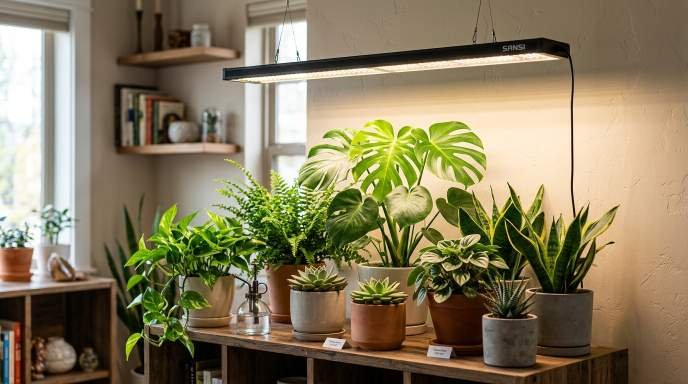
Quick Comparison: Which Grow Light Is Best?
| Grow Light Type | Best For | Main Advantage |
|---|---|---|
| Full-spectrum LED panel | Multiple plants | Broad, even coverage |
| LED grow-light bulb | One or two plants | Simple and inexpensive |
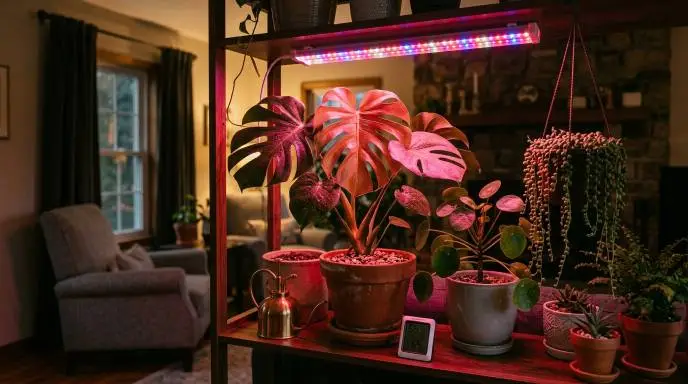
| LED bar light | Plant shelves | Even light across the shelf |
| Clip-on LED | Small spaces | Easy positioning |
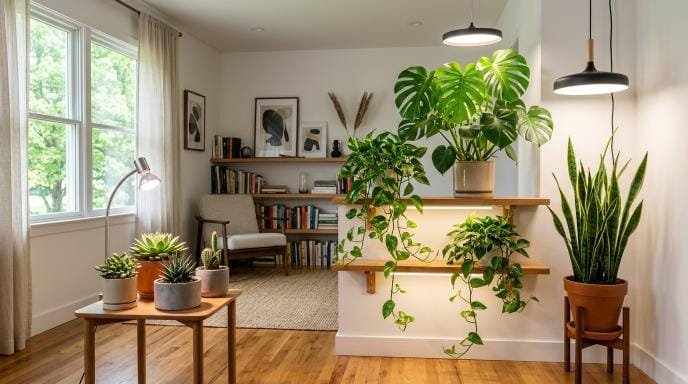
| Pendant grow light | Large plants and living rooms | Coverage plus attractive design |
| T5 fluorescent | Older shelf setups | Even coverage |
| Incandescent/halogen | Not recommended | Excess heat and poor efficiency |
Use the recommendations below to make the decision based on your actual growing situation.

1. SANSI Grow Light Bulb — Best If You Have 1–3 Plants
Buy this if:
You need supplemental light for a few individual houseplants and already have a suitable lamp.
Skip this if:
You need to illuminate an entire plant shelf or a collection of high-light plants.
| Decision Factor | SANSI Grow Light Bulb |
|---|---|
| Best for | 1–3 individual plants |
| Ideal plants | Pothos, philodendron, monstera, peace lily, and similar foliage plants |
| Best location | Desk, side table, corner or near a window |
| Setup | Existing compatible lamp |
| Coverage | Small |
| Installation | Very easy |
| Main advantage | Minimal setup |
| Main weakness | Limited coverage |
| Choose it when | You want targeted supplemental lighting |
| Don’t choose it when | You need whole-shelf coverage |
Why choose it?
The biggest reason to buy a SANSI-style bulb is convenience. You don’t need to build a grow-light system or install bars underneath shelves.
If one plant is struggling because it sits in a dark corner, this type of bulb solves that specific problem without adding unnecessary equipment.
The catch
Its small coverage area makes it a poor choice for multiple plants spread across a shelf. You may end up buying several bulbs when one appropriately sized LED bar or panel would have been more practical.
Verdict:
Best simple solution for a few plants. Buy it when your lighting problem is small and localized.
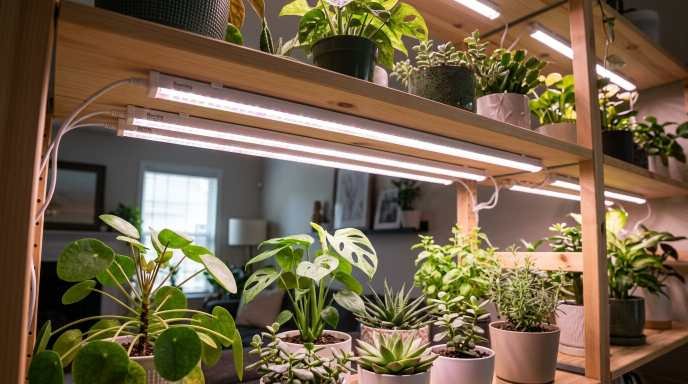
2. Barrina T5 LED Grow Lights — Best If You Have a Plant Shelf
Buy this if:
You have multiple plants arranged across shelves and want relatively even light distribution.
Skip this if:
You have only one plant or need very high light intensity for demanding plants.
| Decision Factor | Barrina T5 LED Bars |
| Best for | Plant shelves |
| Ideal plants | Foliage plants, herbs, seedlings and smaller collections |
| Best location | Under shelves and racks |
| Setup | Mounted beneath shelves |
| Coverage | Medium to large |
| Installation | Moderate |
| Main advantage | Even shelf coverage |
| Main weakness | Requires installation and cable management |
| Choose it when | Several plants need light at the same time |
| Don’t choose it when | You need a compact single-plant solution |
Why choose it?
The decision is simple: if the problem is an entire shelf, use a light designed like a shelf.
The long-bar format distributes light across the shelf width rather than concentrating it around a single plant.
This makes it particularly practical for plant collectors who have moved beyond one or two pots.
The catch
Installation takes more work than a bulb. You need to mount the bars, route the cables, and decide how to control multiple lights.
For high-light plants, don’t assume that a T5-style bar automatically provides enough intensity. Check the available PPFD information for your intended mounting height.
Verdict:
Best practical choice for plant shelves. Choose it when even coverage matters more than maximum intensity.
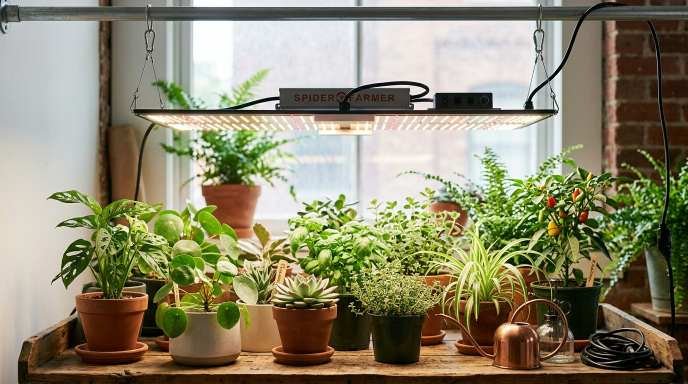
3. Spider Farmer LED Panel — Best If You Need High Light and Broad Coverage
Buy this if:
You have a larger collection or plants that require substantially more light.
Skip this if:
You’re trying to brighten one pothos or a small collection in a living room.
| Decision Factor | Spider Farmer LED Panel |
| Best for | Large collections and higher-light plants |
| Ideal plants | Succulents, cacti, herbs, seedlings, and demanding collections |
| Best location | Dedicated growing area, rack, or larger plant zone |
| Setup | Hanging or mounted |
| Coverage | Medium to large |
| Installation | Moderate |
| Main advantage | Strong output and broad coverage |
| Main weakness | Overkill for small setups |
| Choose it when | You need substantial light across a defined area |
| Don’t choose it when | Your plants have low light requirements |
Why choose it?
A panel becomes the better decision when you have stopped solving individual plant problems and started solving a growing-area problem.
Instead of placing separate bulbs over multiple plants, one appropriately sized panel can provide a more consistent lighting environment.
This is also the format to consider when growing succulents, cacti, seedlings, or other plants that need stronger light.
The catch
More power isn’t automatically better. If the panel is too strong or mounted too close, plants can experience excessive light or heat.
You also need somewhere appropriate to hang or mount it.
Verdict:
Best choice when light intensity and coverage matter more than simplicity or appearance.
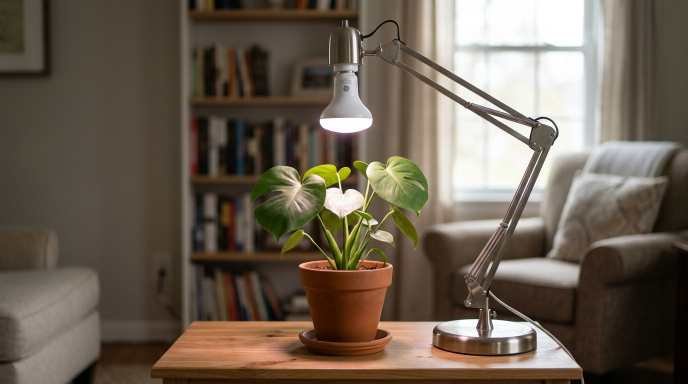
4. GE Grow Light Bulb — Best If You’re a First-Time Buyer
Buy this if:
You want the simplest possible introduction to supplemental plant lighting.
Skip this if:
You already know you need broad coverage or high-intensity lighting.
| Decision Factor | GE Grow Light Bulb |
| Best for | Beginners |
| Ideal plants | Low- to moderate-light houseplants |
| Best location | Desk, table, or floor lamp |
| Setup | Compatible lamp |
| Coverage | Small |
| Installation | Very easy |
| Main advantage | Simple to start with |
| Main weakness | Limited coverage |
| Choose it when | You want to experiment before buying a system |
| Don’t choose it when | You have many plants |
Why choose it?
The strongest selling point is low complexity.
You don’t need to understand PPFD maps, hanging heights, or shelf installation before getting started. Put the bulb in a suitable fixture, position it appropriately, and use a timer.
For someone who has never used a grow light, that simplicity has real value.
The catch
Don’t mistake simple installation for universal usefulness.
A bulb works well for a targeted area. It doesn’t make sense as the primary light source for a large plant collection.
Verdict:
Best entry point for beginners. Start here if you have a small lighting problem and don’t want to overbuy.
5. Soltech Pendant Grow Light — Best If Appearance Matters
Buy this if:
Your grow light will be permanently visible in a living room or other finished space.
Skip this if:
Your only priority is maximum light output for the lowest price.
| Decision Factor | Soltech Pendant |
| Best for | Visible home installations |
| Ideal plants | Large foliage and statement plants |
| Best location | Living rooms, offices, and bedrooms |
| Setup | Hanging/pendant installation |
| Coverage | Medium to large |
| Installation | Moderate |
| Main advantage | Combines lighting and interior design |
| Main weakness | Higher cost |
| Choose it when | Appearance is part of the buying decision |
| Don’t choose it when | Price-per-light-output is your priority |
Why choose it?
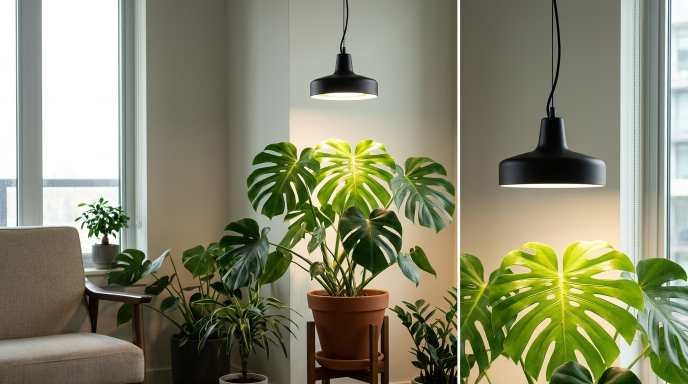
The main decision here isn’t simply about plant performance. It’s about living with the grow light every day.
A pendant fixture can provide supplemental lighting for a large statement plant while looking intentional rather than like temporary gardening equipment.
That makes it particularly attractive for a monstera, ficus, or other plant that occupies a permanent position in a living room.
The catch
You’re paying for more than lighting performance. Design, construction, and installation all contribute to the cost.
If the fixture will be hidden above a shelf, there’s little reason to pay a premium for aesthetics.
Verdict:
Best for design-conscious plant owners. Choose it when the grow light is part of your room, not just part of your gardening equipment.
Which One Should You Buy?
| Your Situation | Best Choice | Decision |
| One plant in a dark corner | SANSI or GE bulb | Buy a bulb |
| 2–3 plants | Grow-light bulb or clip-on | Keep it simple |
| Plant shelf | Barrina-style LED bars | Choose even coverage |
| Large plant collection | LED panel | Choose broader coverage |
| Succulents or cacti | High-output LED panel | Prioritize PPFD |
| Large Monstera in a living room | Pendant or panel | Balance coverage and appearance |
| First grow light | GE/SANSI-style bulb | Start with the simplest setup |
| Visible installation | Pendant | Prioritize design |
| Dedicated growing area | LED panel | Prioritize output and coverage |
| Lowest-cost solution | LED bulb | Avoid paying for unnecessary features |
Best Grow Lights by Situation
Best Grow Light for One Plant
Choose a grow-light bulb or small clip-on LED.
This is inexpensive and easy to position.
Best Grow Light for a Plant Shelf
Choose LED bar lights.
The long fixture distributes light across multiple plants and makes excellent use of shelf space.
Best Grow Light for Succulents and Cacti
Choose a higher-output LED with reliable PPFD information.
These plants generally require considerably more light than low-light foliage plants.
Best Grow Light for a Dark Room
Choose a full-spectrum LED matched to the size of the growing area.
A small bulb is enough for one plant but won’t adequately illuminate a large collection.
Best Grow Light for Large Plants
Choose a strong panel or pendant positioned so that the canopy receives adequate light.
Tall plants can be difficult because the distance between the fixture and lower leaves may become large.
How to Choose a Grow Light on a Budget
Under $30
Look for:
- Basic grow-light bulbs
- Simple clip-on lights
- Small LED bars
Best for one or two plants.
$30–$75
Consider:
- Better clip-on systems
- Multi-bar shelf lighting
- Stronger grow bulbs
- Small panels
Best for small collections.
$75–$150
Look for:
- Stronger LED panels
- Larger shelf systems
- Dimmable fixtures
- Better coverage
Best for serious indoor plant collections.
Over $150
Consider:
- Premium pendant lights
- Large-area panels
- High-quality construction
- Advanced controls
- Decorative fixtures
At this price level, you’re often paying for better coverage, construction, appearance and control rather than simply more light.
Common Grow-Light Buying Mistakes
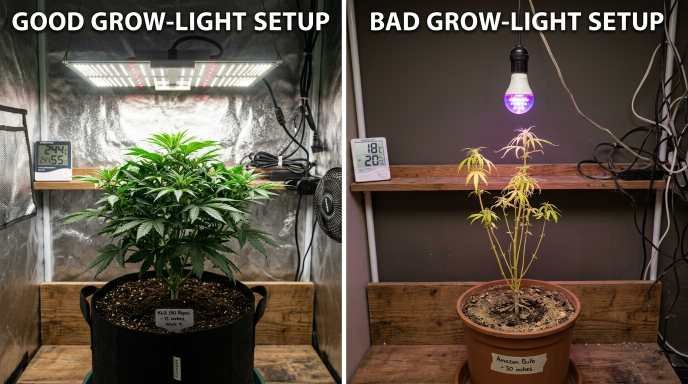
Buying based only on wattage
More watts do not automatically mean better plant lighting.
Choosing by lumens
A bright-looking bulb isn’t necessarily a strong grow light. Learn how to measure light for indoor plants in this guide.
Ignoring coverage
Always consider the entire area occupied by the plants.
Mounting the fixture too far away
Light intensity decreases as distance increases.
Leaving the light on 24 hours
Plants need darkness.
Using a weak decorative fixture for high-light plants
A beautiful lamp is useless if it doesn’t deliver enough light. Learn about high-light indoor plants from this article.
Buying without checking the plant’s requirements
A grow light that works perfectly for a pothos may be inadequate for a cactus.
The Fastest Way to Decide
Choose a bulb if you have only a few plants.
Choose LED bars if your plants live on shelves.
Choose a panel if you need high intensity or broad coverage.
Choose a pendant if the fixture will be visible and aesthetics matter.
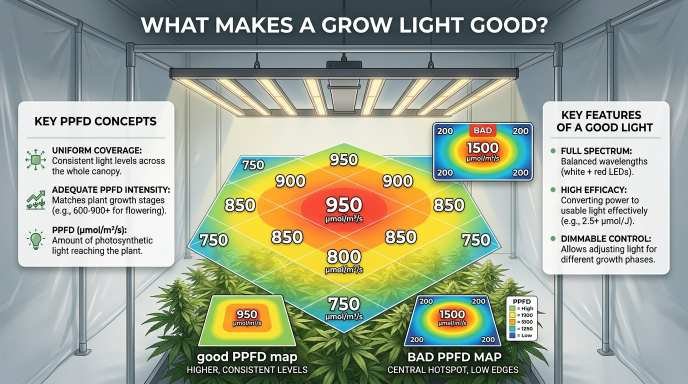
Choose based on PPFD if you’re growing succulents, cacti, seedlings, or other high-light plants.
The “best” grow light is therefore not a universal winner. It’s the product that solves your specific lighting problem without making you pay for coverage, intensity, or features you don’t need.
Bottom Line
For most indoor plant owners, full-spectrum LED is the best grow-light choice in 2026.
Choose a grow-light bulb for one or two plants, LED bars for shelves, and a high-output LED panel for larger collections or high-light plants. If the fixture will be visible in your living space, a pendant grow light offers a more attractive solution.
Before buying, prioritize PPFD, coverage, plant requirements, and mounting distance rather than wattage alone.
The best grow light isn’t the most powerful one—it’s the one that delivers enough usable light to your plants for the space and setup you actually have.
Frequently Asked Questions
What is the best grow light for indoor plants?
A full-spectrum LED is the best general-purpose option for most indoor plants. Use a bulb for a few plants, LED bars for shelves, and a panel or pendant for larger collections.
Are LED grow lights good for houseplants?
Yes. LEDs are efficient, versatile, and available in bulbs, bars, panels, and pendant fixtures suitable for different indoor growing situations.
How many hours should I run a grow light?
Many foliage houseplants can start with approximately 12–14 hours of supplemental light per day. Flowering plants and seedlings may require different schedules.
Is full-spectrum light better for indoor plants?
For most houseplant collections, full-spectrum white LED is the easiest all-around option because it provides useful wavelengths while producing natural-looking light.
Can a normal LED bulb grow plants?
Some ordinary LED bulbs can provide supplemental lighting, but purpose-built grow-light bulbs are generally easier to evaluate and position for plant growth.
Should I use lumens or PPFD?
PPFD is more useful for evaluating plant lighting. Lumens describe brightness for human vision, while PPFD describes plant-useful photons reaching the plant.
Do plants need darkness under grow lights?
Yes. Plants need a regular light-dark cycle. A timer makes it easier to maintain a consistent schedule.