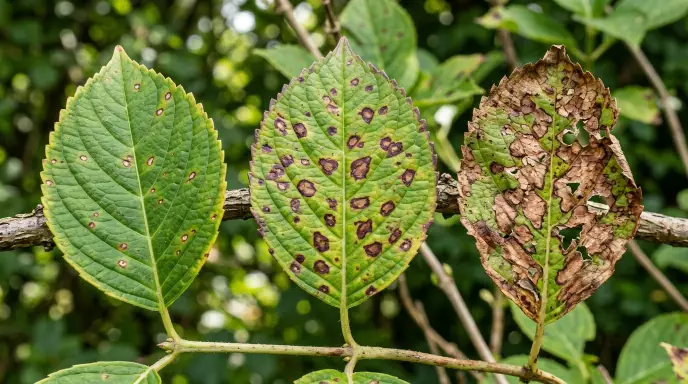
Brown spots on your plant’s leaves can feel like a mystery, but they usually come from one of five causes: fungal infection, bacterial infection, sunburn, watering issues, or nutrient deficiency. Brown spots are just one symptom of plant distress. Brown spots are just one symptom of plant distress. If your plant also has sticky residue or white cottony masses, you may be dealing with mealybug damage and treatment. Read our houseplant pest control guide. For a complete diagnostic framework that covers pests, diseases, and all types of care issues, see How to Diagnose Indoor Plant Problems. For a complete step-by-step guide on treating sunburned plants, see our how to fix a sunburned plant guide. The good news? Almost every cause is reversible if caught early, and new growth will come in clean once you fix the underlying problem. Brown spots can sometimes trace back to the pot. Poor drainage in a ceramic pot can lead to root issues that show up as leaf spots. Our Guide to ceramic pots that prevent brown spots and root issues covers what to look for.
You can tell them apart in under a minute by checking three things:
- Is the spot round or angular?
- Is it dry or water-soaked?
- Is it spreading across the plant, or staying on one side?
Here’s the quick version:
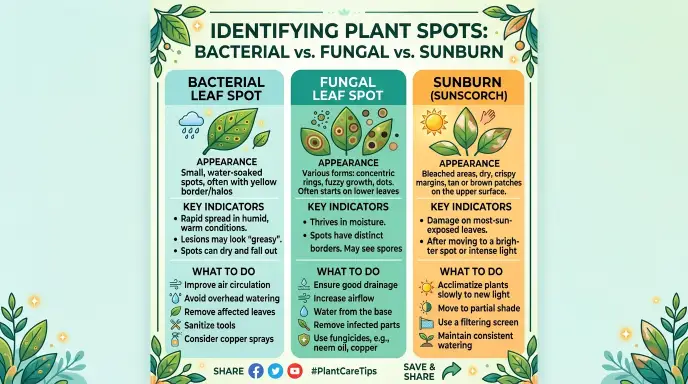
- Fungal: round, with a yellow ring around it.
- Bacterial: wet and greasy, almost bruised-looking.
- Sunburn: dry, crisp, and only on the side facing the light.
That’s the short answer. Here’s how to confirm which one you’re dealing with, and what to do next.
Table of Contents

Bacterial vs. Fungal vs. Sunburn: Quick-ID Cheat Sheet
Before diving into each cause, check your plant against this table.
If your spots are dry, crispy, and just on the tips/edges rather than the middle of the leaf, skip to the bottom of this article. You might have a watering issue, not a disease.
The one fact worth remembering:
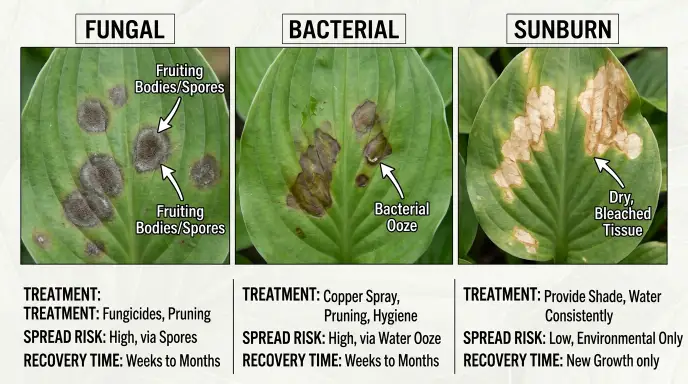
Fungal and bacterial spots spread leaf to leaf over time. Sunburn doesn’t. That single detail rules out half the guesswork.
What Do Fungal Leaf Spots Look Like?
Fungal leaf spot is the most common of the three, and usually the least urgent.

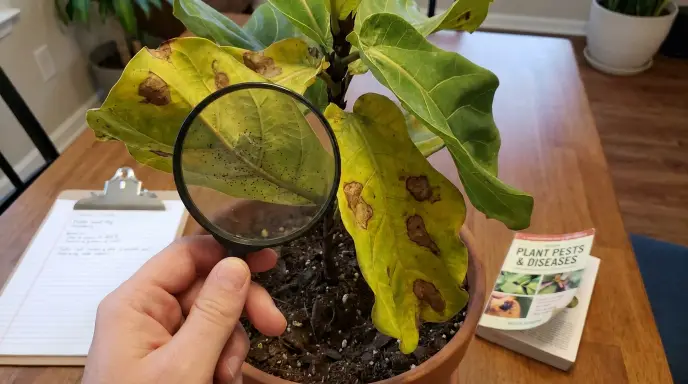
What it looks like:
- Round or oval spots with a clearly defined edge. For more on treating root-related fungal issues, check out our guide on root rot.
- Often a darker ring around the outside, giving a bullseye or target-like look.
- A yellow halo frequently surrounds the spot.
- Tiny black dots may appear inside the lesion—these are fungal fruiting bodies (spores), one of the clearest tells.
- Spots typically range from 2 mm to 1 cm and may merge as the disease progresses.
Why it happens:
- Fungal spores need moisture sitting on the leaf surface to germinate.
- Once a spore lands on a wet leaf, it can penetrate the tissue directly—no wound needed.
- This is different from bacteria, which generally need a way in first.
Why it starts low and spreads up:
- Older, lower leaves sit closer to the soil, where humidity is higher, and airflow is worse. For measuring humidity hygrometer is a must.
- Spores splash up from the soil during watering.
- Spores also spread through still, damp air near the base of the plant.
- Once established, the fungus produces more spores that travel to nearby leaves, especially if foliage stays wet.
Common culprits on houseplants:
What Do Bacterial Leaf Spots Look Like?
Bacterial spot is less common than fungal spot on houseplants, but it spreads faster and is harder to stop once it starts.
What it looks like:
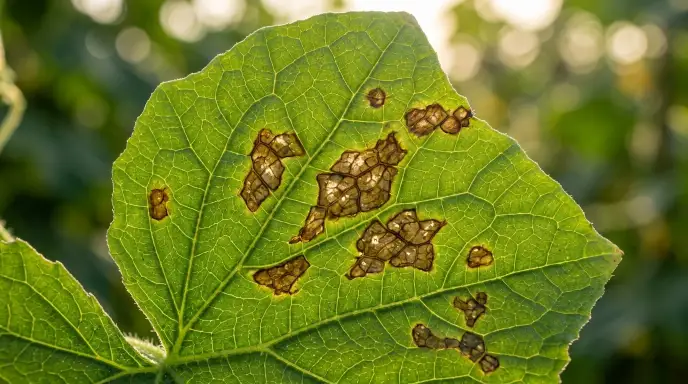
- Water-soaked spots that look dark, greasy, or almost translucent when held up to light—this is the single most useful diagnostic clue for bacteria. Read our full guide: Overwatering vs. Underwatering.
- Spots darken to brown or black over time.
- Angular or boxy shapes, since bacteria spread through the space between leaf veins and cannot easily cross veins.
- A chlorotic (yellow) halo frequently surrounds the lesion.
- Some lesions may ooze fluid containing bacteria in humid conditions.
- In advanced stages, tissue may disintegrate, and cracks may form.
If your plant has brown spots and you’re also noticing stretched-out growth or weak stems, it’s worth checking our guide on how to fix leggy growth.
Why it happens:
- Bacteria can’t punch through intact leaf tissue the way fungal spores can.
- They need an entry point: a pruning wound, an insect bite, a torn leaf edge, or damage from overhead watering.
- Once inside, wet conditions let them multiply and spread quickly.
- Spots may ooze visibly in humid air. Humidity affects fungal growth, so use a humidifier to increase humidity.
Why it’s the one to take most seriously:
- Bacterial infections don’t respond to fungicide; they require bactericides, and even those are only marginally effective.
- They can move through a plant faster than fungal infections.
- If a spot keeps spreading despite fungicide treatment, that’s often a sign it’s bacterial, not fungal.
What Does Plant Sunburn (Sunscald) Look Like?
Sunburn is the easiest of the three to rule in or out, because it follows the light, not the leaf.
What it looks like:
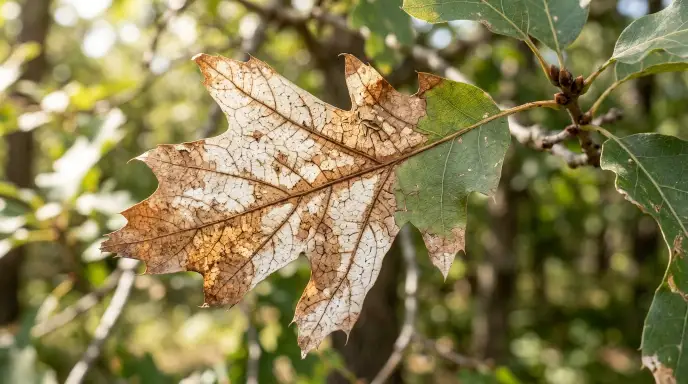
- Bleached, white, tan, or crisp brown patches, depending on severity. If your leaves are crispy but don’t match sunburn, check our crispy leaves guide.
- Dry, papery texture—almost like the tissue has been freeze-dried rather than infected.
- Minor cases may appear as yellowish or brownish crispy spots.
The one-sided tell:
- Rotate the plant and check the far side. Not all plants can handle direct light. See our list of sun-loving plants.
- If it’s untouched, you’re looking at sun damage, not disease.
- Neither fungal nor bacterial spots follow a light source this way; they show up wherever moisture and entry points exist. Read our guide on how much light plants need.
What triggers it:
- A sudden move into a brighter window. Understanding your window direction prevents sunburn.
- An unexpected heatwave. During heatwaves, adjust your watering routine- here’s how.
- A grow light positioned too close to the foliage.
Plants that were fine in a north-facing room and get moved to a south-facing windowsill overnight are a classic case. The leaf tissue simply isn’t acclimated to the new light intensity yet.
A note on leaf scorch:
In hot, dry conditions, plants can experience leaf scorch-brown, crispy edges caused by moisture loss even in shade. This is related to heat and dry air rather than direct sun exposure. If your plant is bone dry, use this rehydration checklist.
Why it doesn’t spread:
- Sunburn is physical damage, not a living organism.
- Once exposure stops or the plant is moved, no new spots appear elsewhere.
- Damaged tissue won’t recover, but it won’t infect the rest of the plant either.
What About Watering Issues and Nutrient Deficiencies?
Not every brown spot is a disease or sunburn. Two other common causes:
Over-watering:
Soft, squishy dark patches on leaves, often accompanied by yellowing. The plant may droop despite wet soil.
Under-watering:
Brown, crispy tips or edges. The leaf tissue dries out from the margins inward. Learn about a long-spout watering can to water properly.
Nutrient deficiency:
Yellow-and-brown veining patterns, usually appearing on older leaves first.
If your spots don’t match fungal, bacterial, or sunburn patterns, check your watering routine and fertilization schedule before reaching for treatments.
How to Tell If Leaf Spots Are Fungal, Bacterial, or Sunburn (60-Second Test)

If you’re still not sure after reading the sections above, run through this on the actual leaf in front of you.
- Hold the leaf up to a light source. Does the spot look water-soaked or translucent? That points to bacterial.
- Check the opposite side of the plant. Is the damage only on one side? That points to sunburn.
- Look inside the spot for a yellow halo or tiny black specks. That points to fungal.
- Touch the spot. Dry and papery leans toward sunburn. Soft, greasy, or slightly mushy leans toward bacterial. A drier spot with a defined ring leans fungal.
- Smell it. A fishy or rotten odor points to bacterial.
- Check the veins. Angular spots that stop at veins = bacterial. Spots that cross veins freely = fungal.
Most plants will give a clear answer within the first two steps.
Fungal vs. Bacterial vs. Sunburn: Treatment, Spread Risk, and Recovery Time
Can Sunburn Turn Into a Bacterial or Fungal Infection?
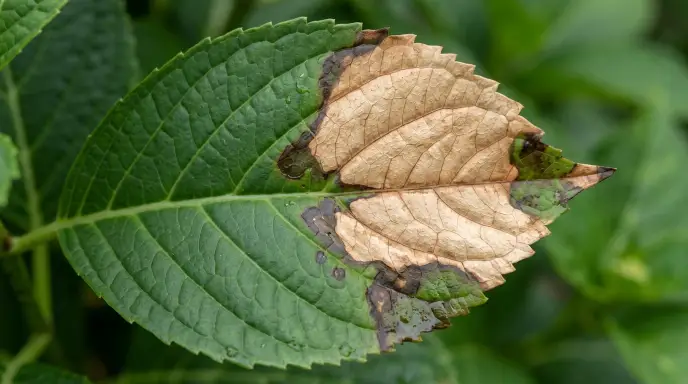
Yes—and this is where a lot of diagnoses go wrong.
Plants rarely deal with just one stressor in isolation.
- A sunburned leaf develops dead, damaged tissue at the site of the burn.
- That damaged tissue becomes an open door for bacteria or fungal spores that couldn’t have gotten in otherwise.
- So it’s possible to have genuine sunburn on one side that later develops a secondary bacterial or fungal infection at the site of that damage.
Watch for this if:
- New spots keep appearing near old sunburn damage.
- The area starts looking wet and dark instead of just dry and bleached.
If either happens, the original cause and the current problem might not be the same thing anymore. Spider mite damage is often mistaken for sunburn. Here’s how to tell them apart and prevent spider mites.
How to Treat Fungal, Bacterial, and Sunburned Leaves
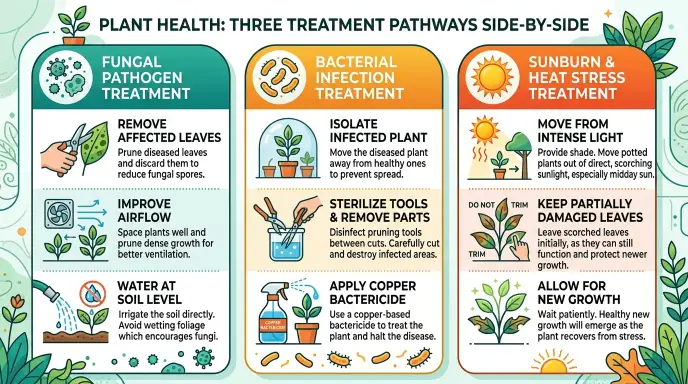
Fungal:
- Remove and dispose of affected leaves—don’t compost them.
- Improve airflow around the plant with a small fan or more spacing between plants.
- Water at the soil line instead of overhead to keep foliage dry.
- Use a copper-based fungicide or neem oil as a last resort for widespread cases
- Sterilize pruning tools between cuts to prevent spread.
Bacterial:
- Quarantine the plant immediately.
- Remove affected leaves using scissors or shears wiped down with rubbing alcohol between every cut.
- Dispose of infected leaves off-site—don’t compost.
- Avoid overhead watering and misting until the outbreak clears.
- Use a copper-based bactericide on remaining leaves—but know that bactericides are only marginally effective; they help protect uninfected tissue but will not stop spread on already infected plants.
- If more than half the plant is affected, consider discarding it to protect your other plants.
- Sterilize all tools after use—bacteria spread easily through contaminated equipment.
Sunburn:
- Move the plant back from direct light, gradually over a week or two rather than all at once.
- Keep partially damaged leaves if they still show some green; they continue photosynthesizing and supporting recovery.
- Only remove leaves that are more than 50% damaged.
- Trim off severely damaged leaves once new, undamaged growth appears.
- Skip fungicide or bactericide—nothing is living to treat.
- Water appropriately during recovery to support new growth.
How to Prevent Leaf Spots and Sunburn on Houseplants
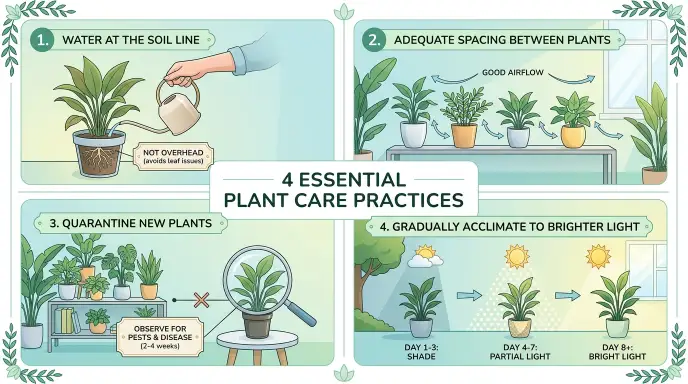
- Water at the soil, not the leaves—especially for plants prone to leaf spot. Watering correctly prevents most leaf spot issues.
- Water in the morning so any accidental splashes dry during the day. If your plant is overwatered, follow this recovery checklist.
- Give plants enough spacing for air to move between the leaves.
- Quarantine new plants for a couple of weeks before placing them near your existing collection.
- Move plants into brighter light gradually, over 1 to 2 weeks, rather than all at once.
- Wipe down pruning tools with rubbing alcohol between plants—especially if a bacterial issue is suspected nearby.
- Use pots with proper drainage and avoid letting soil stay constantly wet. The right potting soil prevents drainage problems.
- Remove fallen leaves from the soil surface promptly—they can harbor pathogens.
A Quick Story
I once nearly treated a fungicide-worthy case that wasn’t one. A pothos I’d moved to a brighter spot developed crisp brown patches on one side. I almost sprayed it before noticing the other side was completely clean—classic sunburn, not disease. Checking both sides of the plant first would’ve saved me a wasted trip to the store.
FAQ
Can a plant have more than one of these at once?
Do brown spots always mean the plant will die?
Is it safe to keep a plant with bacterial spot near other plants?
Not while it’s active. Bacterial infections spread easily through shared water, tools, or leaf-to-leaf contact in tight spacing. Isolating the plant until it clears is the safer move.
Will the spots go away on their own?
The damaged tissue won’t heal or turn green again, but new growth usually comes in clean once you address the cause. Existing spots are permanent on that leaf; future leaves are unaffected as long as you fix the underlying issue.
How do I know if it’s too late to save the leaf?
If more than half the leaf is affected, or the damage has spread to the stem, it’s usually better to remove the whole leaf. The plant will redirect its energy toward new growth instead. Holding onto a badly damaged leaf doesn’t help the plant recover faster.
Key Takeaways
- Round spots with a yellow halo point to fungal, especially if you spot tiny black specks inside
- Water-soaked, greasy, angular spots point to bacterial—and these need the fastest response
- One-sided, dry, papery patches point to sunburn—no treatment needed beyond adjusting the light
- Spread is the tiebreaker: fungal and bacterial spots move to new leaves; sunburn stays exactly where the light hit it
- Angular spots that stop at leaf veins = bacterial; spots that cross veins freely = fungal
- A fishy or rotten smell is a strong clue for bacterial infection
- A plant can develop a secondary infection at the site of old sunburn damage—don’t assume the first diagnosis is the only one
- Sterilize your tools between cuts—especially when dealing with bacteria
The next time a spot shows up on a leaf, you won’t need to guess. Hold it up to the light, check the other side of the plant, smell it, and check the veins—and you’ll know which of the five causes you’re dealing with before you even reach for a treatment. The Complete Beginner’s Guide to Indoor Plant CareThe Complete Beginner’s Guide to Indoor Plant Care