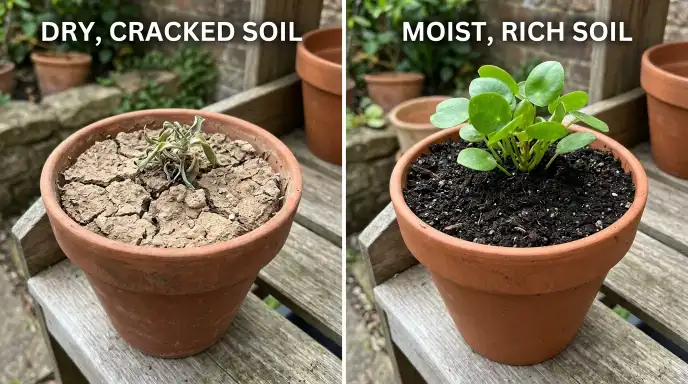
The soil you choose is the single most important factor in your plant’s survival more important than light, more important than watering routine, and more important than fertilizer. Here’s the thing: most “potting soil” sold at garden centers isn’t actually soil at all. And most houseplant deaths trace back to the wrong growing medium and the foundation of our complete beginners guide to indoor plant care.
This guide compares the top indoor potting mixes based on expert recommendations, real customer feedback, and key performance factors like drainage, moisture retention, and pest resistance. We’ve sifted through the options so you can pick the right mix for your plants and your home environment. The right soil prevents many problems. If your plant still struggles, How to Diagnose Indoor Plant Problems helps you figure out what’s going wrong. Great soil needs a great pot to work properly. Even the best potting mix can’t save a plant if the pot doesn’t have drainage or if the glaze holds too much moisture. Our Complete guide to choosing ceramic pots that work with your potting soil helps you match the right pot to your soil mix.
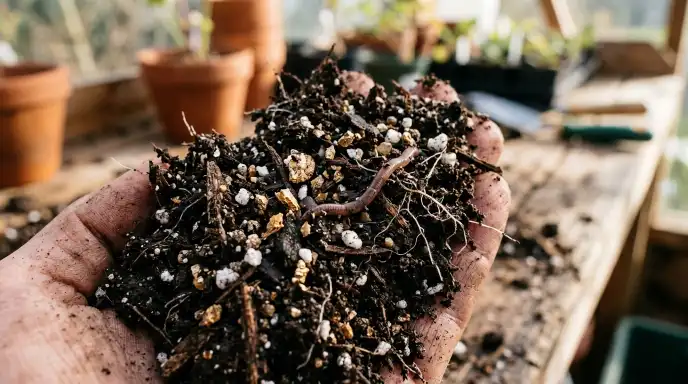
Quick Comparison: Best Potting Soils at a Glance
| Product | Best For | Key Feature | Volume | Price Range |
|---|---|---|---|---|
| Burpee Organic Premium Potting Mix | All-purpose, built-in fertilizer | OMRI-listed organic, slow-release feed for 3 months | 9 quarts | $$ |
| FoxFarm Happy Frog | Balanced all-purpose use | Beneficial microbes & organic matter | 12 quarts | $$ |
| Leaves and Soul Chunky Mix | Aroids & tropical plants | Fast-draining chunky structure | 1 gallon | $$ |
| Back to the Roots Indoor Mix | Compact storage, everyday plants | Expands with water, sustainable | 6 quarts | $ |
| Espoma Organic Potting Mix | Organic plant collections | Myco-Tone mycorrhizae for root health | 8 quarts | $$ |
| Miracle-Gro Indoor Potting Mix | Beginner-friendly, forgiving | Feeds up to 6 months, indoor-specific blend | 16 quarts | $ |
In-Depth Reviews
1. Burpee Organic Premium Potting Mix – Best Overall All-Purpose
Burpee has been a trusted name in gardening for generations, and this all-purpose mix earns top marks for its thoughtful formulation and ease of use.
The mix uses sustainable coconut coir instead of peat moss to retain moisture, combined with perlite for drainage and a slow-release organic fertilizer that feeds plants for up to three months. This built-in feeding is a major convenience: you don’t need to think about fertilizer for an entire growing season.
What users consistently appreciate:
- Well-draining texture that prevents root rot and mildew
- OMRI-listed for organic use
- Works well for both indoor pots and outdoor containers
- Reliable for starting seeds and cuttings
What to watch for:
Some users report fungus gnat issues, though this can often be managed by allowing the top inch of soil to dry between waterings. The bag size is smaller than some competitors, so heavy repotters may need multiple bags.
Best for: Gardeners who want a ready-to-use, organic mix with built-in feeding for a wide range of houseplants.
Where to buy: Amazon, Ace Hardware, Walmart
2. FoxFarm Happy Frog – Best Balanced All-Purpose Soil
FoxFarm is a heavyweight in the gardening world, and their Happy Frog formula is one of the most commonly used potting soils for container plants.
What makes this mix distinct is the inclusion of beneficial microbes and organic matter that support root development over time. Rather than being overly chunky or ultra-fast-draining, it strikes a middle ground: it holds enough moisture for consistent watering while allowing excess water to move through the pot.
Key advantages:
- Fine, well-aerated texture that plants love
- Balanced moisture retention
- Supports healthy root systems through microbial activity
- Ready to use straight from the bag
Considerations:
This is a traditional soil-based mix, so while it performs well, it may not be the best choice for plants that require extremely fast drainage, like some succulents. Why drainage matters: learn in this guide.
Best for: Container gardeners who want a reliable, balanced potting soil that supports consistent plant health.
Where to buy: Amazon, Ace Hardware, The Home Depot
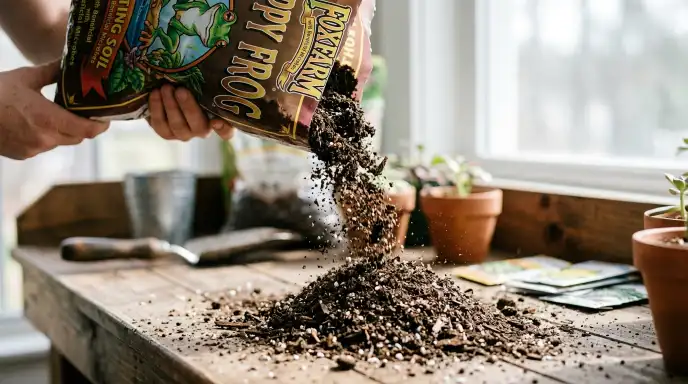
3. Leaves and Soul Chunky Mix – Best for Aroids & Tropicals
If you’ve struggled with overwatering or grow plants that crave airflow around their roots—like Monsteras, Philodendrons, or other aroids—this mix is worth serious consideration.
Instead of a fine, soil-like texture, this is a chunky and airy mix with visible pieces that create space around plant roots. That structure is intentional: it allows water to drain quickly while still leaving pockets of moisture behind.
What makes it stand out:
- Ideal for plants that benefit from frequent watering with fast drainage
- Helpful for plant owners who tend to overwater
- Available in plant-specific blends (Fiddle Leaf Fig, Snake Plant, Aloe, etc.)
- pH-balanced and ready to use
Potential downside:
The chunky texture may not suit all plants, and the volume is smaller per bag compared to some competitors.
Best for: Tropical plants, aroids, and anyone who wants a customized soil blend for specific plant types.
Where to buy: Amazon
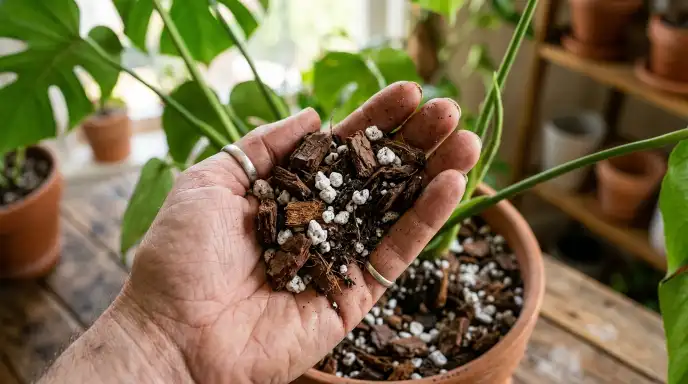
4. Back to the Roots Indoor Mix – Best Compact Storage Option
Back to the Roots is a beloved name in organic gardening, and this indoor soil reflects the brand’s straightforward, sustainable approach.
This mix comes as a compact block that expands with water into a workable indoor soil. Once expanded, it has a soft, consistent texture that’s easy to handle and adaptable to a wide range of plants. The company also runs a “Grow One, Give One” program—sharing a photo of your garden helps support classroom gardening kits.
Key benefits:
- Easy-to-store compact packaging
- OMRI-listed organic
- Sustainable peat-free formulation
- Great for smaller containers and everyday houseplants
Drawbacks:
Requires hydration before use, and the expanded volume is relatively modest compared to pre-moistened bagged options.
Best for: Small spaces, apartment dwellers, and gardeners who want a store-anywhere organic soil option.
Where to buy: Amazon, Target
5. Espoma Organic Potting Mix – Best for Organic Collections
Espoma has earned a strong reputation among organic gardeners, and this potting mix delivers with a focus on root health and sustainability.
The mix features Myco-Tone, Espoma’s proprietary blend of mycorrhizae that form beneficial relationships with plant roots, improving water and nutrient uptake. This is a significant advantage for plant health over the long term.
What users like:
- Organic formulation with mycorrhizae for stronger roots
- Good moisture balance
- USA-made quality
- Easily customizable with added perlite or bark
Points to consider:
No added fertilizer, so you’ll need to feed separately. It may retain too much moisture for succulents without amendments.
Best for: Organic-focused plant parents who want a clean, quality base to customize for specific needs.
Where to buy: Amazon, Walmart
6. Miracle-Gro Indoor Potting Mix – Best for Beginners
Miracle-Gro is the most recognizable name in gardening, and this indoor-specific blend is designed to take the guesswork out of plant care.
The mix feeds for up to six months with a built-in fertilizer and has a lighter texture than outdoor blends. It’s forgiving for new plant owners: it supports even moisture without turning muddy and reduces the number of steps on day one.
Strengths:
- Feeds plants for months—less to think about
- Light, non-muddy texture
- Forgiving for inconsistent watering
- Available in bulk 2-packs for larger collections
Limitations:
May be too moisture-retentive for cacti and succulents without adding extra perlite. It also works best with pots that have drainage holes.
Best for: New plant parents, busy people, and anyone repotting a whole plant shelf.
Where to buy: Amazon, Lowe’s, The Home Depot
What to Look for in Indoor Potting Soil
Not all black bags labeled “potting mix” are created equal. Here’s what the experts say matters most.
Soilless Mix vs. Traditional Potting Soil
Here’s the critical distinction that most beginners miss: most indoor potting mixes are soilless. That means they contain no actual dirt.
Professional plant experts strongly advise against using outdoor garden soil indoors. Alex Wertley, greenhouse team lead at Primex Garden Center, advises checking that a bag is labeled specifically for indoor use, since outdoor soil is too heavy and holds far more moisture than a container plant needs.
Why the difference matters:
| Factor | Traditional Potting Soil | Soilless Potting Mix |
|---|---|---|
| Drainage | Slow; compacts over time | Fast; resists compaction |
| Weight (5L) | 4-5 kg | 1.5-2 kg |
| Pest risk | Fungus gnats common | Pest-free out of the bag |
| Lifespan in pot | 6-9 months | 12-18 months |
According to the University of Wisconsin Extension, field soils aren’t used in pots because the added weight becomes a problem, and because field soil tends to compact, drain poorly, and carry a higher risk of disease and weed contamination.
Essential Ingredients
A high-quality indoor potting mix balances three critical variables: moisture retention, drainage, and aeration.
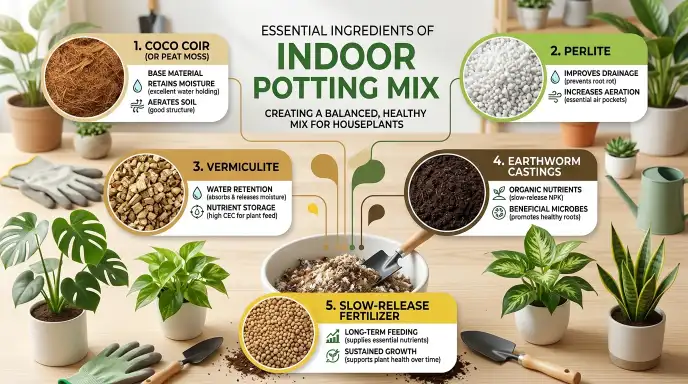
Look for these ingredients:
- Coconut coir or peat moss: The base that holds moisture. Horticulture specialists recommend these as the primary moisture-retention components. Not sure whether to choose coco coir or peat moss? Our detailed comparison can help you decide
- Perlite: The white, lightweight volcanic glass that creates air pockets. It allows excess water to drain and prevents soil compaction. Learn exactly how much perlite to add for your specific plants in our dedicated guide.
- Bark fines: Create chunky structure for airflow, especially important for aroids and tropicals.
- Compost or worm castings: Provide nutrients and support microbial life.
- Vermiculite: A mica product that helps retain moisture and nutrients.
Avoid mixes that:
- Contain actual garden soil or topsoil (too heavy, compacts)
- Are fine and dusty like ground coffee (will compact and suffocate roots)
- Rely heavily on synthetic fertilizer salts (can cause salt buildup and leaf tip burn)
Specialized Mixes for Specific Plants
Not all houseplants want the same soil.
Cacti and Succulents: Need fast-draining mixes with high ratios of perlite, sand, pumice, or gravel. Horticulture specialist Linda Langelo, with Colorado State University Extension, notes that without fast-draining soil, roots are especially prone to rotting in humid climates.

Aroids (Monsteras, Philodendrons, Peace Lilies): These want chunky potting soil. Horticulturist Steven Cirafesi, at Primex Garden Center, suggests mixing charcoal, orchid bark, and perlite into standard potting soil to build a properly chunky blend. Our complete DIY guide to making your own indoor potting mix provides all the details.
Orchids: Require specialized bark-based or sphagnum moss mixes. Cirafesi recommends continuing with whatever the original grower used for the best chance of success.
Environmental Factors
Your home environment should influence your soil choice:
- Bright, sunny rooms with low humidity: May require more moisture-retentive mixes to prevent rapid drying.
- Humid, dark rooms: Need better-draining soil to prevent root rot.
- High light increases evaporation on the soil surface, meaning you may want slightly more moisture-holding capacity.
FAQ: Potting Soil for Indoor Plants
Can I use garden soil for indoor plants?
No. Garden soil is too heavy, compacts in pots, drains poorly, and can introduce pests and diseases. Use a soilless potting mix designed for containers.
What’s the difference between potting soil and potting mix?
The terms are often used interchangeably, and there’s no legal standard. Most bagged products labeled “potting soil” or “potting mix” contain the same or similar ingredients—primarily peat, bark, and perlite. Check the label rather than relying on the name.
How do I prevent fungus gnats in my potting soil?
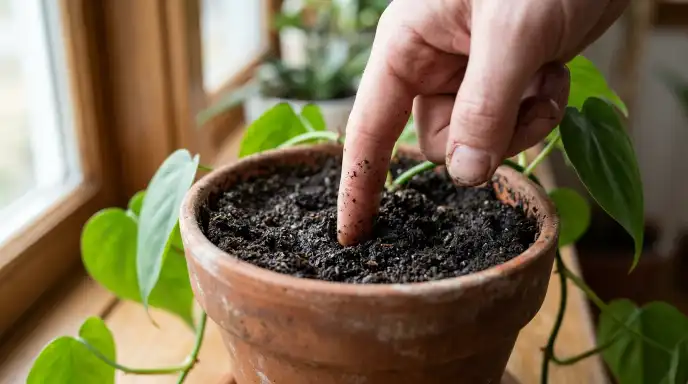
Fungus gnats breed in consistently wet soil. Choose mixes with good drainage ingredients like perlite or bark, allow the top inch to dry between waterings, and consider bottom watering. Soilless mixes tend to have fewer gnat problems than traditional potting soils. Using the right soil is key. Also, consider how to fix poor soil drainage in your pots to prevent gnats.
How often should I replace potting soil?
Soilless potting mixes typically last 12-18 months before they break down and compact. If your soil drains poorly or feels heavy, it’s time for a refresh.
Can I make my own potting mix?
Yes. Linda Langelo, horticulture specialist at Colorado State University Extension, recommends a formula of 40% peat or coco coir, 30% perlite, and 30% bark as a starting point for a custom all-purpose mix. Adding worm castings or compost provides nutrients.
Do I need special soil for succulents?
Yes. Succulents and cacti require fast-draining soil with high proportions of inorganic materials like perlite, sand, pumice, or gravel. Standard potting mix retains too much moisture and will cause root rot.
Final Recommendations
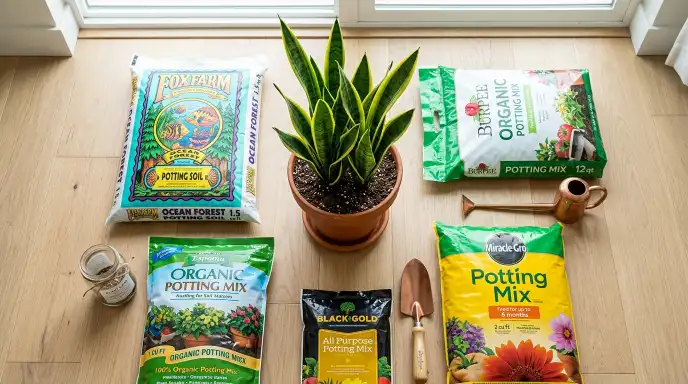
If you want the best all-purpose option with built-in feeding, choose Burpee Organic Premium Potting Mix—it’s OMRI-listed, feeds for three months, and works across a wide range of houseplants.
If you grow aroids or tropical plants that crave airflow and fast drainage, the Leaves and Soul Chunky Mix is specifically designed for your needs.
If you’re a beginner or want a forgiving, low-maintenance mix, Miracle-Gro Indoor Potting Mix feeds for months and takes the guesswork out of fertilization.
If storage space is tight, the Back to the Roots compact block expands when hydrated and stores easily.
If you prefer organic formulations, Espoma Organic Potting Mix with Myco-Tone mycorrhizae supports strong root development. Pair your new soil with the best pots for beginners or a moisture meter to perfect your watering.