Table of Contents
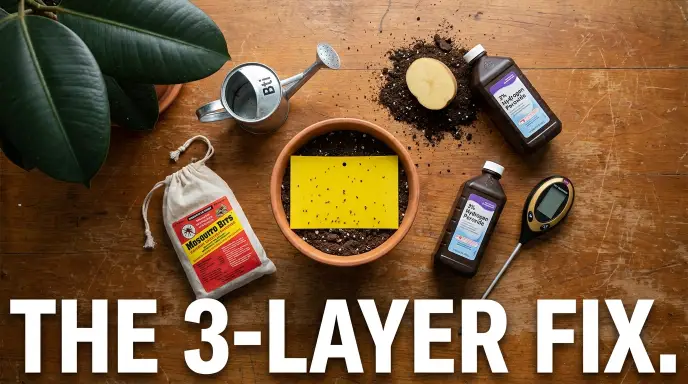
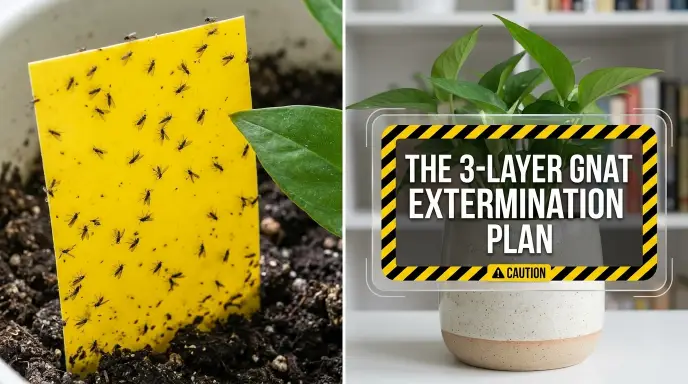
Getting rid of fungus gnats takes three to four weeks, not one day. You need to hit three things at once: trap the adults with yellow sticky cards, kill the larvae in the soil with Bti, and let the top one to two inches of soil dry out between waterings so eggs can’t survive. Skip any one layer, and the population rebuilds on schedule.
That timeline is why most people fail. They treat what they can see, the swarm vanishes for a week, then it comes back — and they conclude fungus gnats are unkillable. They’re not. They’re just running on a life cycle that outlasts your patience unless you know what you’re waiting for.
First, Confirm They’re Actually Fungus Gnats
Fruit flies, drain flies, and fungus gnats look nearly identical at arm’s length and respond to completely different treatments. Misidentifying them is the fastest way to waste two weeks.
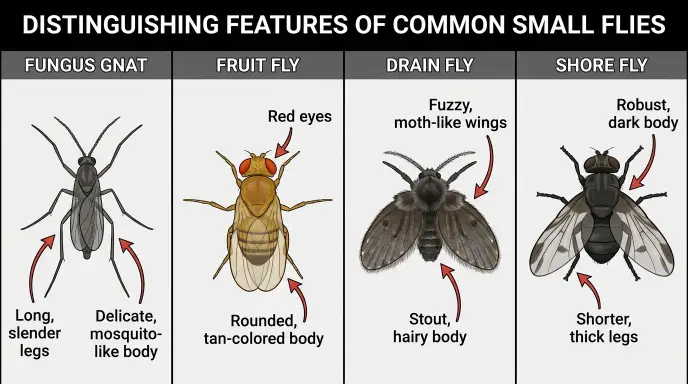
To find which pot is actually breeding them, tap the rim sharply and watch the soil surface at eye level rather than from above. Adults flush upward in a small puff. Do this to every plant in the room — usually one or two pots are the nursery, and the rest are just neighbors catching strays.
The Potato Slice Test
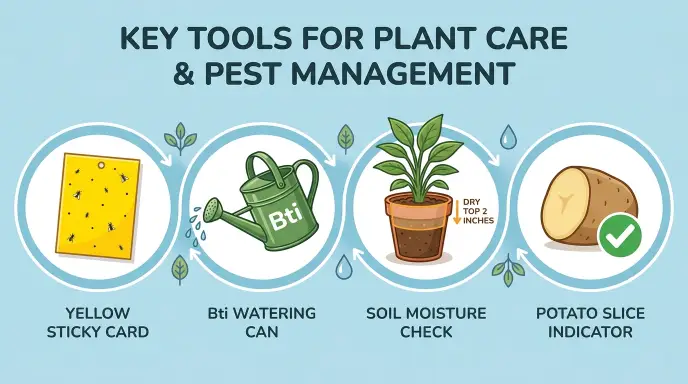
Adults in the air tell you there’s a problem. Larvae in the soil tell you how big it is. Oklahoma State University Extension recommends a check that almost no popular guide mentions: cut a raw potato into quarter-inch slices, lay them flat on the soil so they make full contact, and lift them after three to four days.
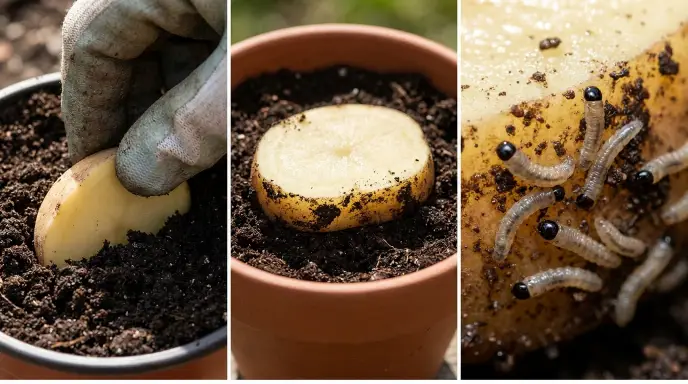
Larvae are about a quarter inch long, translucent or whitish, with a distinctly shiny black head. Find them clustered on the underside of a slice and you have an active soil population — which means adult-only treatment will not work, no matter how many gnats your traps catch.
Run this test twice: Once at the start to confirm, once at week three to verify. Clean slices at week three mean you’re genuinely finished. Larvae still there means your soil is still too wet, and you need to go back to Layer 3.
Why They Keep Coming Back
This is the part most guides skip, and it explains every failed attempt.
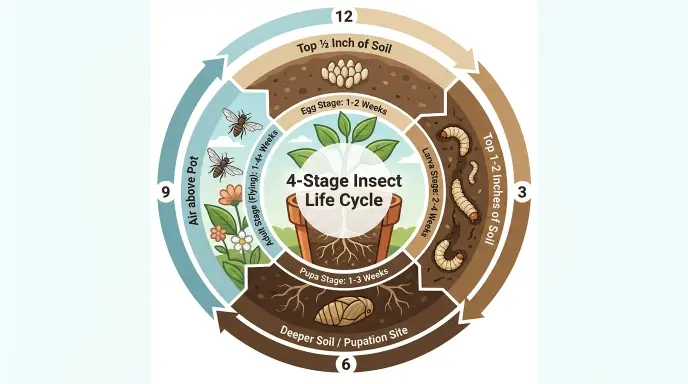
| Stage | Roughly how long | Where it lives | Can you see it? |
|---|---|---|---|
| Egg | 4–6 days | Top ½ inch of soil | No |
| Larva | ~2 weeks | Top 1–2 inches of soil | Only if you look for it |
| Pupa | 3–4 days | Soil | No |
| Adult | ~1 week | Air and soil surface | Yes — this is all you see |
A single female lays somewhere between 100 and 200 eggs before she dies. So the swarm in front of you is a fraction of the real population — the rest is underground on a three-to-four week clock. Warm rooms speed that clock up. Cool rooms slow it down.
| Insect | Where it hovers | Body shape | Drawn to | Correct fix |
|---|---|---|---|---|
| Fungus gnat | Soil surface, windows, your face | Skinny, long-legged, mosquito-like | CO₂ and damp soil | Dry soil + Bti + sticky cards |
| Fruit fly | Kitchen, fruit bowl, bin | Round, tan, stubby | Fermentation | Vinegar trap, remove food source |
| Drain fly | Sinks, showers, floor drains | Fuzzy, moth-like wings | Drain biofilm | Clean the drain |
| Shore fly | Soil surface, algae | Stocky, short-legged, dark | Algae on wet soil | Same as fungus gnats |
| Springtail | Soil only — jumps, doesn’t fly | Tiny, wingless | Damp organic matter | Harmless; dry the soil |
The mistake I see most often, and the one worth naming plainly: treating only the adults, watching the swarm collapse after each sticky card change, and assuming it’s over. It isn’t. Sticky cards are a scoreboard, not a treatment. Every larva in the pot is still maturing on schedule while you congratulate yourself.
The 3-Layer Method
Run all three layers simultaneously. Done one after another, they fail — the population simply shelters in whichever stage you aren’t treating.
| Method | Targets | Speed | Limitation |
|---|---|---|---|
| Yellow sticky cards | Adults | Immediate | Zero effect on larvae or eggs |
| Bti (Mosquito Bits) | Larvae | 3–7 days | Needs repeat applications |
| Hydrogen peroxide | Larvae, eggs | On contact | No residual — one-time knockdown |
| Drying the soil | Eggs, larvae | 1–3 weeks | Slow; some species won’t tolerate it |
| Beneficial nematodes | Larvae | 1–2 weeks | Cost; live organisms with a shelf life |
| Grit top dressing | Egg-laying | Preventive | Backfires badly on wet soil |
Layer 1: Trap the Adults
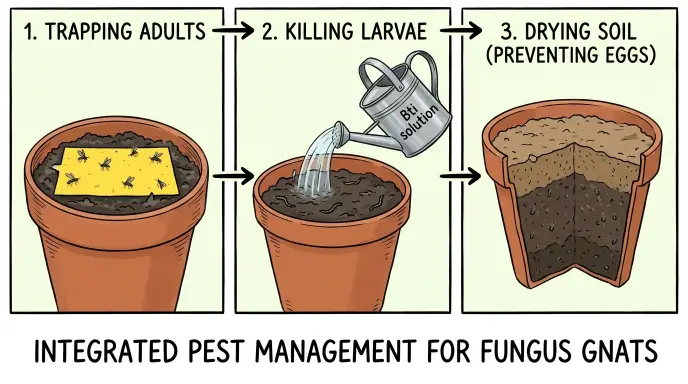
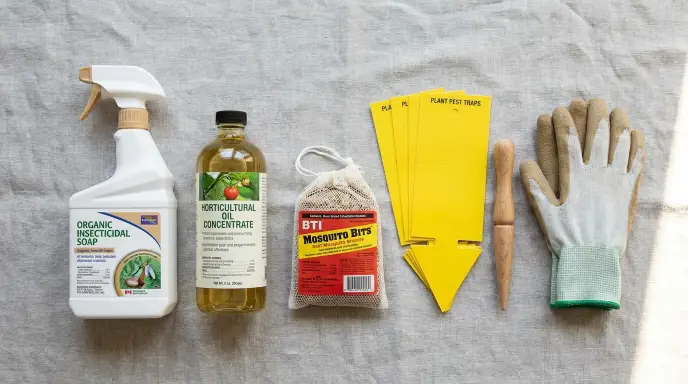
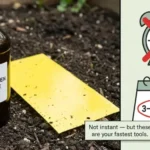
Yellow sticky cards work because fungus gnats are strongly attracted to yellow. Place them horizontally just above the soil surface rather than up among the foliage — adults spend most of their time crawling on and just over the soil, not flying at leaf height.
Then do the thing almost nobody does: count what you catch. Swap the cards weekly and note roughly how many are stuck to each one. A declining count across three consecutive weeks is the only trustworthy evidence that your larval treatment is working. Without that number, you’re guessing, and guessing is exactly what makes people quit at week two.
Why Apple Cider Vinegar Traps Don’t Work
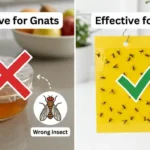
You’ll find the vinegar trap recommended on some of the largest gardening sites in the US: shallow dish, apple cider vinegar, drop of dish soap, plastic wrap with holes poked in the top.
It doesn’t work for fungus gnats. Oklahoma State University Extension states this directly — vinegar traps are a fruit fly tool, and they don’t work for monitoring fungus gnats. The reason is straightforward once you know it. Fruit flies hunt fermentation. Fungus gnats hunt carbon dioxide and the fungal odors rising off damp soil. Cider vinegar smells like nothing they’re looking for.
If you’ve built one and caught nothing, that’s not because your gnats are unusual. It’s because the trap was designed for a different insect.
Layer 2: Kill the Larvae
Bti is the reliable option. Bacillus thuringiensis subsp. israelensis is a naturally occurring soil bacterium lethal to fungus gnat larvae and harmless to plants, pets, and people. It’s what the University of Minnesota Extension recommends, and it’s sold as granules under names like Mosquito Bits. Steep roughly 4 tablespoons in a gallon of water for about 30 minutes, strain the granules out, and water your plants with the treated water. Repeat every 5 to 7 days for at least three cycles so you catch each new wave of hatching eggs. Check your product label, since concentrations vary between brands.
Hydrogen peroxide is fast but partial. Standard 3% peroxide diluted one part to four parts water kills larvae and eggs on contact. Water the soil thoroughly with it — you’ll hear fizzing as it reacts with organic matter, which is normal. The catch is that it breaks down into water and oxygen within minutes and leaves no residual protection. Useful as a knockdown when numbers are heavy. Useless on its own.
Beneficial nematodes are for larger collections. Steinernema feltiae nematodes and Stratiolaelaps scimitus predatory mites both hunt larvae in soil and keep working after application, which Bti and peroxide don’t. They’re also live organisms needing refrigeration, and they cost meaningfully more. For two or three pots, overkill. Above roughly fifteen plants, or on your second round of gnats, they start to make sense.
Layer 3: Change the Conditions
Extension services are unanimous that altering the growing conditions is the single most important step. Layers 1 and 2 buy you time. Layer 3 is what stops them from returning, and it depends entirely on how you water more than on any product you buy.
How dry is “dry”? An actual definition
Every article tells you to let the soil dry out. Almost none define it, which is why the advice fails so often. Here’s what it means in three ways you can verify yourself.
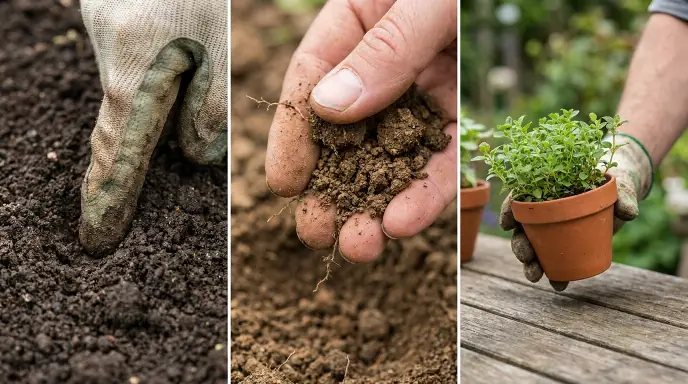
By depth. Larvae live and feed in the top one to two inches. That’s the only zone that has to dry. Drying the whole pot would stress most houseplants badly and isn’t the goal.
By feel. Push your index finger straight down to the second knuckle, withdraw slowly, and roll the soil between thumb and forefinger. Cool soil that smears or clings is still wet. Cool soil that crumbles into loose grains is ready. Warm, dusty soil means you’ve gone past dry and waited too long. This tactile calibration beats any gadget once you’ve done it a dozen times, and it sits alongside a few other no-tool checks worth knowing.
By weight. Lift each pot right after a full soak, then lift it again four days later. Learn that difference by hand. Once you have it, weight is the fastest reliable check you own—a gnat-safe pot feels noticeably lighter than you expect.
| Pot diameter | Depth to dry | Typical interval |
|---|---|---|
| 4 inches | Full 1–2 inches | 4–7 days |
| 6–8 inches | Top 2 inches | 7–12 days |
| 10 inches and up | Top 2–3 inches | 14–21 days |
Treat those intervals as a starting calibration, not a schedule. Light, species, and season all shift them, so check before watering rather than watering by calendar. If you’d rather measure than estimate while you learn the feel, a soil moisture meter gives you a second opinion.
Bottom watering
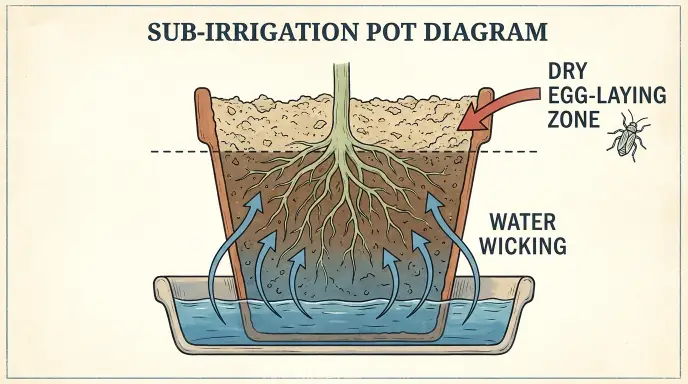
Bottom watering keeps the surface dry while roots still drink, removing the egg-laying zone without stressing the plant. Set the pot in a tray of water about an inch deep, leave it 15 to 20 minutes until the surface is just barely darkening, then remove it and let it drain fully. Empty the tray afterwards — standing water restarts the exact problem you’re solving.
Grit top dressing (and how it backfires)
A half-inch layer of horticultural grit, coarse sand, or small pumice on the surface gives females nowhere to lay. It’s genuinely effective as prevention.
Only apply grit to soil that is already dry to two inches. Laid over wet soil, it seals in moisture and gives the larvae a humid ceiling to breed under—the infestation gets worse for a couple of weeks before you work out why. To check whether you’ve made a barrier or a lid, drag a fingernail across the top half inch. If it flakes dry but stays dark and cool underneath, that’s a lid. Take the grit off and let it breathe.
Where They Actually Came From
There are only two realistic origins, and most articles only mention one.
The first is soil that stays wet. Larvae feed on fungi, algae, and decaying organic matter in consistently damp soil, so a pot that never dries on top is purpose-built habitat.
The second gets badly under-reported: you probably imported them in a bag of potting mix. Commercial mixes aren’t sterilized before shipping — deliberately, since sterilizing would kill the beneficial organisms that make the mix work. A bag can pick up gnats in transit or sitting on a garden center shelf. If your infestation began within a few weeks of repotting something, the bag is the likelier suspect than your watering can. And if your soil holds water far longer than it should no matter how you water, a better-draining potting mix is a structural fix rather than a treatment.
When to Repot Instead of Treating in Place
Most infestations don’t need a repot. These do:
- Seedlings or fresh cuttings. Their roots are too fragile to survive sustained larval feeding through a three-week treatment.
- Sour or swampy-smelling soil. That’s anaerobic decay, and it usually means root rot is running alongside the gnats.
- Three weeks of treatment with no decline in trap counts. The mix itself is holding too much water to ever dry properly.
- Visibly broken-down mix — dense, compacted, no structure left.
If you repot, shake off as much old soil as the roots will tolerate and move into something chunkier. Adding perlite is the simplest structural improvement — the right ratio depends on the plant, but more aeration means faster dry-down and less habitat. Go gently, since a rough repot on an already weakened plant can do more damage than the gnats were doing.
What Doesn’t Work
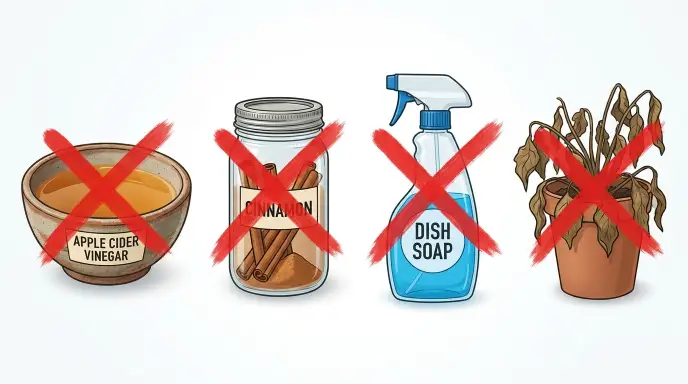
- Apple cider vinegar traps — wrong insect entirely.
- Cinnamon on the soil — mildly antifungal, which is where the myth started, but it doesn’t kill larvae or deter egg-laying at the amounts people sprinkle on.
- Dish soap sprayed on foliage — adults don’t live on the leaves. Wrong surface.
- Letting the plant desiccate completely — kills some larvae and may kill your plant first. Target the top two inches, not the root ball.
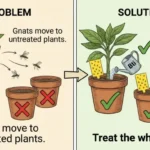
- Treating one pot in a room of ten — adults simply relocate. Treat the whole room at once.
Fungus Gnat Diagnostic Table
| Sign | Root cause | Immediate action | Prevention |
|---|---|---|---|
| Flies rising when you water | Adults emerging from soil | Sticky cards at soil level | Keep top 2″ dry between waterings |
| Larvae on potato slices | Established soil population | Bti drench, 3 cycles weekly | Faster-draining mix |
| Seedlings wilting, no other cause | Larvae feeding on fine roots | Repot into fresh mix now | Pasteurized mix for seed starting |
| Gnats back after two clear weeks | New eggs hatched; cycle unbroken | Continue all layers 2 more weeks | Don’t stop treatment early |
| Green or slimy soil surface | Algae from constant moisture | Scrape top ½”, let dry fully | Switch to bottom watering |
| Sour smell from the pot | Anaerobic soil, likely root rot | Unpot and inspect roots | Check drainage holes are clear |
| Gnats around one plant only | That pot is the nursery | Isolate and treat it hardest | Quarantine new plants for 2 weeks |
What Recovery Looks Like, Week by Week
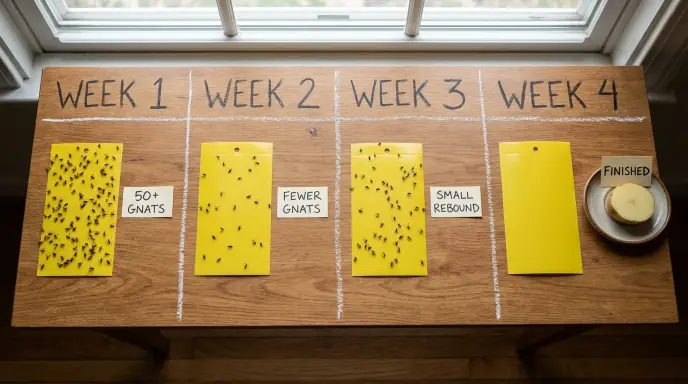
| Week | What you’ll see | What to do | What not to conclude |
|---|---|---|---|
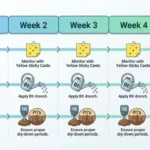
| 1 | Heavy trap catches. Looks worse before better. | All three layers. First Bti drench. | Not “this made it worse” — you’re catching what was already there. |
| 2 | Noticeably fewer adults. Feels finished. | Second Bti drench. Keep going. | Not “I’m done.” This is where most people quit and lose the month. |
| 3 | Small rebound as remaining eggs hatch. | Third Bti drench. Repeat potato test. | Not “it failed.” This wave is expected. |
| 4 | Trap counts near zero. Slices clean. | Stop Bti. Leave one card up as a monitor. | Not “I can water on a schedule again.” |
Household Realities That Keep Bringing Them Back
- Forced-air heat in winter. Dry indoor air pulls moisture off the surface fast, so pots look dry while the root zone stays saturated for weeks. People water on the visual cue and feed the gnats all season. Winter watering works differently — most houseplants need roughly half as much.
- Humidifiers. Running one for a calathea or fern creates a pocket where soil never fully dries. Aim it at the air, not the pots.
- Self-watering pots. A permanently damp wick is fungus gnat habitat by design. They solve real problems, but switch back to conventional watering until you’re clear.
- Saucers left standing. Empty every one twenty minutes after watering. This single habit prevents more gnat problems than any product.
- The autumn move indoors. Plants that summered outside come in carrying eggs. This is the biggest annual spike, and it’s worth quarantining them for two weeks.
- Opened bags of potting mix. Store sealed, dry, and off the floor.
Frequently Asked Questions
-
What kills fungus gnats instantly?

Nothing kills the whole population instantly. Hydrogen peroxide at 1:4 kills larvae and eggs on contact, and sticky cards remove adults within hours, but eggs keep hatching for up to three weeks. Anything promising an overnight fix is only addressing the gnats you can see.
-
Do vinegar traps work for fungus gnats?
No. Apple cider vinegar attracts fruit flies, which hunt fermentation. Fungus gnats are drawn to carbon dioxide and the fungal odors of damp soil. Oklahoma State Extension states directly that vinegar traps don’t work for fungus gnats. Use yellow sticky cards instead.
-
How long does it take to get rid of fungus gnats?
Three to four weeks with all three layers running at once. That’s set by the life cycle, not by how aggressive your treatment is. Warmer rooms run slightly faster, cooler rooms slower.
-
Will fungus gnats spread to my other plants?
Yes. Adults fly between pots and lay in any soil damp enough to support larvae. Treat every plant in the room simultaneously — treating one pot while the others stay wet is the most common reason infestations drag on for months.
-
Do fungus gnats bite, and are they harmful?
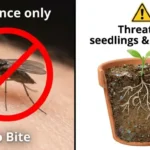
Adults don’t bite and don’t feed at all. They’re a nuisance to you and a genuine threat only to seedlings and fresh cuttings, whose fine roots the larvae feed on.
-
Can fungus gnats kill a plant?
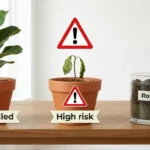
Rarely a mature one. Seedlings, cuttings, and young plants are at real risk. In established plants, the wet soil causing the gnats is usually more dangerous than the gnats — it’s the same condition that produces root rot.
The Bottom Line
Fungus gnats are a moisture problem wearing an insect costume. Trap the adults so you can measure progress, kill the larvae with Bti, and let the top two inches of soil dry properly between waterings. Run all three at once for three to four weeks, expect a rebound around week three, and don’t stop when the swarm first disappears.
If the symptoms don’t quite fit, or you’re not sure the gnats are the whole story, the full diagnostic guide walks through separating pests from disease and care mistakes. And if what you’ve found is on the leaves rather than in the soil, spider mites are the other likely culprit.