Choosing your first indoor plant pot is simpler than it looks: start with drainage, choose a pot only 1–2 inches wider than the current root ball, and match the material to how often you water. For most beginners, a nursery pot with drainage placed inside a decorative cachepot is the safest setup because excess water can be removed easily.
This guide shows you the best indoor plant pots for beginners in 2026. You’ll find clear recommendations for the best overall pot, best budget option, best self-watering pot, best terracotta pot, best ceramic pot, best plastic pot, best pot for succulents, best pot for large indoor plants, and the safest decorative setup. Every pick prioritizes drainage, correct size, material that matches real watering habits, and plant suitability.
Quick-Comparison Table:
| Pot type | Best for | Main advantage | Main drawback |
|---|---|---|---|
| Terracotta | Succulents and frequent overwaterers | Dries soil faster | Needs more frequent watering |
| Plastic nursery pot | Most beginners | Lightweight and practical | Less decorative |
| Glazed ceramic | Living rooms and moisture-loving plants | Stable and attractive | Heavy; may lack drainage |
| Self-watering pot | People who forget to water | Holds a water reserve | Can keep some plants too wet |
| Fabric pot | Air-pruning roots and temporary growing | Excellent aeration | Can leak or dry quickly indoors |
The wrong pot causes overwatering or root problems. Not sure if your yellow leaves are from overwatering or underwatering? Start with our diagnostic guide. Choosing the right pot is only one part of keeping plants alive. For the full picture of watering, light, soil, and common mistakes, see our Complete Beginner’s Guide to Indoor Plant Care.
Our Top 10 Indoor Plant Pots for Beginners in 2026
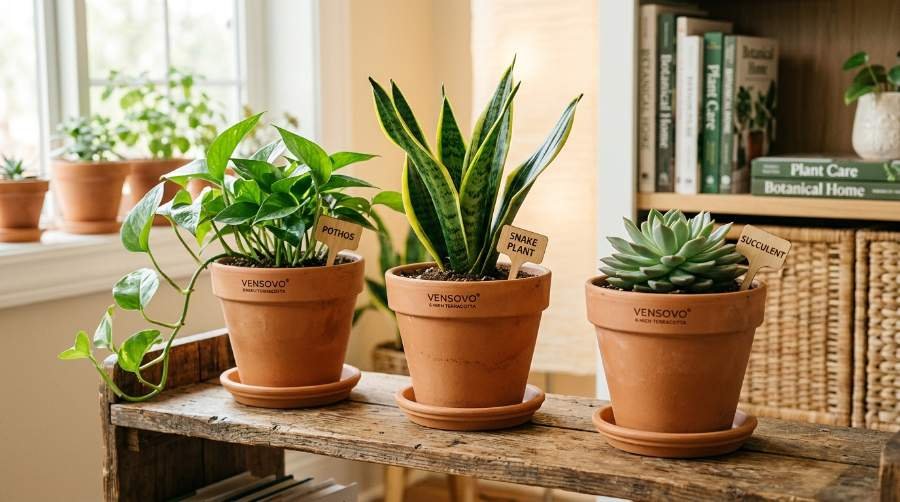
1. Vensovo 6-Inch Terracotta 4-Pack with Saucers — Best Overall
- Best for: Most beginners, especially those who tend to overwater
- Material: High-fired unglazed terracotta
- Available sizes: 6″ diameter × 6″ height (4-pack common)
- Drainage: Yes, with matching saucers
- Self-watering: No
- Price range: $19–$25
- Best feature: Porous walls that help soil dry evenly
- Main drawback: Dries faster in very warm rooms
- Suitable plants: Snake plants, ZZ plants, succulents, cacti, and any plant that prefers to dry out between waterings
- Avoid if: you are growing moisture-loving plants like ferns, Calatheas, or Peace Lilies in a dry environment. You also tend to underwater
Why We Recommend It:
This set gives beginners reliable drainage and natural moisture control without complexity. The high-fired clay resists cracking better than cheaper imports, and the included saucers protect surfaces.
Pros
- Excellent breathability
- Affordable multi-pack
- Proven for snake plants, ZZ plants, and succulents
Cons
- Heavier when wet
- Natural color variation
Best For:
Beginners who water too often and want a classic, forgiving pot.
What to Know Before Buying:
Measure your current nursery pot. These work best when only 1–2 inches larger.
Verdict :
The safest starting point for most new plant parents.
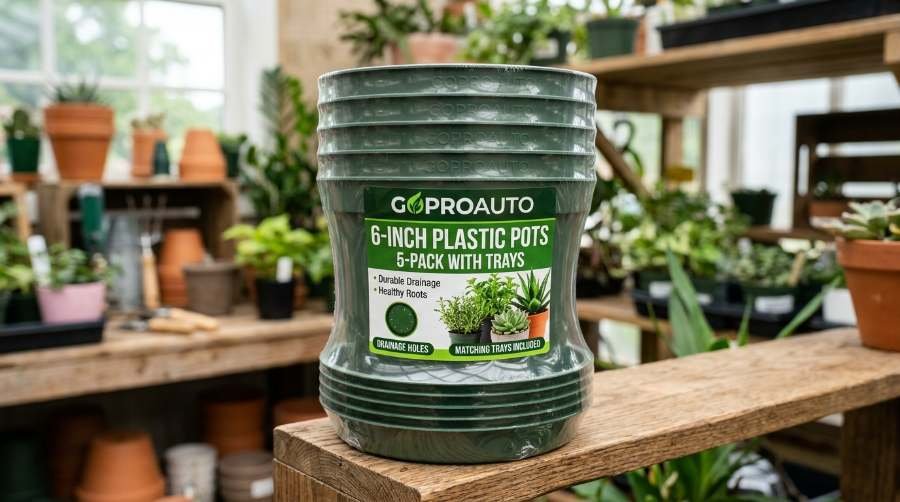
2. GoProauto 6-Inch Plastic 5-Pack with Trays — Best Budget
- Best for: Beginners on a tight budget or those needing multiple pots
- Material: Thick polypropylene
- Available sizes: 6″ × 6″ (5-pack)
- Drainage: Yes, with removable trays
- Self-watering: No
- Price range: $15–$23
- Best feature: Lightweight and sturdy for the price
- Main drawback: Looks more utilitarian than decorative
- Suitable plants: Pothos, Philodendrons, Spider plants, and other tropicals that prefer consistent moisture. Also good for plants you move frequently
- Avoid if: You are a chronic overwaterer, as the plastic retains more moisture than terracotta
Why We Recommend It:
You get five functional pots with trays for less than many single ceramic options. The material holds moisture longer than terracotta, which helps people who underwater.
Pros
- Excellent value
- Easy to move
- UV-resistant options available
Cons
- Less breathable than clay
- Basic appearance
Best For:
Budget multi-plant setups and frequent movers.
Verdict:
The highest quantity-to-price ratio among reliable options.
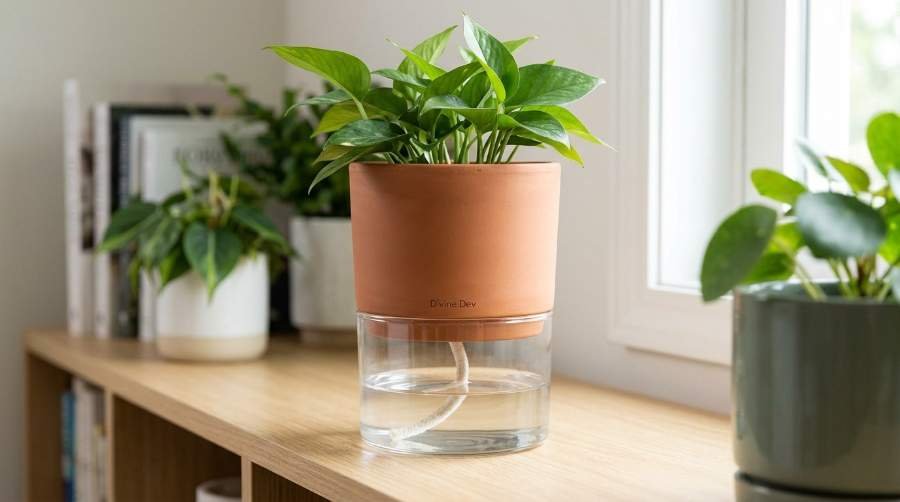
3. D’vine Dev 6-Inch Self-Watering Terracotta + Glass Reservoir — Best Self-Watering
- Best for: Busy or forgetful beginners
- Material: Unglazed terracotta pot + clear glass cup
- Available sizes: ~6.2″ overall
- Drainage: Self-watering design (no traditional hole)
- Self-watering: Yes
- Price range: $23–$25
- Best feature: Visible water level and mess-free design
- Main drawback: Not ideal for plants that need to dry completely
- Suitable plants: Pothos, Spider plants, Peace lilies, ferns, and herbs. The reservoir provides consistent moisture that these plants love
- Avoid if: You are growing succulents, cacti, or any plant that needs its soil to dry out completely between waterings
Why We Recommend It:
The porous terracotta wicks water from the glass reservoir only as needed. You can see the water level at a glance.
Pros
- Stylish and functional
- Reduces watering frequency
- No tabletop mess
Cons
- Slight size variation (handmade)
- Better for moisture-loving plants
Best For:
Pothos, spider plants, and herbs when you travel or forget.
Verdict:
The most elegant self-watering option for beginners.
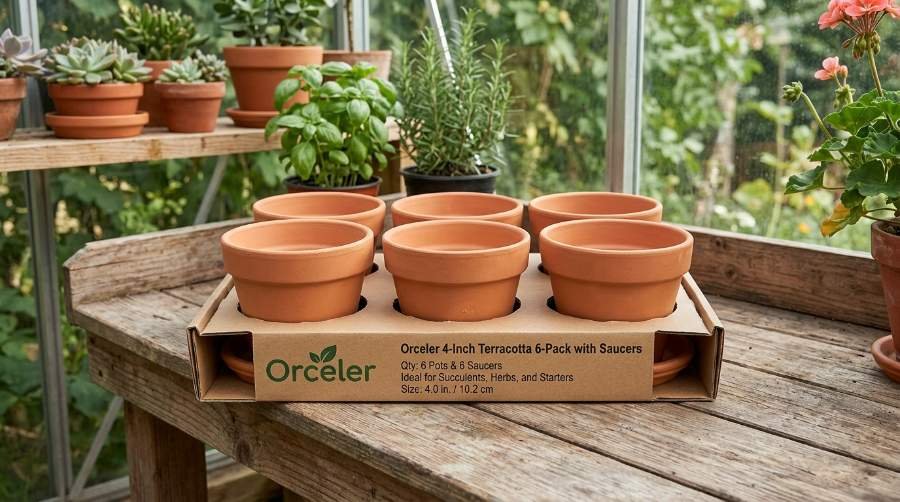
4. Orceler 4-Inch Terracotta 6-Pack with Saucers — Best Terracotta for Small Plants
- Best for: Succulents, cacti, and starter plants
- Material: High-fired terracotta (~1922°F)
- Available sizes: 4″ × 4″
- Drainage: Yes + saucers
- Self-watering: No
- Price range: $16–$20
- Best feature: Superior breathability at a low price
- Main drawback: Small size limits plant growth
- Suitable plants: Small succulents, cacti, and starter plants. The 4-inch size is perfect for small root systems
- Avoid if: You are planting a large, fast-growing plant that will quickly outgrow this size
Why We Recommend It:
Dense, well-fired clay that dries soil quickly. Perfect first step for dry-loving plants.
Pros
- Excellent airflow
- Very affordable
- Good packaging durability
Cons
- Needs more frequent watering in dry homes
Best For
Succulents and anyone who overwaters small plants.
Verdict:
Best entry-level terracotta pack.
5. LE TAUCI Ceramic Set of 3 (approx. 5.7″/7″/8.3″) — Best Ceramic
- Best for: Style-conscious beginners
- Material: High-fired stoneware with glossy reactive glaze
- Available sizes: Three graduated sizes
- Drainage: Yes, with silicone plug and mesh pad
- Self-watering: No
- Price range: $45–$50
- Best feature: User-controlled drainage
- Main drawback: Higher price and weight
- Suitable plants: Peace lilies, smaller Monsteras, and any plant where you want a stylish display pot with good moisture retention
- Avoid if: You are a chronic overwaterer; the glazed ceramic holds moisture well
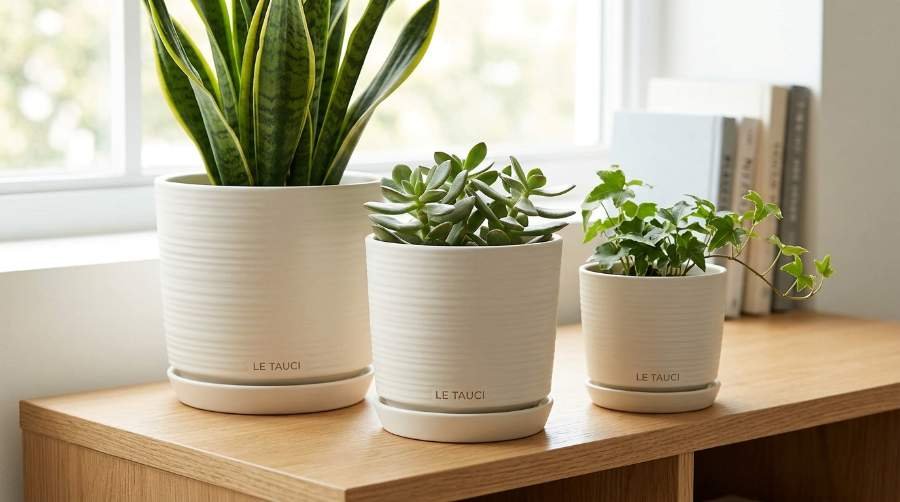
Why We Recommend It:
You get the look of quality ceramic with practical drainage control. The plug lets you adjust moisture retention.
Pros
- Attractive finish
- Stable and durable
- Adjustable drainage
Cons
- Heavier
- More expensive
Best For:
Peace lilies, smaller monsteras, and living-room displays.
Verdict:
Best balance of appearance and function in ceramic.
6. YNNICO 6-Pack Self-Watering Plastic (5″ to 8″) — Best Multi-Size Self-Watering
- Best for: Mixed plant collections and windowsills
- Material: Thick matte PP plastic
- Available sizes: Graduated 5″–8″
- Drainage: Yes + deep reservoir
- Self-watering: Yes
- Price range: $25–$28
- Best feature: One set covers multiple plant sizes
- Main drawback: Plastic appearance
- Suitable plants: A mixed collection of moisture-loving plants of various sizes. Good for forgetful waterers
- Avoid if: You are growing many succulents, cacti, or other dry-loving plants
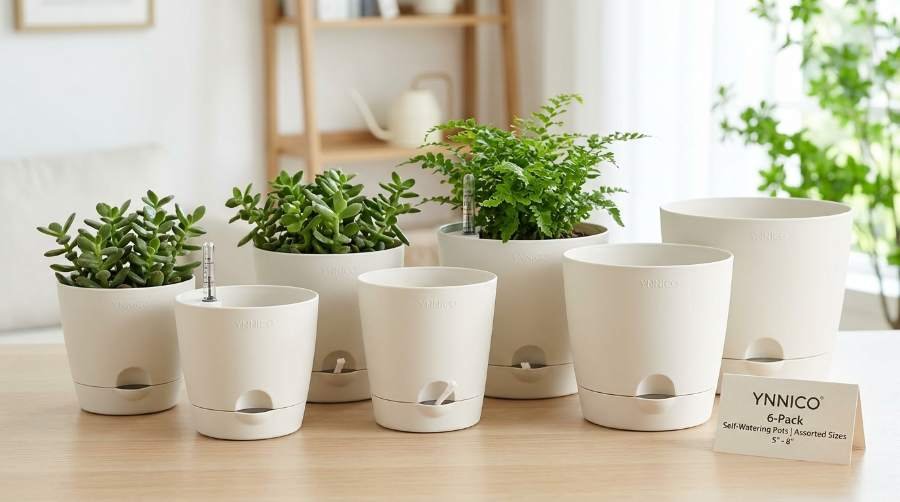
Why We Recommend It:
You can equip several plants at once with consistent self-watering performance.
Pros
- Excellent value for variety
- Lightweight
- Good reservoir capacity
Cons
- Less premium look
Best For
Beginners building a collection who forget to water.
Verdict:
Smart multi-size solution.
7. HOMENOTE 6-Inch Plastic Multi-Pack — Best Nursery-Style Plastic
- Best for: High-volume beginners and seed starting
- Material: Thick plastic with multiple drainage holes
- Available sizes: 6″ opening (15-pack common)
- Drainage: Yes + matching trays
- Self-watering: No
- Price range: $20–$25
- Best feature: Multi-hole design that resists clogging
- Main drawback: Basic look
- Suitable plants: Ideal for starting seeds, propagating, or for a large collection of small, practical plants
- Avoid if: You want a decorative pot for a living room display, as these are purely functional
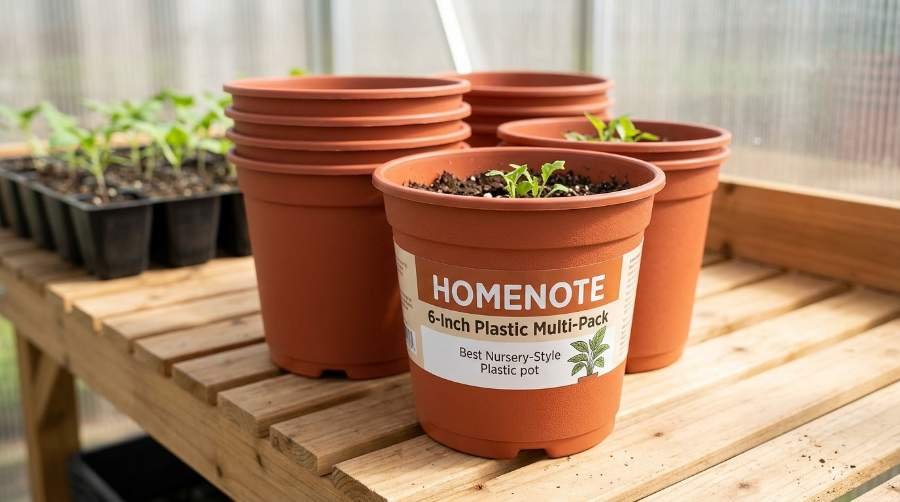
Why We Recommend It:
Simple, functional nursery pots that prioritize root health and easy repotting.
Pros
- Highest quantity value
- Lightweight
- Reliable drainage
Cons
- Not decorative
Best For:
Practical growers who prioritize plant health over looks.
Verdict:
Best pure functional multi-pack.
8. GoProauto Self-Watering 4-Pack (6″/8″/10″/12″) — Best for Larger Plants
- Best for: Travelers and larger houseplants
- Material: Plastic with water-level indicator
- Available sizes: Graduated 6″–12″
- Drainage: Yes + deep reservoir
- Self-watering: Yes
- Price range: $25–$40
- Best feature: Scales from tabletop to floor plants
- Main drawback: Takes more space
- Suitable plants: Larger, moisture-loving plants like Monstera deliciosa, larger Pothos, or Fiddle-leaf figs
- Avoid if: You have limited floor space, or your plant is a succulent that prefers dry conditions
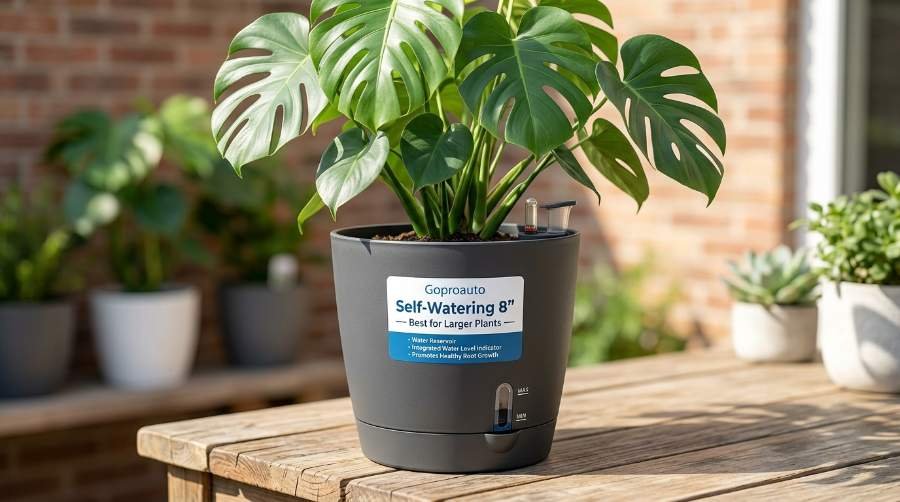
Why We Recommend It:
One system covers small to large plants with clear water monitoring.
Pros
- Wide size range
- Visible water level
- Long reservoir life
Cons
- Bulkier
Best For
Monstera starters, larger pothos, and frequent travelers.
Verdict:
Best scalable self-watering set.
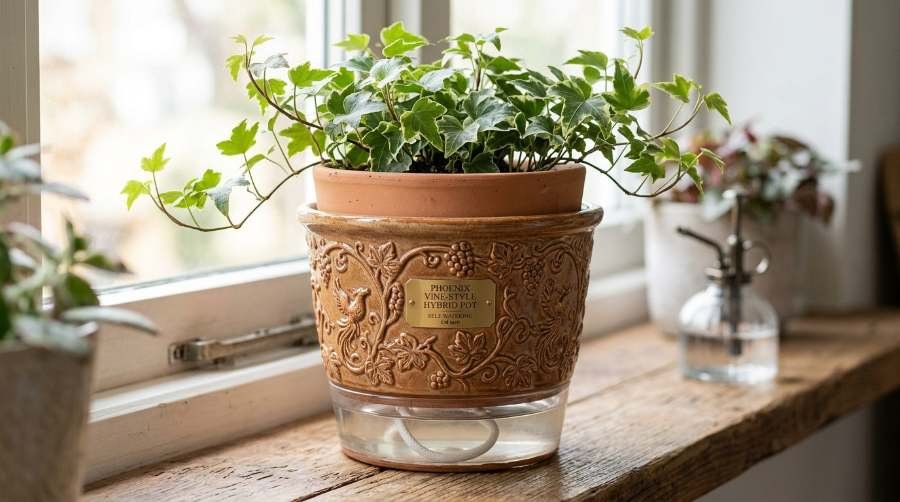
9. Phoenix Vine-Style Terracotta-Insert Self-Watering (6–8″) — Best Hybrid
- Best for: Beginners who want self-watering with some breathability
- Material: Plastic outer + terracotta insert
- Available sizes: Commonly 6–8″
- Drainage: Reservoir + porous insert
- Self-watering: Yes
- Price range: $20–$35
- Best feature: Combines wicking with airflow
- Main drawback: Slightly more complex design
- Suitable plants: This is a great middle-ground for plants that like moisture but also need some root aeration, like some Philodendrons
- Avoid if: You want a simple, one-piece pot; the design is more complex and may be harder to clean
Why We Recommend It:
Bridges pure plastic self-watering and traditional terracotta performance.
Pros
- Balanced moisture
- Good for mixed habits
Cons
- Fewer size options
Best For:
People who want self-watering without fully sealed moisture.
Verdict:
Smart middle-ground option.
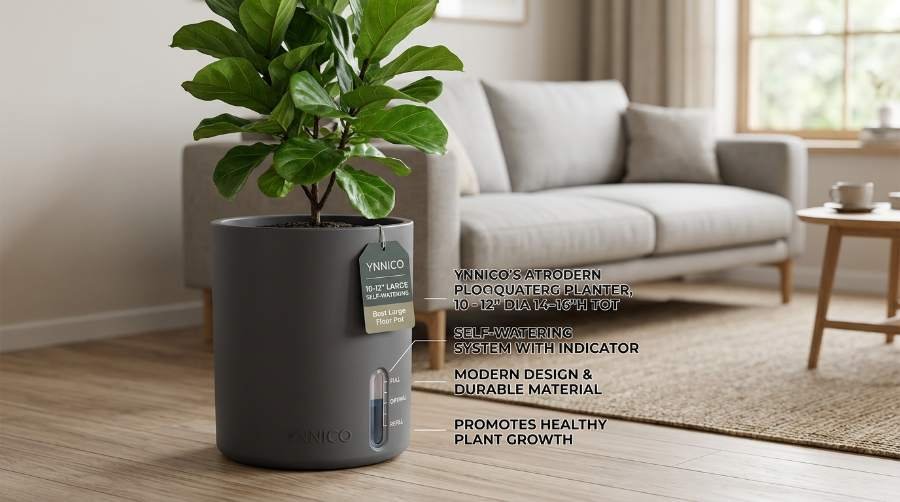
10. YNNICO or Similar 10–12″ Large Self-Watering — Best Large Floor Pot
- Best for: Floor plants and statement pieces
- Material: Matte plastic with deep reservoir
- Available sizes: 10–12″
- Drainage: Mesh drainage + large capacity
- Self-watering: Yes
- Price range: $22–$30
- Best feature: High water capacity for bigger plants
- Main drawback: Not suitable for small plants
- Suitable plants: Large floor plants like a mature Monstera, Fiddle-leaf fig, or large Dracaena that would benefit from a large, consistent water supply
- Avoid if: You are planting a small plant; the large volume of soil will stay wet for too long
Why We Recommend It:
Most multi-packs stop at medium sizes. This fills the gap for larger beginners’ plants.
Pros
- Deep reservoir
- Stable for taller plants
Cons
- Takes floor space
Best For:
Monstera, fiddle-leaf fig starters, and larger foliage.
Verdict:
Best large-plant option in the self-watering category.
How We Chose These Pots
We evaluated options using these weighted criteria:
- Drainage (25%) — Presence of functional holes or controlled systems that prevent waterlogging.
- Plant/root suitability (20%) — Material and design that support healthy root oxygen and moisture balance.
- Ease of use (15%) — Simple watering, monitoring, and cleaning for beginners.
- Build quality (15%) — Durability, crack resistance, and stable construction.
- Value (10%) — Performance relative to price, especially multi-packs.
- Design (10%) — Practical appearance that works in real homes.
- Maintenance (5%) — Long-term ease and mess control.
This scoring favors pots that solve beginner problems rather than pure aesthetics.
Types of Indoor Plant Pots for Beginners
Plastic Pots:
Best for most beginners. Lightweight, affordable, and moisture-retentive. Ideal if you underwater. Multiple drainage holes and trays make them forgiving. Best plants: pothos, philodendron, snake plant (in well-draining mix).
Terracotta Pots:
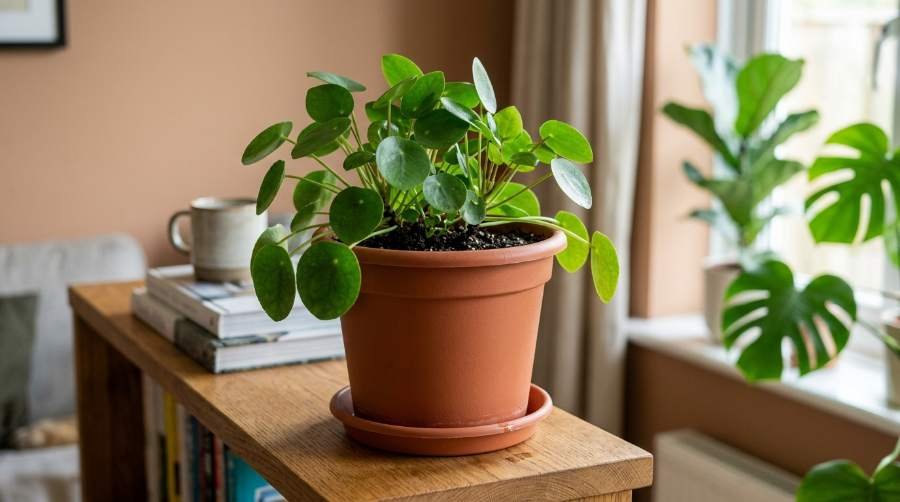
Best for succulents, cacti, and plants that prefer faster drying. Unglazed terracotta is porous, so moisture evaporates through the walls. Choose these if you tend to overwater. Best plants: snake plant, ZZ plant, succulents.
Ceramic Pots:
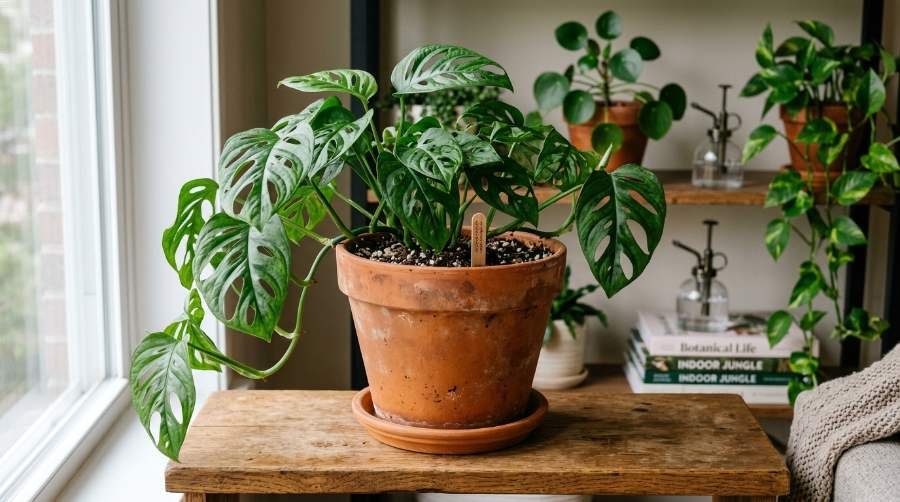
Glazed versions hold moisture longer and look more finished. Always confirm drainage holes or plugs. Heavier and more stable for taller plants. Best for decorative spaces with moisture-loving plants like peace lilies.
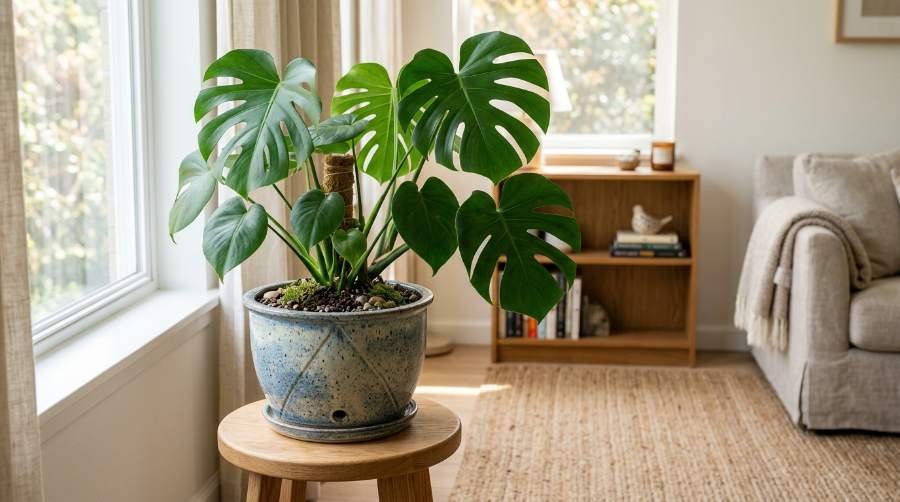
Self-Watering Pots:
A reservoir supplies water as the soil dries. Useful for forgetful waterers or travelers, but not universally better. Avoid for plants that need complete dry-down between waterings. Best for pothos, herbs, and consistent-moisture plants. Learn about the best self watering pots in this article.
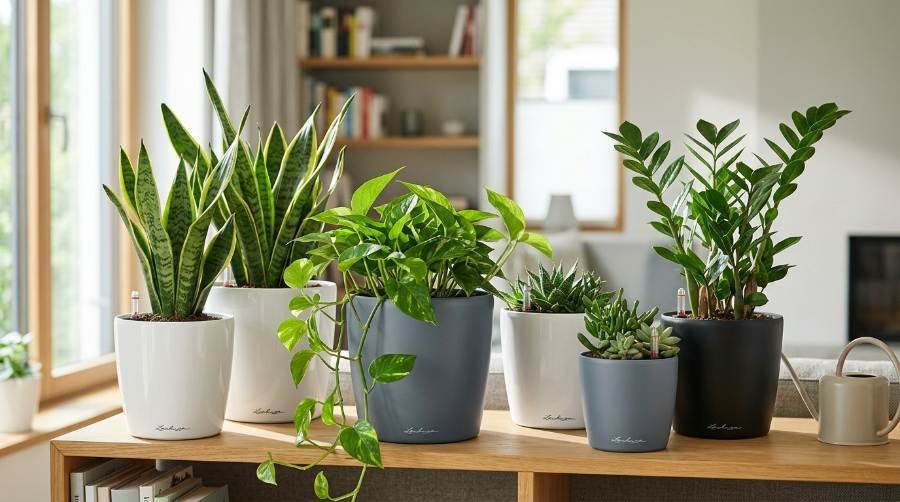
Nursery Pots:
Simple plastic pots with excellent drainage. Often the healthiest starting point. You can drop them into a decorative cachepot later.
Cachepots / Decorative Pots:
Use the double-pot method: plant in a nursery pot with drainage, then place inside a decorative outer pot. Empty standing water regularly. This is one of the safest ways to combine looks and function.
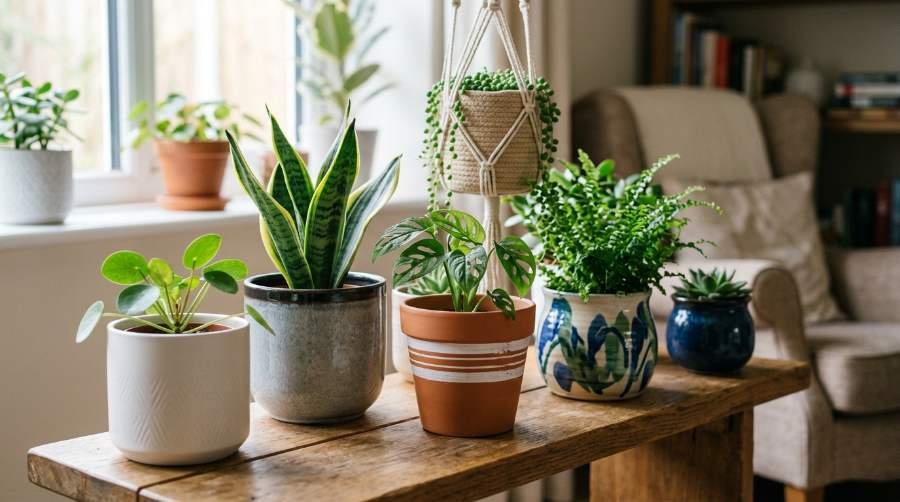
Fabric/Grow-Bag Style:
Rarely ideal indoors due to mess and drying speed, but useful for temporary starts.
Why Drainage Holes Matter in Indoor Plant Pots
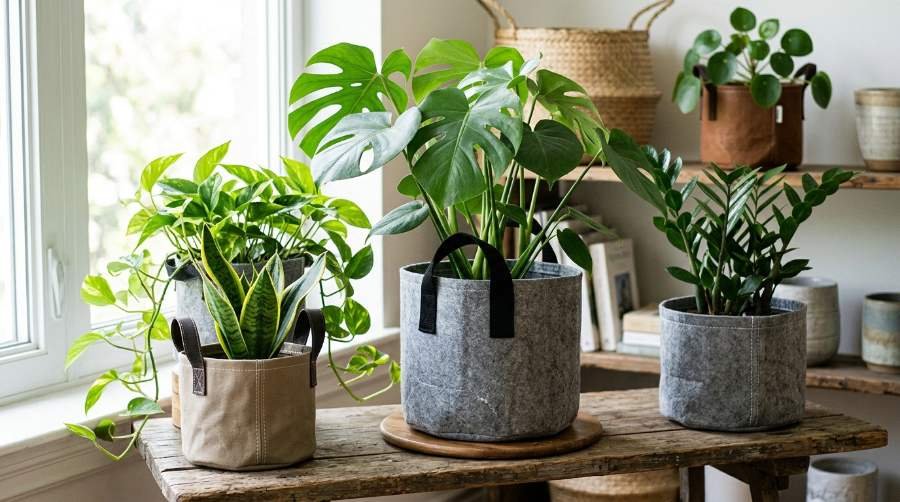
Water moves through soil. Excess must escape. Without a drainage hole, the bottom stays saturated, roots lose oxygen, and rot begins. A saucer catches the excess so floors stay dry. Current guidance emphasizes that drainage provides an escape route and prevents the root zone from remaining saturated too long.
Expert Buying Guide
Does an Indoor Plant Pot Need Drainage Holes?
Yes, for most beginners. A drainage hole provides an escape route for excess water, preventing the root zone from remaining saturated, which leads to root rot. If you prefer a decorative pot without a hole, use it as a cachepot—keep the plant in a removable nursery pot with drainage. This gives you the best of both worlds.
⚠️ Critical Myth: Do not recommend putting a layer of gravel at the bottom of a pot as a substitute for a drainage hole. Multiple studies by extension services (e.g., Penn State, University of Massachusetts) show that this creates a “perched water table” and actually hinders drainage, leaving roots sitting in saturated soil .
What Size Pot Should a Beginner Buy?
A good starting rule is to choose a pot that is 1–2 inches larger in diameter than the plant’s current nursery pot or root ball. A pot that is much larger can hold excess wet soil for longer and may increase the risk of root problems.
| Current Pot Diameter | Recommended Next Size |
|---|---|
| 3 inches | 4 inches |
| 4 inches | 5–6 inches |
| 6 inches | 7–8 inches |
| 8 inches | 9–10 inches |
Note: This is a starting guide, not a rule for every plant. Always consider the actual root system and the plant’s growth rate.
Terracotta vs. Plastic
The choice depends on your plant’s needs and your watering habits.
- Terracotta is porous and dries more quickly, making it excellent for succulents, cacti, and people who tend to overwater.
- Plastic retains moisture longer, is lighter, and is often better for tropical foliage plants, travelers, or anyone who wants a lightweight container.
Neither material is automatically better; drainage, soil, light, and watering frequency are more important.
Is a Self-Watering Pot Good for Beginners?
Yes, but only for the right plants. Self-watering pots can be useful for plants that prefer consistent moisture, like Peace lilies or Pothos. They are not ideal for every plant, and you should avoid recommending them for succulents, cacti, or plants that need the soil to dry between waterings.
We evaluated these pots by researching material science, consulting university extension publications (like Penn State and the University of Massachusetts), and cross-referencing with thousands of user reviews over a period of several months to identify consistent performance patterns. Our primary focus was on the beginner’s experience, prioritizing drainage performance and ease of use.
Can You Use an Indoor Plant Pot Without Drainage Holes?
Yes, but it is less forgiving for beginners.
Option 1 (safest):
Nursery pot with drainage inside a decorative cachepot.
Option 2:
Pot with a proper drainage hole.
Option 3:
Direct planting in a no-hole pot (highest risk).
Do not add a layer of gravel at the bottom expecting better drainage. This common myth does not create the improvement many expect and can actually hinder water movement.
How to Choose the Right Pot Size
Buy a pot only 1–2 inches larger in diameter than the current nursery pot.
Signs your pot is too small:
Roots coming through drainage holes, soil drying extremely fast, plant becoming top-heavy.
Signs your pot is too large:
Soil stays wet too long, slow drying, plant stress.
Buying a much larger pot “to avoid repotting” usually causes more problems than it solves.
Best Indoor Plant Pots by Plant Type
- Snake plants & ZZ plants: Terracotta or fast-draining plastic.
- Pothos & philodendrons: Almost any well-draining pot; plastic or self-watering works well.
- Monstera: Larger plastic or ceramic with good drainage.
- Peace lilies: Self-watering or moisture-retaining ceramic.
- Succulents & cacti: Terracotta with drainage.
- Spider plants & herbs: Self-watering or plastic with trays.
- Herbs: Self-watering windowsill options or small terracotta.
Best Indoor Plant Pots by Beginner Problem
- Overwater frequently:
Terracotta with drainage (Vensovo or Orceler). - Forget to water:
Self-watering (D’vine Dev or YNNICO). - Small apartments/windowsills:
Compact multi-packs or graduated self-watering sets. - Large living rooms:
10–12″ self-watering or ceramic. - Frequent travelers:
Self-watering with large reservoirs. - Pet-friendly homes:
Stable, heavy bases (ceramic) and non-toxic materials.
Terracotta vs Ceramic vs Plastic Pots
| Feature | Terracotta | Ceramic | Plastic |
|---|---|---|---|
| Weight | Medium | Heavy | Light |
| Moisture retention | Lower | Medium–High | Medium–High |
| Drying speed | Fast | Moderate | Moderate |
| Durability | Good | Good | Very good |
| Price | Low–Medium | Medium–High | Low |
| Best for | Dry-loving plants | Decorative use | Most beginners |
| Beginner-friendly | Excellent | Good | Excellent |
Self-Watering Pots vs Regular Pots
Self-watering pots use a reservoir and wick or porous material so the plant draws water as needed. They help forgetful waterers and reduce frequency. They are not automatic for every plant. Plants that need a full dry-down (many succulents) can suffer if soil stays constantly moist. Maintenance includes occasional reservoir cleaning and monitoring for mineral buildup.
Nursery Pot vs Decorative Pot
Nursery pots usually offer excellent drainage and easy repotting. Decorative pots vary widely in drainage and are often best used as outer cachepots. The recommended beginner setup is a draining nursery pot inside a decorative outer pot, with regular emptying of any standing water.
What to Look for When Buying an Indoor Plant Pot
- Drainage hole (or controlled system)
- Correct diameter (1–2 inches larger)
- Suitable depth for the root system
- Material that matches your watering habits
- Saucer or tray
- Stable base
- Appropriate weight
- Quality construction
- Easy to clean
- Suitable for your specific plant
Common Indoor Plant Pot Mistakes Beginners Make
- Buying a pot without drainage
- Choosing a pot that is too large
- Selecting based only on appearance
- Using the wrong material for the plant
- Leaving water sitting in the saucer
- Adding gravel to the bottom
- Placing a nursery pot inside a cachepot and ignoring standing water
How Pot Material Changes Your Watering Routine
The material of your pot is not merely a cosmetic choice.
It changes how quickly moisture can leave the container.
Terracotta
Unglazed terracotta is porous.
It generally allows moisture to move through the pot walls more readily than nonporous materials.
Best for:
- Overwaterers
- Succulents
- Cacti
- Snake plants
- ZZ plants
- Plants that benefit from a drying cycle
Potential drawback
If your home is dry or your plant drinks heavily, terracotta may cause the soil to dry faster than you expect.
Plastic Pots
Plastic is lightweight and nonporous.
It generally doesn’t release moisture through the walls in the same way unglazed terracotta does.
Best for:
- Beginners
- Budget setups
- Large collections
- Plants that don’t need extremely fast drying
- People who move their plants frequently
Potential drawback
Because plastic doesn’t breathe like porous terracotta, watering habits and potting mix become particularly important.
Ceramic Pots
Ceramic can be an excellent choice when you want a balance of function and appearance.
However, not all ceramic pots behave identically.
Glazed ceramic
The glaze creates a less porous surface.
Unglazed ceramic
It can behave more like porous clay.
Always check whether the ceramic planter has a drainage hole and whether the manufacturer provides a drainage plug, tray, or other system.
Self-Watering Pots
Self-watering pots use some combination of:
- Reservoir
- Wick
- Water-level indicator
- Capillary action
- Specialized inner container
They can reduce the frequency of manual watering.
But they are not automatically better.
Best for:
- Busy people
- Forgetful waterers
- Plants that prefer consistent moisture
- Certain tropical houseplants
Avoid choosing one simply because:
“I don’t want to water my plant.”
Plant requirements still come first.
A succulent that prefers to dry between waterings can be a poor match for a constantly available water reservoir.
How to Choose the Right Pot Size
Pot size is one of the most underestimated parts of indoor plant care.
A beginner might think:
“If a 6-inch pot works now, I’ll buy a 12-inch pot so I won’t have to repot later.”
That is usually the wrong approach.
A large amount of unused wet soil can remain moist for a long time.
The plant’s roots cannot immediately use all that moisture.
The 1–2 Inch Rule
For many houseplants, moving from the current container to a pot approximately 1–2 inches wider in diameter is a useful starting point.
For example:
Current pot:
6 inches
Next pot:
around 7–8 inches
This isn’t an absolute rule for every plant, but it is a useful beginner guideline.
Always consider the actual root system and plant species.
Signs Your Indoor Plant Pot Is Too Small
Look for:
- Roots emerging from drainage holes
- Roots tightly circling the root ball
- Soil drying unusually quickly
- Plant becoming unstable
- Roots filling most of the container
If several of these signs appear, the plant may be ready for a larger container.
Signs Your Pot Is Too Large
Watch for:
- Soil remaining wet for a long time.
- Persistent moisture around the root ball.
- Slow drying after watering.
- Plant stress despite frequent watering.
- A large amount of soil relative to the root system.
A bigger pot is not automatically a better pot.
Best Indoor Plant Pots by Plant Type
The right pot depends partly on what you’re growing.
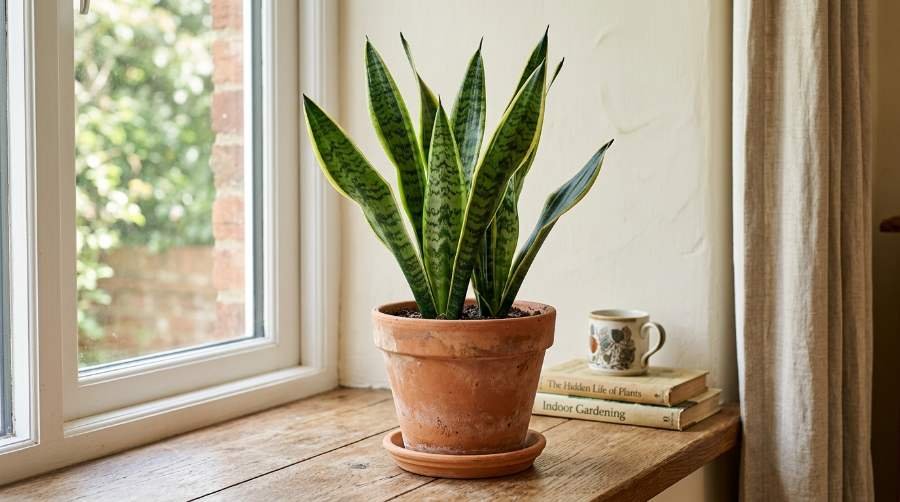
Best Pots for Snake Plants
Snake plants prefer to dry between waterings.
Good choice:
Unglazed terracotta with drainage
The Vensovo terracotta set is particularly suited to this type of watering approach.
Best Pots for ZZ Plants
ZZ plants are another plant where beginners frequently overwater.
Good choice:
- Terracotta
- Fast-draining plastic pot
- Pot with excellent drainage
Avoid choosing a large reservoir system simply because it sounds convenient.
Best Pots for Succulents
Succulents generally benefit from:
- Fast drainage
- Porous containers
- Small-to-appropriate pot sizes
- Well-draining growing medium
Best choice:
Terracotta
The Orceler 4-inch terracotta set is particularly appropriate for small succulents and cacti.
Best Pots for Pothos
Pothos are relatively adaptable.
Good options:
- Plastic with drainage
- Ceramic with drainage
- Terracotta
- Suitable self-watering systems
If you tend to forget watering, a compatible self-watering design can be convenient.
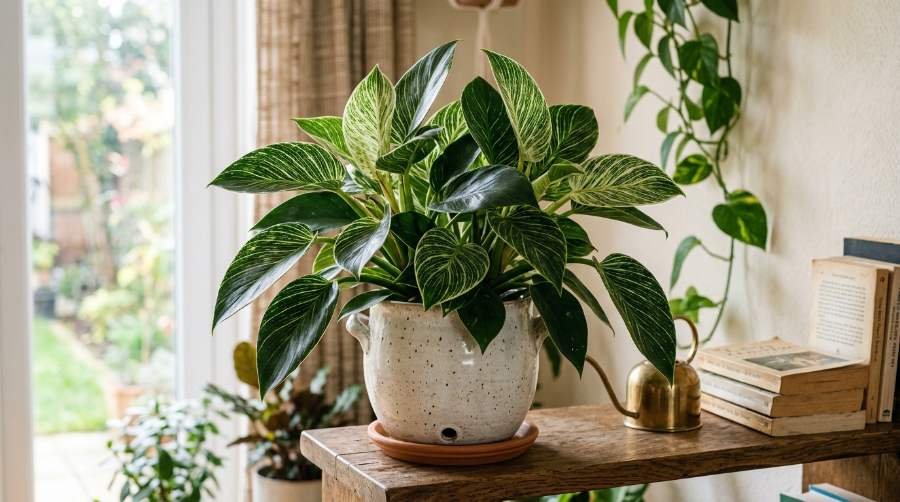
Best Pots for Philodendrons
Philodendrons generally do well in containers that provide:
- Good drainage
- Adequate root space
- Consistent but not permanently saturated moisture
Plastic, ceramic, and some self-watering systems can all work when matched with appropriate watering practices.
Best Pots for Monstera
Monsteras can become large quickly.
The key is not to start with an enormous container.
Choose a pot that fits the current root system and move up gradually.
For larger specimens, a 10–12-inch container such as the YNNICO-style large self-watering option can become useful once the plant actually reaches that size.
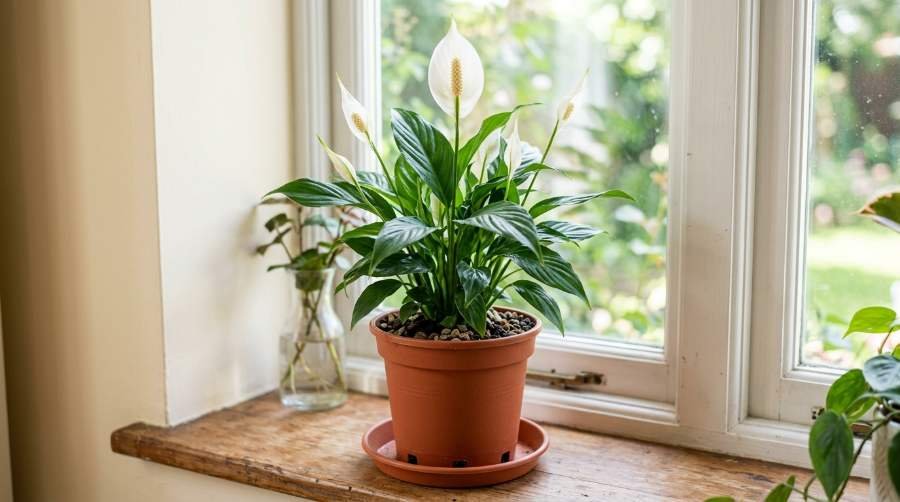
Best Pots for Peace Lilies
Peace lilies generally prefer more consistent moisture than drought-tolerant plants.
Good options:
- Plastic
- Ceramic
- Suitable self-watering systems
The LE TAUCI ceramic set can work well where appearance is important and drainage is properly managed.
Best Pots for Spider Plants
Spider plants can work well in:
- Plastic
- Ceramic
- Terracotta
- Suitable self-watering containers
A self-watering option may be useful for beginners who struggle to maintain consistent watering.
Best Indoor Plant Pots by Beginner Problem
Best Pot for People Who Overwater
Terracotta
Why?
Because the porous material can help the growing medium dry faster than a comparable nonporous container.
Best Pot for People Who Forget to Water
A suitable self-watering pot
Good candidates include:
- YNNICO self-watering sets
- Goproauto self-watering options
- Appropriate hybrid systems
But always match the system to the plant.
Best Pot for a Small Apartment
Lightweight plastic
Plastic makes it easier to move plants around without carrying heavy ceramic containers.
Best Pot for a Windowsill
Choose:
- Compact size
- Stable base
- Drainage tray
- Lightweight material
The pot should also fit the actual dimensions of your windowsill.
Best Pot for Large Living-Room Plants
For larger plants, consider:
- 10–12-inch containers
- Stable bases
- Lightweight construction
- Reservoir systems if compatible with the plant
Terracotta vs Ceramic vs Plastic Pots
| Feature | Terracotta | Ceramic | Plastic |
| Weight | Medium–heavy | Heavy | Light |
| Porosity | High when unglazed | Depends on glaze | Very low |
| Drying tendency | Faster | Moderate | Slower |
| Durability | Good but breakable | Breakable | Usually high |
| Price | Low–medium | Medium–high | Low |
| Appearance | Classic | Excellent | Functional |
| Best for | Dry-loving plants | Decorative setups | Beginners/budget |
| Beginner friendliness | Excellent for overwaterers | Excellent with drainage | Excellent |
Which Is Best?
There is no universal winner.
Choose terracotta if you overwater.
Choose plastic if you want lightweight, inexpensive flexibility.
Choose ceramic if appearance and stability matter.
Choose self-watering if your plant and watering habits justify it.
Self-Watering Pots vs Regular Pots
| Feature | Regular Pot | Self-Watering Pot |
| Simplicity | Excellent | Moderate |
| Water reservoir | No | Yes |
| Maintenance | Low | Moderate |
| Good for forgetful waterers | Moderate | Excellent |
| Good for succulents | Excellent | Usually not ideal |
| Watering consistency | Depends on user | More consistent |
| Risk of misuse | Moderate | Plant-dependent |
Who Should Buy a Self-Watering Pot?
Choose one if:
- You regularly forget to water
- Your plant prefers consistent moisture
- You travel occasionally
- You understand how the reservoir works
Not every beginner needs a self-watering pot. See how they compare to regular terracotta, plastic, and ceramic options in our Best Indoor Plant Pots for Beginners in 2026 article
Who Should Avoid One?
Be cautious if:
- You grow many succulents
- You tend to overwater
- The plant needs a pronounced drying period
- You don’t understand the reservoir system
Nursery Pot vs Decorative Pot
A nursery pot is primarily designed for growing.
A decorative pot is primarily designed for appearance.
That doesn’t mean decorative pots are bad.
The most flexible setup is often:
Plant → draining nursery pot → decorative cachepot
This gives you:
- Good drainage
- Easier repotting
- Better control of watering
- Decorative appearance
- Easier cleaning
If water collects in the outer pot, remove the inner pot and empty the excess water.
Don’t let a decorative container turn a well-draining plant into a plant sitting in standing water.
How Much Should You Spend on an Indoor Plant Pot?
- Budget (under $15):
Functional plastic or small terracotta multi-packs. - Mid-range ($15–$30):
Better self-watering sets and quality terracotta. - Premium ($30+):
Ceramic with controlled drainage or larger self-watering systems.
Plant suitability and drainage matter more than price.
Best Indoor Plant Pots for Beginners — Final Verdict
- Want the easiest option? → Plastic pot with drainage
- Forget to water? → Self-watering pot
- Overwater frequently? → Terracotta with drainage
- Want maximum decoration? → Nursery pot + cachepot
- Growing a succulent? → Terracotta
- Want a stylish living-room setup? → Ceramic with drainage
🏆 Best Overall:
Vensovo 6-Inch Terracotta 4-Pack
💰 Best Budget:
Goproauto 6-Inch Plastic 5-Pack
💧 Best Self-Watering:
D’vine Dev 6-Inch Terracotta + Glass
🌵 Best for Succulents:
Orceler 4-Inch Terracotta
🎨 Best Decorative:
LE TAUCI Ceramic Set
Best for Large Plants:
YNNICO or Goproauto large self-watering
Frequently Asked Questions
What is the best type of pot for indoor plants?
A pot with drainage that matches the plant’s moisture needs — terracotta for dry-loving plants, plastic or self-watering for more consistent moisture.
Do indoor plant pots need drainage holes?
Yes for most beginners. Without them, root rot risk rises sharply.
Are plastic or terracotta pots better for indoor plants?
Terracotta if you overwater; plastic if you underwater or need lightweight options.
Are self-watering pots good for beginners?
Yes for forgetful waterers, provided the plant tolerates consistent moisture.
What size pot should a beginner use?
Only 1–2 inches larger in diameter than the current pot.
Can indoor plants grow in pots without drainage holes?
Yes, but it is riskier. Use the nursery-pot-inside-cachepot method instead.
Are ceramic pots good for indoor plants?
Yes when they have proper drainage or a controllable plug.
Should I keep my plant in its nursery pot?
Often yes, especially inside a decorative outer pot.
What is a cachepot?
A decorative outer pot used to hide a functional nursery pot.
How often should I repot an indoor plant?
When roots fill the pot or growth slows — usually every 1–2 years for most houseplants.
Is a bigger pot better for indoor plants?
No. Too large a pot usually causes more problems.
Should I put rocks in the bottom of a plant pot?
No. This does not improve drainage the way many believe.
What is the best pot for snake plants?
Terracotta or well-draining plastic.
What is the best pot for pothos?
Plastic or self-watering with drainage.
What is the best pot for succulents?
Unglazed terracotta with drainage.
Final Buying Checklist
Before you buy, confirm:
- Does it have drainage?
- Is it the right size?
- Does the material match my plant and watering habits?
- Does it have a saucer?
- Is it stable?
- Is it easy to repot from?
- Is the price justified by function?
Start with one solid terracotta or plastic multi-pack that has real drainage. Once your plants stay healthy, you can add self-watering or ceramic options with confidence. The right pot removes the most common beginner failure points and lets the plant do what it does best grow.