If your houseplant’s leaves are curling, browning at the edges, or just look tired no matter how often you water, the problem probably isn’t water at all. It’s humidity. Low humidity is a primary cause of crispy leaves. Learn to identify it here. The fastest way to increase humidity for indoor plants is to combine a small humidifier with grouped plants and reduced airflow from vents, then confirm it worked with a cheap hygrometer instead of guessing. That’s the short answer. Below is everything that goes into doing it right, including which popular tricks barely move the needle and which ones actually work. Low humidity invites spider mites; here’s how to identify and stop spider mites.
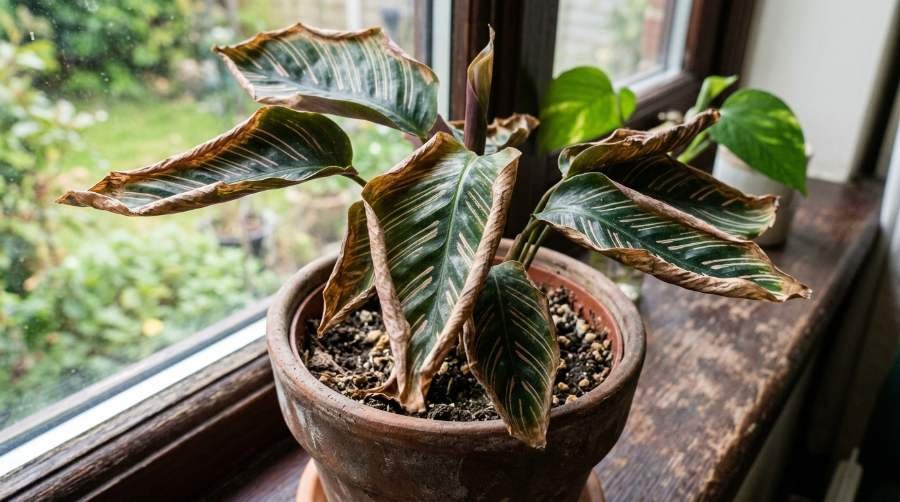
My own wake-up call was a maidenhair fern I kept watering more and more, convinced I was underwatering it. The soil was damp every time I checked. It kept crisping anyway. A five-dollar hygrometer told me the real story: 22% humidity in a room that fern needed at 60%.
Why Humidity Matters for Indoor Plants
Plants lose water constantly through tiny pores on their leaves called stomata, in a process called transpiration. Roots pull water up to replace what’s lost, and in balanced conditions, that cycle keeps leaves firm and hydrated. Dry air speeds up transpiration because it pulls moisture out of leaves faster than roots can resupply it, even when the soil itself is perfectly moist.
This is why a plant can be watered on schedule and still look thirsty. Before you assume it’s underwatering, use this guide to confirm the real cause of yellow leaves. The problem isn’t the root zone. It’s the air around the leaves, which is exactly why so many people search for how to increase humidity for indoor plants instead of changing their watering schedule.
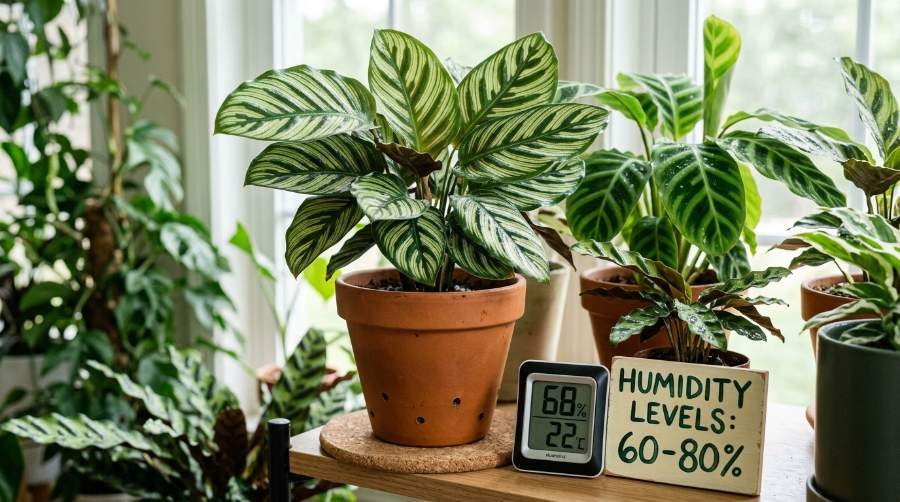
Not every plant reacts the same way. Species that evolved in tropical rainforest understories, like calatheas, ferns, and many orchids, are used to humidity levels of 60 to 80 percent and have thin leaves with little defense against dry air. Plants from arid climates, like cacti and succulents, evolved the opposite way, with thick, waxy leaves built to hold onto moisture, so they can actually suffer if you push humidity too high around them.
What’s the Ideal Humidity Level for Houseplants?
Most common houseplants do well in the 40 to 60 percent range. High-humidity specialists want more, drought-adapted plants want less.
| Plant Category | Ideal Humidity | Examples |
|---|---|---|
| Tropical foliage | 50–60% | Pothos, philodendron, monstera |
| High-humidity lovers | 60–80% | Ferns, calathea, orchids |
| Tolerant, adaptable | 30–50% | Snake plant, ZZ plant, cast iron plant |
| Arid/desert plants | 30–40% | Cacti, succulents |
For context, indoor humidity in a heated home during winter commonly drops to somewhere between 10 and 20 percent, according to the U.S. Environmental Protection Agency’s guidance on indoor air, which is far below what most houseplants, and most people’s sinuses, are comfortable with. That gap is the entire reason so many people look for ways to increase humidity for indoor plants every winter. For context, indoor humidity in a heated home during winter commonly drops to somewhere between 10 and 20 percent, according to the U.S. Environmental Protection Agency’s guidance on indoor air, which is far below what most houseplants, and most people’s sinuses, are comfortable with. That gap is the entire reason this topic exists.
Signs Your Indoor Plants Need More Humidity
Before you try to increase humidity for indoor plants, it helps to know the actual symptoms so you’re not guessing:
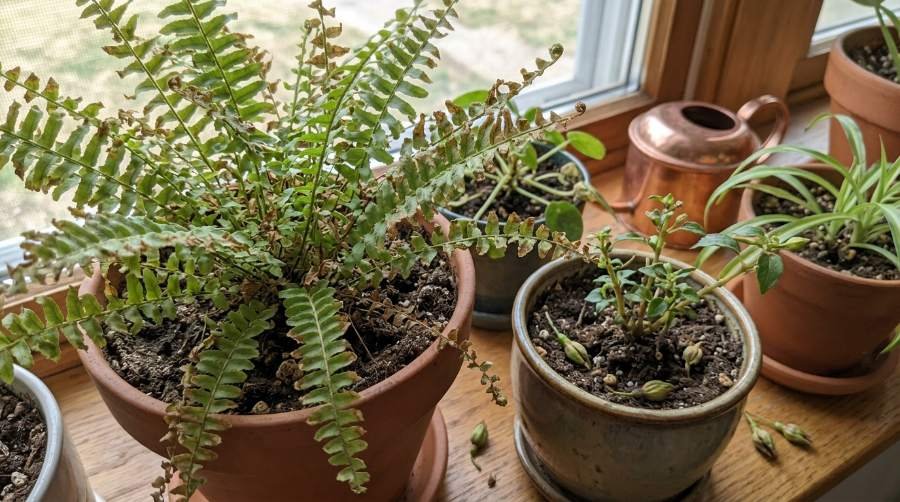
- Brown, crispy edges or tips on leaves, especially on ferns and calatheas.
- Leaves curling inward or cupping.
- Slower growth than usual during the growing season.
- Flower buds dropping before they open.
- Fern fronds browning from the tips inward.
A quick word of caution:
some of these symptoms overlap with overwatering or underwatering, which is exactly why so many plant owners chase the wrong fix for months. Crispy tips paired with consistently moist soil usually point to air, not water. Yellowing paired with soggy soil usually points to overwatering instead.
How to Measure Humidity Before You Start Fixing It
Here’s the part almost no guide tells you:
you cannot reliably feel the difference between 30 percent and 50 percent humidity. Your skin and your plant’s leaves are not calibrated instruments, and this is exactly why so many people try five different fixes and have no idea which one, if any, actually worked.
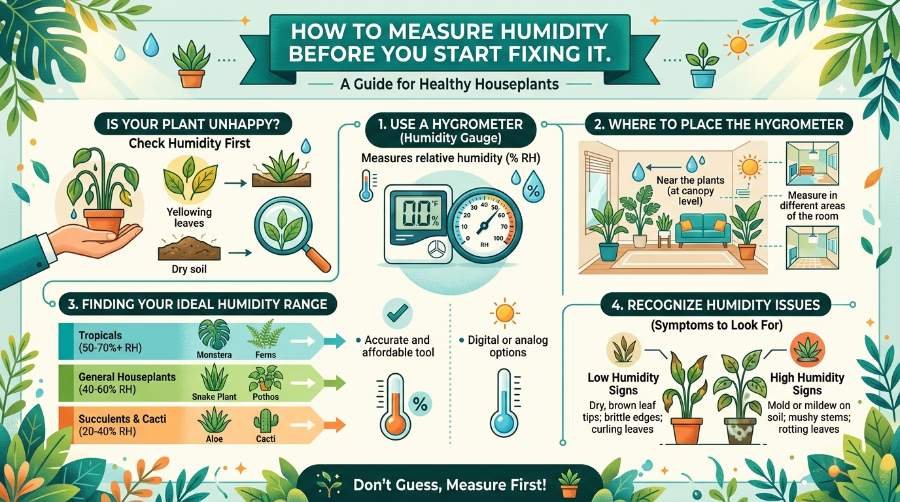
A small digital hygrometer costs less than a cup of coffee at most hardware stores and takes the guesswork out completely. Place it near your plants, not on a far wall, since humidity varies noticeably room to room and even corner to corner. Check the reading for a few days before making changes, then check again a few days after. That before-and-after comparison is the only way to know if what you’re doing is working or just habit.
10 Ways to Increase Humidity for Indoor Plants, Ranked by Effectiveness
These are ranked from strongest, most reliable impact to weakest, so you can prioritize your time and money.
1. Use a Humidifier
This is the most effective and most consistent way to increase humidity for indoor plants, because it’s the only method that raises humidity across an entire room rather than a few inches of air. Small cool-mist humidifiers run affordably and work for a single plant shelf; larger-capacity units cover whole rooms for plant collectors. Refill and clean it regularly, since standing water can grow mold or cause mineral buildup.
Learn details about the humidifier, follow the guide: Best Humidifiers for Houseplants
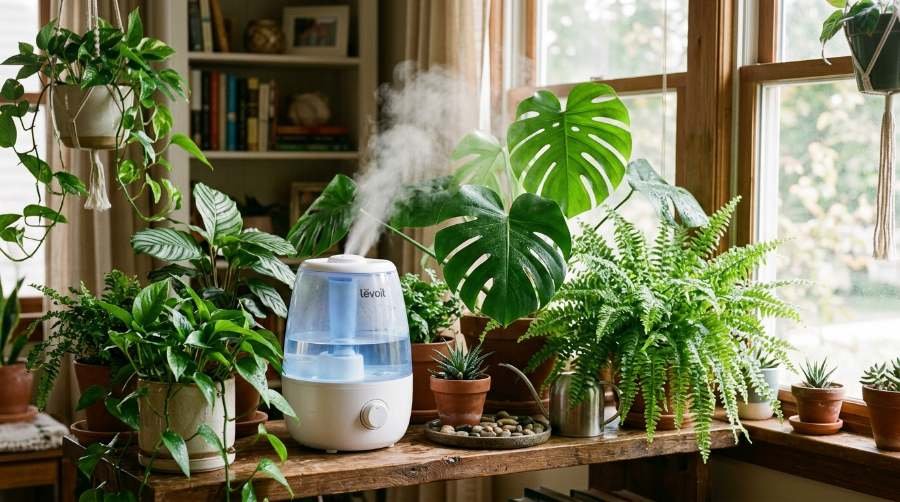
2. Group Plants Together
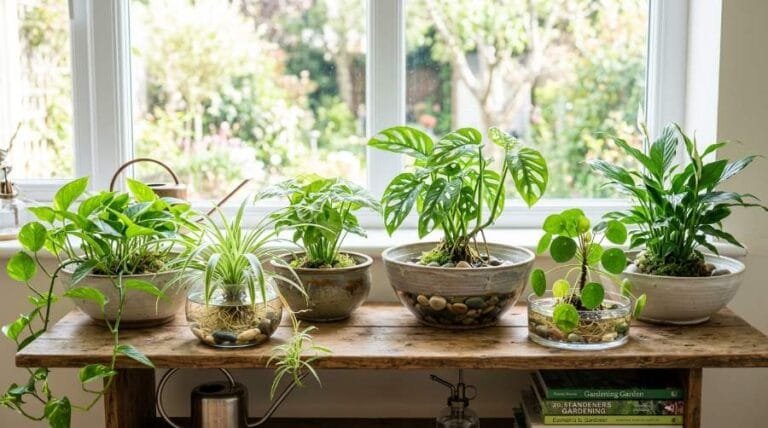
Plants release moisture into the air as they transpire, and when several are clustered, they create a small shared microclimate with noticeably higher humidity than a lone plant sitting in open air. This costs nothing and also happens to look better on a shelf, and it’s one of the easiest ways to increase humidity for indoor plants without buying anything. Which group plants are humidity loving learn from this article.
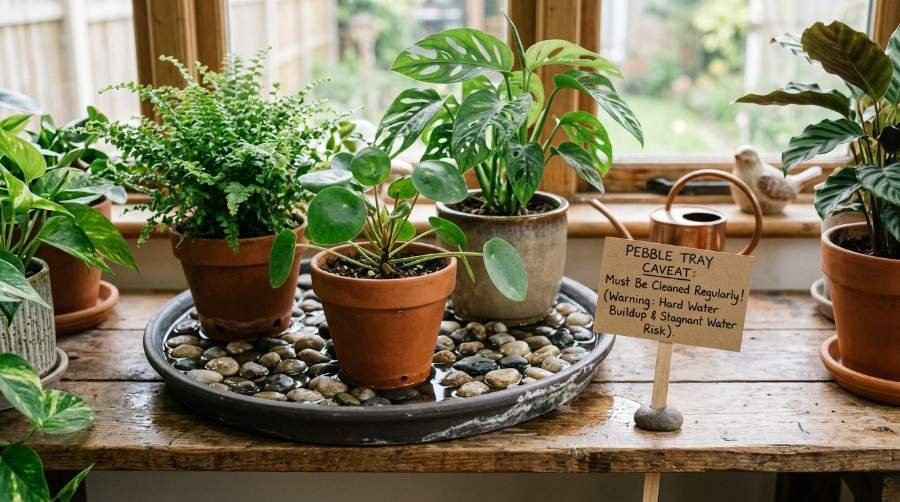
3. Use a Pebble Tray, With a Real Caveat
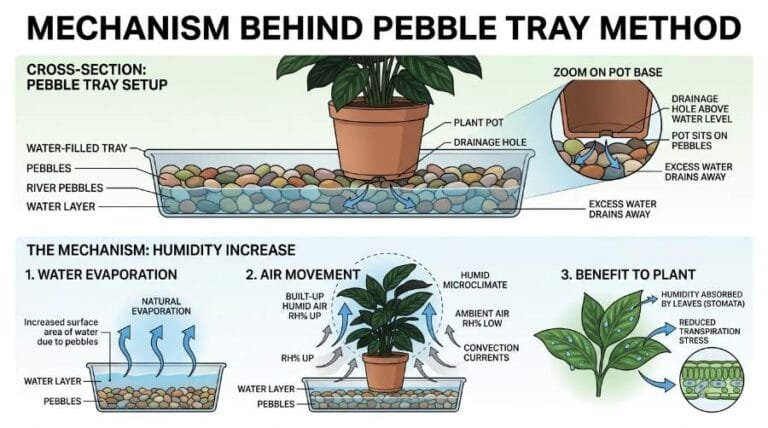
A tray of pebbles topped with water, with the pot sitting above the waterline, does raise humidity, but only in the few inches of air directly around that one pot. It will not meaningfully change the humidity of a whole room, despite how often it’s recommended as a stand-alone fix. Treat it as a small supplement, not a solution.
So Do Pebble Trays Work Well Enough to Use? Follow the guide: Do Pebble Trays Actually Work for Humidity? The Surprising Science
4. Move Plants to Naturally Humid Rooms
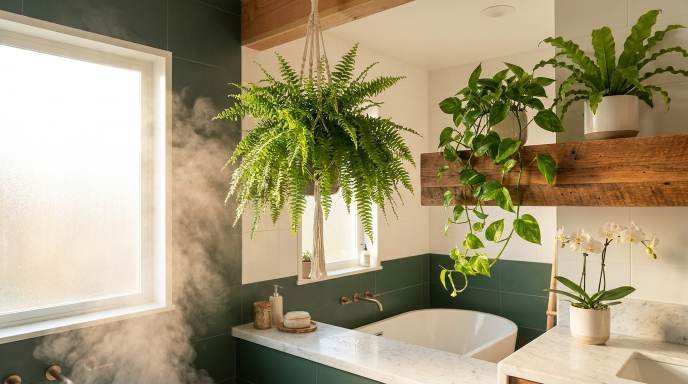
Kitchens and bathrooms tend to run more humid than living rooms or bedrooms because of cooking steam and showers. A bathroom with decent natural light can be one of the best humidity spots in the house for a fern or orchid.
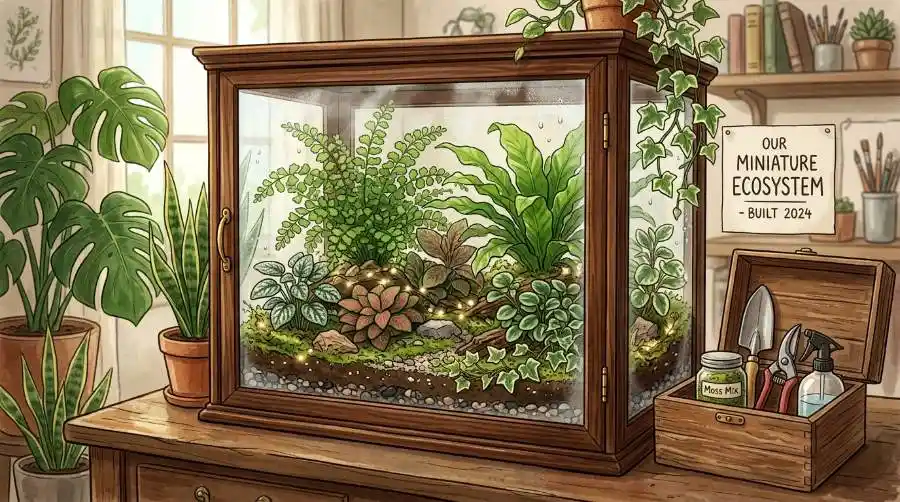
5. Build a Terrarium or Enclosed Plant Cabinet
For plants that want humidity well above 70 percent, a glass terrarium or enclosed cabinet with a small fan traps moisture far more effectively than any open-room method. This is the serious option for orchids, moss, and humidity-obsessed tropicals.
6. Use a Humidity Dome or Plastic Cover Temporarily
Clear plastic covers or propagation domes spike humidity dramatically in an enclosed space, which is useful for recovering a stressed plant or rooting cuttings, but it’s a short-term tool, not a permanent living condition for most mature plants.
7. Reduce Airflow From Vents and Fans
Heating and air conditioning vents blow dry, conditioned air directly onto nearby plants and can undo everything else on this list. Simply moving plants a few feet away from a vent, or closing a vent in that room, often makes a bigger difference than people expect when they’re trying to increase humidity for indoor plants near a window or air vent.

8. Mist Sparingly, and Know Its Real Limits
Misting is the most recommended and most overrated method on the internet. It raises humidity for a matter of minutes before evaporating completely, and it does nothing for the hours in between. It’s not useless, since some plants enjoy the brief moisture on their leaves, but treat it as a nice extra, never your main strategy.
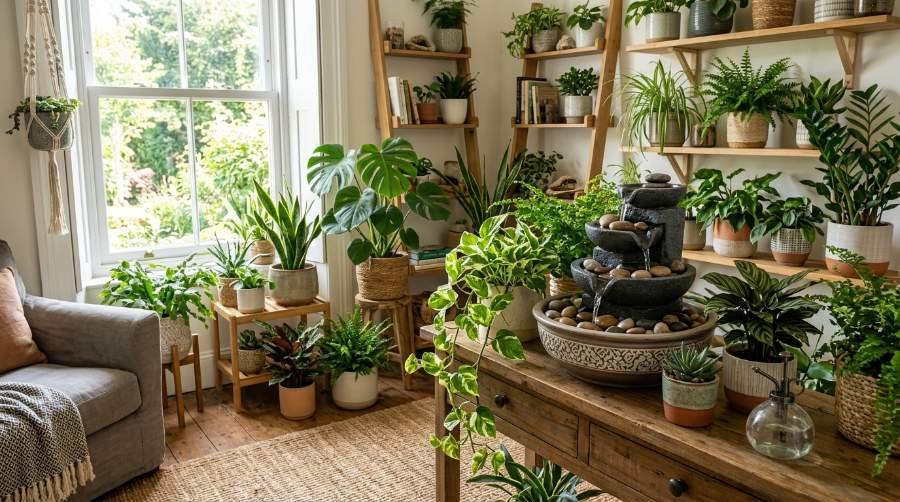
9. Add a Water Tray or Small Fountain to the Room
A wider, shallow tray of water, or a small tabletop fountain, increases the surface area of evaporating water in a room and adds a modest, steady humidity boost over time, especially combined with grouped plants.
10. Choose Humidity-Tolerant Plants If You Can’t Fix the Room
If raising room humidity isn’t realistic, the honest fix is picking plants that don’t demand it. Snake plants, ZZ plants, and pothos tolerate average home humidity without complaint, which is a completely reasonable strategy rather than a compromise.
Want to learn how to increase humidity without a humidifier? Check out this guide: How to Increase Humidity in a Room Without a Humidifier
How Humidity Needs Change by Plant Type
- Ferns and calatheas want 60 percent or higher and struggle noticeably below 50 percent
- Orchids prefer 50 to 70 percent but also need airflow, so pair humidity increases with light air movement, not a sealed space
- Succulents and cacti are happiest at 30 to 40 percent, and pushing humidity too high around them invites rot, not health
- Tolerant foliage plants like pothos and snake plants adapt comfortably across a 30 to 50 percent range
Signs You’ve Raised Humidity Too Much
This is the part most humidity guides skip entirely, and it matters just as much as the fixes themselves.
Overcorrecting comes with its own problems:
- Mold or white fuzz appearing on the soil surface.
- Fungus gnats multiplying around pots.
- Powdery mildew or dark spots developing on leaves.
- Root rot from soil that never fully dries between waterings.
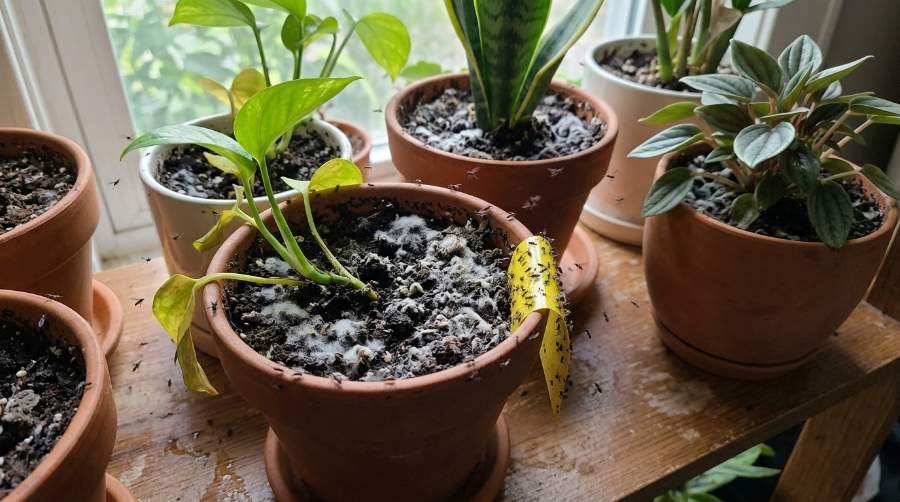
The usual cause isn’t humidity by itself, it’s humidity combined with stagnant air. A small fan on low, or simply cracking a window for ten minutes a day, keeps air moving and prevents the fungal problems that come with a still, damp room. Don’t increase watering frequency just because you’ve raised humidity either, since the two aren’t the same fix and stacking them is a common mistake.
Seasonal Humidity Adjustments
Winter is the season that matters most. Indoor heating strips moisture out of the air, often dropping whole-home humidity into the teens, right when many plants are already dealing with shorter days and less light. Summer AC dries air too, but usually less severely, and homes in naturally humid climates may need little to no intervention at all during warmer months. If you live somewhere naturally dry year-round, like much of the American Southwest, these methods matter in every season, not just winter.
FAQs
Does misting increase humidity for plants?
Only briefly. Misting raises humidity in the immediate air around a leaf for a few minutes before it evaporates, so it’s a minor supplement, not a real solution on its own.
What is the best humidity level for houseplants?
Most common houseplants do well between 40 and 60 percent, with tropical species like ferns and calatheas preferring 60 to 80 percent.
Can too much humidity hurt my plants?
Yes. Consistently high humidity without airflow can cause mold, fungus gnats, and root rot, especially in succulents and cacti that prefer drier air.
Do all houseplants need high humidity?
No. Desert-adapted plants like cacti and succulents actually prefer lower humidity, and several common houseplants, including snake plants and pothos, tolerate average home conditions just fine.
How do I know if my plant needs more humidity?
Watch for crispy leaf edges, curling leaves, or slowed growth despite consistent watering, then confirm with a hygrometer rather than guessing. That confirmation step is what separates a real fix from a guess when you’re trying to increase humidity for indoor plants.
Key Takeaways
Measure before you guess, since a cheap hygrometer will tell you more in five minutes than a week of trial and error. Prioritize methods by real effectiveness, a humidifier and grouped plants first, misting last. Match the fix to the plant, because a fern and a cactus want opposite conditions. And keep an eye out for overcorrection, since too much humidity without airflow creates a different set of problems entirely. Follow these steps and you’ll have a reliable, repeatable way to increase humidity for indoor plants no matter the season.
Once your plants are breathing easier, the next place moisture problems tend to show up is the soil itself. If you’re still working out watering and repotting basics, our Complete Beginner’s Guide to Indoor Plant Care covers the fundamentals this guide builds on.