Liquid vs slow-release fertilizer for indoor plants is not a contest with one clear winner. Liquid fertilizer gives fast, precise control and quick results during the growing season. Slow-release fertilizer provides steady, low-effort background feeding with far fewer applications. The better choice depends on your plants, how often you water, and how hands-on you want to be. Many experienced growers end up using both forms of liquid and slow-release fertilizer.
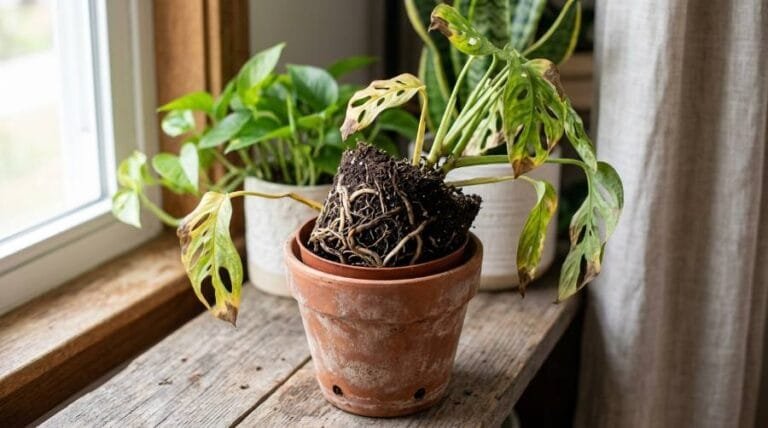
I once fed my orchid a full dose of slow-release fertilizer meant for my pothos. Within weeks, the leaves yellowed, and the roots looked scorched. That single mismatch taught me plant type matters more than the fertilizer brand.
Quick Snapshot: Liquid vs Slow-Release Fertilizer for Indoor Plants
Liquid Fertilizer
How it works:
Diluted in water and poured onto the soil (or occasionally sprayed on leaves) every few weeks.
Pros:
Fast absorption, easy to adjust strength, great for a quick energy boost.
Cons:
Needs a regular schedule; higher risk of root burn if over-applied.
Best for:
Succulents, cacti, orchids, and fast-growing tropicals that need precise care.
Slow-Release Fertilizer
How it works:
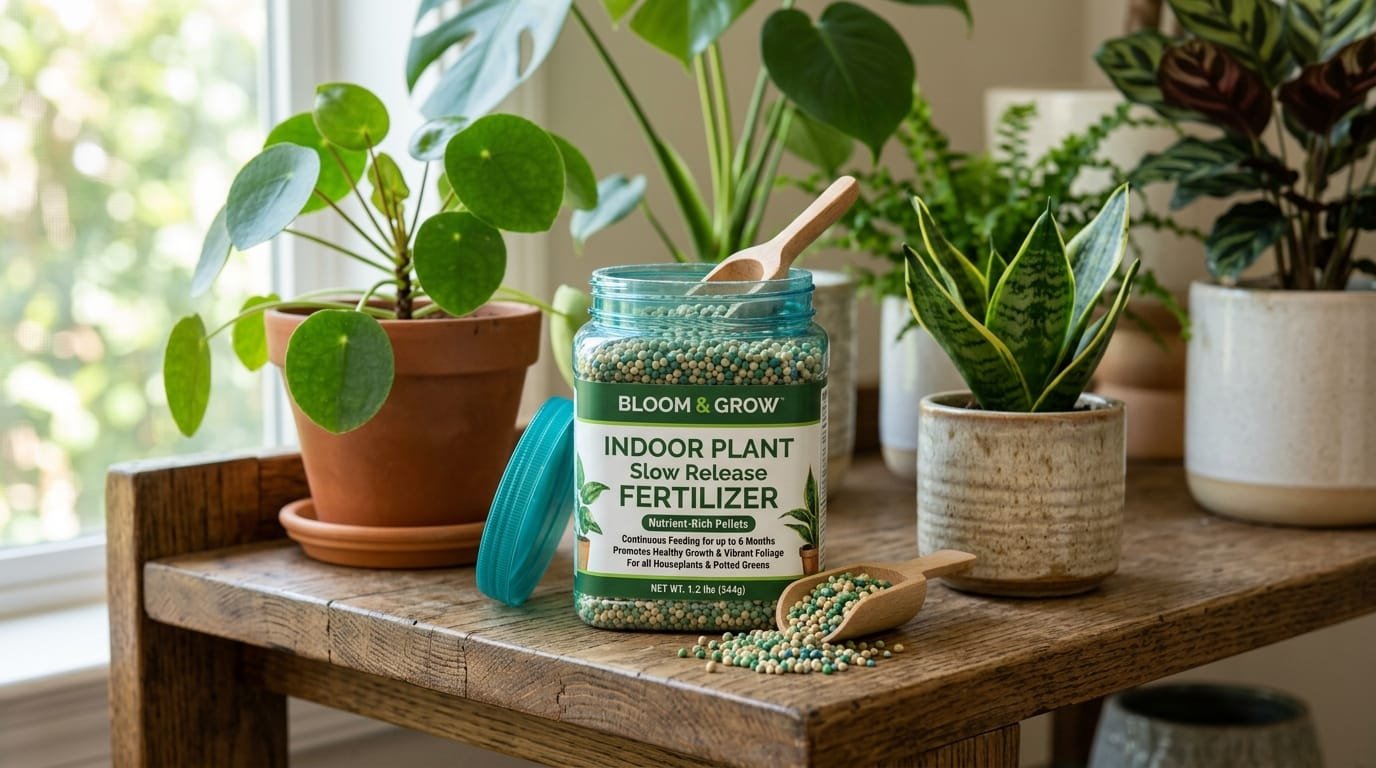
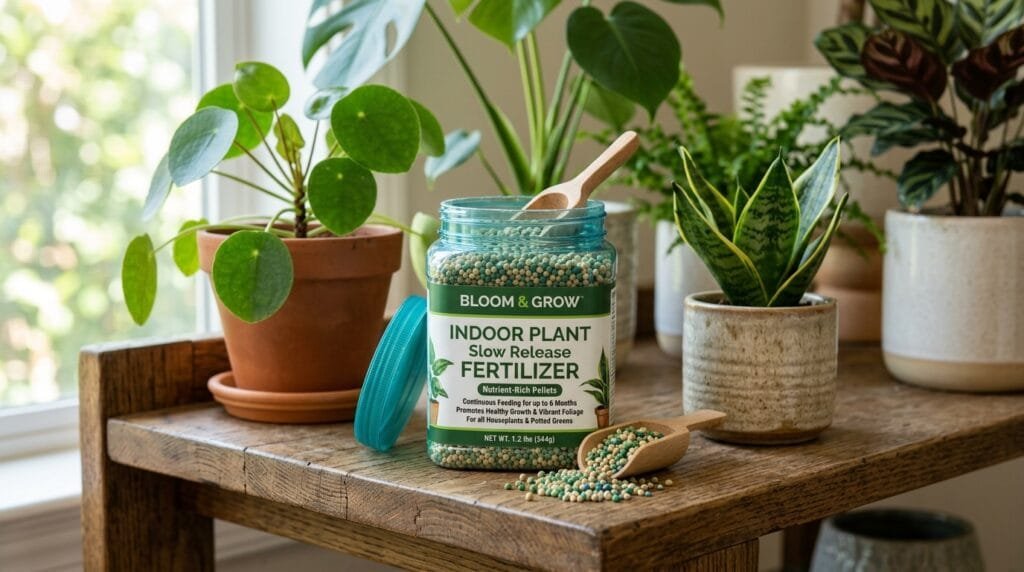
Pellets, granules, or spikes mixed into the potting mix; nutrients release gradually over months with each watering.
Pros:
Low maintenance, steady feeding, only a few applications per year.
Cons:
Harder to control exact dosing; less effective for plants watered rarely.
Best for:
Busy plant parents with steady, large tropical houseplants.
This side-by-side view of liquid vs slow-release fertilizer shows why neither option wins for every plant parent.
How Liquid vs Slow-Release Fertilizer Actually Work in Pots
Indoor plants live in a closed system. Unlike garden soil, potting mix has limited volume and no natural buffering from surrounding earth. This changes how liquid vs slow-release fertilizer behaves.
Liquid fertilizer arrives already dissolved. Roots can take up the nutrients within hours to a couple of days. You decide the exact strength every time you water. That control is one of the biggest advantages of liquid vs slow-release fertilizer, but it also means any mistake shows up quickly.
Slow-release fertilizer (often polymer-coated pellets or organic granules) sits in the mix and releases small amounts of nutrients each time the soil is moist and warm enough. The coating or decomposition process spreads the feeding over 2–6 months. The release rate depends on temperature, moisture, and sometimes microbial activity in the pot.
In a pot, excess liquid fertilizer can raise salt levels fast because there is nowhere for the surplus to go except out the drainage holes or into the roots. Slow-release products reduce that daily risk but can still leave unused nutrients sitting in the mix if the plant is watered infrequently or the room stays cool. Understanding these mechanics is essential when choosing between liquid vs slow-release fertilizer.
To learn the right way to fertilize your plants, follow this guide: How to Fertilize Indoor Plants: A Beginner’s Step-by-Step Guide
Detailed Pros and Cons of Liquid vs Slow-Release Fertilizer
Liquid Fertilizer Pros
- Visible results often appear in 3–7 days.
- Easy to increase, decrease, or skip based on plant response.
- Perfect for correcting yellow leaves or stalled growth.
- Works well even in cooler rooms because it does not rely on temperature-triggered coatings.
Liquid Fertilizer Cons
- Requires remembering a schedule.
- Higher chance of root burn or leaf-tip burn if mixed too strong.
- Nutrients can wash out with every thorough watering.
- More work if you have a large collection.
Slow-Release Fertilizer Pros
- Apply once and forget for months.
- Lower daily risk of sudden burn.
- Steady background nutrition that supports consistent growth.
- Convenient for large specimen plants or busy schedules.
Slow-Release Fertilizer Cons
- Hard to adjust once the pellets are in the soil.
- Can underperform if the plant is watered rarely or the room is cool.
- Some coated products leave plastic residue.
- Uneven distribution if pellets clump or sit too close to roots.
These pros and cons of liquid vs slow-release fertilizer help explain why plant parents often switch between the two or combine them.
Best Plant Types for Liquid vs Slow-Release Fertilizer
Choose liquid fertilizer for:
- Succulents and cacti (they need light, infrequent feeding).
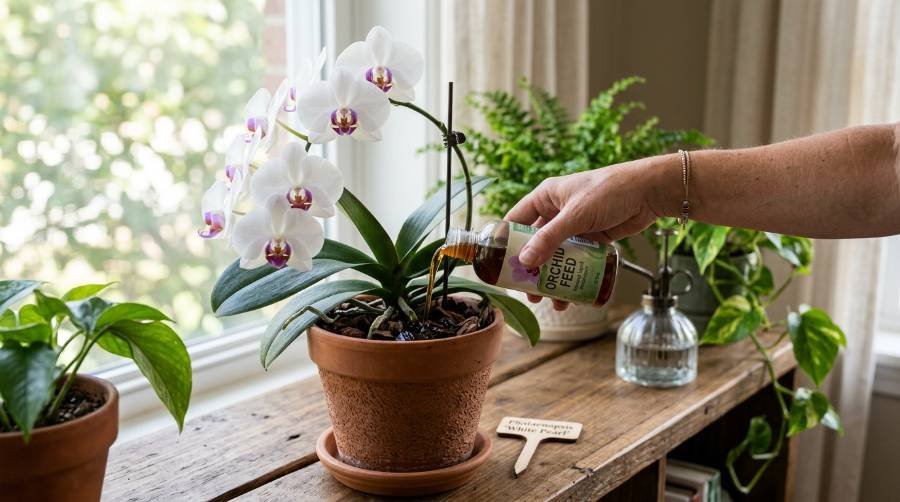
- Orchids during active growth.
- Fast-growing tropicals such as pothos, monstera, philodendron, and tradescantia.
- Any plant showing clear nutrient deficiency.
Choose slow-release fertilizer for:
- Large, steady tropicals such as fiddle-leaf fig, rubber plant, or bird of paradise.
- Low-maintenance collections where you want fewer tasks.
- Plants that stay in the same pot for a year or more.
Middle-ground plants (peace lily, snake plant, ZZ plant, cast-iron plant):
usually do well with either method at reduced rates. Many growers use a light slow-release base and occasional diluted liquid only when new growth appears. Matching plant type to the right form of liquid vs slow-release fertilizer produces healthier growth with fewer problems.
Application Schedules for Liquid vs Slow-Release Fertilizer
Liquid fertilizer schedule
- Active growth (spring through early fall): every 2–4 weeks at half to full label strength, depending on the plant.
- Late fall and winter: every 6–8 weeks or stop completely if growth has paused.
- Always water the plant first if the soil is dry, then apply the diluted fertilizer.
- Flush the pot with plain water every 1–2 months to prevent salt buildup.
Slow-release fertilizer schedule
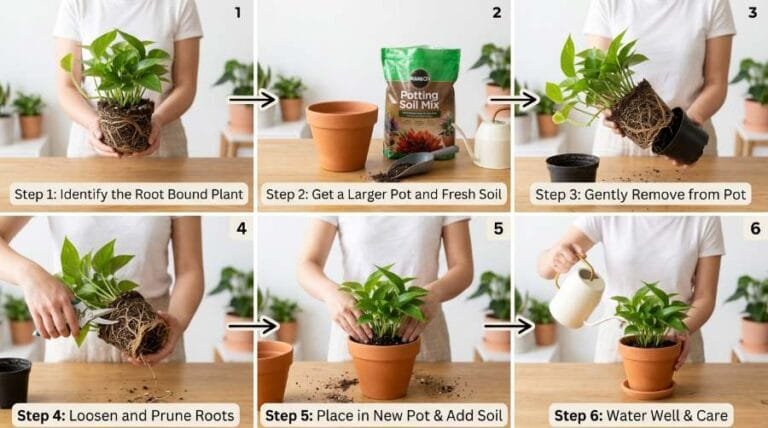
- Mix pellets into the potting mix at repotting time.
- Top-dress existing pots every 3–6 months according to the product label.
- Use half the outdoor rate for indoor pots to avoid excess.
- Check remaining pellets after several months; replace when they look spent.
A simple rule that works for most collections: fertilize only when you see active new growth. If the plant has not produced a new leaf in three or more weeks, hold off. Following clear schedules for liquid vs slow-release fertilizer prevents both under-feeding and over-feeding.
Common Mistakes with Liquid vs Slow-Release Fertilizer and How to Avoid Them
- Mixing liquid fertilizer at full strength every week → Use half strength and watch the plant.
- Putting high-NPK slow-release pellets into a small pot of succulents → Choose organic or low-rate formulas and water sparingly.
- Fertilizing in deep winter when light is low → Pause or reduce dramatically.
- Never flushing the pot → Run plain water through the soil every 4–8 weeks.
- Combining full rates of both types at the same time → Cut each rate in half if you use both.
Avoiding these common mistakes with liquid vs slow-release fertilizer keeps roots healthy and growth steady.
Can You Use Liquid and Slow-Release Fertilizer Together?
Yes. Many experienced indoor gardeners combine liquid vs slow-release fertilizer successfully. Use slow-release fertilizer as the steady base (especially at repotting) and add diluted liquid fertilizer only during peak growth or when a plant looks hungry. Reduce the liquid rate by half so the total nutrient load stays safe. This hybrid approach to liquid vs slow-release fertilizer gives the convenience of slow-release plus the precision of liquid when it matters most.
Cost, Effort, and Long-Term Value of Liquid vs Slow-Release Fertilizer
Liquid fertilizer usually costs less per bottle but requires more frequent purchases and more of your time. Slow-release products cost more upfront yet need far fewer applications. For a collection of 10–15 plants, the annual cost of liquid vs slow-release fertilizer is often similar. The real difference is time and risk. If you forget liquid feedings, plants may starve. If you over-apply slow-release, the mistake lasts for months. Choose the method of liquid vs slow-release fertilizer that matches how consistently you can care for your plants.
Simple Decision Framework for Liquid vs Slow-Release Fertilizer
Ask yourself three questions:
- How often do you check and water your plants?
- Do you prefer fast results or low effort?
- What types of plants make up most of your collection?
- Frequent checker + mixed or fast-growing plants → Liquid fertilizer
- Busy schedule + large steady tropicals → Slow-release fertilizer
- Want both control and convenience → Hybrid approach using liquid vs slow-release fertilizer
Conclusion: Choosing Between Liquid vs Slow-Release Fertilizer
Liquid vs slow-release fertilizer for indoor plants comes down to matching the tool to your plants and your lifestyle. Liquid fertilizer wins for speed, precision, and flexibility. Slow-release fertilizer wins for convenience and steady background feeding. Neither form of liquid vs slow-release fertilizer is better in every situation.
Start with the type that fits how you already care for your plants. Observe the results for a month or two, then adjust. Healthy indoor plants respond quickly once the feeding method matches their needs and your routine. Understanding liquid vs slow-release fertilizer helps you make better choices for every pot in your home.
Liquid vs Slow-Release Fertilizer for Indoor Plants: Side-by-Side Summary
| Factor | Liquid Fertilizer | Slow-Release Fertilizer |
|---|---|---|
| Feeding pattern | Fast spike, needs repeat dosing | Steady, gradual release |
| Application frequency | Every 2-4 weeks | 2-4 times per year |
| Control precision | High, adjustable strength | Low, fixed release rate |
| Best for | Succulents, orchids, seedlings | Large tropicals, low-attention spaces |
| Main risk | Root burn if overused | Uneven or insufficient feeding |
| Maintenance level | Higher | Lower |
FAQs About Liquid vs Slow-Release Fertilizer
Is liquid or slow-release fertilizer better for indoor plants?
Neither is universally better. Liquid offers control and speed; slow-release offers convenience. Choose based on your plants and schedule when deciding on liquid vs slow-release fertilizer.
How often should I use liquid fertilizer on houseplants?
Every 2–4 weeks at half to full strength during active growth. Reduce or stop in winter. This schedule works well within a liquid vs slow-release fertilizer plan.
Can I use slow-release fertilizer in potting mix?
Yes. Mix it in at repotting or top-dress existing pots. Use lower rates indoors than outdoor labels suggest when comparing liquid vs slow-release fertilizer.
Do succulents need liquid or slow-release fertilizer?
Most do best with diluted liquid fertilizer applied sparingly a few times during the growing season as part of a liquid vs slow-release fertilizer approach.
Can I combine liquid and slow-release fertilizer safely?
Yes. Use slow-release as the base and add diluted liquid only when needed. Reduce rates of both to avoid overfeeding when using liquid vs slow-release fertilizer together.
Conclusion and Key Takeaways
Liquid vs slow-release fertilizer for indoor plants comes down to matching the tool to your plants and your lifestyle. Liquid fertilizer wins for speed, precision, and flexibility. Slow-release fertilizer wins for convenience and steady background feeding. Neither is better in every situation.
Start with the type that fits how you already care for your plants. Observe the results for a month or two, then adjust. Healthy indoor plants respond quickly once the feeding method matches their needs and your routine.
If you’re brand new to plant care in general, our Complete Beginner’s Guide to Indoor Plant Care covers light, soil, and watering alongside fertilizing, so you’ve got the full picture in one place.