For fertilizing indoor plants, most indoor plants need feeding every 4 to 6 weeks during spring and summer, using a liquid fertilizer diluted to half strength. Water the soil first, apply it around the base rather than the stem, and stop feeding almost entirely once fall and winter growth slows down. That’s the short version of fertilizing indoor plants. The longer version, including why each step matters, is what actually keeps you from either starving your plants or burning their roots.
I overfed my first snake plant so badly the leaf tips turned brown and crispy within a month. I thought I was helping it grow faster. I was wrong, and it took nearly a year to recover.
Start there for a broader comparison of fertilizer types across every kind of houseplant, then come back here for the step-by-step routine that keeps feeding simple and safe. If you’re brand new to plant care in general, our Complete Beginner’s Guide to Indoor Plant Care covers light, soil, and watering alongside fertilizing, so you’ve got the full picture in one place.
Why Indoor Plants Need Fertilizer at All
Fertilizing indoor plants replaces nutrients that naturally become limited in a container. A simple feeding routine helps support healthy leaves, roots, and steady growth.
Potted soil isn’t like outdoor soil. Outdoors, fallen leaves, decomposing organic matter, and natural mineral cycles keep replenishing nutrients on their own. Indoors, a plant is stuck with whatever nutrients came in the bag of potting mix, and that supply runs out.
Here’s what depletes it faster than most people expect:
- Regular watering flushes nutrients out:
Through the drainage holes every time water runs through the pot. - Active growth uses up what’s left:
A plant putting out new leaves or roots is pulling nutrients from a fixed, shrinking pool. - Potting mix itself has a shelf life:
Even fresh, high-quality mix typically only holds enough nutrients to support a plant for a few months before it needs a top-up.
This is the core reason learning how to fertilize indoor plants correctly matters more than most people think. Without it, even a plant getting perfect light and water will eventually stall out.
Understanding NPK Ratios (What the Numbers on the Bottle Actually Mean)
Understanding NPK is a key part of fertilizing indoor plants because the three numbers tell you what nutrients you are actually supplying.
Every fertilizer bottle has three numbers on the label, usually written like 10-10-10 or 3-1-2.
These represent the percentage of three core nutrients:
- Nitrogen (N):
Fuels leafy green growth. This matters most for foliage plants like pothos, monstera, and philodendron. - Phosphorus (P):
Builds strong roots and supports flowering. More relevant for blooming plants like orchids or African violets. - Potassium (K):
Strengthens overall plant health and helps with resistance to stress and disease.
How to Read a Fertilizer Label
The three numbers always appear in the same order: nitrogen, phosphorus, potassium. A balanced fertilizer, something like 10-10-10, gives roughly equal amounts of each and works well for most general houseplants.
A specialized fertilizer shifts that ratio for a reason:
- A higher middle number (phosphorus), like 15-30-15, is built for bloom-focused plants.
- A higher first number (nitrogen) suits plants grown mainly for their leaves rather than flowers.
If you’re not sure which your plant needs, a balanced ratio is the safest default until you learn its specific preferences.
The Best Types of Fertilizer for Indoor Plants (And When to Use Each)
Not every fertilizer works the same way. Picking the right format matters as much as picking the right NPK ratio.
Liquid Fertilizer
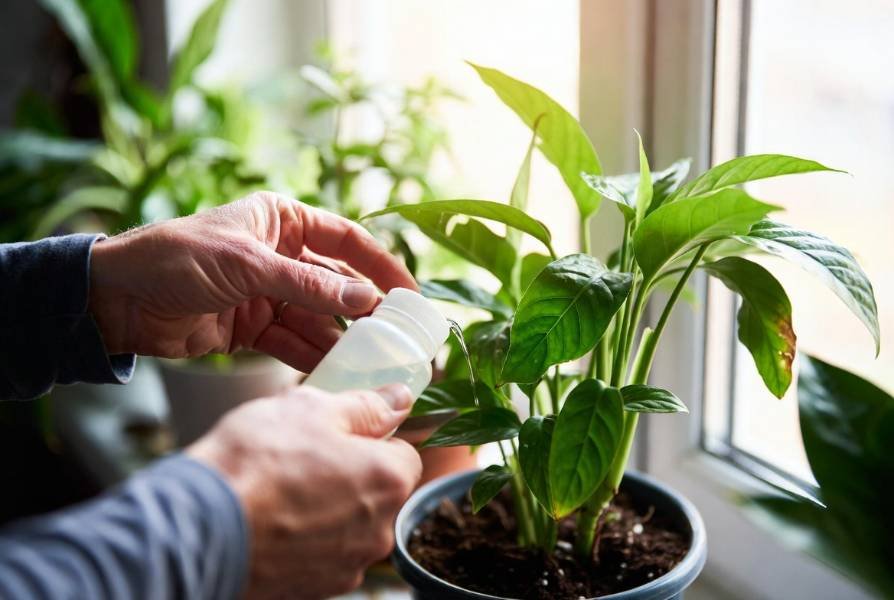
Fast-acting and easy to control. You dilute it with water and apply it during a normal watering session.
Best for:
Beginners and anyone who wants precise control over feeding strength.
Granular (Slow-Release) Fertilizer
Small pellets mixed into or scattered on top of the soil, releasing nutrients gradually over weeks or months.
Best for:
people who tend to forget regular feeding schedules and want a lower-maintenance option.
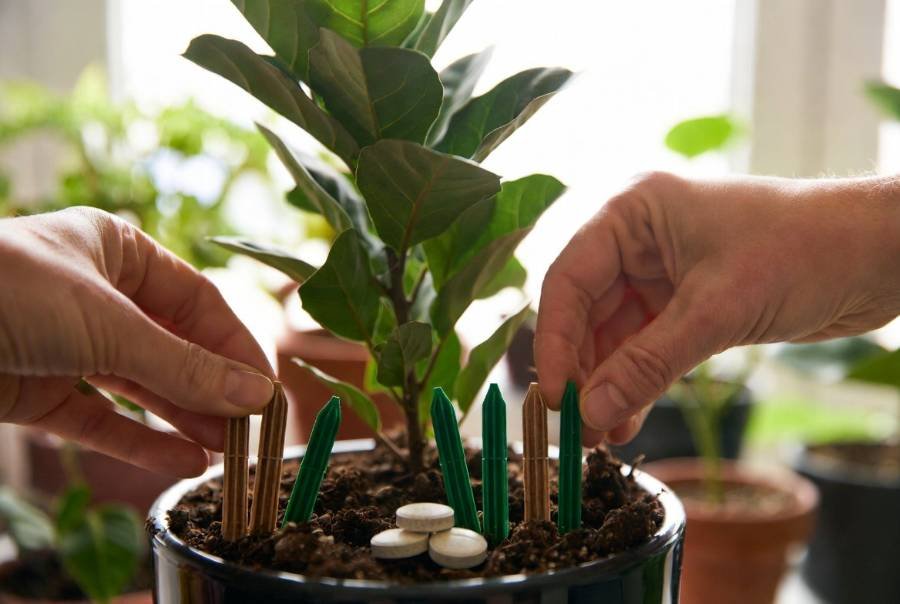
Fertilizer Spikes and Tablets
Pushed directly into the soil, releasing nutrients slowly near the root zone.
Best for:
Low-maintenance setups, though they’re riskier for small or sensitive plants since the concentrated dose sits close to the roots.
Organic vs. Synthetic Fertilizer
- Organic fertilizer works slower, tends to be gentler on roots, and improves soil biology over time.
- Synthetic fertilizer works faster and gives more precise nutrient control, but it’s also easier to overdo.
The real tradeoff comes down to control versus margin for error. Synthetic gives you more control. Organic gives you more room to make a mistake without serious damage. For now, know about the fertilizer mistake; follow the guide: Common Fertilizer Mistakes and How to Fix Them
For now, know about the fertilizer timing; follow the guide: The Best Time of Year to Fertilize Indoor Plants
Step-by-Step: How to Fertilize Indoor Plants Correctly
Here’s the full fertilizing indoor plants routine, along with the reasoning behind each step so it actually sticks.
- Check the season first:
Only fertilize during active growth, typically spring and summer. Plants can’t use nutrients efficiently while dormant, so feeding during fall or winter just builds up salts in the soil instead of helping the plant. - Water the soil before feeding:
Never apply fertilizer to dry soil. Dry roots absorb concentrated nutrients too quickly, which causes chemical burn along the root tips. - Dilute to half strength:
Most package instructions are written with outdoor or commercial use in mind. Indoor plants generally do better with a weaker dose applied more consistently than a full-strength dose applied occasionally. - Apply evenly around the base:
Pour the diluted fertilizer around the base of the plant rather than directly on the stem or crown, where it can cause localized burn. - Skip new and recently repotted plants:
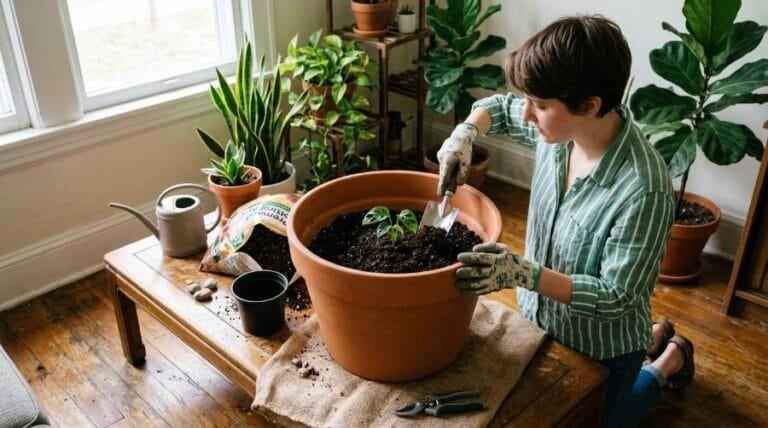
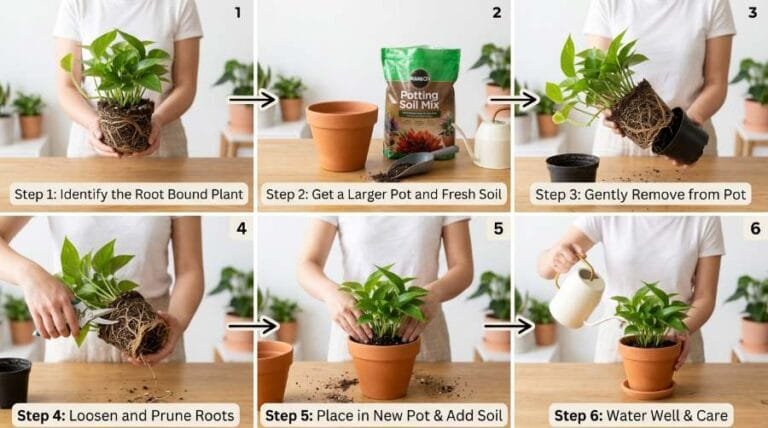
Fresh potting mix already contains nutrients, and disturbed roots need a few months to recover before they’re ready to handle additional feeding.
Following these steps consistently is the most reliable way to fertilize indoor plants without risking the kind of damage that takes months to undo.
How Often Should You Fertilize Indoor Plants?
A consistent schedule is one of the most important parts of successful fertilizing indoor plants. The goal is steady nutrition, not maximum feeding.
For fertilizing indoor plants, the general rule is every 4 to 6 weeks during spring and summer, but that number shifts depending on a few factors.
| Plant Growth Type | Suggested Feeding Frequency | Season Notes |
|---|---|---|
| Fast growers (pothos, philodendron) | Every 3 to 4 weeks | Reduce to none in fall and winter |
| Moderate growers (most common houseplants) | Every 4 to 6 weeks | Taper off as growth slows |
| Slow growers (snake plant, ZZ plant) | Every 6 to 8 weeks, or less | Often need little to no winter feeding |
| Succulents and cacti | Every 8 weeks or longer | Extremely light feeding even in growing season |
Light exposure and pot size play a role too. A plant in bright, indirect light grows faster and uses nutrients more quickly than the same species sitting in a dim corner, so it can typically handle feeding on the more frequent end of its range.
Signs Your Plant Needs Fertilizer (And Signs It’s Had Too Much)
When fertilizing indoor plants, learn to read the leaves and soil instead of relying only on a calendar.
This is where most beginners get stuck, since both underfeeding and overfeeding can look like general plant stress at first glance.
| Sign | Underfed | Overfed |
|---|---|---|
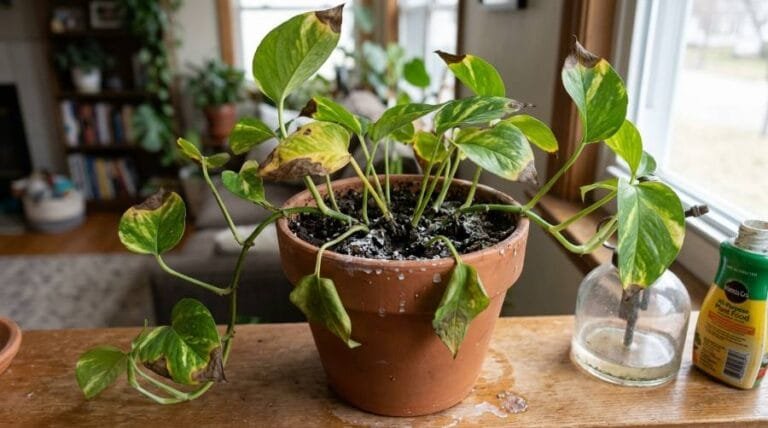
| Leaf color | Pale or yellowing older leaves | Brown, crispy tips or edges |
| Growth pattern | Slow or stalled new growth | Wilting despite moist soil |
| Leaf size | Smaller than normal new leaves | Normal size, but damaged edges |
| Soil appearance | Normal | White, crusty buildup on the surface |
Overfeeding is actually more common and more damaging than underfeeding. A plant can survive a lean stretch without nutrients far more easily than it can recover from root burn caused by too much fertilizer sitting in the soil.
Common Fertilizing Mistakes (And the Myths Behind Them)
Good fertilizing habits for indoor plants are mostly about avoiding a few common mistakes.
A few habits and misconceptions quietly undo an otherwise solid feeding routine.
- More fertilizer means faster growth: This is a myth. Excess nutrients build up as salts in the soil and damage roots instead of speeding anything up.
- All plants need year-round feeding: Most houseplants slow down or go dormant in fall and winter and don’t need regular fertilizer during that stretch.
- Fertilizer fixes a sick plant: Fertilizer isn’t a treatment for stress, pests, or disease. Feeding a struggling plant can sometimes make things worse by adding stress to a root system that’s already compromised.
- Any fertilizer works for any plant: Blooming plants, succulents, and foliage plants all have different nutrient needs. A one-size-fits-all approach usually leads to imbalanced growth over time.
Nutrient issues are just one possible cause of plant problems. How to Diagnose Indoor Plant Problems covers the full range of issues from pests to diseases to watering mistakes.
Fertilizing Specific Types of Indoor Plants
Different plant categories need different approaches to fertilizing indoor plants.
- Foliage plants (pothos, monstera, philodendron):
A nitrogen-leaning balanced fertilizer supports the leafy growth these plants are grown for. - Flowering plants (orchids, African violets):
A fertilizer with a higher phosphorus ratio supports blooming. - Succulents and cacti:
Very diluted, infrequent feeding works best. This is where overfeeding happens most often, since these plants naturally grow slowly and need far less than typical houseplants.
For deeper, plant-specific guidance on fertilizing indoor plants, see our dedicated guides on fertilizing Monstera plants and fertilizing succulents and cacti indoors once those are published on the site.
Frequently Asked Questions
These questions cover the practical side of fertilizing indoor plants, especially for beginners.
How do I know if I’m fertilizing my indoor plants correctly?
Watch for steady new growth without crispy leaf tips or a white crust on the soil surface when fertilizing indoor plants. If your plant is putting out healthy new leaves on a normal seasonal schedule, your current approach to fertilizing indoor plants is working.
Can I use outdoor plant fertilizer on indoor plants?
Generally not recommended without adjustment. Outdoor fertilizers are often formulated at strengths meant for larger root systems and open soil, so they need heavier dilution to be safe for potted plants indoors.
What happens if I never fertilize my houseplants?
Growth slows significantly over time, and older leaves often turn pale or yellow as the plant depletes what little nutrient reserve is left in the potting mix, which is why fertilizing indoor plants matters. The plant likely won’t die immediately, but it won’t thrive either.
Should I fertilize a plant that just got repotted?
Wait at least a few months. Fresh potting mix already contains nutrients, and the plant’s roots need time to settle before handling additional feeding.
Is coffee or eggshell water a real substitute for fertilizer?
Not a reliable one. These household additions contain trace nutrients, but not in a balanced or consistent enough ratio to replace an actual fertilizer routine.
Key Takeaways: Fertilizing Indoor Plants the Right Way
- Fertilize during active growth, typically spring and summer, and taper off in fall and winter.
- Always water the soil before applying fertilizer to prevent root burn.
- Dilute liquid fertilizer to half strength for most indoor plants.
- Match the fertilizer type and NPK ratio to the plant category you’re feeding when fertilizing indoor plants.
- Watch for the early signs of overfeeding, since it’s more common and more damaging than underfeeding when fertilizing indoor plants.
- Skip new and recently repotted plants until their roots have had time to settle.
Getting fertilizing indoor plants right isn’t about a complicated feeding chart. It’s about matching a simple routine to the season and paying attention to what the plant is actually showing you.