How to fertilize indoor plants the right way starts with one clear rule:
Use a diluted, water-soluble fertilizer only during active growth, apply it to already moist soil, and never force nutrients on a resting or stressed plant. Feed most houseplants every 4 to 6 weeks from spring through summer at half the package strength. Stop or cut back sharply in fall and winter. This approach prevents root burn, salt buildup, and the weak growth that comes from overfeeding.
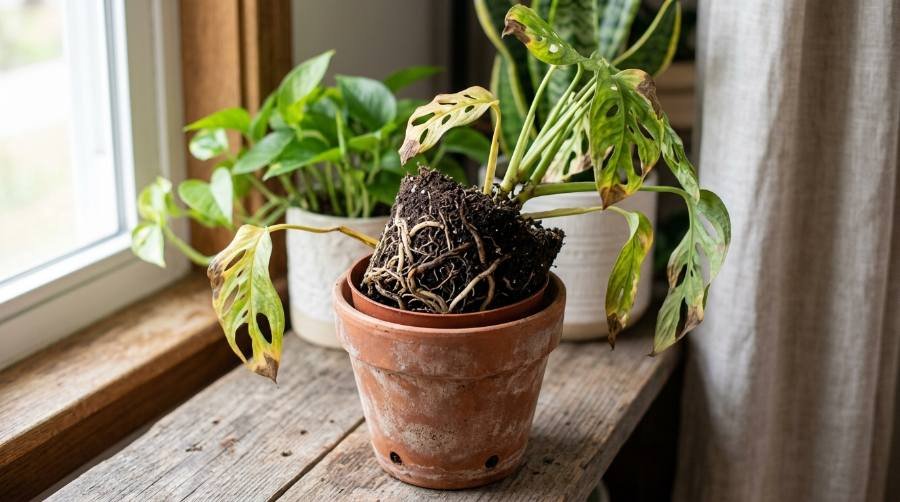
I learned this the hard way years ago when I nearly killed a healthy monstera by pouring full-strength liquid food onto dry soil in February. The leaf tips crisped overnight. After flushing the pot and waiting for new growth, I switched to the half-strength, moist-soil method and never repeated the mistake. That single lesson shaped how I care for every plant in my home.
Why Most People Get How to Fertilize Indoor Plants Wrong
Indoor plants live in a closed system. Potting mix contains fewer nutrients, light levels are lower than outdoors, and heating or air conditioning dries the air and concentrates salts. Outdoor garden advice often fails here because rain never flushes the pots and roots cannot escape excess fertilizer. If your plant shows signs of distress despite proper fertilizing, How to Diagnose Indoor Plant Problems walks you through identifying pests, diseases, and other care issues.
Common mistakes include:
- Applying full-strength fertilizer year-round.
- Feeding dry soil.
- Using the same schedule for every plant.
- Ignoring winter dormancy.
These habits cause more harm than good. Excess salts pull water out of roots, leading to brown tips and stalled growth. A plant that is not actively producing new leaves cannot use the extra nutrients. Learn how to protect plants from winter cold in this guide.
The Exact Seasonal Calendar for How to Fertilize Indoor Plants
Match feeding to the plant’s growth cycle rather than the calendar alone.
Spring and early summer:
Begin when you see new leaves or stems. Most tropical foliage plants respond well to feeding every 4 to 6 weeks. Fast growers such as pothos or monstera can handle the shorter end of that range. Slow growers such as snake plants or ZZ plants prefer the longer interval.
Late summer into fall:
As day length shortens, stretch the time between feedings to every 6 to 8 weeks and keep the strength at half or less.
Winter:
Stop fertilizing for most plants. Short days and cooler indoor temperatures slow growth. The only exception is a plant under strong grow lights that continues putting out new leaves. Even then, reduce to quarter strength once a month at most. Learn about the best time of year to fertilize plants from this article.
New or recently repotted plants:
Wait 4 to 8 weeks or until the plant has received three or four plain waterings. Fresh potting mix already contains starter nutrients, and stressed roots burn easily.
Look for visible new growth before every feeding. If the plant has not produced a new leaf in several weeks, skip the fertilizer.
Step-by-Step Method — How to Fertilize Indoor Plants Without Root Burn
Follow these steps every time:
- Water the plant with plain room-temperature water until the soil is evenly moist. Never apply fertilizer to dry media.
- Mix liquid or water-soluble fertilizer at half the rate listed on the package. For many products, this means ½ teaspoon per gallon instead of 1 teaspoon. Use warm (not hot) water for better dissolving.
- Pour the diluted solution slowly over the soil surface until a small amount drains from the bottom holes.
- Empty the saucer within 15 to 20 minutes so the plant does not sit in leftover fertilizer water.
- Every fourth to sixth watering, flush the pot with plain water only. Run three times the pot’s volume of water through the soil and let it drain fully. This removes accumulated salts.
Still figuring out the basics of fertilizing? Follow the guideline: How to Fertilize Indoor Plants: A Beginner’s Step-by-Step Guide
Matching Fertilizer Type and Strength to Your Indoor Plant Collection
Different plants need different nutrient balances.
- Foliage plants (pothos, philodendron, monstera, rubber plant):
A balanced or slightly nitrogen-forward formula such as 10-10-10, 20-20-20, or 9-3-6 works well at half strength. - Flowering houseplants (peace lily, anthurium, African violet):
Use a formula with a higher middle number (phosphorus) only while buds are forming. Return to balanced food afterward. - Succulents and cacti:
Choose low-nitrogen formulas and feed only once every 6 to 8 weeks in the growing season at quarter to half strength. - Herbs grown indoors:
Light organic feeds only. Stop two weeks before harvest. - Orchids and epiphytes:
Specialized weak solutions applied to the roots or media.
Organic options such as fish emulsion or seaweed extract support soil microbes better in the sterile mixes most indoor plants live in. Synthetic liquids give faster results when used carefully.
Visual Diagnosis — Signs You’re Fertilizing Too Much or Too Little
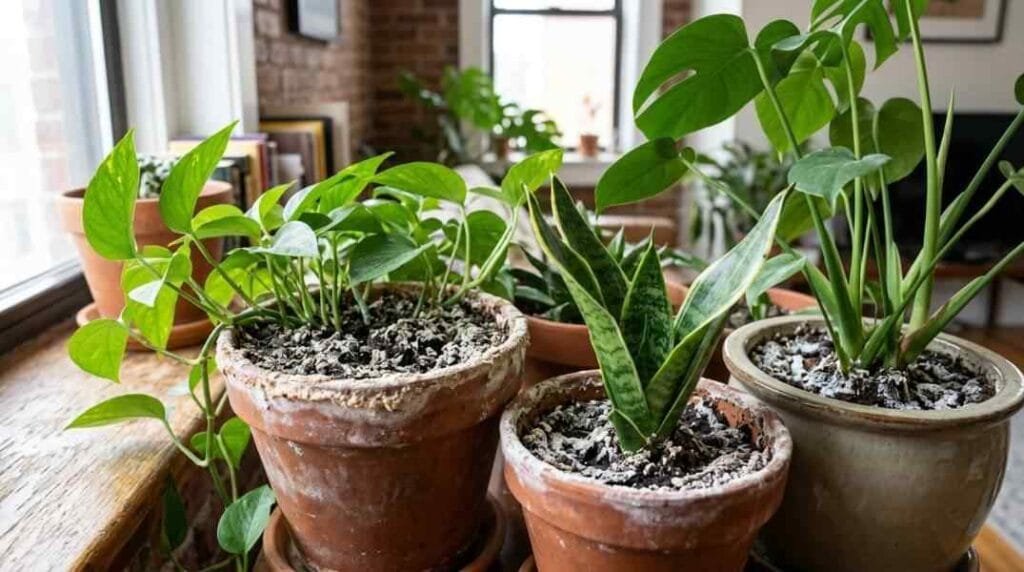
Too much fertilizer
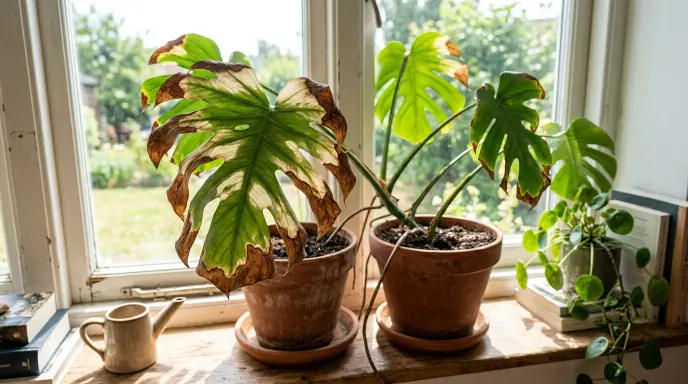
- Brown or crispy leaf tips and edges.
- White crust on the soil surface or pot rim.
- Sudden leaf drop.
- Stunted new growth even though older leaves look dark green.
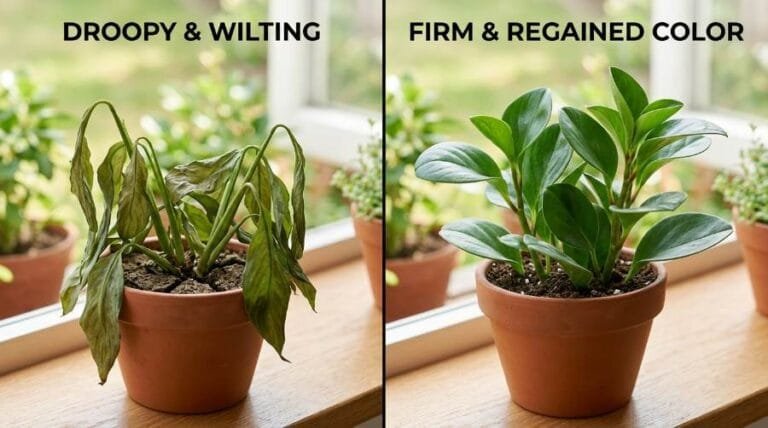
- Wilting while the soil is still moist.
Too little fertilizer
- Pale or yellowing new leaves.
- Slow or no new growth despite good light and water.
- Older leaves yellowing from the bottom while veins stay green.
To recover from overfeeding, flush the pot thoroughly with plain water and withhold fertilizer for four to six weeks. Resume at quarter strength only after new growth appears.
Advanced Indoor-Only Techniques Most Guides Skip
Indoor conditions create unique needs.
- Pair liquid fertilizer with an occasional diluted seaweed or compost tea to keep beneficial microbes alive.
- Plants under strong grow lights may need slightly more frequent feeding than those in natural low light.
- Dry winter air from heating systems increases salt stress. Dilute further and flush more often during those months.
- Terracotta pots wick moisture and salts differently than plastic. Flush terracotta more frequently.
- Test any new product on a single plant for six weeks before treating the whole collection.
These adjustments matter more indoors than in an outdoor garden because the pot is a closed environment.
Common Mistakes That Ruin How to Fertilize Indoor Plants
Avoid these five errors:
- Feeding dry soil — always water first.
- Applying full-strength product to indoor plants — start at half or less.
- Fertilizing right after repotting or while a plant is recovering from pests.
- Letting fertilizer water sit in the saucer.
- Using the identical schedule for every plant in the house.
Each of these leads to salt buildup or root damage. The safer alternative is always half-strength on moist soil during active growth only. Sunburned plants are stressed plants. For a complete recovery protocol, see our sunburn guide.
Recommended Tools and Simple Tracking System
You need very little:
- A measuring spoon or syringe for accurate dilution.
- A watering can with a gentle rose head.
- A notebook or phone note for dates and strengths.
- Optional: a cheap TDS meter if you want to check salt levels after flushing.
A simple entry looks like this: “April 12 – half-strength 10-10-10 on monstera – new leaf unfolding.” Review the notes every few months and adjust. Also, you need a gardening kit that has all things together. Read this guide to learn about the best gardening tool kits.
Frequently Asked Questions
How often should I fertilize indoor plants?
Most plants need feeding every 4 to 6 weeks during spring and summer at half strength. Reduce or stop in fall and winter.
Can I fertilize indoor plants in winter?
Usually no. Only feed if the plant is under grow lights and still producing new leaves, and then use quarter strength at most.
What is the safest way to dilute fertilizer for houseplants?
Use half the rate printed on the package mixed in warm water. For sensitive plants or winter, drop to quarter strength.
Should I fertilize newly bought or repotted indoor plants?
Wait 4 to 8 weeks so roots can settle and any starter nutrients in the fresh mix can be used first.
Liquid vs slow-release — which is better for indoor plants?
Liquid gives more control and is easier to dilute. Slow-release works for large, established plants or people who travel, but still requires occasional flushing.
How do I know if my indoor plant needs fertilizer?
Look for new growth. If the plant has not produced a fresh leaf in several weeks and light and water are correct, it is time to feed.
Conclusion
Learning how to fertilize indoor plants the right way comes down to restraint and observation. Half-strength liquid food applied to moist soil every 4 to 6 weeks in the growing season, with regular plain-water flushes, produces stronger roots and healthier leaves than aggressive outdoor schedules. Watch for new growth, match the formula to the plant type, and stop when the plant rests. Follow this method and your indoor plants will reward you with steady, resilient growth instead of burnt tips and stalled progress.
Still figuring out the basics of watering, light, and potting for your specific plants? Our Complete Beginner’s Guide to Indoor Plant Care is a good starting point before you get into the fine details of Fertilizer.