Ideal Temperature for Houseplants (Day and Night Ranges)
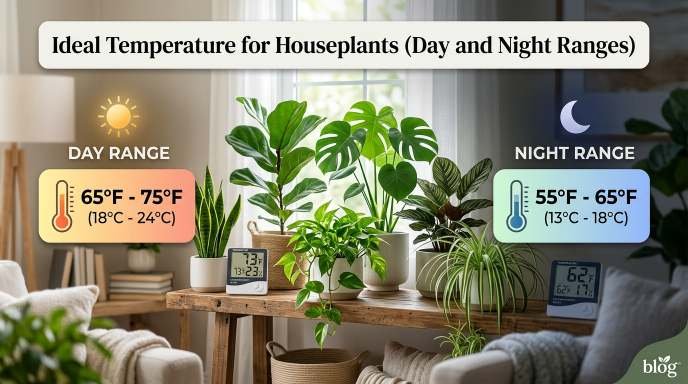
Most houseplants grow best between 65 and 75°F (18 to 24°C) during the day, with a drop to roughly 55 to 65°F (13 to 18°C) at night. That 10 to 15 degree nighttime dip mirrors what plants experience outdoors and actually supports healthier growth for many species, rather than something to avoid. Tropical plants generally want the warmer end of these ranges, while some flowering and cool-growing plants prefer temperatures on the lower side. There’s no single number that fits every houseplant, but staying within these ranges and avoiding sudden swings covers the vast majority of common indoor plants.
Quick Reference: Ideal Houseplant Temperatures
| Situation | Temperature |
|---|---|
| Most houseplants, daytime | 65 to 75°F (18 to 24°C) |
| Tropical plants, daytime | 70 to 80°F (21 to 27°C) |
| Most houseplants, nighttime | 55 to 65°F (13 to 18°C) |
| Foliage plants, nighttime | 60 to 68°F (16 to 20°C) |
| Typical night drop | 10 to 15°F (6 to 8°C) |
| Caution point for most houseplants | Below 55°F (13°C) |
| Warm-growing plants | 70 to 80°F day / 64 to 70°F night |
| Moderate-growing plants | 60 to 65°F day / 55 to 60°F night |
| Cool-growing plants | 50 to 60°F day / 45 to 55°F night |
These are starting points, not fixed rules. The species you’re growing always takes priority over a general chart.
Why the Day-Night Temperature Drop Matters
Plants don’t stop working once the sun goes down. They keep respiring at night, and temperature affects how they manage energy and water during that process. A moderate drop from day to night mimics the natural cycle plants evolved with outdoors, and for a lot of flowering houseplants, cooler nights actually encourage better blooming.
That doesn’t mean you need to chill your home on purpose. If your house naturally cools from around 72°F during the day to 62 or 65°F at night, that’s already a comfortable range for most common houseplants. The distinction worth remembering: a gradual, moderate night drop is completely different from cold exposure, like leaving a tropical plant next to an open window on a freezing night.
Daytime Temperature: What’s Actually Ideal
For the average houseplant, 65 to 75°F covers it. Tropical species can handle warmer conditions, often 70 to 80°F, especially when humidity, light, and airflow are also in good shape.
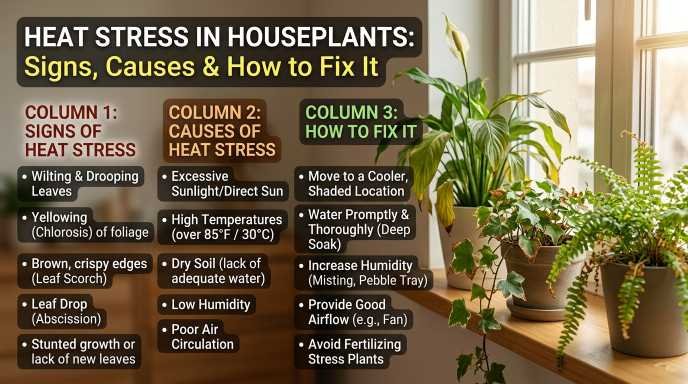
Here’s the part that trips people up: a room hitting 80°F isn’t automatically too hot for a plant. Learn about heat stress in houseplants from this guide. The real problems show up when heat stacks up with other stressors, including:
- Strong direct sunlight
- Low humidity
- Dry soil
- Poor airflow
- Hot air from a radiator
- Heat radiating from an oven or appliance
A tropical plant sitting in an 80°F room with decent moisture and airflow can do just fine. The same plant, same room, same temperature, but pressed against a hot window in direct afternoon sun, can start showing heat stress fast. The room temperature and the plant’s actual experience aren’t always the same thing. Know about summer plant care tips from this guide.
Nighttime Temperature: What’s Actually Ideal
A useful rule of thumb: let nighttime temperature fall 10 to 15°F below daytime. If your room runs 72°F during the day, something in the 60 to 65°F range at night works well for most houseplants.
Some flowering plants prefer it even cooler. This isn’t something I can verify with a live source check today, but it’s a widely repeated horticultural guideline that flowering houseplants often respond well to nights in the 55 to 60°F range, with the exact number varying by species.
Do All Houseplants Need the Same Temperature?
No, and this is where a lot of generic care advice falls short. Houseplants come from wildly different native climates, so grouping them by general temperature preference helps more than treating every plant the same.
Warm-growing houseplants
Range: 70 to 80°F day, 64 to 70°F night
This group covers most tropical foliage plants, including:
- Philodendrons
- Monsteras
- Calatheas
- Tropical palms
- Many orchids
- Other tropical foliage plants
These want warm, stable conditions and don’t tolerate cold well.
Moderate-growing houseplants
Range: 60 to 65°F day, 55 to 60°F night
This group handles cooler indoor conditions noticeably better than warm-growing tropical species, without needing the heat that monsteras or calatheas demand.
Cool-growing houseplants
Range: 50 to 60°F day, 45 to 55°F night
Some plants are naturally built for cooler environments and actually perform worse if kept too warm year-round.
These three categories are broad starting points. Always check the specific plant you’re growing rather than assuming it fits neatly into one bucket.
What’s the Minimum Safe Temperature for Houseplants?
There’s no universal floor that applies to every plant, but for most common houseplants, 55°F (13°C) is a meaningful caution line. Iowa State University Extension recommends keeping most houseplants above that point.
Below it, cold-sensitive plants, especially tropical species, can start showing:
- Wilting
- Leaf drop
- Blackened leaves
- Brown patches
- Soft, collapsed stems
- Noticeably slower growth
Not every plant reacts the same way at 55°F, though. How long the plant sits at that temperature and which species it is both matter.
Is 60°F too cold?
Usually not. A nighttime dip to 60°F is fine for most common houseplants, and some even do better there. Tropical plants that want warmer conditions may just grow more slowly if it stays cool for an extended stretch.
One thing worth watching when temperatures drop: plants use less water in cooler conditions. If you keep watering on your usual schedule anyway, the soil can stay wet longer than the plant actually needs, which raises the risk of root stress. Check the soil before watering instead of sticking to a fixed calendar.
Is 80°F too hot?
Not for most tropical houseplants on its own. The real risk comes from heat combined with other stress factors like intense sunlight, dry soil, low humidity, or poor ventilation. A plant sitting next to a sunny window can run considerably hotter than what your thermostat reports for the room.
Ideal Temperature for Tropical Houseplants
Most tropical houseplants want it warmer than cool-growing types. A practical target for tropical foliage plants:
- Day: 70 to 80°F (21 to 27°C)
- Night: 60 to 70°F (16 to 21°C)
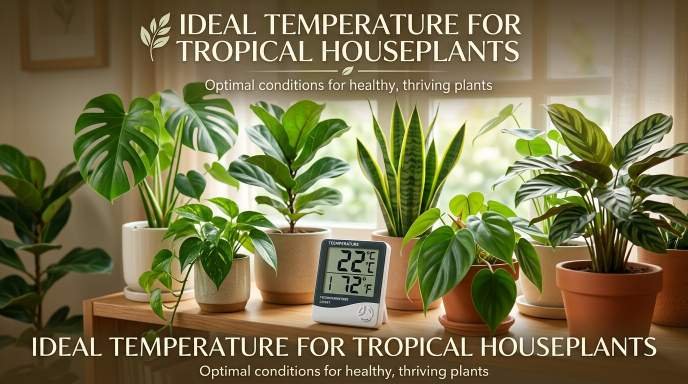
This covers common favorites like monstera, philodendron, pothos, calathea, prayer plant, peace lily, and most tropical ferns. Species-specific needs still come first, though, since “tropical” covers a wide range of native climates.
Humidity plays a supporting role here too, but it can’t fix a temperature that’s genuinely outside the plant’s comfort zone. A humid room won’t rescue a tropical plant sitting in a cold draft.
How Winter Affects Houseplant Temperature
Winter brings two separate problems: cold exposure and hot, dry air from your heating system.
A room can feel perfectly comfortable to you while a plant sitting near the window experiences something colder entirely. Glass loses heat fast at night, and the air right next to it can run significantly colder than the rest of the room. Drafts from doors and windows add another layer of sudden temperature change.
To protect plants through winter:
- Keep tropical species away from drafty doors
- Move cold-sensitive plants back from very cold windows at night
- Keep plants clear of heating vents
- Skip unheated rooms for tropical plants
- Check the actual temperature at the plant’s location, not just the room average
Sometimes your brightest window is also your coldest spot at night. You may need to balance light against temperature stability rather than optimizing for one alone.
How Summer Affects Houseplant Temperature
Heat stress shows up in summer too, most often when plants sit directly against hot glass or catch strong afternoon sun. Spider mites thrive in warm conditions. Here’s how to spot the signs before spider mites spread.
During hot stretches:
- Shield sensitive plants from intense afternoon sunlight
- Improve airflow around dense foliage
- Check soil moisture more frequently. Learn how to check soil moisture from this guide.
- Keep plants away from hot appliances
- Watch for curling, wilting, or crispy leaf edges
- Avoid placing plants directly against hot windows
Leaf temperature can run well above room temperature in direct light. A room reading 78°F can still expose a plant in direct afternoon sun to much higher heat than that number suggests.
Where You Should Avoid Placing Houseplants
Location creates temperature problems even in a room that otherwise feels comfortable.
Near radiators: Radiators put out hot, dry air that speeds up water loss from leaves. Keep sensitive plants several feet back when you can.
Directly under heating vents: Hot air blasting straight onto foliage causes rapid moisture loss and browning leaf edges.
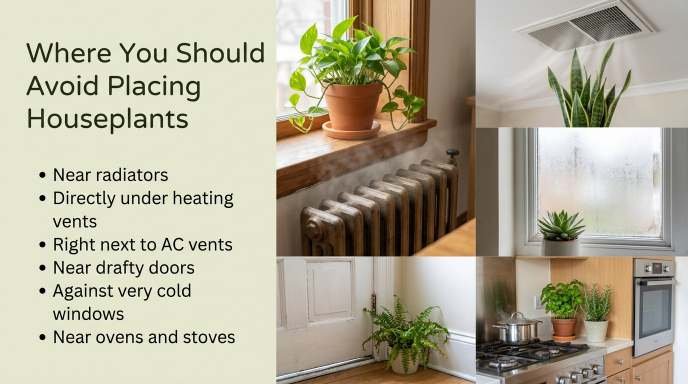
Right next to AC vents: Cold airflow triggers sudden temperature swings and dries out the surrounding air.
Near drafty doors: Repeated cold air exposure wears down tropical plants over time.
Against very cold windows: Glass temperature can drop well below room temperature at night, especially in winter.
Near ovens and stoves: Kitchens often make good plant environments overall, but direct heat from cooking appliances can still damage nearby foliage.
Can Sudden Temperature Changes Hurt Houseplants?
Yes, and tropical plants are the most sensitive to it. Moving a plant straight from a warm room into cold outdoor air can cause damage even if the outdoor temperature doesn’t seem extreme. The same thing happens on a smaller scale when a plant sits right in the path of an AC vent or a drafty window.
Whenever you’re changing a plant’s environment, doing it gradually beats doing it all at once. Stable conditions are generally safer than repeated swings, even if each swing seems minor.
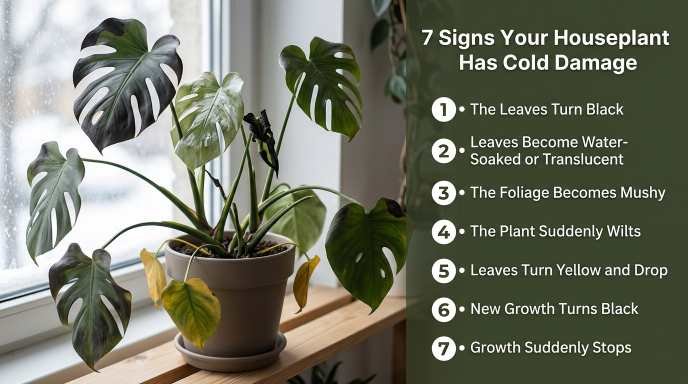
Signs Your Houseplant Is Too Cold
Cold stress tends to show up as:
- Blackened leaves
- Drooping
- Sudden leaf drop
- Soft or collapsed growth
- Brown patches
- Very slow growth
If you notice these symptoms shortly after a cold night, check the plant’s location before you start adjusting watering or fertilizer. It’s easy to mistake a temperature problem for something else entirely.
Signs Your Houseplant Is Too Hot
Heat stress can look a lot like underwatering:
- Wilting
- Crispy leaf tips
- Brown leaf edges
- Yellowing
- Curling leaves
- Soil drying out unusually fast
Check where the damage is concentrated. If it’s worst on the leaves closest to a sunny window, radiator, or other heat source, temperature is likely playing a role. Check temperature and humidity before assuming the plant just needs more water.
How to Measure the Temperature Around Your Plants
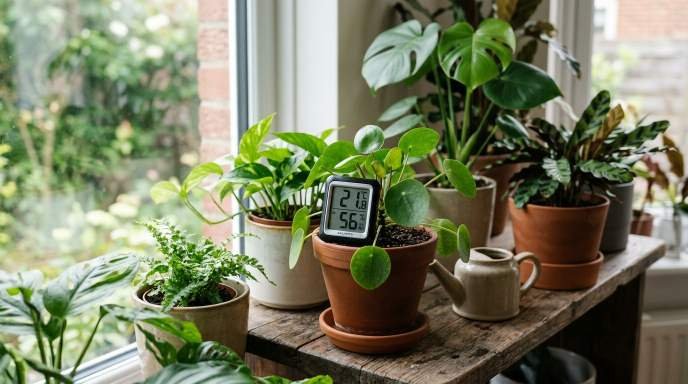
Your thermostat tells you the room’s average temperature, not what’s happening right where your plant sits. Temperature can vary a surprising amount between a windowsill, a shelf, the center of the room, and a spot near an AC vent or radiator.
A small digital thermometer placed directly where the plant grows gives you a much better picture. A min/max thermometer is even more useful in winter, since it can reveal just how cold a spot gets overnight, well after you’ve gone to bed and stopped checking.
Temperature Doesn’t Work Alone
Temperature is one input among several, not the whole picture. How a plant responds also depends on:
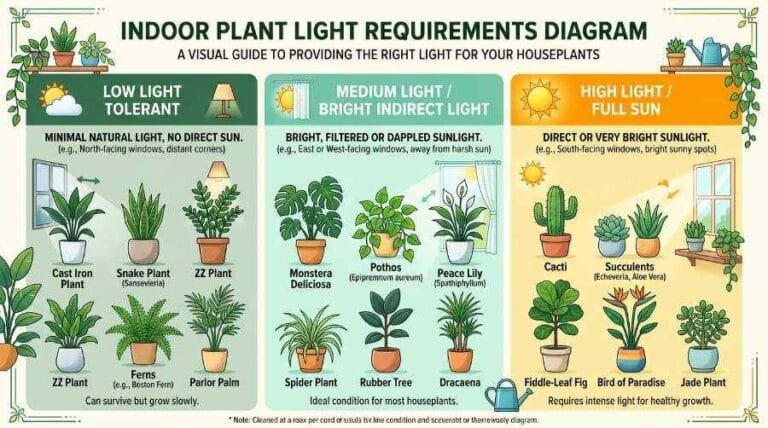
- Light
- Humidity
- Soil moisture
- Airflow
- Watering habits
- Species
- Season
- How acclimated the plant already is to its spot
Temperature is just one part of creating the right environment for healthy houseplants. For a complete overview of light, watering, humidity, soil, and other essential care factors, see our Complete Beginner’s Guide to Indoor Plant Care
An 80°F room with good humidity, decent light, and enough water can suit a tropical plant just fine. The same 80°F with intense direct sun, dry air, and dry soil is a different situation entirely. Likewise, 60°F is fine for a lot of plants on its own, but 60°F paired with soil that stays constantly wet raises the odds of root problems. Treat temperature as one piece of the plant’s overall environment, not the single factor to obsess over.
A Quick Story
I once moved a philodendron to a windowsill for “better light” in January. I didn’t realize that the glass became about ten degrees colder than the rest of the room at night. Within a week, the leaves closest to the window became soft and dark. I moved the plant about two feet back from the window, while keeping it in the same area with similar light. It quickly recovered. This taught me that the temperature around a plant can matter more than the room thermostat shows.
Frequently Asked Questions
What’s the best temperature for most houseplants?
Around 65 to 75°F (18 to 24°C) during the day works for most common houseplants, with nights roughly 10 to 15°F cooler.
What temperature should houseplants be at night?
Most do well around 55 to 65°F (13 to 18°C). Tropical and flowering plants can have different preferences.
Do houseplants need cooler nights?
Many benefit from a moderate drop, generally 10 to 15°F below the daytime temperature.
Is 55°F too cold for houseplants?
It can be for many tropical species. Some plants tolerate it fine, others start showing cold stress. It depends heavily on the plant.
Is 60°F too cold for tropical plants?
Not for a short period, but extended time at that temperature can slow growth. Prolonged cool exposure adds stress for plants that prefer warmth.
Is 80°F too hot for houseplants?
Not on its own for most tropical plants. It becomes a problem when combined with intense sun, dry soil, low humidity, or poor airflow.
Should houseplants sit near a radiator?
Generally, no. Direct radiator heat dries out foliage and can push the plant’s actual temperature well above the room’s.
Can air conditioning damage houseplants?
Yes. Direct cold airflow causes sudden temperature swings and dries the air around the plant. Keep sensitive plants out of the direct path of a vent.
Why are my houseplants’ leaves turning brown in winter?
Several things can cause this, including dry heated air, radiator exposure, cold drafts, watering habits, and insufficient light. Check the plant’s exact location before changing your watering routine.
Final Takeaway
For most houseplants, aim for 65 to 75°F during the day and roughly 55 to 65°F at night, with a moderate 10 to 15°F drop between the two. Tropical plants generally want it warmer, while some flowering and cool-growing species do better on the cooler end.
The number itself matters less than avoiding extremes and sudden swings. Keep plants away from radiators, heating vents, AC vents, drafty doors, and cold windows, then fine-tune from there based on what the specific plant actually needs.
The right temperature for a houseplant isn’t one perfect figure. It’s a stable range that fits the plant, the season, and the exact spot it’s growing in.