The best long-spout watering cans for indoor plants share one thing:
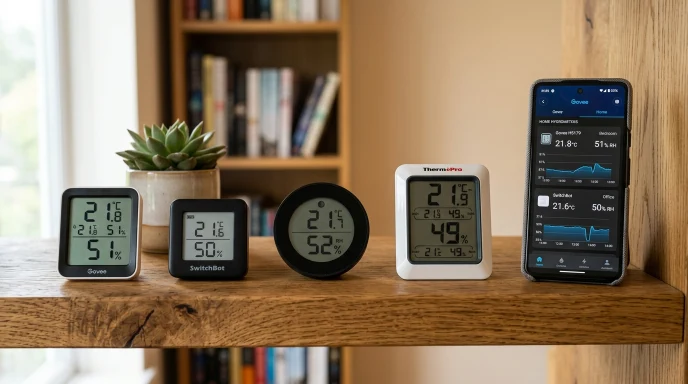
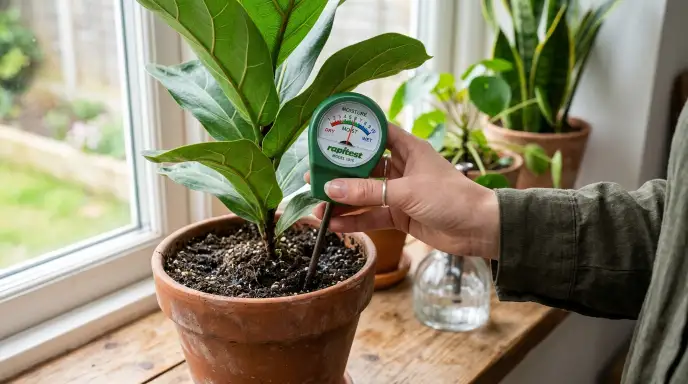
A narrow, far-reaching spout that gets past leaves and puts water right at the soil line instead of on the foliage. For most people with a mixed houseplant collection, the Dramm 2-Liter Watering Can is the strongest all-around pick. If budget is the priority, the Bloem Aqua Rite gives you the same long-spout control for less. If you want precision and premium build quality, Haws makes the best case for spending more. A long-spout watering can keeps foliage dry, but a moisture meter tells you when to water.
Quick Picks: Best Long-Spout Watering Cans
| Best For | Our Pick | Why |
|---|---|---|
| Best Overall | Dramm 2-Liter Watering Can | Far-reaching spout, useful capacity, balanced design |
| Best Budget | Bloem Aqua Rite (56 oz) | Long-stem spout with precise pouring at a lower price |
| Best Premium | Haws Fazeley Flow | Curved spout built for controlled indoor watering |
| Best for Delicate Plants | Haws Rowley Ripple | Removable rose for gentle watering of seedlings |
| Best for Crowded Plants | WhaleLife Long-Spout Can | Long stem reaches beneath dense foliage |
| Best Small Option | Haws Handy Indoor | Compact size for a few plants |
| Best for Large Collections | Dramm 5-Liter | More capacity with an extra-long spout |
| Best Modern Design | Umbra Quench | 360-degree handle for multi-angle pouring |
Prices, colors, and availability change often. Check the current listing before you buy.
A Quick Story Before We Get Into It
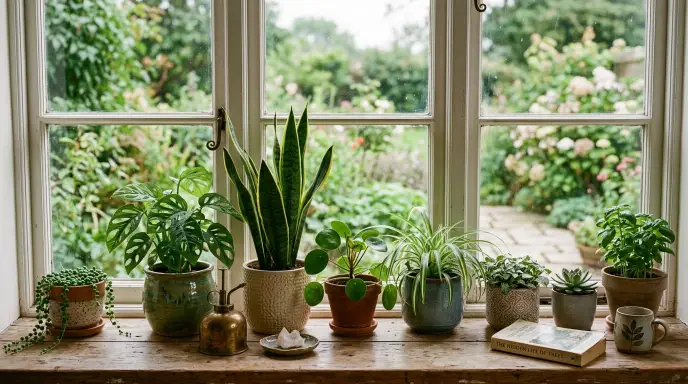
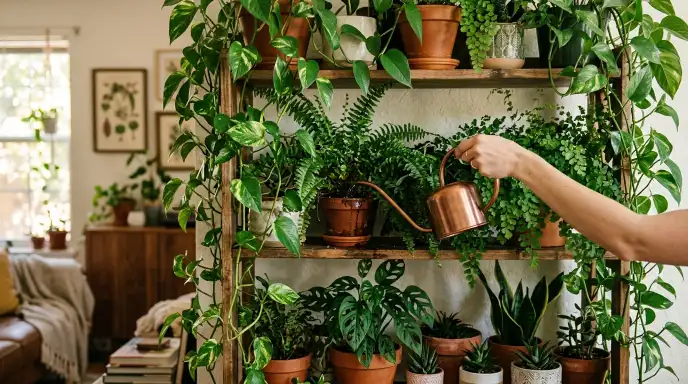
I used to water my plants with whatever cup was closest to the sink. My shelf plants sat behind a row of pothos, so every watering session meant tilting a wide-mouth jug over the leaves and hoping for the best. My wood shelf paid the price. Switching to a long-spout can fixed it in one try, the spout just slides past the leaves and goes straight to the soil.
Why Long-Spout Watering Cans Work Better for Houseplants
Indoor watering is a different job than outdoor watering
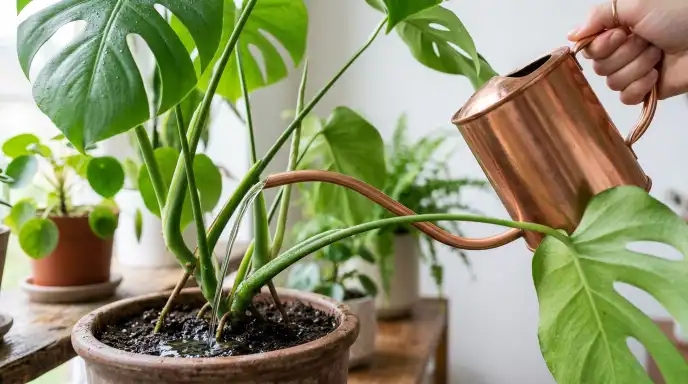
A garden watering can is built to cover a wide bed quickly. Houseplants need the opposite, controlled placement of a smaller amount of water in a tight space. A long, narrow spout lets you:
- Reach soil hidden beneath leaves.
- Water plants pushed to the back of a shelf.
- Navigate between closely spaced pots.
- Keep water off furniture and windowsills.
- Target the soil instead of the plant itself.
It also protects plant health, not just your floors
Pouring water over the top of a plant can trap moisture in leaf joints and the crown of the plant, which creates conditions where fungal and bacterial issues can take hold. Directing water straight to the soil instead of the foliage avoids that problem. This matters most for plants like Calathea, succulents, and other species where water sitting on the crown or leaves can cause rot.
A narrow spout also slows the flow rate down, which means less disturbance to topsoil and less risk of splashing soil (and anything living in it) onto nearby leaves.
The Best Long-Spout Watering Cans, Reviewed
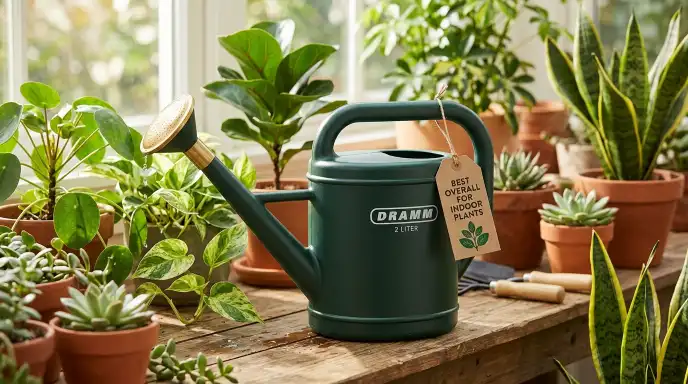
1. Dramm 2-Liter Watering Can, Best Overall
This is the can most indoor plant owners should start with. Dramm builds it with a 2-liter capacity, a spout that reaches well past the body of the can, and a detachable rose that switches between a direct stream and a gentle shower. It’s plastic, so it stays manageable even full.
Best for: Collections of roughly 5 to 20 plants.
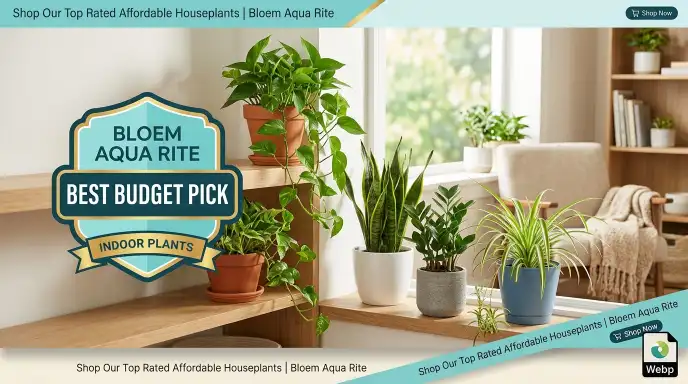
2. Bloem Aqua Rite, Best Budget Pick
Bloem’s long-stem spout is built specifically for precise pouring into hard-to-reach spots, and it does that without the price tag of a metal can. It comes in 56-ounce and 144-ounce sizes, the smaller one is the better fit for most indoor collections.
Best for: Beginners or anyone who wants long-spout control without spending much.
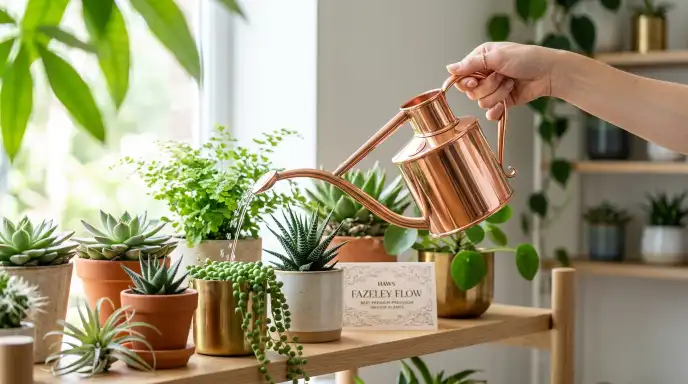
3. Haws Fazeley Flow, Best Premium Precision
Haws makes this in galvanized steel, copper, or brass, with a curved, non-drip spout built for a calm, direct stream into individual pots rather than broad coverage.
Best for: Orchids, bonsai, and small tropicals where accuracy matters more than speed.
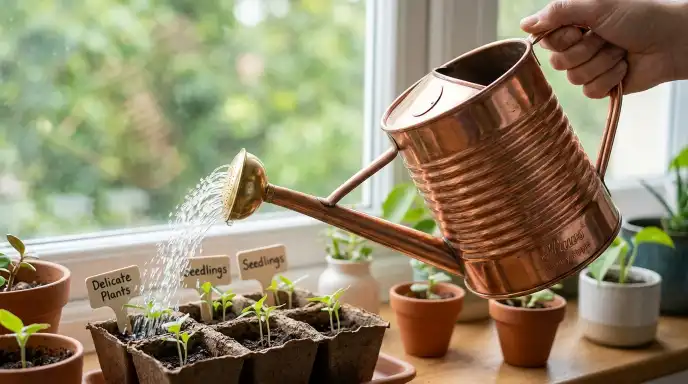
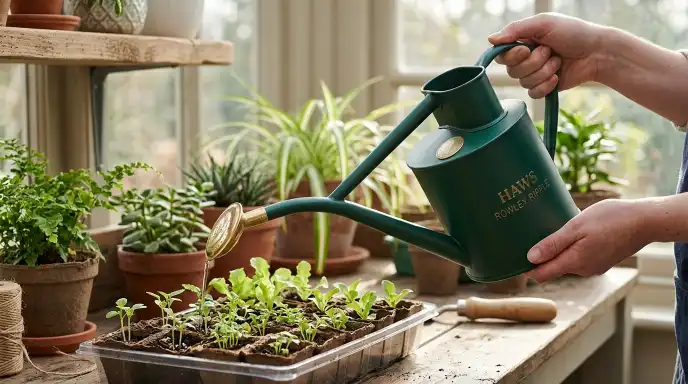
4. Haws Rowley Ripple, Best for Delicate Plants and Seedlings
Where the Fazeley Flow is built for a direct stream, the Rowley Ripple typically pairs with a removable brass rose, turning that same precision spout into a gentle shower. That matters for seedlings and delicate root systems, where a hard stream can dislodge new roots.
Best for: Propagating seedlings or watering high-humidity tropicals that need gentle saturation.
5. WhaleLife Long-Spout Watering Can, Best for Crowded Shelves
This 40-ounce can has a transparent reservoir so you can see how much water is left, plus a long stem built to reach through foliage to the base of the plant.
Best for: Plant shelves, windowsill rows, or any tightly packed arrangement.
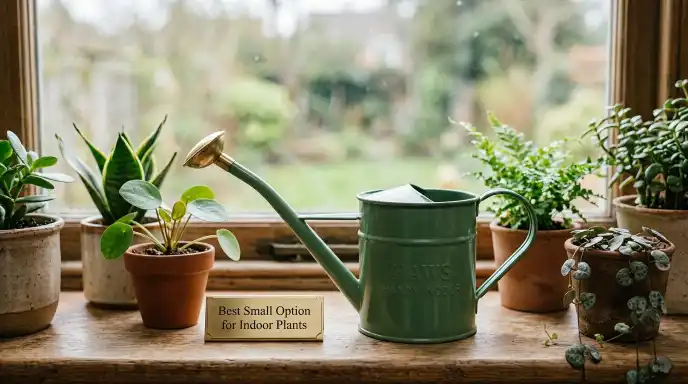
6. Haws Handy Indoor Watering Can, Best Small Option
If you only have a handful of plants, a large can is more awkward than useful. Haws’ smaller indoor models scale the same curved, long-spout design down to about a pint.
Best for: Apartment plant owners, desk plants, and small orchid or bonsai collections.
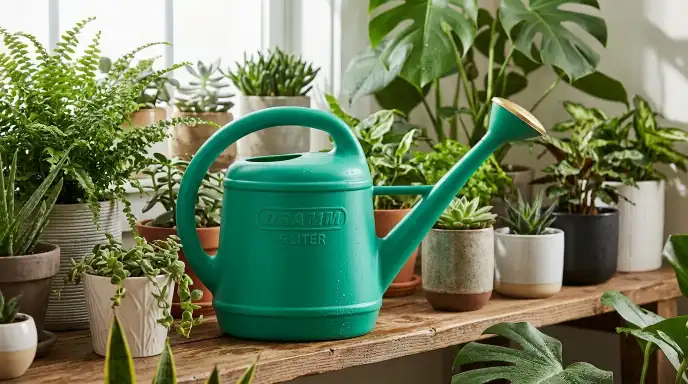
7. Dramm 5-Liter Watering Can, Best for Large Collections
For anyone managing a large indoor jungle, Dramm’s 5-liter version keeps the same far-reaching spout as the 2-liter model but with meaningfully more capacity, which means fewer trips back to the sink.
Best for: Collections of 20 or more plants.
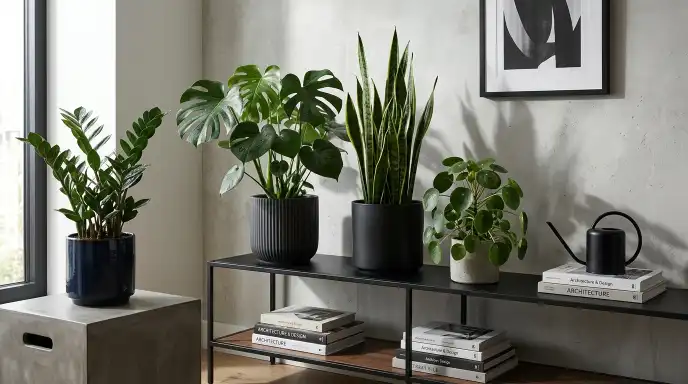
8. Umbra Quench, Best Modern Design
The Quench is a 1-liter stainless steel can with a straight precision spout, built as much for display as for function.
Best for: Plant owners who want a can that also looks good sitting out.
Pros and Cons Compared: All Long-Spout Watering Cans
| Model | Capacity | Pros | Cons |
|---|---|---|---|
| Dramm 2-Liter | 2 L | Far-reaching spout, useful capacity, detachable rose, light even when full | More can than needed for just 1 to 2 plants |
| Bloem Aqua Rite | 56 oz / 144 oz | Long-stem spout, lower price than metal cans, easy to clean | Larger 144 oz size gets heavy fast |
| Haws Fazeley Flow | 0.6 to 1 L | Very controlled curved spout, durable metal build | Costs more, smaller capacity means more refills |
| Haws Rowley Ripple | 1 L | Removable rose for gentle watering, well balanced | Premium pricing, smaller capacity |
| WhaleLife | 40 oz | Reaches through dense foliage, transparent reservoir | Rear handle awkward for carrying when full |
| Haws Handy Indoor | 0.6 L | Compact, easy to store, precise for small pots | Frequent refills for larger collections |
| Dramm 5-Liter | 5 L | Same reach as the 2-liter with far more capacity | Heavy once filled, overkill for small collections |
| Umbra Quench | 1 L | Rust-resistant, varied grip angles, doubles as decor | Smaller capacity, premium price for the size |
Full Comparison Table
| Model | Best For | Capacity | Spout | Material |
|---|---|---|---|---|
| Dramm 2-Liter | Best overall | 2 L | Far-reaching | Plastic |
| Bloem Aqua Rite | Best budget | 56 oz / 144 oz | Long-stem | Plastic |
| Haws Fazeley Flow | Premium precision | 0.6 to 1 L | Curved | Metal |
| Haws Rowley Ripple | Delicate plants | 1 L | Long reach | Metal |
| WhaleLife | Crowded plants | 40 oz | Long-stem | Plastic |
| Haws Handy Indoor | Small collections | 0.6 L | Long | Plastic |
| Dramm 5-Liter | Large collections | 5 L | Far-reaching | Plastic |
| Umbra Quench | Modern design | 1 L | Straight | Stainless steel |
What to Look for When Buying a Long-Spout Watering Can
Spout length
The spout should reach the soil without forcing you to lift the whole can over the foliage. This matters most for Monstera, philodendrons, ferns, hanging baskets, and any plant with leaves that spread wide. That said, a spout that’s too long throws off the can’s balance once it’s full, so more length isn’t automatically better.
Spout width
A narrow opening gives you more control than a wide garden-style outlet, which matters most for small pots and plants with foliage close to the soil line.
Capacity
| Collection Size | Practical Capacity |
|---|---|
| 1 to 5 plants | 0.5 to 1 L |
| 5 to 15 plants | 1 to 2 L |
| 15 to 30 plants | 2 to 3 L |
| 30+ plants | 3 L or more |
A liter of water weighs about a kilogram, so a large can gets heavy fast once it’s full. Match the size to your actual collection rather than buying the biggest one on the shelf.
Balance
A can that shifts weight suddenly as you tilt it is harder to control than one that pours predictably. Poor balance leads to wrist fatigue, sudden surges, and spills, and for indoor use, balance often matters more than maximum capacity.
Removable rose
A removable rose gives you two watering modes in one can: a concentrated stream without it, for directing water straight to the soil, and a gentle shower with it, for seedlings or surface watering.
Plastic or Metal: Which Should You Buy
Plastic
| Pros | Cons |
|---|---|
| Lightweight and easy to carry | Less premium look and feel |
| Affordable | |
| Won’t rust | |
| Comes in larger capacities without excess weight |
Metal
| Pros | Cons |
|---|---|
| Premium appearance, good for display | Usually more expensive |
| Rigid, durable construction | Heavier to carry |
| Often better balanced when full | Some finishes need extra care |
Neither material is objectively better. It depends on whether you want a tool you don’t think about, or one that also looks good sitting on a shelf.
Does a Long Spout Prevent Overwatering?
No, and this distinction matters. A long spout improves precision and control over where the water lands, but it doesn’t determine how much water your plant actually needs.
Overwatering comes down to a mix of factors:
- Watering frequency.
- Soil drainage.
- Pot size and drainage holes.
- The specific plant’s needs.
- Light, temperature, and humidity in the room. Know about ideal temperatures for plants from this
A precise watering can helps you apply water on purpose instead of by accident, but it’s not a substitute for paying attention to what your plant actually needs. Learn about total plant care from this guide.
Long-Spout Watering Can vs. Cup
| Feature | Long-Spout Can | Cup |
|---|---|---|
| Reach beneath foliage | Excellent | Poor |
| Flow control | Excellent | Moderate |
| Crowded shelves | Excellent | Poor |
| Small plants | Excellent | Good |
| Spill prevention | Better | Moderate |
| Purpose-built for the job | Yes | No |
A cup can technically water a plant, but a purpose-built can gives you far more control over where the water actually goes.
How to Water Indoor Plants Without Spilling
- Aim the spout at the soil:
Not over the foliage. - Start slowly:
Tilt the can gradually to build a controlled stream. - Move around the root zone:
Instead of flooding one spot. - Watch the drainage:
Once water runs from the drainage holes, the plant has had enough. - Empty the saucer:
Don’t let a pot sit in standing water for long, unless that specific plant wants it.
Which One Should You Buy?
- Choose the Dramm 2-Liter if you want one reliable can for everyday indoor plant care.
- Choose the Bloem Aqua Rite if you want long-spout control without spending much.
- Choose Haws if precision, design, and premium build matter more to you than price.
- Choose the WhaleLife if your plants are densely packed or hard to reach.
- Choose a 0.5 to 1-liter can if you have a small collection or limited storage.
- Choose the Dramm 5-Liter if you’re managing 20 or more plants and want fewer refills.
- Choose the Umbra Quench if you want a can that also works as a shelf-display piece.
Frequently Asked Questions
Are long-spout watering cans better for indoor plants?
Yes, in most cases. The extended, narrow spout makes it easier to reach the soil beneath foliage and between closely positioned pots.
What size watering can is best for houseplants?
For many indoor collections, 1 to 2 liters is a practical range. Smaller collections can use around 0.5 to 1 liter, while larger collections may benefit from 2 to 3 liters or more.
Is a narrow spout better for indoor plants?
Generally, yes. A narrow spout gives you more precise control over where the water goes than a wide garden-style spout.
Does a long-spout watering can prevent spills?
It reduces the chance of spills, but it can’t guarantee them. Spills also depend on the can’s balance, capacity, handle design, and how you pour.
Is plastic or metal better for a watering can?
Plastic is generally better for lightweight everyday use. Metal is worth considering if appearance, rigidity, and premium construction matter more to you than weight or price.
What is the best watering can for plants on a shelf?
A compact can with a long, narrow, or curved spout is usually the best choice, since it can reach beneath foliage without requiring you to move the pots.
Does a narrow spout prevent overwatering?
No. It improves accuracy and control, but overwatering depends on watering frequency, soil drainage, pot size, and the specific plant, not the spout itself.
Final Verdict
If you want one long-spout watering can for most indoor plants, the Dramm 2-Liter Watering Can is the strongest overall choice. Its capacity, reach, balance, and detachable rose make it versatile enough for everyday houseplant care.
For a lower-cost option, the Bloem Aqua Rite 56-ounce delivers the same long-spout precision without the higher price. If premium construction and controlled pouring matter more to you, Haws has the strongest indoor range across both direct-stream and rose-equipped models.
The best watering can isn’t necessarily the biggest or the longest. It’s the one that gives you enough reach to hit the soil, enough capacity for your collection, and enough balance to control the stream without a fight. Learn how to water in the right way from this guide.