Check soil moisture without a meter by pushing your finger 1 to 2 inches into the soil, inserting a plain wooden stick and checking it after a few minutes, or lifting the pot to feel its weight. Each method works, but they’re not equally accurate in every situation. Pot size and plant type change which one you should actually trust.

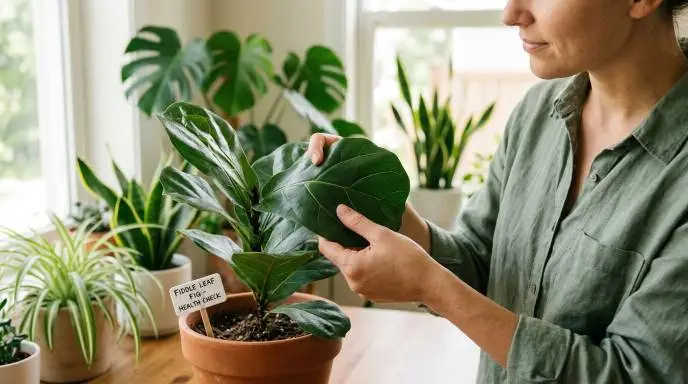
I killed a fiddle leaf fig by trusting a dry-feeling top inch of soil in a 14-inch floor planter. Watered it anyway “just in case,” and root rot set in within weeks. A wooden skewer pushed to the bottom would have shown me the truth my finger never reached.
How to Check Soil Moisture Without a Meter (Quick Answer)
- Finger test: push a finger 1-2 inches deep. Dry and crumbly means water, cool and clinging means wait.
- Wooden stick test: insert a chopstick or skewer to the bottom of the pot, leave it 5-10 minutes, then check for moisture on the wood.
- Pot weight test: lift the pot. Heavy means still wet, noticeably light means dry.
if you want highly precise readings, you can also use a digital hygrometer.
The Finger Test
- Push your index finger 1 to 2 inches deep into the soil.
- Pull it out and check what’s on your skin.
- Dry, crumbly soil that doesn’t stick to your finger means the plant is thirsty.
- Cool, damp soil that clings to your skin means it’s fine to wait.
How Deep Is Deep Enough?
- 1-2 inches works well for small to medium pots, up to roughly 6 inches wide.
- Larger pots need a deeper check, since surface soil dries out far faster than soil lower down in the container.
- This depth gap is the single most common reason the finger test gives a false “dry” reading. Misreading soil moisture is exactly why so many plant owners confuse overwatering and underwatering, see the full comparison here.
- For pots larger than a gallon or so, the wooden stick method reads moisture more reliably than a finger alone.
The Wooden Stick or Chopstick Method
- Insert an unfinished wooden skewer, chopstick, or dowel all the way to the bottom of the pot.
- Leave it in place for 5 to 10 minutes.
- Pull it out and check the wood for a darker color change or soil clinging to it.
- A clean, dry stick means it’s time to water.
- A stick with darkened wood or clinging soil means there’s still moisture lower in the pot.
This method beats the finger test for larger containers because it reads moisture at the root zone, where it actually matters for the plant, instead of stopping at the surface.
The Pot Weight Method
- Lift the pot right after watering it fully once, so you know what “wet” feels like for that specific plant.
- Lift it again before your next planned watering and compare.
- Heavy still means it’s holding water; noticeably light means it’s dry and ready.
- Works best as a quick daily check once you’re already familiar with a pot’s normal weight range. Less useful the first time you test an unfamiliar plant.
The Squeeze Test (For Garden Beds and Larger Containers)
- Grab a small handful of soil from a few inches below the surface.
- Squeeze it into a ball.
- Holds its shape loosely and crumbles when poked → moisture is ideal.
- Falls apart immediately → too dry.
- Stays muddy or drips → too wet.
This is the same technique covered in our Best Soil for Vegetable Garden guide, just applied here specifically to checking whether it’s time to water rather than testing soil texture.
Which Method Should You Actually Use?
- Small to medium pots: the finger test is fast and accurate enough on its own.
- Large pots or floor planters: use the wooden stick method, since surface soil misleads at this size.
- Plants you check often: the pot weight method works well once you know the baseline
- Garden beds and raised beds: the squeeze test.
- When you want total certainty: combine two methods, like a finger test plus a weight check, rather than relying on just one reading.
Still figuring out the basics of watering, light, and potting for your specific plants? Our Complete Beginner’s Guide to Indoor Plant Care is a good starting point before you get into the fine details of moisture testing.
Does the “Right” Moisture Level Change by Plant?
- Succulents and cacti: prefer soil to dry out almost completely between waterings. A dry finger test reading here is normal, not a warning sign.
- Ferns and moisture-loving plants: prefer consistently damp soil. Waiting for a fully dry reading often means you’ve already waited too long.
- General houseplants: the “damp but not wet” reading most guides describe applies best here, not as a universal rule across every plant type.
When These Tests Can Mislead You
- Dry topsoil over wet lower soil: common in larger pots, which is exactly why checking depth matters more than most sources mention.
- Compacted soil: water can pool near the surface and give a false “wet” reading there while the roots below stay dry. This connects directly to the drainage issues covered in our Fix Poor Soil Drainage guide.
- Recently watered but poorly draining soil: soil can test “wet” for days simply because it can’t drain properly, not because it’s holding the right amount of moisture for the plant.
Learn about the best sprout watering cans from this guide.
All of these methods can help you check soil moisture, but if you want a quick and more reliable way to measure moisture deeper in the soil, a moisture meter is a useful tool. Follow this guide to find the best soil moisture meters for indoor plants and choose the right one for your needs.
FAQs
How do I know if I’m overwatering without a meter?
Consistently wet readings from the finger test or wooden stick, combined with yellowing leaves or a musty smell from the pot, are strong signs of overwatering. Our Yellow Leaves on Plant Causes guide breaks down the specific patterns to watch for.
Is it better to check soil moisture with a stick or your finger?
For small pots, a finger is quick and accurate enough. For larger pots or floor planters, a wooden stick reads moisture deeper in the soil, which the finger test can’t reach.
How often should I check my plant’s soil moisture?
No fixed schedule works for every plant. Checking every few days, or whenever the topsoil looks dry, is more reliable than watering on a fixed calendar.
Can soil look dry on top but still be wet underneath?
Yes. This is common in larger pots, where the surface dries out much faster than the soil lower down. It’s the main reason a quick surface glance can be misleading.
Do soil moisture meters work better than manual tests?
Meters can offer a numeric reading, but they’re not automatically more accurate than a well-done finger or stick test, and they can give inconsistent readings if the probe hits an air pocket or root. Manual methods remain a reliable, free alternative for most home growers.
Key Takeaways
- The finger test works well for small to medium pots; the wooden stick is more reliable for larger ones.
- Pot weight is a fast, useful check once you know a plant’s normal “wet” weight.
- The squeeze test is best suited to garden beds and raised beds.
- The “right” moisture level depends on the plant. Succulents want dry, ferns want consistently damp.
- Compacted or poorly draining soil can give misleading readings no matter which method you use. improving soil drainage with perlite.