To fix poor soil drainage in your indoor garden, amend the soil with perlite, pumice, or orchid bark at 25% to 33% of the total mix, confirm your pots have functional drainage holes, and aerate compacted soil with a wooden dowel. Skip the bottom-rocks trick. It doesn’t actually help. The root cause of poor drainage often starts with the wrong soil. We’ve reviewed the best options here
Most advice online jumps straight to fixes without checking that drainage is really the problem, or mixing up a soil issue with a pot issue. This guide sorts both out clearly.
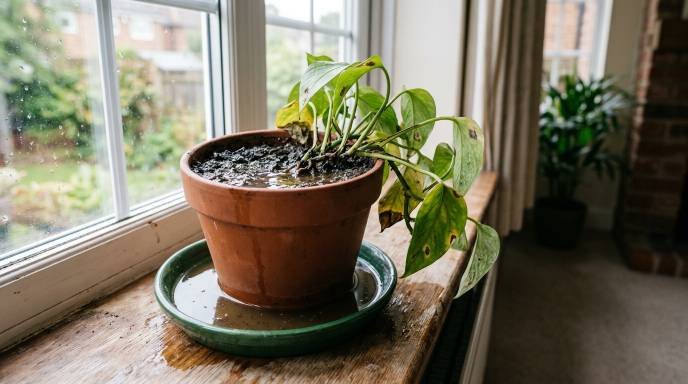
My peace lily sat in a decorative pot with zero drainage holes for a full year before I noticed water pooling an inch deep at the bottom every time I watered it. Roots were mush. One drill, four holes, and a fresh repot later, it’s never looked better.
This ties into the base recipe from our DIY Indoor Potting Mix guide, and for the full picture on keeping any indoor plant healthy beyond just drainage, see our Complete Beginner’s Guide to Indoor Plant Care.
Is Poor Drainage Actually Your Problem? (Quick Self-Check)
Before amending anything, confirm drainage is actually what you’re dealing with. Look for these signs:
- Water sits visibly on the soil surface for more than a few seconds after watering.
- Soil stays damp for noticeably longer than expected between waterings.
- A musty smell coming from the pot or soil.
- Yellowing lower leaves combined with soil that’s consistently wet to the touch see our Yellow Leaves on Plant Causes guide if this is the pattern you’re seeing.
One important distinction: this is different from simply overwatering out of habit. Drainage problems show up even when your watering amount is otherwise reasonable. The soil or pot itself is what’s holding water too long, not just how often you’re reaching for the watering can. If you’re not sure whether the soil is actually wet or just looks that way, our guide on how to check soil moisture without a meter covers three quick ways to confirm.
How to Fix Poor Soil Drainage in Your Indoor Garden (Quick Answer)
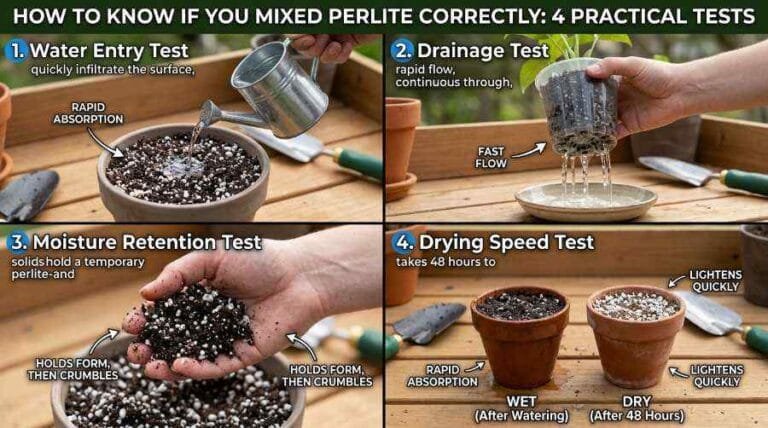
- Amend soil with coarse material (perlite, pumice, or orchid bark) at 25% to 33% of total volume.
- Confirm every pot has functional, unblocked drainage holes.
- Aerate compacted soil periodically with a wooden dowel.
- Skip the bottom-rocks layer entirely. It works against you, not for you.
Learn about all types of indoor plant pots from this. Also learn about perlite VS pumice from our other guide. Know how to handle perlite safely in this guide.
Fixing the Soil Itself
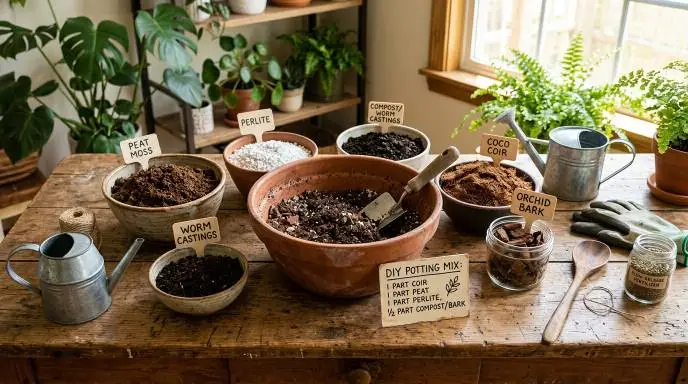
Coarse aeration material is only half the equation. The moisture-retaining base you pair it with (coco coir or peat moss) matters too. Our coco coir vs. peat moss comparison covers how each one behaves once you’ve amended for drainage.
Add Perlite or Pumice
- Both are porous volcanic rocks that increase airflow and speed up drainage.
- Aim for 25% to 33% of the total mix volume.
- Perlite is cheaper and more widely available but can float to the surface over time.
- Pumice is denser and won’t float, and holds up better long-term.
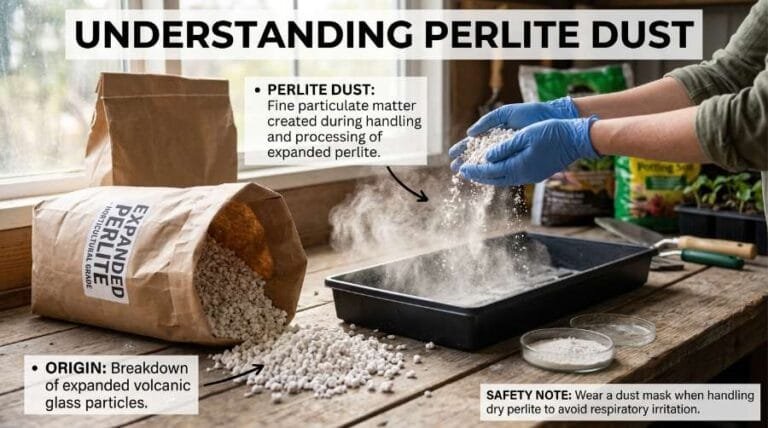
- Handling dry perlite kicks up some dust. See our breakdown of whether perlite dust is safe to breathe and how to handle it properly.
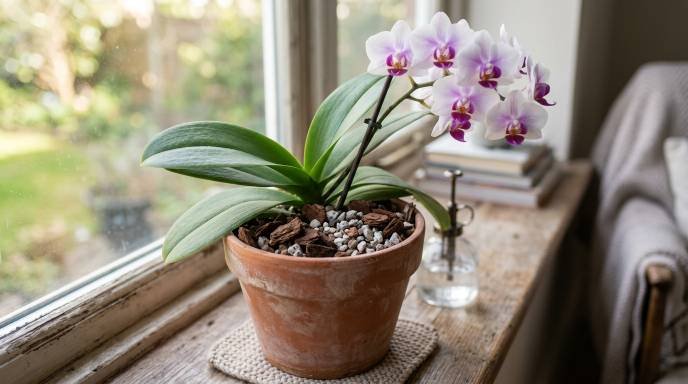
If you want to know ratio details about perlite, follow this guide. And in another guide shows the method of adding perlite.
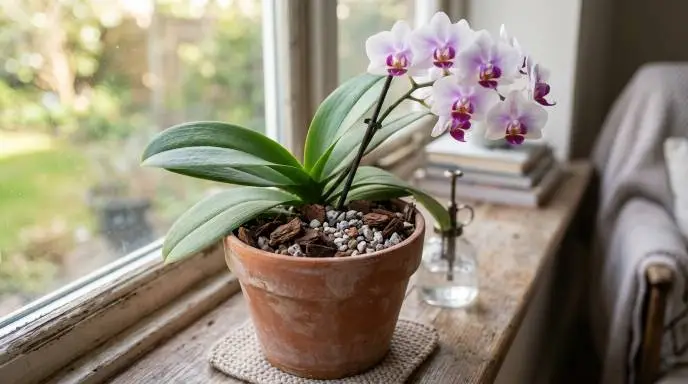
Add Orchid Bark or Coarse Grit
- Chunky organic material that physically props the soil open.
- Prevents fine particles from packing down tightly over months of watering.
- This is the same mechanism behind the Chunky Aroid Mix recipe, just applied here to general houseplant drainage instead of aroid-specific mixes.
The Bottom-Rocks Myth, Debunked
This is one of the most repeated pieces of bad advice in houseplant care, so it’s worth actually explaining rather than just warning against it.
- Water doesn’t move freely from fine soil into coarse material like rocks. Learn about the best long-spout watering cans from this guide.
- It has to fully saturate the fine layer above before it moves down at all, a phenomenon soil scientists call a “perched water table”.
- The result: a rock layer doesn’t drain water faster. It actually raises the waterlogged zone higher, putting it closer to the roots instead of farther away.
In short:
Rocks at the bottom don’t help. They can make the problem worse.
Fixing the Container
Check for Functional Drainage Holes
- Confirm the inner nursery pot, not just the decorative outer pot, has open, unblocked holes.
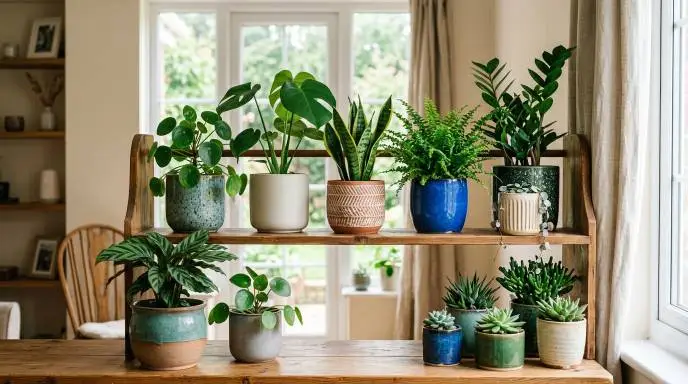
- If a pot has no holes at all, either drill some yourself or use it strictly as a decorative cachepot, never as the actual growing pot. Learn about the best indoor plant pots from this guide.
Lift the Planter
- Elevate pots sitting inside flat saucers or decorative cachepots.
- Small pot feet or even bottle caps underneath create a gap for airflow.
- This keeps the pot’s base from sitting directly in any water that drains through.
Don’t Let Saucers Collect Water
- Empty standing water from saucers within 15 to 30 minutes of it draining through.
- Leaving water sitting indefinitely defeats the purpose of drainage holes in the first place.
Aerating Compacted Soil
- Take a wooden dowel or a chopstick.
- Gently push it into the soil in several spots around the pot.
- This breaks up compacted channels that block water from reaching the lower roots evenly.
A few things worth knowing:
- Best done every few months for plants that have been in the same soil for a long stretch without repotting.
- Not a substitute for amending the soil mix. Aeration helps existing soil breathe better, but it doesn’t fix soil that’s fundamentally too dense to begin with.
For doing all kinds of gardening work, you need a good gardening tools kit. Read this article to learn about the best gardening tool kits.
My Plant Is Already Sitting in Soggy Soil: Now What?
- Stop watering immediately and let the topsoil dry out before doing anything else.
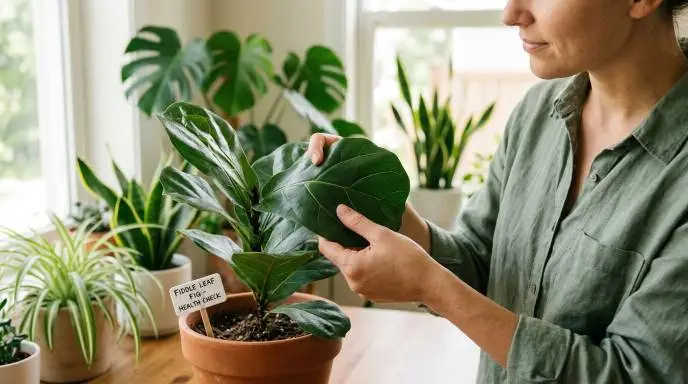
- Gently remove the plant from its pot and check the roots. Healthy roots are firm and light-colored; mushy, dark, or foul-smelling roots mean rot.
- Trim away any rotted roots with clean scissors.
- Repot into fresh, amended soil rather than reusing the old, waterlogged mix.
- Hold off on fertilizing until the plant shows clear signs of new, healthy growth
How to Prevent Drainage Problems Going Forward
- Amend soil for any pot that doesn’t already have a drainage-friendly mix, rather than waiting for a problem to show up.
- Check drainage holes before buying a new pot, not after you’ve already potted a plant in it.
- Repot into fresh soil every 1 to 2 years, since even good soil compacts and breaks down over time.
Learn about repotting houseplants without killing them from this guide.
FAQs
Do rocks at the bottom of a pot help with drainage?
No. Water doesn’t move into the rock layer until the soil above it is fully saturated, which actually raises the waterlogged zone closer to the roots instead of draining it away.
How much perlite should I add to improve drainage? Around 25% to 33% of the total soil mix volume is the standard range for most houseplants that need better drainage.
Can a pot have too much drainage?
Yes, in some cases. A mix that’s too coarse dries out too quickly, which can stress plants that prefer more consistent moisture. Balance is the goal, not maximum drainage at all costs.
How do I know if my plant’s roots are rotting?
Healthy roots are firm and light-colored. Rotting roots are mushy, dark brown or black, and often have a foul smell when you check them during a repot.
Is it bad to leave a saucer full of water under a plant?
Yes. Standing water in a saucer keeps the pot’s base sitting in moisture, which works against the drainage holes and can lead right back to the same soggy-soil problem.
Key Takeaways
- Amend soil with 25% to 33% perlite, pumice, or bark to improve airflow and drainage speed.
- Rocks at the bottom of a pot don’t help drainage. They raise the waterlogged zone instead.
- Confirm drainage holes and lift pots out of standing saucers.
- Aerate compacted soil periodically, but amend the mix itself for a lasting fix.
- Trim rotted roots and repot into fresh soil if a plant is already sitting in soggy conditions.