Soak the entire pot in room-temperature water for 15 to 30 minutes until the bubbling stops, then let it drain completely and rest in shaded light for a few days. Skip fertilizer, trim off fully crisp leaves, and hold off on a normal watering schedule until the soil starts drying out again on its own. Most bone-dry plants recover within one to two weeks if the roots and stems still have some flexibility left.
That’s the quick version. But pouring water over dry soil from the top often does almost nothing, and a lot of people give up on a plant thinking it’s already dead when it just needed a proper soak. This checklist walks through exactly why that happens and how to bring a severely dry plant back the right way.
I once left a peace lily on a windowsill for two weeks while traveling for work. It came back looking flat and lifeless, leaves curled in on themselves. A single 20-minute soak in the sink brought it upright again within a day.
If you’re just getting started with houseplants in general, our indoor plant care guide for beginners is a good place to build the basics before troubleshooting specific problems like this one.
How to Know If Your Plant Is Actually Bone Dry, Not Just Thirsty
There’s a real difference between soil that’s simply dry and soil that has gone fully hydrophobic, meaning it now repels water instead of absorbing it. Treating the two the same way is why a lot of rescue attempts fail.
- Soil-pulling-away test: Look at the edge of the pot. If the soil has shrunk and pulled away from the sides, leaving a visible gap, that’s a clear sign of hydrophobic, bone-dry soil.
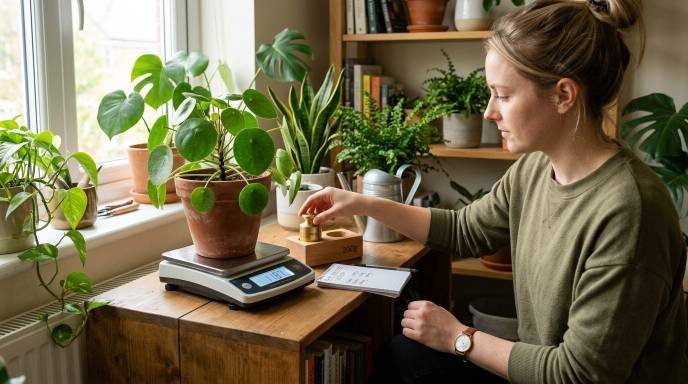
- Weight test: Lift the pot. A bone-dry plant feels noticeably lighter than usual because there’s little to no moisture left in the soil.
- Leaf signs: Crispy, brittle edges point to bone-dry conditions. Drooping with soft leaves usually points to overwatering instead, and curling can go either way depending on how long it’s been happening.
Why Watering From the Top Doesn’t Work on Bone-Dry Soil
This is the part most articles skip entirely, and it’s the reason so many people think they’ve already lost the plant.
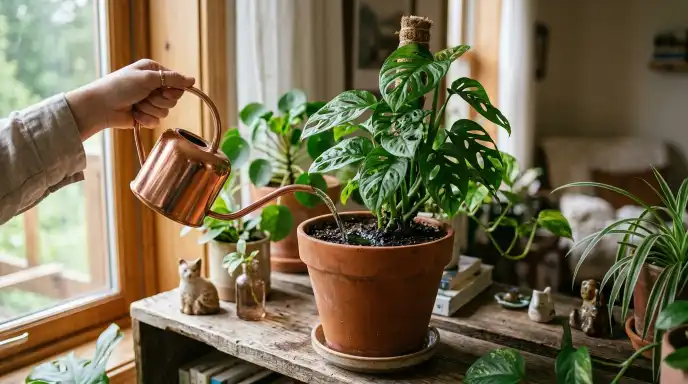
When soil dries out completely, especially soil with a lot of organic material like peat or coco coir, it shrinks and becomes hydrophobic. Use a digital hygrometer to get a precise reading. Water poured on top doesn’t soak in. Instead, it runs down the gap between the soil and the pot wall and straight out the drainage holes, barely touching the actual root ball.
That’s why a plant can look like it’s “not absorbing water” even after you’ve watered it several times. The soil isn’t refusing water out of stubbornness. It physically can’t absorb it fast enough from the surface alone. Use perlite for better drainage.
The fix is to force water in from every direction at once, which is exactly what soaking the whole pot does. For the full method on watering deeply enough that this doesn’t happen in the first place, see our deep watering guide for houseplants.
Step 1: Inspect the Soil and Roots First
Before soaking anything, take 30 seconds to check what you’re actually working with.
- Look for the gap between the soil and the pot edge.
- Press the soil gently. Bone-dry soil often feels hard or crusted on top.
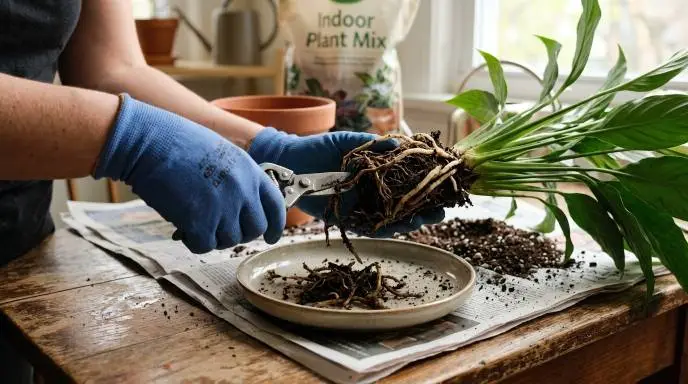
- If the plant slides out of the pot easily, take a quick look at the roots. Dry but still slightly flexible roots are a good sign. Roots that snap or crumble when touched indicate more serious damage.
This quick check tells you whether you’re dealing with straightforward dryness or a plant that’s further along and will need extra patience.
Step 2: Soak the Root Ball the Right Way
This is the core of the rehydration process, and doing it properly makes the biggest difference in recovery speed.
- Fill a sink, bucket, or basin with room-temperature water. Cold water can shock already-stressed roots.
- Lower the entire pot in so the water level sits close to the soil surface, not fully submerging the plant itself.
- Let it sit for 15 to 30 minutes. Smaller pots usually need the shorter end of that range, larger pots the longer end.
- Watch for small bubbles rising to the surface. This is trapped air escaping as water pushes into the soil. Once the bubbling stops, the soil has absorbed as much as it’s going to.
Step 3: Drain Completely and Let It Rest
Rescuing a bone-dry plant only to drown it right after defeats the purpose.
- Lift the pot out of the water and let it drain fully through the bottom holes for several minutes.
- Never let the pot sit in a saucer full of standing water afterward.
- Move it to a spot with bright, indirect light. Avoid direct sun for the next few days while the plant stabilizes.
Step 4: Trim Damage and Hold Off on Feeding
Once the soaking is done, resist the urge to do anything more than the plant actually needs right now.
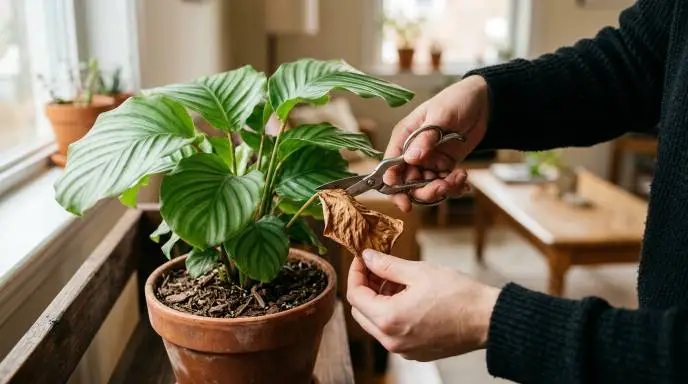
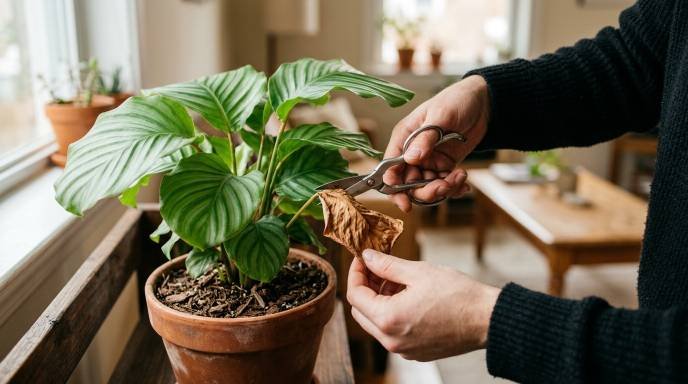
- Trim dead leaves: Cut off any leaves that are fully brown or crisp all the way through. Partially damaged leaves can often be left alone since they may still be photosynthesizing.
- Skip fertilizer: Stressed roots can’t process nutrients well right after a drought episode, and fertilizer at this stage risks burning them further.
- Check drainage: Confirm the pot has working drainage holes before putting the plant back in its usual spot, so the next watering doesn’t create a new problem.
For trimming and other gardening work, you need a good kit. Learn about the best gardening tool kits from this.
Step 5: Aftercare, the First Two Weeks
Knowing what to expect day by day keeps you from either overwatering out of worry or giving up too early.
Days 1–3: The plant may still look a little tired even after soaking. This is normal, roots need time to start pulling moisture back up to the leaves.
Days 4–10: Check the soil with a finger every few days rather than watering on autopilot. Once the top inch or two has dried out, it’s safe to resume light, regular watering. Read this article to learn how to check soil moisture without a moisture meter.
Weeks 2 and beyond:
- Signs of recovery: new leaf growth, leaves that feel firmer, stems that no longer look shriveled.
- Signs it isn’t working: stems that stay brittle, no new growth after two to three weeks, or leaves that keep dropping despite proper watering. At this point, propagation from any remaining healthy tissue becomes the better option.
Five Mistakes People Make While Rehydrating a Bone-Dry Plant
Most plants that don’t recover aren’t lost from the dryness itself. They’re lost from what happens during the rescue attempt.
- Watering heavily from the top instead of soaking from below. This just runs off the hydrophobic soil without actually reaching the roots.
- Resuming a full watering schedule immediately. One soak doesn’t mean the plant is back to normal. It still needs a few days to stabilize.
- Placing the plant in direct sun to “perk it up faster.” This adds heat stress right when the plant is least equipped to handle it.
- Fertilizing right after rehydration. Feeding stressed roots too early can do more harm than the dryness itself.
- Ignoring the drainage holes. A plant rescued from bone-dry soil can just as easily be lost to root rot a week later if water has nowhere to escape.
Plant-Specific Rehydration Notes
Recovery speed and technique vary depending on the type of plant.
- Succulents and cacti: These store water in their leaves and stems, so a bone-dry episode is usually less urgent than it looks. A proper soak is still the right move, just less frequently needed than with other plants.
- Tropical foliage (pothos, monstera, philodendron): Thin leaves show dryness fast through crisping and curling, but these plants generally bounce back well within a week or two once soaked properly.
- Thick-rooted plants (peace lily, ZZ plant): These often look dramatically wilted when bone dry, drooping almost flat, but they tend to recover quickly, sometimes standing back upright within a day of a good soak.
When to Keep Trying, and When to Let Go
Not every severely dry plant makes it back, and that’s worth saying plainly.
Signs of unlikely recovery:
- Stems are fully brittle and snap rather than bend.
- There’s no green tissue left anywhere on the plant, not even at the base.
- No new growth appears after three or more weeks of consistent aftercare.
What to do instead: If any stem or leaf still has green, flexible tissue, take a cutting and propagate it in water or soil. Even if the original plant doesn’t pull through, you keep the plant going through a fresh start.
How to Prevent This From Happening Again
Once the plant is stable, the goal shifts to catching dryness early next time instead of finding out the hard way.
- Check soil moisture with a finger or a moisture meter on a regular basis instead of relying on a fixed watering schedule.
- Set a simple reminder to check plants before trips or busy weeks, rather than assuming they’ll be fine.
- Group plants with similar watering needs together so none of them get overlooked.
Frequently Asked Questions
How long does it take for a bone-dry plant to recover?
Most plants show visible improvement within a few days to two weeks after a proper soak, depending on how long the soil was dry and how much root damage occurred.
Can a plant recover after the soil pulls away from the pot?
Yes, in most cases. That gap is a sign of hydrophobic soil rather than permanent damage, and a thorough soak usually closes it back up as the soil rehydrates and expands.
Is it better to soak or slowly water a severely dry plant?
Soaking is more effective for genuinely bone-dry soil, since top-watering tends to run off without penetrating the root ball. Slow, gradual watering works better once the plant has stabilized.
Should I trim damaged leaves before or after rehydrating?
After. Wait until the plant has been soaked and given a few days to recover, since some leaves that look damaged may still partially bounce back.
How do I know if my plant is too dry to save?
If the stems are fully brittle, there’s no green tissue anywhere, and there’s still no new growth weeks after a proper soak, the plant likely won’t recover, though a healthy cutting can sometimes still be propagated.
Final Thoughts
A bone-dry plant looks worse than it usually is, and in most cases, a proper soak rather than a quick splash of water is all it takes to bring it back. Check the soil honestly, soak from below instead of watering from the top, and give the plant time to stabilize before going back to a normal routine. Not every plant makes it back, but with the right approach, most do. If overwatering is the issue instead, our recovery checklist for an overwatered plant walks through that process step by step. If you’ve ruled out watering issues, check our bacterial vs. fungal vs. sunburn guide.