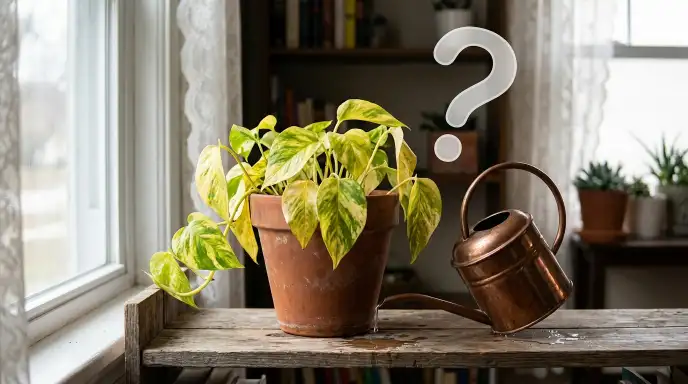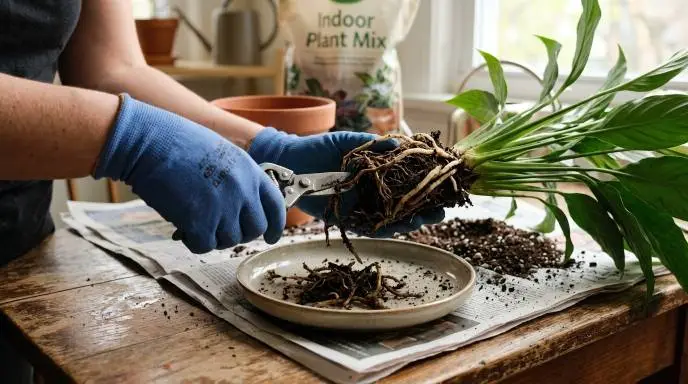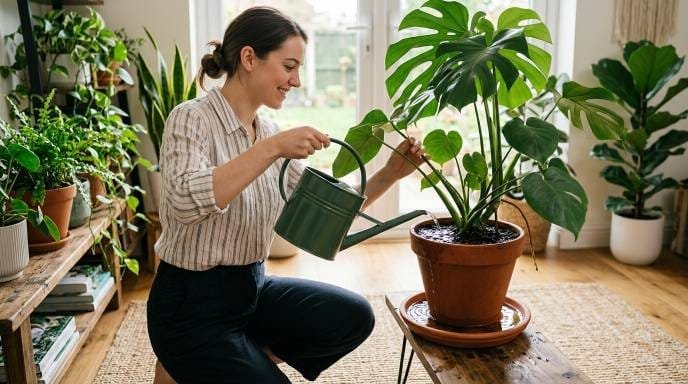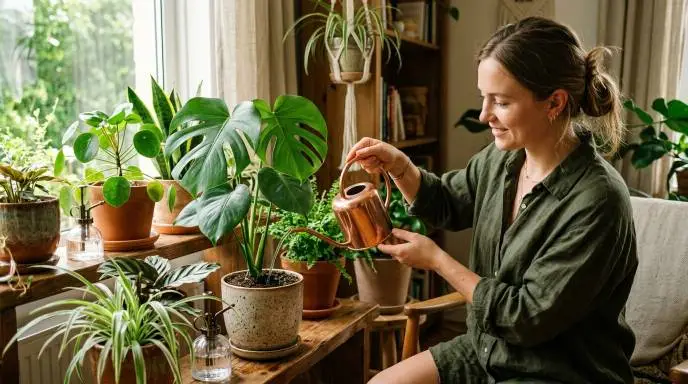
If you’re wondering how to adjust your indoor watering routine for potted plants during a heat wave, the answer starts with checking the soil before you water rather than assuming it’s dry. Water deeply and early in the morning using room-temperature water, let the pot drain fully, and move plants away from hot windows. During a heatwave, the pot material matters as much as the watering schedule. Ceramic pots can absorb heat and affect root temperature. Our Best ceramic pots for plants in hot weather and heatwave conditions guide covers which pots handle heat best. Skip fertilizer until temperatures settle. The instinct during a heatwave is to water more often, but that’s usually the wrong move and one of the fastest ways to trigger root rot on top of heat stress. According to the RHS watering guidelines, checking soil moisture before watering is the single most important step during extreme heat. Learn details about heat stress in plants from this article.
That’s the quick version. Most heatwave plant care advice stops at “water more and move it out of the sun,” which misses why that instinct backfires so often. This guide walks through how to water indoor plants during a heatwave the right way, what’s actually happening to a plant under heat stress, and how long these adjustments should last once the temperature actually breaks.
During a heatwave last summer, I checked on my plants every evening and ended up watering most of them daily out of worry. Two of them developed root rot within a week. Cutting back to checking the soil first, instead of watering on instinct, was the fix. Learn about summer plant care tips from this guide. Even NASA plant watering research emphasizes that checking soil moisture is more important than following a fixed schedule. Heatwaves often cause sunburn. If your plant is already damaged, here’s our sunburn recovery guide. Heatwaves create the perfect conditions for spider mites. Here’s how to catch spider mites early and treat them.
If you’re building out a full seasonal routine, our indoor plant care guide for beginners covers the basics that make heat stress easier to spot and manage.
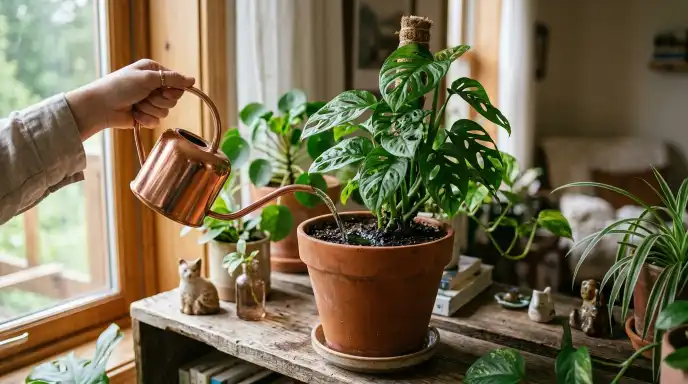
Why Watering More During a Heatwave Is Usually Wrong
This is the instinct almost everyone acts on, and it’s usually the wrong call.
- The logic feels sound but isn’t always accurate:
Hot weather makes it easy to assume the soil is drying out faster than it actually is, especially when the air itself feels dry and uncomfortable. - Surface soil can look dry while the root zone is still moist:
Heat dries out the top layer of soil quickly, but the moisture lower down, where the roots actually are, often hasn’t gone anywhere yet. - Overwatering during heat stress compounds the problem:
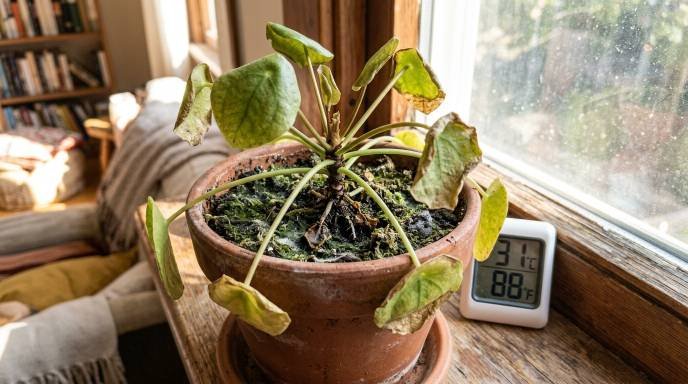
Roots that are already working hard to keep up with heat stress don’t handle sitting in extra water well, and this combination is one of the fastest paths to root rot during a heatwave.
Before reaching for the watering can, checking the soil takes less than a minute and prevents most of this.
How Humidity Affects How Often You Should Water
Heat gets the blame, but humidity is doing a lot of the damage.
- Plants lose water through their leaves constantly:
A process called transpiration, and this speeds up significantly in heat. - Low humidity accelerates transpiration even further:
A hot, dry heatwave pulls moisture out of leaves much faster than a hot, humid one, since dry air creates a bigger gap for water vapor to escape into. Learn how to increase humidity from this guide. - This explains sudden wilting even in moist soil:
If a plant is losing water through its leaves faster than its roots can resupply it, it can wilt dramatically even though the soil underneath is still perfectly damp.
Understanding this changes what “watering more” actually means. Sometimes the plant doesn’t need more water in the soil at all. It needs less water loss happening through the leaves in the first place, which comes down to placement more than watering frequency.
How to Check If Your Potted Plants Actually Need Water
This single habit prevents most heatwave watering mistakes.
- Check soil moisture first
- Water only when soil is dry 1-2 inches down
- Let the plant tell you when it’s thirsty
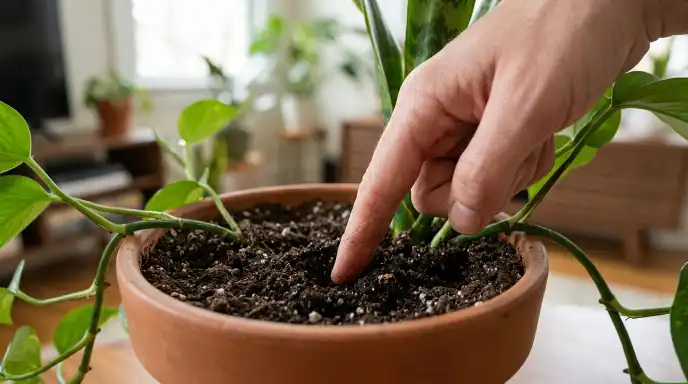
A moisture meter is worth using if you’ve got several plants to check during a multi-day heat event, since it gives a faster, more consistent reading than fingers alone. The University Extension heatwave watering guide confirms that this simple soil check is more reliable than any watering schedule. During a heatwave, soil dries out much faster, and readers are often anxious about misjudging moisture. A hygrometer can help you get highly precise readings.
Should I Water Plants Every Day in a Heatwave?
No. Daily watering is almost never the right answer, even during extreme heat. The instinct to water every day comes from worry, not from what the plant actually needs. Watering on a fixed schedule ignores the most important factor: the moisture level in the soil. A plant’s water needs depend on pot size, soil type, plant variety, and the specific conditions in your home. Watering daily without checking the soil first often leads to overwatering and root rot, which is far more damaging than letting the soil dry out a bit longer. Instead of watering on a schedule, check the soil with your finger every day or two. Water only when the top one to two inches feel dry. If the soil is still cool or damp, wait another day and check again. This simple habit prevents the most common heatwave watering mistake and keeps your plants healthier than any daily routine ever could. Maintaining the ideal temperature for houseplants is just as important as adjusting your watering routine during a heatwave.
Is It Better to Water Plants in the Morning or Evening?
Morning watering gives soil the whole day to absorb moisture before peak afternoon heat hits, so roots can take up water before the day’s transpiration demand really ramps up. Watering early in the day gives the soil and roots time to absorb moisture before the afternoon heat arrives. As temperatures rise, transpiration—the process where plants release water vapor through their leaves—kicks into high gear. By watering in the morning, you’re ensuring that your plant has a full reservoir of moisture available to draw from during the hottest part of the day when it needs it most. The water has time to penetrate deep into the root zone where it belongs, rather than just sitting on the surface or evaporating under the midday sun.
Morning watering offers three key advantages:
Advantage Why It Matters Reduces evaporation loss Water has time to soak in before heat accelerates evaporation Prevents fungal issues Foliage dries during the day rather than staying wet overnight Aligns with plant biology Plants naturally uptake water during daylight hours for photosynthesis
Evening watering, on the other hand, comes with real risks. When you water at night, the soil stays wet for longer because there’s no sun or heat to help dry it out. Cooler nighttime temperatures combined with damp soil create the perfect environment for fungal pathogens to thrive. Root rot, mold, and mildew all prefer these conditions. The plant also doesn’t have as much opportunity to use the water immediately, since transpiration and photosynthesis slow down in the dark.
If morning watering isn’t possible, early afternoon is the next best option—but only if you can avoid getting water on the leaves. Wet foliage combined with intense afternoon sun can cause leaf scorch, where water droplets act like tiny magnifying glasses and burn the leaf surface. Late afternoon or early evening watering is acceptable in an emergency, but be aware that it carries higher fungal risk. When watering in the evening, direct the water to the soil surface rather than spraying the leaves, and avoid making a habit of it during extended heatwaves.
Time Pros Cons Morning Reduced evaporation, less fungal risk, aligns with plant biology Requires early wake-up Afternoon Possible if you avoid leaves High evaporation; leaf scorch risk if leaves get wet Evening Acceptable in emergencies Higher fungal risk; soil stays wet overnight
The Bottom Line: Water in the morning whenever possible. If you can’t, water in the late afternoon and aim for the soil, not the leaves.”
Know about long sprout watering cans from this article.
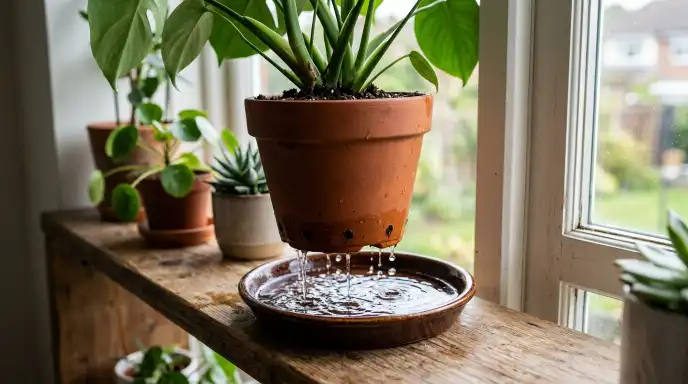
Why Is Proper Drainage Important During a Heatwave?
Skipping this step undoes a lot of the good the watering just did.
- Standing water in a saucer becomes especially risky during heat, since warm, stagnant water encourages root problems faster than cool water would.
- Water over a sink or basin when possible; let the pot drain fully for several minutes, then return it to its usual tray.
Where Should I Place My Plants During a Heatwave?
Sometimes the best fix isn’t watering at all, it’s moving the plant.
- Southwest-facing windows tend to be the most intense exposure:
During a heatwave, afternoon sun combined with glass can trap and magnify heat. Read this article to learn about the best window direction for plants. - Move plants back a few feet rather than out of light entirely:
Most still need bright, indirect conditions, just without direct scorching sun. - Turn off grow lights temporarily:
if you’re using them, since these add heat on top of an already-hot room.
Should I Fertilize My Plants During a Heatwave?
Feeding a heat-stressed plant does more harm than good.
- Roots under heat stress can’t safely process nutrients, and fertilizing at this stage risks burning them further.
- It’s safe to resume a normal feeding schedule once temperatures drop back to typical levels and the plant shows signs of stability, like firm leaves and no new wilting.
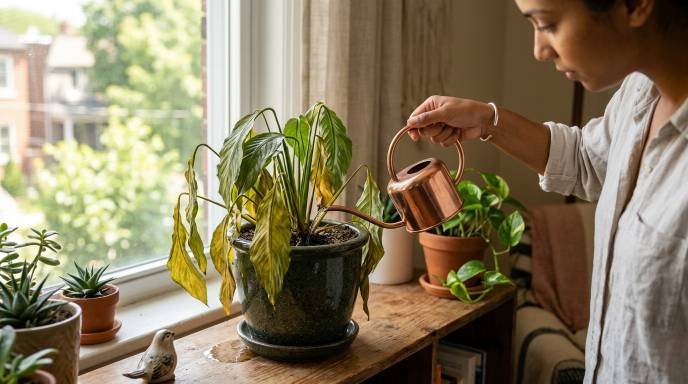
How Long Does a Heatwave Need to Last Before I Change My Watering Routine?
Not every hot stretch calls for the same level of attention.
A one- to two-day heat spike:
- A soil check and one deep watering session is usually enough.
- Moving the plant temporarily away from direct sun helps it ride out the short spike without much extra intervention.
A multi-day or multi-week heatwave:
- Check soil more frequently, since conditions can shift day to day depending on humidity and airflow.
- Consider grouping plants to slightly raise humidity around them.
- Watch closely for heat stress symptoms rather than assuming a one-time fix will carry the plant through the whole event.
For extended heat events, a simple pebble tray with water underneath the pot (without the pot sitting directly in the water) can help raise humidity around thirsty tropical plants.
Which Houseplants Handle Heat Best?
Heat tolerance varies quite a bit depending on the plant.
- Succulents and cacti:
are naturally more heat-tolerant overall, but they’re still vulnerable to scorching from direct sun magnified through glass, which can burn leaves even on plants built for dry conditions. - Thin-leafed tropicals (ferns, calatheas, pothos):
lose water fastest through transpiration and are usually the first to show wilting during a heatwave. - Thick-rooted plants (peace lily, ZZ plant):
tend to be more heat-resilient overall but still benefit from being moved away from direct hot light during extended heat events.
How Can I Tell If My Plant Is Heat-Stressed or Just Thirsty?
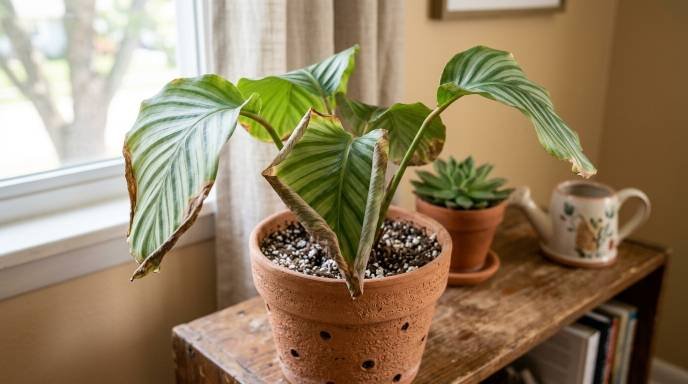
These symptoms point to heat specifically, not simply a lack of water.
- Leaf scorch:
Crispy, brown patches, often concentrated on the side of the plant facing the window. - Sudden wilting despite moist soil:
A sign that water loss through the leaves is outpacing what the roots can resupply, rather than dry roots being the cause. - Curling leaves:
Heat-stress curling tends to happen quickly and alongside visible sun exposure, distinct from the slower curling that comes with straightforward underwatering.
learn about heat stress plants in this article.
What Should I Do If My Plant Is Already Heat-Stressed?
Once you’ve spotted heat stress, a few adjustments help the plant stabilize.
- Move it to a cooler, shaded spot right away.
- Check the soil and water only if it’s genuinely dry. If the soil has fully dried out and pulled away from the pot, our bone-dry plant rehydration checklist walks through the proper soak method.
- If the plant was overwatered while trying to compensate for the heat, our overwatered plant recovery checklist covers how to fix that instead.
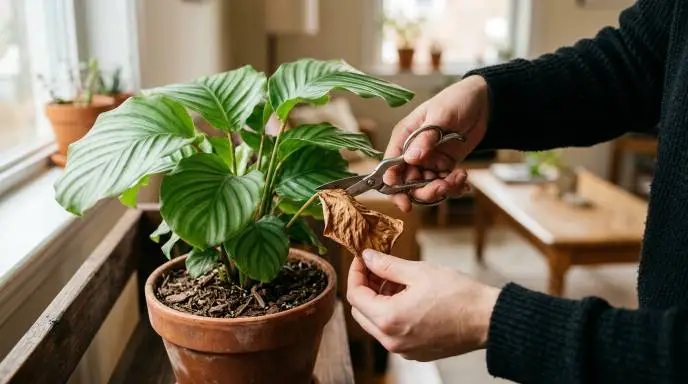
- Avoid pruning heat-damaged leaves right away. Wait until the plant stabilizes to see which leaves actually recover on their own before cutting anything back.
Read this article to know about houseplants dying reason and fixes.
Can Plants Recover from Heat Stress?
Yes, most houseplants can recover from heat stress, but the timeline depends on how severe the damage is and how quickly you take action. Here is what you can expect during the recovery process:
Immediate Response (24-48 Hours):
- Move the plant to a cooler, shaded location immediately
- Check soil moisture and water only if needed
- Leaves may still appear wilted or curled for the first day
- This is normal—don’t panic and don’t overwater
First Week (7 Days):
- Watch for signs of stabilization: leaves should become firmer
- New growth may pause temporarily
- Scorched or damaged leaves may continue to brown
- Monitor soil moisture more frequently than usual
Two to Four Weeks:
- Most plants show noticeable recovery within 2-4 weeks
- New growth should appear at the tips or nodes
- Scorched leaves won’t heal, but new leaves will be healthy
- Fertilize only after you see new growth
Full Recovery (4-6 Weeks):
- Most plants return to normal within a month to six weeks
- Some tropical plants may take longer, especially if damage was severe
- Once temperatures return to normal and the plant is back in its usual spot, it should resume its regular growth pattern
What Affects Recovery Speed?
| Factor | Impact on Recovery |
|---|---|
| Severity of damage | Mild wilting recovers faster than scorched leaves |
| Plant type | Succulents and thick-leafed plants bounce back faster |
| Soil condition | Healthy soil supports faster recovery |
| Consistent care | Following the watering steps above helps |
| Air circulation | Good airflow reduces fungal risk |
When to Give Up on a Leaf:
If a leaf is more than 50% brown, scorched, or crispy, trim it off. The plant will redirect energy to healthier leaves and new growth. If all leaves are lost but the stem is still firm and the roots are healthy, new leaves will eventually grow. Don’t give up on a plant just because it looks bare or stressed. Most bounce back with patience and consistent care.
Frequently Asked Questions
How often should I water indoor plants during a heatwave?
Check the soil every day or two during extreme heat and water only when it’s dry one to two inches down.
Should I water my plants more during a heatwave?
Not necessarily. The instinct to water more is usually the wrong move and one of the fastest ways to trigger root rot. Check the soil first before reaching for the watering can.
Is it better to water in the morning or evening during extreme heat?
Morning is better. It gives the soil time to absorb moisture before peak heat hits and lets roots take up water before transpiration demand peaks later in the day.
What time of day should I water plants in a heatwave?
Water early in the morning. This gives soil the whole day to absorb moisture before peak afternoon heat hits.
Can I fertilize my plants during a heatwave?
No. Skip fertilizer until temperatures settle. Roots under heat stress can’t safely process nutrients.
Can you overwater a plant during a heatwave?
Yes, and it’s actually one of the most common heatwave mistakes. Watering out of habit or worry without checking the soil first can lead to root rot on top of heat stress.
Should I mist my plants during a heatwave?
Misting can offer brief humidity relief for some tropical plants, but it evaporates quickly in hot air and isn’t a substitute for checking and watering the soil properly.
Do all houseplants need extra water during hot weather?
No. Succulents and cacti generally need little to no extra water during heat, while thin-leafed tropicals often do. Checking soil moisture directly is more reliable than treating all plants the same.
Key Takeaway
- Check soil moisture before watering, not the calendar
- Water deeply and early in the morning
- Let pots drain completely — no standing water
- Move plants away from hot windows
- Skip fertilizer until temperatures return to normal
Final Thoughts
The fix during a heatwave isn’t watering more, it’s watering smarter: checking soil first, watering deeply in the morning, and moving plants away from direct heat. Most houseplants ride out a short heat spike just fine with these adjustments, and an extended heatwave just calls for closer, more frequent attention rather than a completely different approach. Once the temperature breaks, most plants bounce back to their normal routine within a week or two.