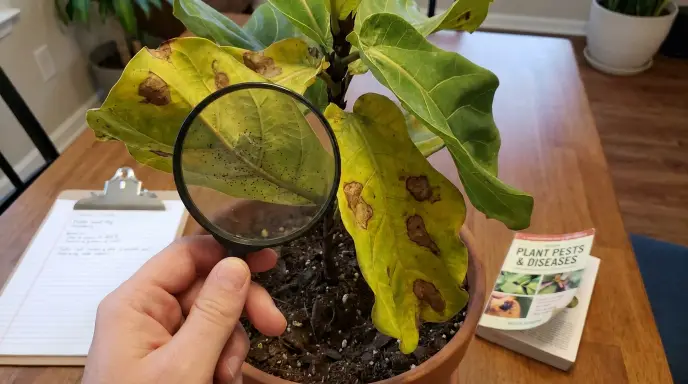
Cold damage on houseplants shows up as water-soaked or blackened leaf patches, sudden wilting, curling leaves, and yellowing that appears within hours to a few days of cold exposure. It happens when temperatures drop below a plant’s tolerance range, usually below 50°F for most tropical houseplants, rupturing plant cells and cutting off water movement inside the leaf. Mild cases often recover with warmth and trimmed damage; severe blackening or mushy stems usually means that tissue won’t recover and should be removed.
What Cold Damage Looks Like on Houseplants
Cold damage rarely looks the same on every plant, but a few patterns show up again and again:
- Water-soaked patches – translucent, darkened spots on leaves, often the first sign
- Blackened or mushy tissue – a later stage, usually past the point of recovery
- Sudden wilting – leaves droop even though the soil is still moist
- Leaf curling – edges roll inward or downward
- Yellowing (chlorosis) – appears a few days after the cold exposure, not immediately
- Stunted new growth – new leaves emerge smaller or distorted after a cold snap
- Leaf drop – often the plant’s last response to serious cold stress
The location of the damage is a clue too. Leaves nearest a cold window, door, or vent usually show symptoms first, while leaves on the far side of the plant may look untouched. Learn details about how to protect indoor plants from winter in this guide.
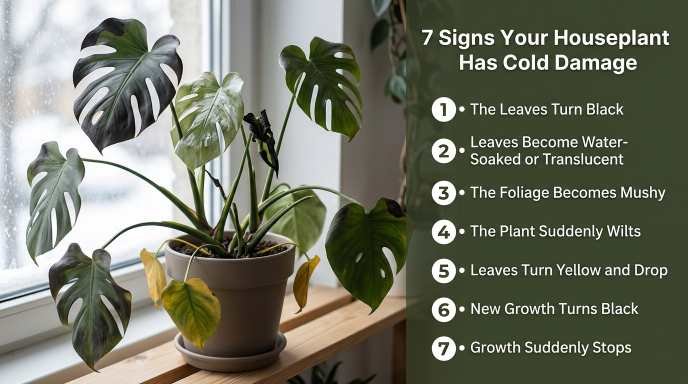
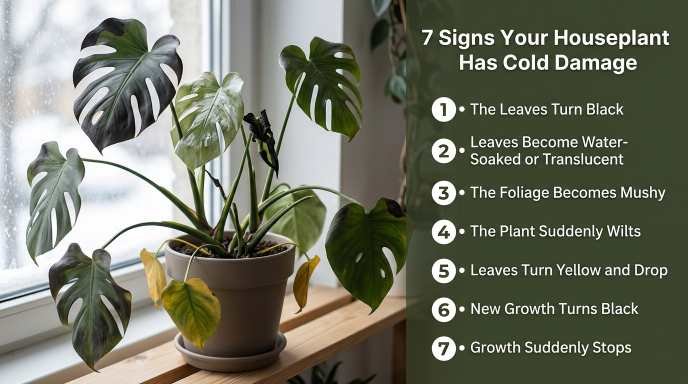
7 Signs Your Houseplant Has Cold Damage
1. The Leaves Turn Black
Black leaves are one of the most recognizable signs of severe cold injury.
The affected tissue may first look dark green, water-soaked, or translucent before turning brown or black as the cells become damaged.
If an entire leaf has become black and mushy, that portion of the plant is generally no longer viable.
However, black leaves do not automatically mean the entire plant is dead. The roots, lower stem, or growing point may still be healthy.
2. Leaves Become Water-Soaked or Translucent
A cold-damaged leaf may look as though it has been soaked in water.
Instead of its normal firm texture, the affected area can become:
- Darker than the surrounding tissue
- Translucent
- Soft
- Wet-looking
- Slightly collapsed
This appearance is particularly useful when diagnosing recent cold exposure.
RHS notes that early frost injury can produce water-soaked, dark-green foliage that later turns black.
3. The Foliage Becomes Mushy
Healthy houseplant leaves usually have some firmness.
Cold-damaged tissue can lose that structure and become soft or mushy.
Severe freezing can destroy plant cells, producing tissue that eventually collapses and dies.
If only a portion of the leaf is damaged, do not automatically remove the entire leaf. Wait until the extent of the injury is clear. This also happens because of improper watering. Learn about correct watering methods from this article.
4. The Plant Suddenly Wilts
Cold stress can cause dramatic drooping.
This creates a common mistake: seeing a wilted plant and immediately watering it.
But wilting does not always mean thirst.
Cold temperatures can interfere with normal root function and water movement. If the soil is already wet, adding more water can create an additional problem.
Always check the soil before watering a cold-stressed plant. A moisture meter will help in this phase. Learn more about moisture meters in this guide.
5. Leaves Turn Yellow and Drop
Not all cold damage produces black leaves.
Less severe or prolonged temperature stress can result in:
- Yellowing
- Browning
- Discoloration
- Leaf drop
- Reduced growth
Houseplant problems can have multiple causes, so temperature history is important when interpreting these symptoms. Know details about ideal temperature for plants.
6. New Growth Turns Black
Young leaves and growing points can be particularly vulnerable to cold.
If a new leaf suddenly becomes:
- Black
- Soft
- Distorted
- Water-soaked
- Limp
after exposure to cold, temperature stress should be considered.
New growth is often more sensitive than older, fully developed tissue.
7. Growth Suddenly Stops
A plant can survive cold exposure without immediately losing all of its leaves.
Instead, it may simply stop growing.
This can happen because cold stress temporarily disrupts normal physiological processes or because roots, stems, or growing points were injured.
If the plant remains stable but stops producing new leaves after a cold event, give it time before assuming it is dying
If your plant’s symptoms don’t match cold damage, check our houseplant symptom troubleshooting guide for other possible causes.

Chilling Injury vs. Freezing Injury
These two terms get used interchangeably, but they describe different things.
Chilling injury:
Happens above freezing, often between 32°F and 50°F, in plants that evolved in tropical or subtropical climates. Their cell membranes weren’t built to function at low temperatures, so even a chilly draft (not frost) can damage them.
Freezing injury:
Happens when temperatures drop below 32°F and ice crystals form inside plant cells. Those crystals rupture cell walls directly, which is why freeze damage tends to look more severe (mushy, blackened tissue) and shows up faster than chilling injury.
For most houseplants kept indoors, chilling injury is the more common scenario. Freezing injury usually only happens if a plant is left near an open window during a hard freeze, forgotten on a porch, or transported in a cold car for an extended period.
How Cold Is Too Cold for Houseplants
| Temperature Range | Effect on Most Tropical Houseplants |
|---|---|
| Above 60°F | Generally safe |
| 50-60°F | Growth slows, some sensitive plants may show mild stress |
| 32-50°F | Chilling injury risk increases, especially with prolonged exposure |
| Below 32°F | Freezing injury likely, especially near windows or exterior walls |
Tolerance varies by species. Snake plants, ZZ plants, and many succulents handle brief dips into the 40s without much trouble, while calathea, peace lilies, and orchids can show stress even in the low 50s. If you’re mapping out safe ranges for your whole plant collection, it’s worth checking each plant’s specific minimum rather than relying on a single number for everything
Cold Damage vs. Other Common Plant Problems
Cold damage gets confused with a few other issues because the symptoms overlap.
| Symptom | Cold Damage | Overwatering | Sunburn |
|---|---|---|---|
| Water-soaked spots | Yes, often first sign | Yes, but usually at the soil line | No |
| Blackened tissue | Yes, in severe cases | Yes, root rot related | No |
| Wilting with moist soil | Yes | Rare | No |
| Curling leaves | Yes | Occasionally | Yes, but with crispy edges |
| Brown, crispy patches | No, tends to look wet | No | Yes |
| Timing | Hours to days after cold exposure | Gradual, over days to weeks | Hours after bright light exposure |
The biggest tell for cold damage specifically is timing tied to a temperature event, a cold night, a forgotten window, a car ride, paired with wet-looking rather than dry, crispy damage.
Cold Damage vs. Overwatering: How Can You Tell?
Cold damage and overwatering can look surprisingly similar.
Both may cause:
- Yellow leaves
- Wilting
- Leaf drop
- Dark foliage
- Root problems
The key difference is the sequence of events. Learn about the overwatering recovery guide in this article.
| Sign | Cold Damage | Overwatering |
|---|---|---|
| Recent cold exposure | Strong clue | Not necessary |
| Cold window or draft | Strong clue | Usually unrelated |
| Sudden temperature drop | Strong clue | Not relevant |
| Soil remains wet | Possible | Common |
| Water-soaked leaves | Common after severe cold | Possible |
| Root damage | Possible | Common with prolonged saturation |
| Symptoms immediately after cold event | Strong clue | Less typical |
For example, imagine a philodendron that was healthy yesterday but spent the night pressed against a cold window. The next morning, several leaves are dark, limp, and water-soaked.
That history points much more strongly toward cold injury than ordinary overwatering.
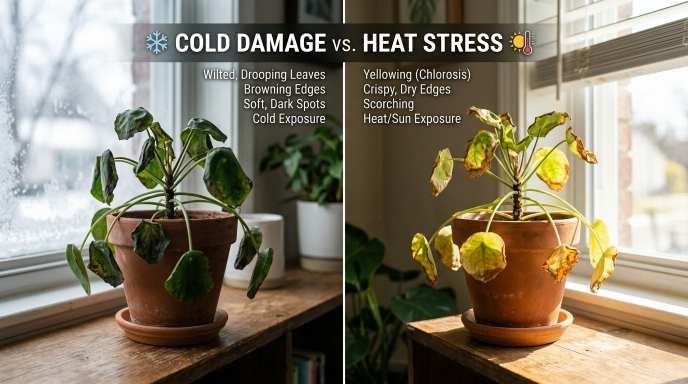
Cold Damage vs. Heat Stress
Cold and heat stress can both cause wilting and discoloration, but the environmental clues are different.
Cold stress often causes:
- Black or darkened tissue
- Water-soaked leaves
- Mushiness
- Sudden drooping
- Cold-related leaf discoloration
- Damage concentrated near windows or drafts
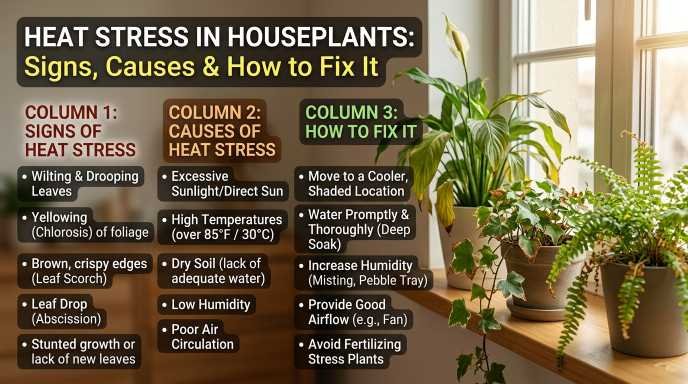
Heat stress often causes:
- Crispy brown edges
- Dry leaf tips
- Curling
- Bleaching
- Excessive water loss
- Damage near hot windows, heaters, or intense sunlight
The location of the plant is therefore part of the diagnosis. Know about watering during heatwaves in this article.
A plant touching a cold window should be investigated differently from one sitting beside a heating vent. Read our heat stress in houseplants article to learn about heat stress in houseplants.
What to Do Immediately After Cold Exposure
1. Move the Plant Away From the Cold Source
Start by removing the source of stress.
Move the plant away from:
- Cold windows
- Exterior doors
- Open windows
- Drafty areas
- Unheated rooms
- Cold floors
- Air-conditioning vents
Do not move it directly from a freezing environment to intense heat.
The goal is stable temperature, not maximum warmth.
2. Keep the Temperature Stable
Once you find a suitable location, leave the plant there.
Repeatedly moving a stressed plant between cold and warm areas creates additional environmental fluctuations.
A stable indoor environment is generally more useful than trying to make the plant as warm as possible.
3. Do Not Put It Directly Beside a Heater
This is one of the most common recovery mistakes.
Avoid placing a damaged plant directly beside:
- Radiators
- Space heaters
- Heat vents
- Fireplaces
Cold-damaged foliage is already stressed. Intense heat can increase water loss and create another environmental shock.
Warm and stable is better than hot.
4. Check the Soil Before Watering
Do not water simply because the plant is drooping.
Check:
- Is the soil still damp?
- Is the pot draining properly?
- Has the plant recently been watered?
- Does the soil remain saturated for several days?
If the soil is wet, allow it to dry appropriately for the plant before watering again.
If it is genuinely dry, water according to the plant’s normal requirements and allow excess water to drain.
5. Do Not Fertilize Immediately
Fertilizer cannot repair cold-damaged tissue.
A stressed plant needs stable environmental conditions first.
Wait until you see signs of active recovery, such as healthy new growth, before returning to your normal fertilizing schedule.
6. Give It Appropriate Light
Move the plant into an appropriate light level, but avoid placing it directly against a cold window simply because that location is bright.
For many tropical houseplants, bright indirect light is a safer recovery environment.
The objective is to provide enough light for normal metabolism without adding another temperature or water-loss problem.
7. Wait Before Aggressive Pruning
Do not immediately remove every leaf that looks damaged.
Cold injury can continue to reveal itself after the original exposure.
Wait until the plant has stabilized and the boundary between living and dead tissue becomes clearer.
Should You Cut Off Cold-Damaged Leaves?
Remove clearly dead tissue, but do not rush to remove everything that looks damaged.
A leaf that is completely black, mushy, collapsing, or clearly dead can eventually be removed with clean, sharp pruning tools.
But partially damaged leaves may still contain living tissue.
That tissue can continue contributing to the plant’s recovery.
A useful rule is:
If tissue is still firm and green, don’t remove it simply because another part of the leaf is damaged.
For severe injury, wait until the plant stabilizes before performing extensive pruning.
How to Tell if a Cold-Damaged Stem Is Still Alive
For plants with sufficiently firm stems, a small scratch test can help.
Gently scratch a tiny section of the outer stem.
If you see:
- Green tissue: the stem is likely alive.
- Brown tissue: that section may be dead.
- Black, soft tissue: the area is likely severely damaged.
If the upper section is dead, test farther down the stem.
The objective is to locate the lowest point where healthy living tissue remains.
Do not perform aggressive scratching on delicate herbaceous stems where the test itself could cause unnecessary injury.
How to Help a Cold-Damaged Houseplant Recover
Once the cold stress has been removed, recovery becomes mostly about preventing additional stress. Cold-stressed plants are more vulnerable to pests like spider mites. Here’s how to spot and prevent spider mites.
Maintain Stable Warmth
Keep the plant within a temperature range appropriate for its species.
Avoid repeated cold-to-hot transitions.
Water Carefully
Use the soil—not the appearance of the leaves—as your primary watering signal.
Provide Suitable Light
Give enough light for recovery without exposing the plant to a cold window or excessive heat.
Maintain Reasonable Humidity
Winter heating can produce very dry indoor air.
Moderate humidity can help reduce additional water stress, particularly for tropical plants. You can also use a humidifier to increase humidity. Learn about the best humidifiers from this article.
Avoid Unnecessary Repotting
Do not automatically repot a cold-damaged plant.
Repotting creates another disturbance and is usually unnecessary unless there is a separate problem such as severe root rot, broken drainage, or a damaged container. Know how to repot without killing the plant in this article.
Wait for New Growth
Healthy new growth is one of the clearest signs that the plant is recovering.
How Long Does Cold Damage Take to Heal?
Cold-damaged tissue does not actually heal.
A black leaf will not become green again.
Instead, recovery means the surviving parts of the plant remain healthy enough to produce new growth.
Mild damage may stabilize within several days.
More serious damage can take weeks or longer to reveal the plant’s final condition.
Root damage can be particularly deceptive because the symptoms may appear later.
Freezing injury may also become more obvious only after temperatures rise and the plant resumes active growth.
So don’t judge recovery solely by the appearance of the existing leaves.
Watch for:
- Firm stems
- Healthy roots
- Stable plant structure
- New buds
- New leaves
- Gradual return of growth
When Is a Cold-Damaged Houseplant Beyond Saving?
A plant has a poor chance of recovery when essentially all viable tissue has been destroyed.
Warning signs include:
- Entire stems becoming soft and collapsing
- A completely rotten crown
- Extensive black, mushy tissue
- Severe root destruction
- No viable growing points
- Continued deterioration despite stable conditions
But do not declare a plant dead simply because it has lost its leaves.
Some plants can recover from severe above-ground damage if viable roots, stems, or dormant growing points remain.
RHS notes that some frost-damaged plants can regenerate from lower buds or roots even when their visible foliage has been blackened.
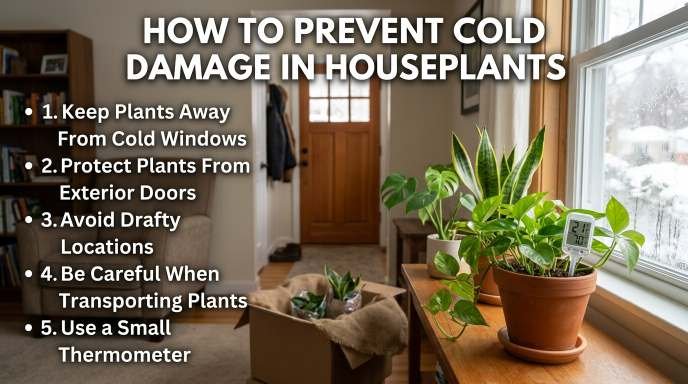
How to Prevent Cold Damage in Houseplants
Prevention is much easier than recovery.
Keep Plants Away From Cold Windows
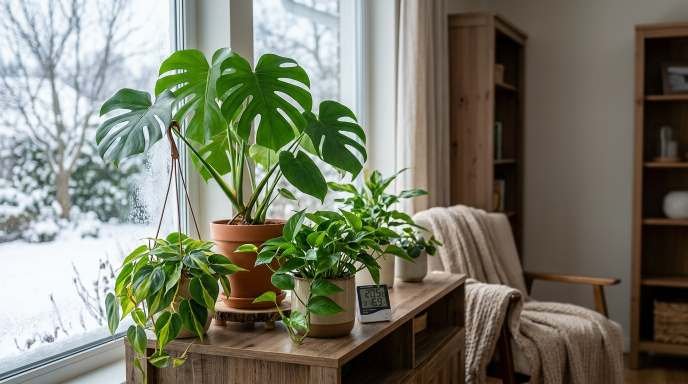
Windows can become substantially colder than the surrounding room.
A plant touching cold glass can therefore experience much lower temperatures than the room thermostat suggests.
If your plant is particularly sensitive, move it farther into the room during cold weather.
Protect Plants From Exterior Doors
Every time an exterior door opens, cold air can enter the room.
Sensitive plants should not sit directly beside frequently opened doors during cold weather.
Avoid Drafty Locations
Cold drafts can cause repeated temperature fluctuations.
Keep tropical plants away from:
- Open windows
- Door gaps
- Poorly insulated areas
- Strong air-conditioning drafts
RHS recommends avoiding drafts and fluctuating temperatures for houseplants affected by temperature-related leaf problems.
Be Careful When Transporting Plants
A plant can suffer severe cold exposure during transportation even if your home is warm.
Minimize the amount of time tropical houseplants spend exposed to cold outdoor air or unheated vehicles.
Use a Small Thermometer
A room thermostat may tell you the temperature across the room, but the temperature directly beside a window can be very different.
A small digital thermometer placed near sensitive plants can help identify hidden cold spots.
7 Common Mistakes After Cold Damage
1. Putting the plant beside a heater
The plant needs stable warmth, not intense direct heat.
2. Watering because the leaves are drooping
Wilting does not automatically mean the plant is thirsty.
3. Fertilizing immediately
Fertilizer does not reverse cellular damage.
4. Cutting off every damaged leaf
Some partially damaged tissue may still be alive.
5. Moving it into intense sunlight
This can add heat and water stress to already damaged tissue.
6. Moving the plant repeatedly
Constant environmental changes create additional stress.
7. Assuming black leaves mean the plant is dead
The roots, lower stem, or growing point may still be alive.
My neighbor once left his fiddle leaf fig by the front door overnight during a cold snap, just a few inches from a drafty gap. By morning, half the leaves had gone dark and soft. He almost tossed it, but we trimmed the ruined leaves, moved it to a warm interior spot, and within three weeks it pushed out two new leaves near the top.
Frequently Asked Questions
Can a houseplant recover from cold damage?
Yes. Recovery depends on the species, minimum temperature, exposure duration, and severity of the injury. Dead leaves will not recover, but surviving roots, stems, and growing points can produce new growth.
Can cold damage turn houseplant leaves black?
Yes. Severe chilling or freezing can cause foliage to become dark, water-soaked, mushy, brown, or black.
Should I cut off cold-damaged leaves?
Remove tissue that is clearly dead, mushy, or rotting, but avoid aggressive pruning immediately after exposure. Allow the plant to stabilize first.
Can a houseplant recover after freezing?
Sometimes. Severe freezing can destroy exposed tissue, but recovery is possible if viable roots, stems, or growing points survive.
What temperature is too cold for houseplants?
There is no universal cutoff. Many tropical plants become increasingly vulnerable below about 50°F (10°C), while some species tolerate lower temperatures. Exposure duration and the speed of temperature change also matter.
Should I water a cold-damaged plant?
Check the soil first. Do not water simply because the plant is wilted. If the soil is already wet, additional water may create further problems.
Can cold damage cause yellow leaves?
Yes. Cold stress can cause discoloration, yellowing, browning, wilting, and leaf drop. Leaves are yellow; know the reason behind it.
Why did my plant turn black beside a window?
Cold glass can expose nearby foliage to much lower temperatures than the rest of the room. If the plant was healthy before the cold exposure, the window is a strong potential cause.
How long does cold shock last?
Visible symptoms can continue developing for days after the cold event. Recovery may take weeks depending on the severity of the injury.
Can roots survive if the leaves are badly damaged?
Yes. Severe foliage damage does not necessarily mean the roots are dead. If the roots and lower stem remain healthy, the plant may eventually produce new growth.
The Bottom Line
Cold damage on houseplants is usually identified by the combination of recent cold exposure and symptoms such as black, brown, water-soaked, mushy, wilted, or suddenly damaged foliage.
The best response is not to panic or try to force rapid recovery.
Instead:
Remove the cold stress → stabilize the temperature → check soil moisture → avoid direct heat → skip fertilizer → provide appropriate light → wait → remove clearly dead tissue → watch for new growth.
Most importantly, remember that damaged foliage and a dead plant are not the same thing.
A plant may lose much of its visible foliage and still recover from surviving roots, stems, or growing points. Give it stable conditions and enough time to show you what is still alive. Also learn about complete indoor plant care from this guide.