The best humidifiers for houseplants right now, at a glance:
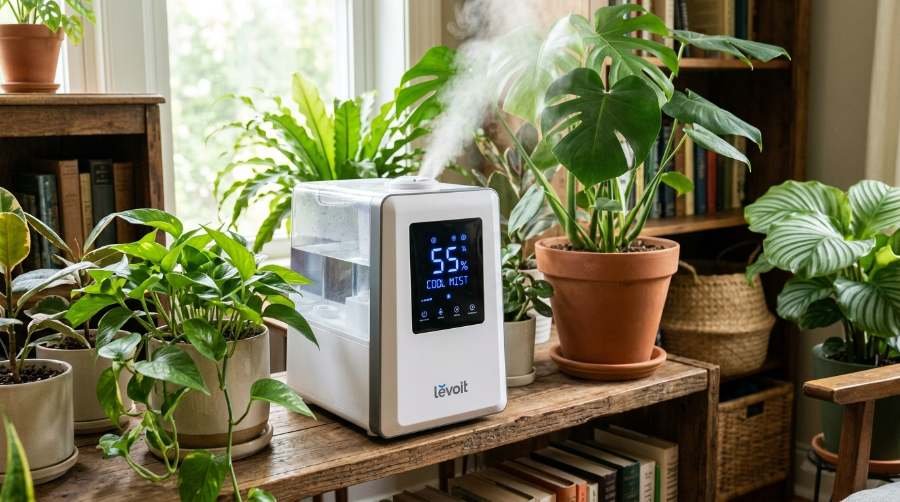
- “🏆 Best Overall” (Levoit OasisMist 450S)
- “💰 Best Value” (Dreo HM311S)
- “💵 Best Budget” (Pure Enrichment MistAire)
- “🌿 Best for Large Collections” (Levoit LV600S)
- “🏠 Best for Small Spaces” (TaoTronics TT-AH001)
- “🚫 Best White Dust-Free” (Honeywell HCM-350)
- “🏠 Best for Large Rooms“(Vornado Evap40)
All four are ultrasonic cool-mist (or hybrid) models, which matters, since cool mist is the safer, more energy-efficient choice for units that need to run near leaves for hours at a time. Here’s the full breakdown, including what actually matters when you’re buying for plants instead of a bedroom. Crispy tips often mean your plant needs more moisture in the air. For root rot fixes, you need a humidifier.
My first humidifier was a cheap one meant for a nursery, not plants, and it fogged my calathea’s leaves with a white mineral crust within two weeks. Switching to distilled water and a proper plant-rated unit fixed it completely.
This is one piece of a bigger picture. If you’re newer to plant care overall, our Complete Beginner’s Guide to Indoor Plant Care covers watering, light, and soil basics alongside humidity.
What to Look for in the Best Humidifiers for Houseplants
A generic “best humidifier” list is written for someone trying to sleep better, not for someone trying to keep a monstera or a fern alive through winter. The buying criteria overlap, but a few matter differently once plants are the priority, which is exactly why a dedicated list of the best humidifiers for houseplants looks different from a general roundup. Here’s what actually moves the needle when you’re shopping with plants in mind. Know more about humidity loving plants in this article.
Mist type:
Cool-mist ultrasonic units are the standard recommendation for plants because they produce a fine mist without heat, which matters when a unit sits close to delicate leaves for hours. Warm mist can help slightly with room temperature in a cold space, but it adds a small heat-proximity risk if placed too near foliage.
Tank size and runtime:
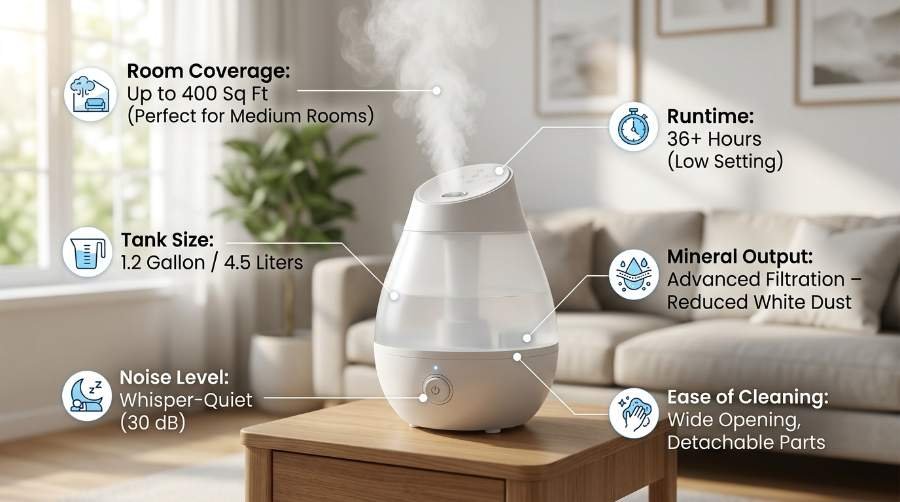
A bedroom humidifier only needs to run overnight. A plant humidifier ideally runs long stretches during the day too, so a larger tank and a longer runtime rating matter more here than in a typical roundup.
Room coverage:
Match the unit’s rated square footage to your actual space; a single shelf needs far less than a dedicated plant room. Read our guide to know how much light indoor plants need.
Mineral output, or white dust:
Hard tap water run through an ultrasonic humidifier can leave a fine white mineral film on nearby leaves and furniture. This is a plant-specific concern that general humidifier roundups rarely mention, and it’s solved simply: use distilled or demineralized water. Know about overwatering vs underwatering and how leaves turn yellow from this guide.
Noise level:
Less critical for plants than for people, but still worth checking if the unit lives in a shared living space.
Ease of cleaning:
Plant humidifiers tend to run longer and more continuously than a typical bedroom unit, which raises the mold and bacteria risk if it isn’t cleaned regularly. Daily emptying and a weekly vinegar descale is the standard maintenance routine worth budgeting time for.
Types of Humidifiers for Houseplants (And What to Skip)
Amazon alone lists more than 10,000 humidifier results, but for plant purposes, they really break down into four categories worth knowing before you shop.
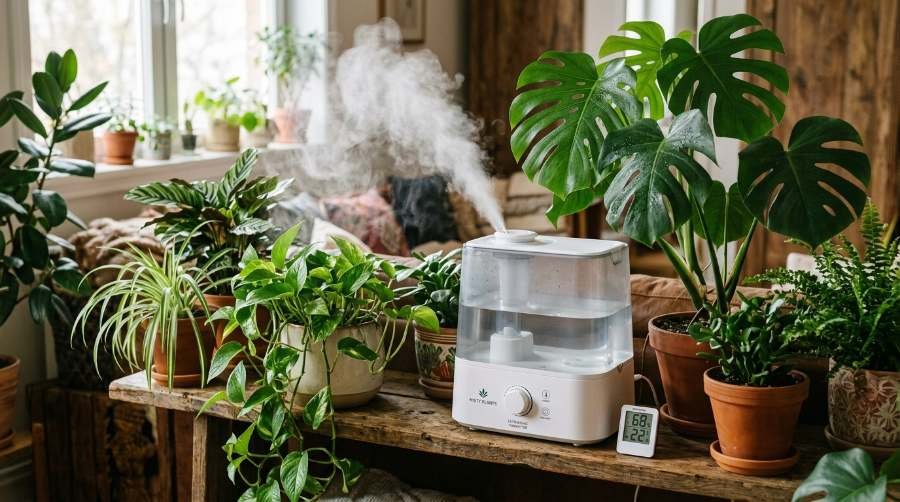
Ultrasonic cool-mist:
A vibrating diaphragm breaks water into a fine, visible mist without any heat involved. This is the type that dominates best-seller lists for a reason: quiet (often under 30 decibels), energy-efficient, no filters to replace, and priced anywhere from $20 to $80 for most models. The tradeoff is mineral dust with hard tap water, and it needs regular cleaning to prevent bacteria buildup. For houseplants specifically, this is the default recommendation.
Ultrasonic hybrid (warm + cool):
Same core technology as above, with an added heating element so you can switch mist temperature by season. Useful if you want one unit to double as winter comfort and plant care, though it costs more to run on warm mode and typically sits in the $60 to $110 range.
Evaporative:
A fan pulls air through a wet wick or filter, releasing invisible moisture into the room. These are naturally self-regulating, since they can’t easily over-humidify a space, and they filter out minerals so there’s little to no white dust, even with regular tap water. The downsides are fan noise, bulkier console-style housing, and an ongoing filter cost of $10 to $25 every few months. Worth considering for a large plant room where mineral dust on leaves is a bigger concern than a bit of fan noise.
Warm mist/steam vaporizer:
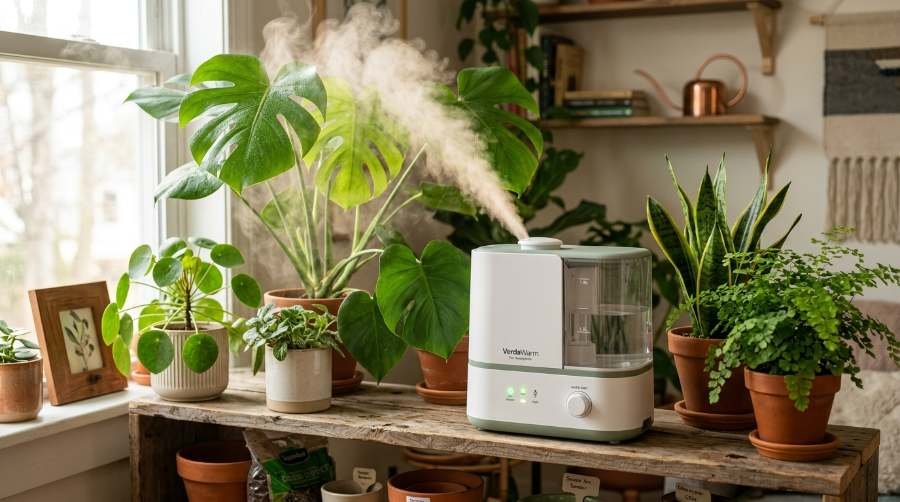
A heating element boils water into steam. Because it’s boiling the water, it kills bacteria in the tank and produces zero white dust, but the heat itself is the problem for plants: steam vaporizers carry a real burn risk and can dry out, or stress leaves that sit too close. These are generally built for cold and flu relief, not plant care, and are worth skipping for a plant setup.
What to Skip
Bottom-fill designs:
These are harder to clean and more prone to mold growth. Top-fill is easier to maintain.
Incorrectly sized units:
A 1.5L unit for a 500 sq ft room will run constantly and never reach target humidity.
Units without auto-shutoff:
If you forget to refill, the unit runs dry and can overheat.
How These Humidifiers Were Compared
Rather than ranking based on marketing claims, this comparison of the best humidifiers for houseplants leans on real testing data, cross-referenced against real plant-owner feedback on how units performed in dense plant clusters.
Here’s what was weighted most heavily:
Humidity rise:
Measured at set distances over multiple hours, not just a manufacturer’s claimed output
Noise readings:
Since a unit running for hours needs to stay livable in a shared space
Tank capacity and runtime:
Since refill frequency affects how consistent the humidity boost actually is
Cleaning time and difficulty:
Since a hard-to-clean unit tends to get neglected
Mineral/white-dust output:
A plant-specific factor most general roundups skip entirely
These weightings come from outlets that specifically test for plant-relevant conditions, including Better Homes & Gardens, The Spruce, Good Housekeeping, RTINGS, and TechGearLab, since those factors are what actually change outcomes for houseplants specifically.
Best Humidifiers for Houseplants: Full Comparison Table
| Model | Price Range | Tank | Runtime | Coverage | Mist Type | Best For |
|---|---|---|---|---|---|---|
| Levoit OasisMist 450S | $72–$90 | 4.5 L | Up to 45 hrs | ~430 sq ft | Warm + Cool | Overall/smart plant care |
| Dreo HM311S | $45–$55 | 4 L | Up to 36 hrs | ~300 sq ft | Cool | Best value / dense clusters |
| Pure Enrichment MistAire | $30–$40 | 1.5–1.7 L | Up to 25 hrs | ~250 sq ft | Cool | Budget / single shelf |
| Levoit LV600S-style | $60–$110 | 6 L+ | 40–50+ hrs | 500–750+ sq ft | Hybrid | Larger plant rooms |
| TaoTronics TT-AH001 | $48-$60 | 4L | 12–30 hours | 107–322 sq. ft. | Ultrasonic Cool-Mist | Small spaces, desks, shelves |
| Honeywell HCM-350 | $76.42-$85 | 3.78L (1 Gallon) | Up to 24 hours | Up to 500 sq. ft. | Evaporative (Wick-Based) | White, dust-free, medium rooms |
| Vornado Evap40 | $129.99-$149.99 | 4 Gallons (Dual Tanks) | Up to 24 hours | Up to 1,000 sq. ft. | Evaporative (Wick-Based) | Large rooms, plant rooms, open spaces |
Individual Reviews: The Best Humidifiers for Houseplants Ranked
Best Overall for Houseplants: Levoit OasisMist 450S Smart Humidifier
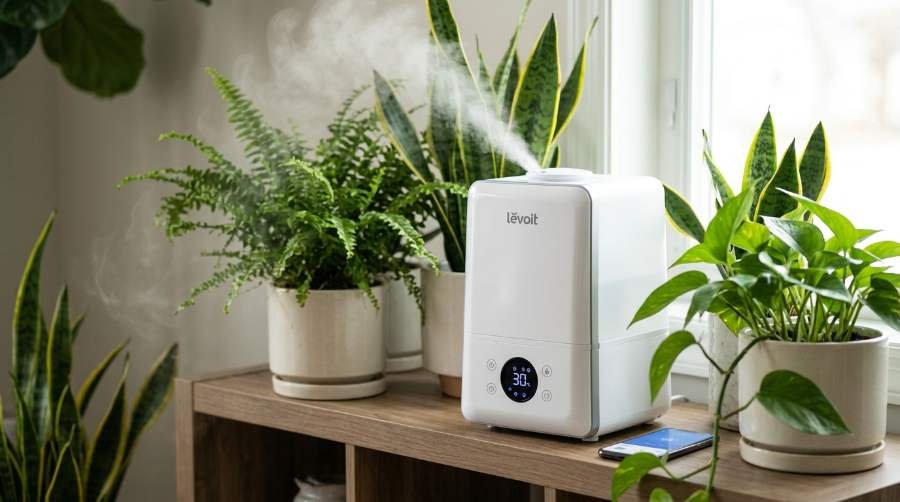
This is the most complete option on the list for anyone serious about plant care, and it’s the one that earns a place at the top of nearly every roundup of the best humidifiers for houseplants.
- Independently tested humidity rise: roughly 15% on low, up to 28% on high, measured 2 feet away after 8 hours in a 430-square-foot room, per third-party lab testing
- Mist reach: dual 350-degree nozzles push mist up to about 3.9 feet high, covering taller plants or a wider spread of pots
- Smart features: companion app adds humidity scheduling and target-based control, useful for managing a real collection
Pros:
Strong, proven humidity output; smart scheduling and humidistat control; dual nozzles cover more plants at once; top-fill design makes refilling simple.
Cons:
Replacement filters and aroma pads add an ongoing cost, and a full descale takes 30 to 40 minutes.
Best for:
Medium-sized plant rooms and anyone who wants precise, app-based humidity control.
Best Value: Dreo HM311S 4L Smart Humidifier
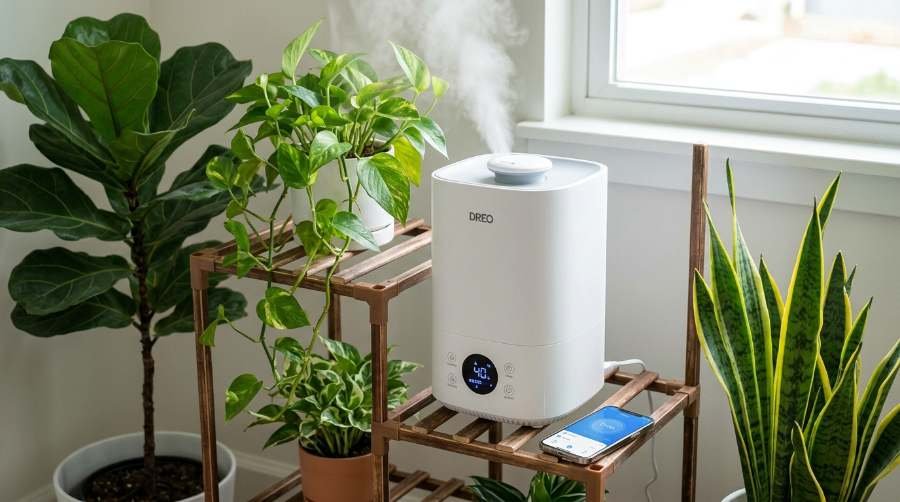
The HM311S punches above its price point specifically for plant use, and it’s a regular pick in independent tests of the best humidifiers for houseplants on a budget.
- Reported results: per plant-owner accounts, raised a bedroom holding more than 40 plants from around 40% humidity to roughly 60%, with visibly less leaf curling within days
- Consistency: built-in humidistat keeps output steady without constant manual adjustment
- Price-to-performance: roughly half the price of the Levoit, making it the strongest value pick on this list
Pros:
Excellent results for the price; quiet operation around 28 decibels; app and voice control included; compact enough for a plant shelf or small room.
Cons:
Cool mist only, no warm-mist option; smaller coverage radius than the larger models here.
Best for:
Small to medium spaces with a dense cluster of plants, especially on a tighter budget.
Best Budget Pick: Pure Enrichment MistAire Ultrasonic Cool Mist Humidifier
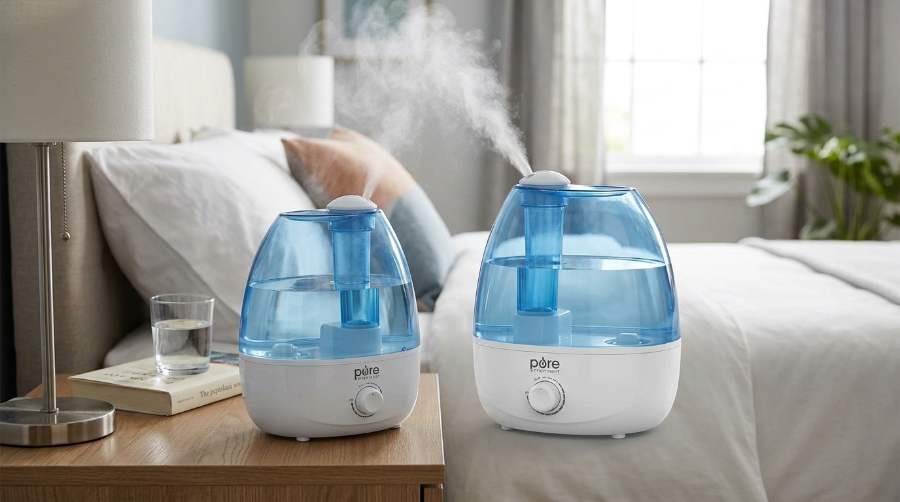
For anyone who just needs to raise humidity around a single shelf or a small plant grouping, this is the simplest, most affordable entry among the best humidifiers for houseplants that still performs.
- Independently tested results: raised humidity by around 28% in the immediate area near the unit, without over-humidifying the whole room
- Track record: repeatedly recommended specifically for plant use across independent reviews
- Controls: no smart app or humidistat, just a straightforward high/low dial and a 360-degree nozzle
Pros:
Very affordable; compact footprint; directs mist precisely where you point it; often backed by a 5-year warranty.
Cons:
Small tank means more frequent refills; the fill opening can be fiddly to clean thoroughly.
Best for:
Beginners, single shelves, or a small group of plants rather than a full room.
Best for Larger Plant Collections Among the Best Humidifiers for Houseplants: Levoit LV600S-Style
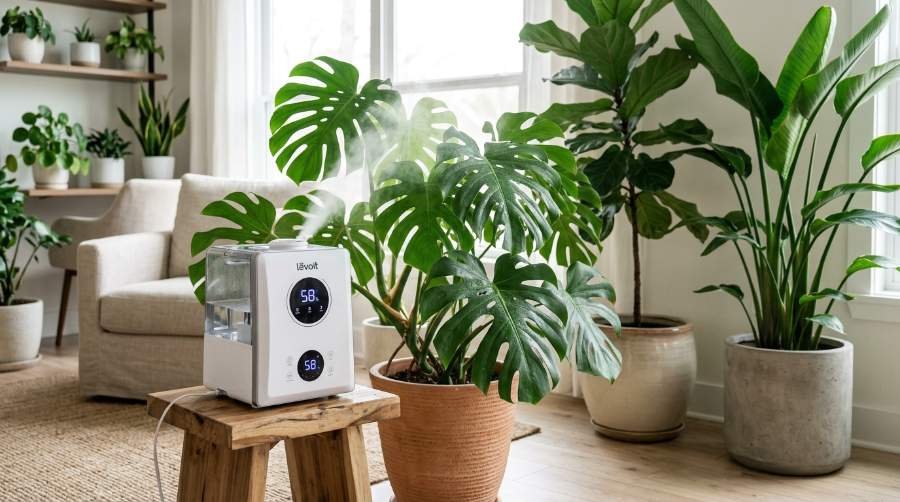
For a dedicated plant room or a genuinely large collection, the smaller units on this list will run out of coverage fast.
- Tank size: 6-liter-plus, built for long stretches between refills
- Runtime: 40 to 50-plus hours on lower settings
- Coverage: rated for 500 to 750-plus square feet, with hybrid warm and cool mist options
Pros:
Coverage large enough for a dedicated plant room; long runtime between refills; hybrid mist gives flexibility by season.
Cons:
Higher upfront cost than the compact options; larger footprint takes up more floor or shelf space.
Best for:
Serious collectors or anyone converting a full room into dedicated plant space.
Best For Small Spaces: TaoTronics TT-AH001
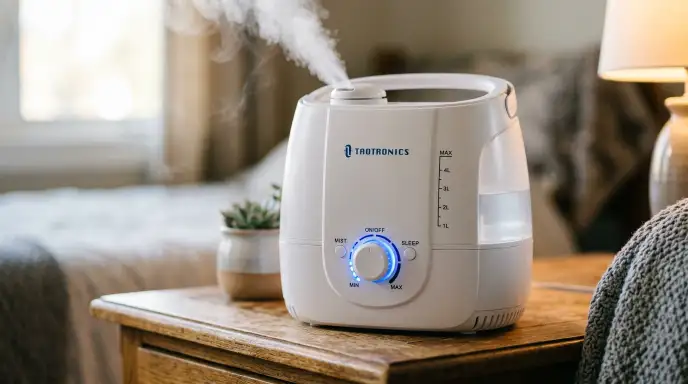
The TaoTronics TT-AH001 strikes a rare balance between power and a compact footprint. It offers a 4-liter tank capacity and a maximum output of around 300 ml/hr, which is notably higher than some comparable models. Despite its strong performance, its compact size makes it an excellent choice for desks, shelves, and other tight spots.
Pros:
- Large 4L tank provides extended runtime (up to 30 hours).
- High mist output for its size (300 ml/hr).
- Compact and portable, fits easily in small spaces.
- Built-in humidistat with auto mode.
- Simple and intuitive controls with LED display.
Cons:
- Not compatible with essential oils.
- The LED interface, while informative, is not ideally positioned (hard to read from above).
- No app control or smart home integration.
Best For:
The TaoTronics TT-AH001 is the ideal choice for plant owners who need a humidifier for a small to medium-sized room (like an office, bedroom, or dedicated plant shelf) and want reliable performance in a compact package. Its high mist output makes it effective at raising humidity in spaces up to 322 sq. ft. It is also an excellent option for those who want a “set it and forget it” experience, thanks to its built-in humidistat, but who don’t need smart app control.
Best Evaporative (White Dust-Free): Honeywell HCM-350
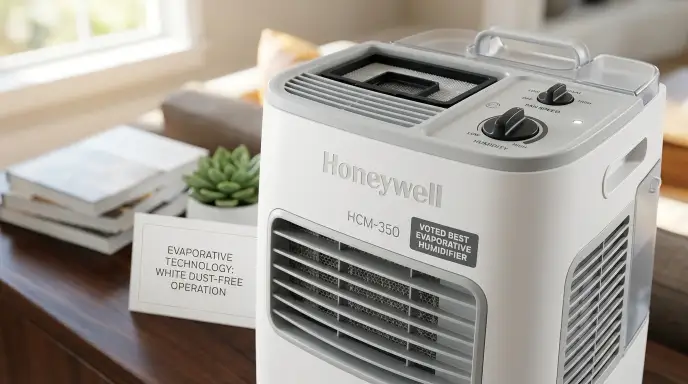
The Honeywell HCM-350 is a germ-free evaporative humidifier that stands out from the ultrasonic crowd. Instead of producing mist through high-frequency vibrations like an ultrasonic unit, the Honeywell HCM-350 uses a wicking filter and a quiet fan to naturally evaporate water into the air. This method is excellent for plant owners because it doesn’t create white dust—a fine mineral powder that can settle on your plants’ leaves, furniture, and electronics.
Pros:
- No white dust—filter traps minerals (critical for plants).
- Self-regulating—naturally stops when the room is saturated.
- No risk of over-humidifying your plants.
- Wide 1-gallon tank opening—no splashing or spills.
- Works with tap water—no need for distilled water.
- Effective in rooms up to 500 sq. ft.
Cons:
- Higher ongoing cost (replacement filters needed every 1-2 months).
- Slightly louder than ultrasonic units (38 dB fan noise).
- Power consumption is higher (45W vs. 30W for ultrasonic).
- Water is constantly moving through the filter—must clean regularly to prevent mildew.
Best For:
The Honeywell HCM-350 is the best choice for plant owners who want to completely avoid white dust on their foliage, furniture, and electronics. It’s also ideal for anyone who prefers to use regular tap water instead of paying for distilled water. This unit is perfect for large plant collections in medium to large rooms (up to 500 sq. ft.) where consistent humidity is needed without the risk of over-humidifying. The evaporative mechanism is also excellent for people with allergies, as it doesn’t disperse minerals or bacteria into the air.
Best for Large Rooms: Vornado Evap40
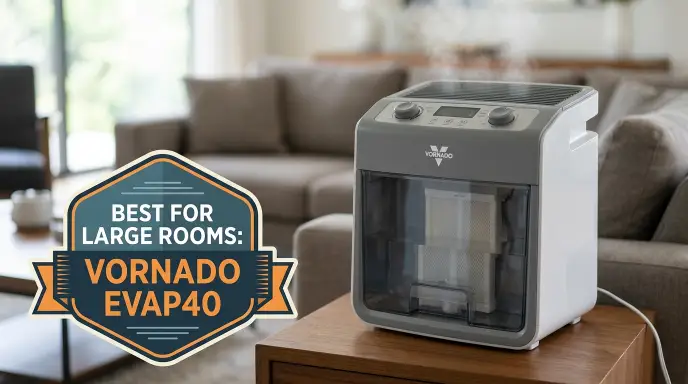
The Vornado Evap40 is a serious machine for serious plant collections. It’s an evaporative humidifier that uses Vornado’s signature Vortex Action—deep-pitch fan blades pull dry air through two large humidifying wicks, then circulate the moistened air throughout the entire room
Pros:
- No white dust—wick traps minerals, safe for plant leaves.
- Actually raises humidity in large spaces (700–1,000 sq ft in practice).
- Dual tanks make refilling much easier than a single large tank.
- Easy to clean—minimal nooks and crannies.
- Proven reliability—many users report 5+ years of continuous use.
Cons:
- Fan noise is noticeable on medium and loud on high—not ideal for bedrooms or quiet spaces.
- Wicks need regular replacement—mineralize faster with hard water, adding ongoing cost.
- Humidistat is a bit vague—not as precise as digital displays.
- Wicks can smell odd for the first few days of use.
- No app, no display, no smart features—it’s purely analog.
Best For:
The Vornado Evap40 is the ultimate choice for serious plant collectors with large rooms, open-plan spaces, or dedicated plant rooms (700–1,000 sq ft). If you have a substantial collection of tropical plants—monsteras, calatheas, ferns, alocasias—that demand consistent 50-60% humidity, this unit delivers the raw output to actually move the needle.
It’s also ideal for anyone who wants to avoid white dust on their plants and furniture and prefers to use regular tap water without buying distilled water. The simple, durable analog design means fewer things to break, and the 5-year warranty provides peace of mind.
Not recommended for:
Small bedrooms, noise-sensitive spaces, or anyone looking for a sleek, smart, app-controlled device.
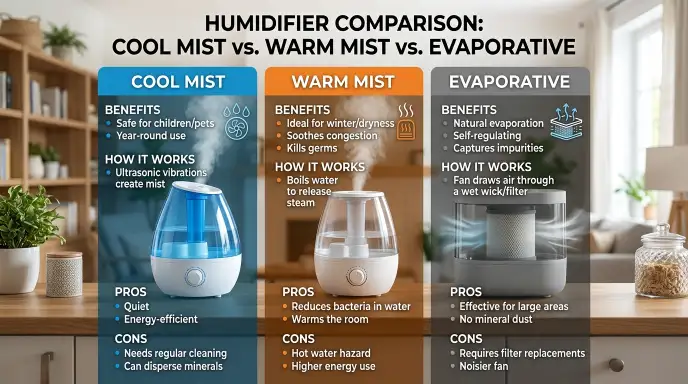
Humidifier Comparison: Cool Mist vs. Warm Mist vs. Evaporative
Here’s a quick comparison to help you see the key differences at a glance.
Which Type is Best for Your Plants?
1. Cool Mist (Ultrasonic) Humidifiers: The Popular All-Rounder
Why it’s recommended:
This is the most common and recommended type for houseplants. It’s quiet, efficient, and safe for use around children and pets. It’s ideal for adding humidity without affecting room temperature.
The Catch (Mineral Dust):
The main downside is that if you use hard tap water, it will aerosolize the minerals and leave a fine white dust on your plant’s leaves and furniture. This is not only unsightly but can clog the pores of plant leaves over time. The fix is simple: use distilled or RO (reverse osmosis) water.
2. Warm Mist (Steam Vaporizer) Humidifiers: The Niche Choice
Why consider it:
Warm mist units boil water, which sanitizes it and reduces the risk of dispersing harmful bacteria. The warm vapor rises and can help raise the temperature slightly, which can be a benefit for tropical plants in a cold room during winter.
The Major Drawback:
The primary concern is safety. The hot steam and boiling water pose a burn risk, especially if you have children or pets. They also use more energy and should be placed several feet away from plants to avoid burning tender leaves.
3. Evaporative (Wick-Based) Humidifiers: The Low-Maintenance Workhorse
Why it’s a great option:
Evaporative humidifiers are highly recommended for plant owners who want to avoid the “white dust” problem entirely. Because they use a wick to trap minerals, you can use regular tap water. They are also self-regulating, meaning they naturally output less moisture as the room approaches saturation.
The Trade-off:
The main downsides are the noise from the internal fan, which can be distracting, and the ongoing cost and maintenance of replacing the wicks or filters regularly.
How to Use the Best Humidifiers for Houseplants Correctly
Buying one of the best humidifiers for houseplants only solves half the problem. Placement and habits matter just as much.
Keep distance in mind:
Place the unit roughly 1 to 4 feet away from your most delicate plants rather than pointing it directly at foliage, which prevents oversaturating leaves or encouraging fungal spots.
Use distilled or demineralized water:
This single habit does more to prevent white mineral dust on leaves and furniture than any feature on the unit itself.
Favor steady, continuous operation over short bursts:
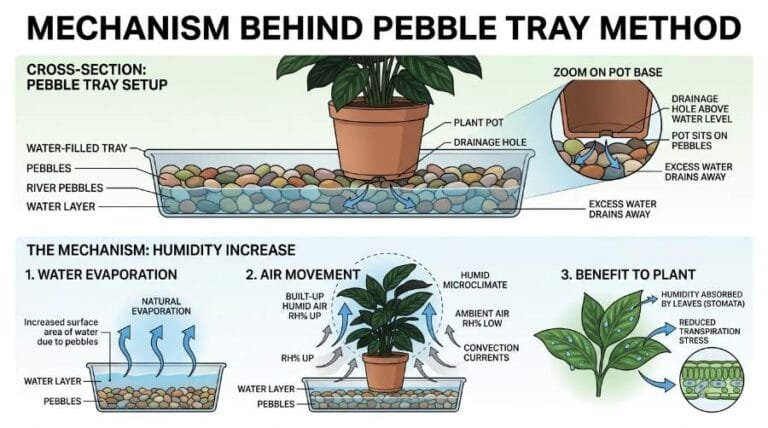
Plants benefit more from a consistent, moderate humidity level than from occasional spikes, which is part of why a dedicated humidifier consistently outperforms misting or a pebble tray for serious humidity needs.
Clean it on a schedule:
Empty and rinse daily, and do a full vinegar descale weekly, especially if the unit runs long hours near a plant cluster.
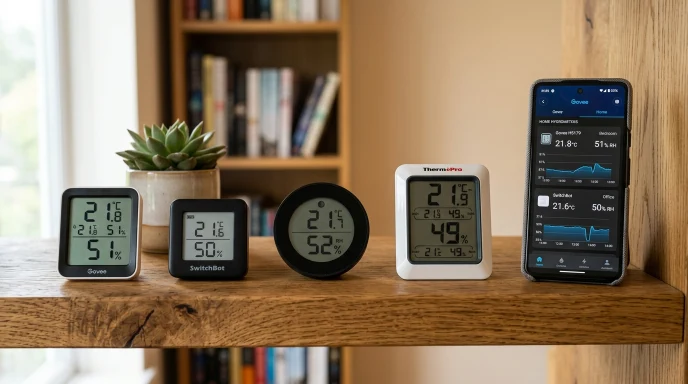
Track results with a hygrometer:
Measuring your baseline humidity before you start and checking again after a week of use is the only way to know the unit is actually doing its job. Our guide on how to increase humidity for indoor plants covers this measurement step in more detail, along with how a humidifier stacks up against every other method. Learn about the best hygrometer in this guide.

FAQs
What’s the best humidifier for a large plant collection?
Among the best humidifiers for houseplants, a larger-tank model like the Levoit LV600S-style humidifier, with 6-plus liters of capacity and coverage rated for 500 square feet or more, is built for a dedicated plant room rather than a single shelf.
Do plants need a cool-mist or warm-mist humidifier?
Cool-mist is the safer default for most houseplants, since it removes any heat-proximity risk to sensitive leaves while still raising humidity effectively.
How big of a humidifier do I need for my plants?
Match the unit’s rated square footage to your actual space. A compact 1.5 to 2-liter unit suits a single shelf or small cluster, while a full plant room needs a 4-liter-plus model with real coverage behind it.
Can a humidifier cause mold in a plant room?
Yes, if it isn’t cleaned regularly. Standing water in the tank, combined with a consistently humid environment, creates conditions mold can thrive in, which is why daily emptying and weekly descaling matter.
How often should I clean a plant humidifier?
Empty and rinse the tank daily, and do a deeper vinegar-based descale about once a week, more often if you’re using tap water instead of distilled.
Key Takeaway
Your choice boils down to this:
- For the quietest, most energy-efficient option with no heat, go with a cool-mist humidifier and plan to use distilled water.
- If you don’t want to buy distilled water, an evaporative humidifier is your best bet. Just be prepared for the fan noise and filter replacements.
Remember that placement is just as important as the type of humidifier. Ultrasonic cool mist produces tiny droplets that can sink to the floor. To make it more effective, place the humidifier on a shelf or table, near your plants, so the mist can disperse around the foliage instead of settling on the floor
For the full picture of how a humidifier compares to grouping plants, pebble trays, and other methods, our guide on how to increase humidity for indoor plants walks through the complete ranked list.