Whether you need to know how to sterilize perlite for reuse or simply want to handle it safely without breathing in dust, this guide covers everything you need. Perlite is generally safe for normal gardening use, but dry perlite can create fine airborne dust that may irritate the eyes, skin, throat, and respiratory system. The safest way to handle perlite is to dampen it before use, work in a well-ventilated area, and use appropriate protection when significant dust is present. Meanwhile, if you’re reusing old potting mix, sterilizing your perlite is just as easy—methods like oven baking, boiling water, or microwaving can kill off lingering fungi and pests. You don’t need complicated procedures for ordinary houseplant care. A few simple habits can greatly reduce your exposure to perlite dust and keep your plants healthy when reusing materials.
Why Would You Need to Sterilize Perlite?
If you’re reusing old potting mix, perlite can harbor harmful fungi, bacteria, or insect eggs. Sterilizing it ensures your new plants don’t get infected. Note: Fresh perlite straight from the bag is usually sterile – you only need to do this when reusing it.

5 Easy Methods to Sterilize Perlite at Home
Step-by-step instructions for these 5 methods:
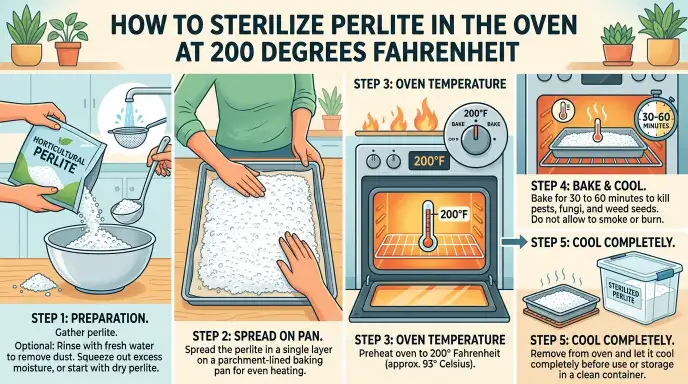
- Oven Method (Most Popular)
- Pre-wet the perlite (never bake it dry!).
- Spread it on a baking tray.
- Bake at 200°F (93°C) for 30 minutes.
- Warning: Do not exceed 200°F, or the perlite structure may break down.
- Microwave Method (Fastest)
- Place wet perlite in a microwave-safe bowl.
- Cover loosely (do not seal airtight).
- Microwave on high for 10-15 minutes until steam rises.
- Warning: Perlite must be wet, or the microwave can spark.
- Boiling Water Method (Simplest)
- Place perlite in a heatproof container.
- Pour in near-boiling water (approx. 194°F / 90°C).
- Let it soak for at least 1 hour.
- Drain and let it cool completely before use.
- Hydrogen Peroxide Method (Chemical)
- Soak perlite in a 3% hydrogen peroxide solution.
- Leave for 15-30 minutes, then rinse thoroughly.
- Alternative: Use a 1:20 bleach-to-water solution, but rinse multiple times to remove all chemical residue.
- Steam Sterilization (For Large Batches)
- Place perlite in a steamer basket or a covered pot with an inch of water at the bottom.
- Steam for 30 minutes. This is great if you have a lot of perlite to reuse.
After Sterilization – What to Do Next
a short checklist for aftercare:
- Dry it out before mixing with soil (or use it slightly damp – that’s fine).
- Let the perlite cool down completely.
- If you used chemicals (bleach/peroxide), rinse thoroughly with clean water.
Sterilizing perlite helps prevent soil-borne issues, but plants can still develop problems from pests, diseases, or care mistakes. How to Diagnose Indoor Plant Problems walks you through the complete diagnostic process.
Is Perlite Safe to Handle?
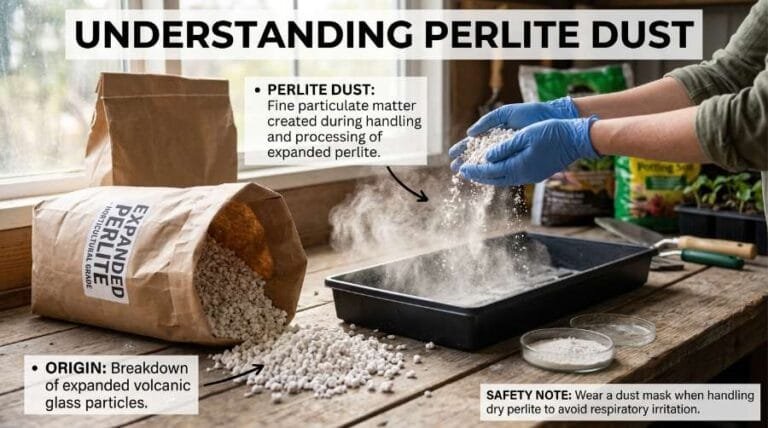
Yes. Perlite is a lightweight, expanded volcanic material commonly used in potting mixes to improve drainage and aeration. It is widely used for houseplants, container gardening, propagation, and seed starting. Read this guide to learn more about what perlite dust is.
The main concern when handling loose perlite is dust, not the solid granules. Dry perlite can release fine particles into the air when it is poured, scooped, mixed, or otherwise disturbed.
NC State Extension specifically advises gardeners to avoid breathing perlite dust and recommends either wearing a dust mask or wetting the perlite before handling it.
For most home gardeners, the goal is simple: prevent unnecessary dust from becoming airborne.
Why Does Perlite Create Dust?
Perlite is extremely lightweight and porous. When it is completely dry, small particles can easily become airborne.
Dust can increase when you:
- Pour dry perlite quickly
- Shake or empty a bag
- Scoop large amounts
- Mix it aggressively
- Drop it from a height
- Crush or break the particles
- Work near a strong fan
If you see a white cloud when handling perlite, stop and reduce the amount of dust being released.
The easiest solution is to lightly dampen the perlite before handling it.
How to Handle Perlite Safely
Follow these simple steps when using loose perlite.
1. Work in a Well-Ventilated Area
Whenever possible, prepare perlite outdoors or in an area with good ventilation.
If you are working indoors, open suitable windows or doors where practical. Avoid positioning a fan so that it blows directly across dry perlite because this can spread dust around the room.
Good ventilation helps reduce the concentration of airborne particles.
2. Open the Bag Carefully
Do not tear open a large bag of dry perlite and immediately shake it.
Open the package slowly and keep your face away from the opening. This is particularly important if the bag has been moved around or compressed during storage.
For larger quantities, placing the bag inside a bucket, tub, or large container can help contain loose material.
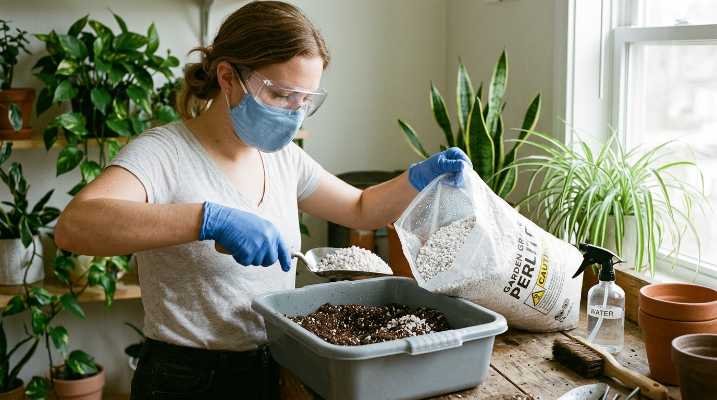
3. Lightly Dampen the Perlite
Dampening dry perlite before handling is one of the simplest ways to reduce dust.
Use a spray bottle or add a small amount of water to the material. The goal is to make the particles slightly damp, not soaking wet.
NC State Extension recommends wetting perlite down as an alternative to using a dust mask when handling it.
You can use this simple method:
- Put the required amount of perlite in a container.
- Lightly mist it with water.
- Mix gently.
- Add a little more water if necessary.
- Use the dampened perlite in your potting mix.
You do not need to soak the perlite. The purpose of adding water is mainly to control dust.
4. Mix Slowly
Once the perlite is damp, mix it gently with your potting soil.
Avoid aggressive stirring because fast movement can still send lightweight particles into the air.
A bucket, plastic tub, or potting tray is better than mixing directly on the floor because it keeps the material contained.
5. Use Appropriate Respiratory Protection When Needed
If dry perlite creates visible airborne dust, appropriate particulate respiratory protection can provide additional protection.
This becomes more important when:
- You are handling a large quantity.
- The area has poor ventilation.
- A visible dust cloud is forming.
- You regularly handle dry perlite.
- You are working in an occupational setting.
For substantial or repeated exposure, follow the manufacturer’s Safety Data Sheet and applicable workplace requirements.
For ordinary houseplant work, however, preventing the dust from becoming airborne is the first priority.
6. Protect Your Eyes When Dust Is Present
Perlite dust can irritate the eyes.
Safety glasses are a sensible precaution when handling large quantities or when visible dust is being produced.
If you are working with a small amount of pre-moistened perlite, there is much less airborne dust.
Should You Wet Perlite Before Using It?
Yes, lightly wetting dry perlite before use is a good safety practice.
The purpose is to reduce airborne dust, not to provide water to your plants.
A simple approach is to place the perlite in a container, mist it lightly, and mix it gently before adding it to your potting soil.
For a large quantity, you can dampen the material gradually rather than pouring or transferring the entire dry bag at once.
The important point is to avoid creating a dust cloud while preparing the material.
Should You Wear a Mask When Handling Perlite?
A mask or appropriate particulate respirator can be useful when dry perlite produces airborne dust.
The amount of protection you need depends on the amount of material, ventilation, and level of dust.
| Situation | Recommended approach |
|---|---|
| Small amount of damp perlite | Normal careful handling |
| Small amount of dry perlite | Dampen before mixing |
| Large amount of dry perlite | Dampen and consider respiratory protection |
| Visible dust cloud | Stop and control the dust |
| Poorly ventilated area | Improve ventilation and control dust |
| Repeated occupational exposure | Follow the product SDS and workplace requirements |
The safest strategy is not simply to put on a mask and continue creating dust. Control the dust at its source first.
Do You Need Gloves When Handling Perlite?
Gloves are not always necessary when handling a small amount of perlite for ordinary houseplant care.
However, gloves can be useful if:
- You are handling a large quantity.
- You have sensitive skin.
- You are handling perlite for an extended period.
- You want to minimize direct contact with dust.
After handling perlite, wash your hands before eating, drinking, or touching your face.
Do You Need Safety Glasses?
Safety glasses are particularly useful when handling large amounts of dry perlite or when visible dust is present.
Fine particles can irritate the eyes, so protecting your eyes is a simple precaution when working with dusty material.
If perlite gets into your eyes, do not rub them. Rinse your eyes thoroughly with clean water.
How to Handle Perlite Indoors
You can use perlite indoors, but you should take extra care to control dust.
Before mixing:
- Open a window or door where practical.
- Work over a tray, bucket, or tub.
- Lightly dampen the perlite.
- Keep your face away from the material.
- Mix slowly.
- Avoid fans blowing directly across dry perlite.
- Keep children and pets away from the work area.
- Clean the workspace after finishing.
A common mistake is to use a fan to blow perlite dust away. This can simply move the particles into other parts of the room.
How to Clean Up Perlite Dust
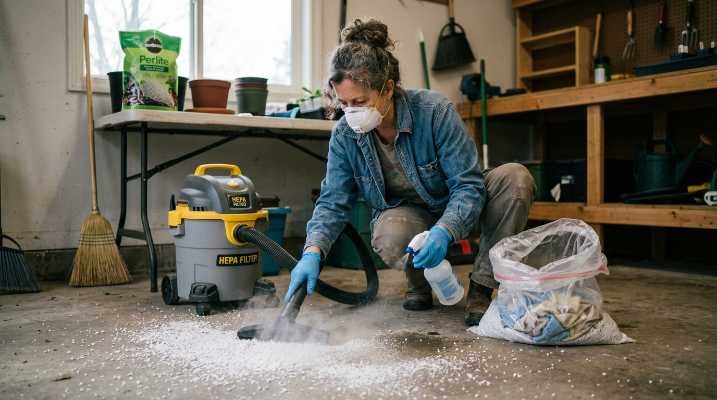
Cleaning should be done in a way that does not create another dust cloud.
Avoid blowing loose perlite dust with a fan or compressed air.
Avoid aggressive dry sweeping if it sends visible dust back into the air.
Instead, use a slightly damp cloth or another suitable dust-control method for small amounts of settled dust.
For larger spills, follow the safety instructions provided by the manufacturer for that specific product.
After cleaning, wash your hands thoroughly.
What Should You Do If Perlite Gets in Your Eyes?
If perlite gets into your eyes, do not rub them.
Rinse the affected eye with clean water.
If irritation continues, or if you experience significant pain or vision problems, seek medical attention.
The important thing is to remove the particles rather than rubbing them against the surface of the eye.
What If You Breathe in a Lot of Perlite Dust?
Move away from the dusty area and get into fresh air.
Perlite dust can irritate the throat and respiratory system.
If you develop persistent coughing, breathing difficulty, chest symptoms, or significant irritation, seek appropriate medical advice.
For workplace exposure, follow the product’s Safety Data Sheet and your workplace safety procedures.
How to Store Perlite Safely
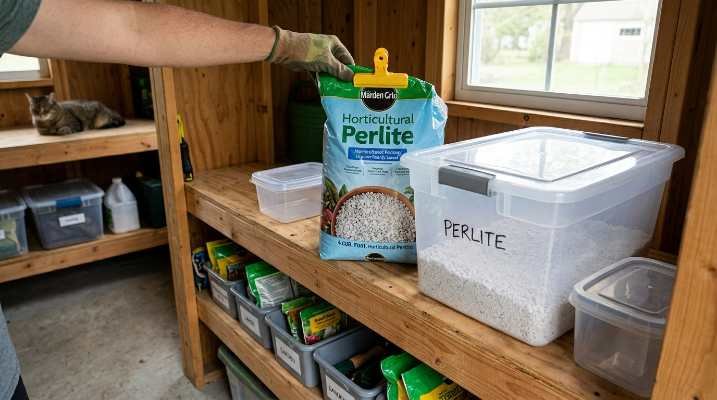
Proper storage helps prevent unnecessary dust and accidental spills.
After opening a bag:
- Close the original bag securely.
- Use a suitable sealed container if appropriate.
- Store the material in a dry location.
- Keep the container where it will not be frequently disturbed.
- Repair or replace damaged packaging.
- Keep it away from children and pets.
There is no reason to leave an opened bag of loose perlite exposed unnecessarily.
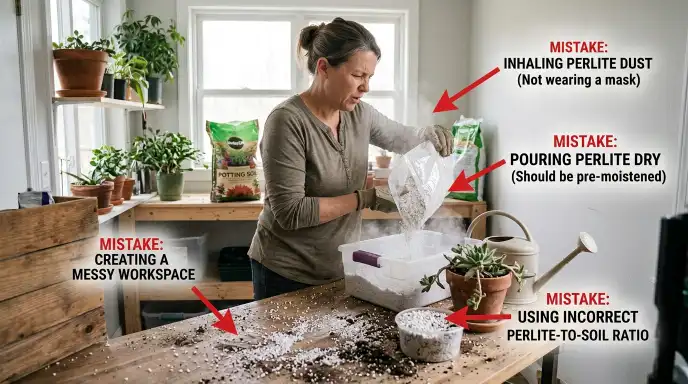
Common Mistakes When Handling Perlite
Pouring Dry Perlite From a Height
Dropping dry perlite from high above the pot or mixing container can create unnecessary dust.
Better: Keep the bag or scoop close to the container.
Mixing Too Aggressively
Fast stirring can send lightweight particles into the air.
Better: Lightly dampen the perlite and mix slowly.
Working Directly Over Your Face
Opening a dusty bag directly in front of your face increases the chance of breathing airborne particles.
Better: Keep the material below face level.
Using a Fan to Remove Dust
A fan can spread perlite dust around the room instead of removing it.
Better: Control the dust where it is created.
Dry Sweeping Aggressively
Hard sweeping can make settled particles airborne again.
Better: Use gentle dust-control or damp-cleaning methods.
Ignoring the Product’s Safety Data Sheet
Different commercial perlite products can have different specifications and safety instructions.
Better: Check the manufacturer’s Safety Data Sheet when handling large quantities or when you need product-specific safety information.
A Simple Perlite Safety Checklist
Before using perlite:
- Work in a well-ventilated area.
- Keep your face away from the bag opening.
- Avoid creating a dust cloud.
- Lightly dampen dry perlite before mixing.
- Mix slowly.
- Wear eye protection when significant dust is present.
- Use appropriate particulate respiratory protection when necessary.
- Wash your hands after handling.
- Clean spills without creating airborne dust.
- Follow the manufacturer’s Safety Data Sheet for large-scale or occupational use.
A quick story
The first time I opened a fresh bag of perlite indoors, I shook it over my potting tray, and a white cloud of dust filled the air. I started coughing before I even began mixing. Now I mist the perlite first every time, and it makes a much cleaner, dust-free experience.
FAQs:
Is perlite toxic?
Perlite is widely used as a horticultural growing medium. The primary handling concern is airborne dust rather than the solid granules.
Is perlite dust harmful to breathe?
Breathing airborne perlite dust can irritate the respiratory system. The best way to reduce exposure is to prevent dry perlite from becoming airborne. Learn more from this guideline on whether perlite dust is safe to breathe or not.
Should I wear an N95 when using perlite?
An appropriate particulate respirator can be useful when dry perlite creates significant airborne dust. For large-scale or occupational use, follow the product’s Safety Data Sheet and applicable workplace requirements.
Can I use perlite indoors?
Yes. Use good ventilation, dampen the perlite before handling it, and avoid creating airborne dust.
Should I wet perlite before mixing it with soil?
Yes. Lightly dampening dry perlite before mixing can reduce the amount of dust released into the air. Read the guide to know how to add perlite to soil.
Is perlite safe for houseplants?
Yes. Perlite is commonly used in houseplant potting mixes. When handling loose perlite, the main precaution is to control dust. For safety, perlite has a ratio; to know the perfect ratio, read this guide.
What should I do if perlite gets in my eyes?
Do not rub your eyes. Rinse them thoroughly with clean water. If irritation, pain, or vision problems continue, seek medical attention.
Can I handle perlite without gloves?
For small amounts used in normal houseplant care, gloves are generally not essential. However, gloves can be useful when handling large quantities or when you want to reduce direct skin contact with dust.
Do I need to sterilize new perlite?
No. Fresh perlite from the bag is already clean and sterile. Sterilization is only necessary when you are reusing perlite from old potting soil.
Can I reuse perlite?
Yes! Perlite is a mineral and doesn’t break down. You can reuse it multiple times. Simply rinse away old organic matter, sterilize it if needed, and let it dry completely.
What temperature kills pathogens in perlite?
Temperatures above 50°C (122°F) kill many fungi and nematodes. The oven method at 200°F (93°C) for 30 minutes is a safe, proven home option.
Final Thoughts
Handling perlite safely is mostly about controlling dust.
For ordinary indoor gardening, the most useful habits are simple: work in a ventilated area, open bags carefully, lightly dampen dry perlite before using it, mix slowly, and avoid blowing or sweeping dust into the air.
If you are handling large quantities or working in an occupational environment, go beyond basic gardening precautions and follow the manufacturer’s Safety Data Sheet and applicable safety requirements.
The goal is not to avoid perlite. It is to use it in a way that keeps unnecessary dust out of your breathing zone, eyes, and workspace.