The best ceramic pots for plants combine a drainage hole (or saucer) with the right glaze type for what you’re growing, and most people get this wrong. If you plant a succulent in a fully glazed pot with no drainage, it’s only a matter of time before the roots rot.
Our top pick for most people is the LE TAUCI Ceramic Plant Pots (Set of 3), which comes with drainage holes, mesh pads, and three sizes for around $10 per pot. It works for most houseplants without overcomplicating things.
Below, we compare all 8 picks by size, price, drainage, and what they’re best suited for. You’ll also find a short buyer’s guide so you can match a pot to your plant instead of just your shelf.
Keep reading to avoid the mistakes that kill plants in “pretty pots.”
Table of Contents
Why Ceramic Pots Are Tricky to Shop For
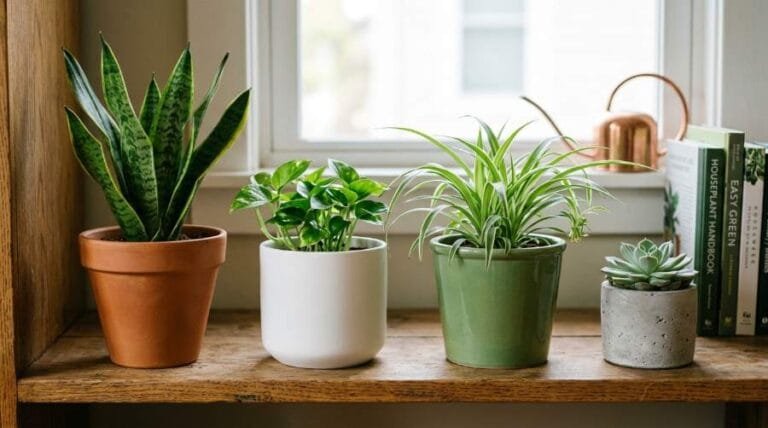
Ceramic looks better than plastic on almost every shelf, but it forces two decisions that plastic pots don’t:
- Whether the pot has a drainage hole
- Whether the clay is glazed or left porous
Many decorative ceramic pots are sold without a drainage hole at all. That’s not a manufacturing oversight; it’s a design choice, since a solid base is easier to seal and glaze evenly.
The tradeoff:
- Water has nowhere to go
- It pools at the bottom of the pot
- It sits directly against the roots
Glaze changes things too:
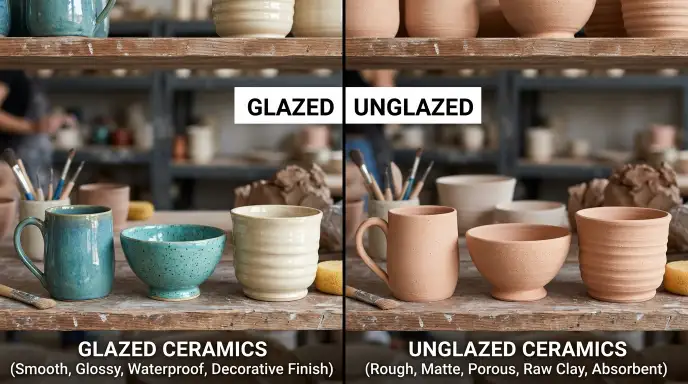
- Glazed pots seal the clay surface, so they hold moisture longer, similar to how a sealed cup holds water better than an unglazed one. If you’re unsure whether your plant needs consistent moisture or dry soil between waterings, check this Guide to identifying overwatering and underwatering symptoms in houseplants.
- Unglazed or semi-porous pots (plain terracotta, red clay) let air and moisture pass through the walls, so the soil dries out faster
Quick way to remember it: glazed pots hold water longer, unglazed pots dry out faster. Match that to how much you tend to water.
The Cachepot Method (Using a Pot Without Drainage Safely)
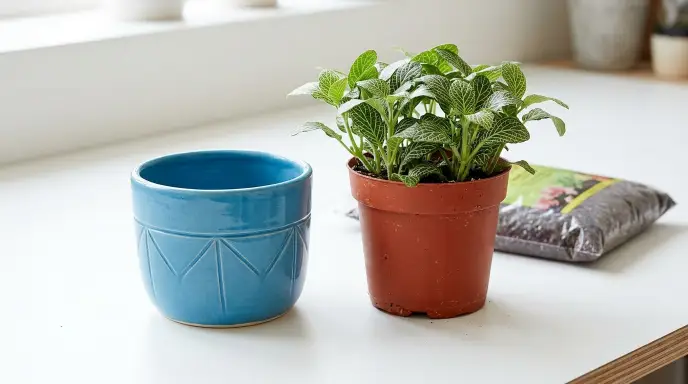
If you love a pot that doesn’t have a hole, you don’t have to skip it. Here’s how to use it safely:
- Keep the plant in its plastic nursery pot
- Slide that nursery pot inside the ceramic one, using the ceramic pot as a decorative cover (called a cachepot)
- Lift the plastic pot out to water it in a sink. If water has nowhere to go, it sits against the roots, and that’s exactly how root rot starts. Read the complete guide to identifying, treating, and preventing root rot in houseplants. Poor drainage can also attract pests like root mealybugs, which live in the soil and cause similar decline. Read the complete guide to identifying, treating, and preventing root rot in houseplants.
- Let it drain fully before setting it back inside
This gives you the drainage of a nursery pot with the look of the ceramic one. Using a nursery pot inside a decorative cover gives you the drainage of the plastic pot with the look of the ceramic one. This is also a smart way to water your plants correctly without worrying about the decorative pot’s drainage.
When It’s Worth Drilling a Hole Yourself
You can drill a hole into some ceramic pots yourself:
- Use a diamond-tip masonry bit
- Go slow and keep the area wet to reduce cracking risk
- Works reasonably well on stoneware, which is fired at high temperatures and holds up to drilling better
- Riskier on low-fire earthenware, which is more brittle and prone to cracking under the bit
If you’re not confident doing this yourself, the cachepot method above is the safer route.
How to Choose a Ceramic Pot (Buyer’s Guide)
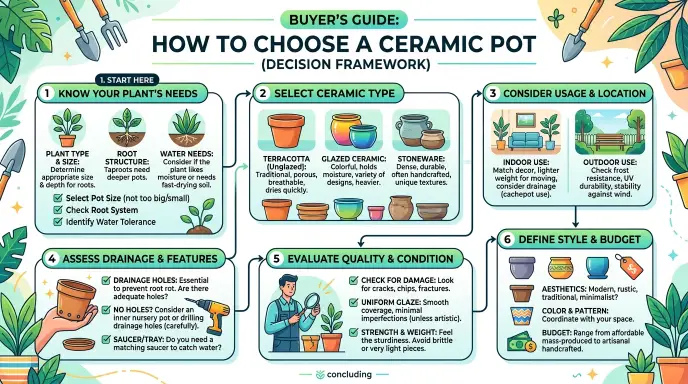
Use this checklist for any ceramic pot, not just the ones on this list:
- Drainage: Does it have a hole, or will you need a cachepot setup?
- Glaze type: Glazed for moisture-loving plants, unglazed or semi-porous for succulents and cacti. If you’re unsure how quickly your soil dries out in a particular pot, a moisture meter takes the guesswork out of watering decisions. Read our Review of the best soil moisture meters for indoor plants.
- Size: The pot should be about 1 to 2 inches wider than the plant’s current root ball, not much more
- Weight: Ceramic is heavy. If it’s going on a shelf or hanging, check the weight before you buy
- Price: Sets are usually cheaper per pot than buying single large pieces
Quick-Match Table: Plant Type to Glaze Type
| Plant Type | Best Glaze Type | Why |
|---|---|---|
| Succulents, cacti | Unglazed or semi-porous | Dries out fast, matches these plants’ low water needs |
| Snake plant, ZZ plant | Unglazed or semi-porous | Prefers soil that dries between waterings |
| Pothos, philodendron | Glazed | Tolerates more consistent moisture |
| Ferns, peace lily | Glazed | Prefers soil that stays evenly moist |
| Orchids | Either, with drainage holes required | Roots need airflow; standing water is harmful |
The right pot prevents many issues, but plants can still struggle. How to Diagnose Indoor Plant Problems helps you identify what’s wrong when things go sideways.
What You Get at Each Price Tier
- Under $10 per pot: Small sets, often for succulents, cuttings, or propagation. Expect basic glazes and simpler shapes.
- $10 to $25 per pot: The most common range for a single medium pot or a small matching set, usually with a saucer and a more distinct glaze or pattern.
- $25 and up: Larger single pots, hand-painted designs, or unglazed statement pieces for floor plants.
Quick Decision Framework
- Pick your plant first, not the pot.
- Check whether that plant likes consistently moist soil or soil that dries out between waterings.
- Match that to a glazed pot (holds moisture) or an unglazed/semi-porous pot (dries faster).
- Confirm the pot has a drainage hole, or plan to use it as a cachepot instead.
- Measure your space and the plant’s current root ball before picking a size.
The 8 Best Ceramic Pots for Plants
Prices and availability shift often on Amazon, so treat the numbers below as a snapshot rather than a guarantee, and check the current listing before you buy.
| Pot | Sizes | Price | Drainage | Best For |
|---|---|---|---|---|
| LE TAUCI Set of 3 | 4.1″, 5.1″, 6.5″ | $29.98 | Hole + saucer | Multiple plants, modern decor |
| DeeCoo Set of 3 | 5.7″, 4.7″, 3.5″ | $20.99 | Hole | Succulents, cacti, orchids |
| Sungmor 9.6″ Large | 9.6″ x 5.1″ | $45.99 | Hole | Large succulents, statement piece |
| T4U Set of 12 | 2.5″ | $21.84 | Hole | Small succulents, propagation |
| Yesland Set of 3 | 7″, 5.5″, 4″ | Mid-range | Hole + saucer | Shelf and table displays |
| Gepege Set of 3 | 6″, 5″, 4″ | Varies | Hole | Decorative displays, indoor/outdoor |
| Ceramic for 6″ | 6″ | $25.26 | Hole + saucer | Medium houseplants, modern decor |
| LE TAUCI 12″ | 12″ | $89.99 | Hole + saucer | Large floor plants, statement pieces |
Pros and Cons of Each Pick
| Pot | Pros | Cons |
|---|---|---|
| LE TAUCI Set of 3 | 3 sizes in one purchase, drainage hole + saucer + mesh pad, footed base for airflow | Sold as a set only, glazed finish is less ideal for succulents |
| DeeCoo Set of 3 | Breathable red clay, handmade embossed pattern, low price per pot | Unglazed look is less polished for some decor styles, dries out faster so needs more frequent watering |
| Sungmor 9.6″ Large | Hand-painted design holds up under high firing, strong as a single statement piece | Higher price for one pot, heavier than pots of a similar size |
| T4U Set of 12 | Very low cost per pot; ice crack glaze gives an artisan look, great for many small plants at once | Small size limits use to seedlings, cuttings, and small succulents; glaze holds moisture longer than unglazed options |
| Yesland Set of 3 | Matching saucers, ribbed texture looks cohesive as a group | Price isn’t fixed and needs checking; ribbed surface can collect dust |
| Gepege Set of 3 | Distinct iridescent glaze, rated for indoor or outdoor use | Price varies by listing; beaded texture is harder to wipe clean |
| Ceramic for 6″ | Durable stoneware, drainage hole and saucer included, modern gold finish | Sold as a single pot; gold finish won’t suit every room |
| LE TAUCI 12″ | Unglazed clay improves airflow for large plants, detachable saucer | Most expensive pick here; heavy once filled with soil |
1. Best Overall: LE TAUCI Ceramic Plant Pots (Set of 3)
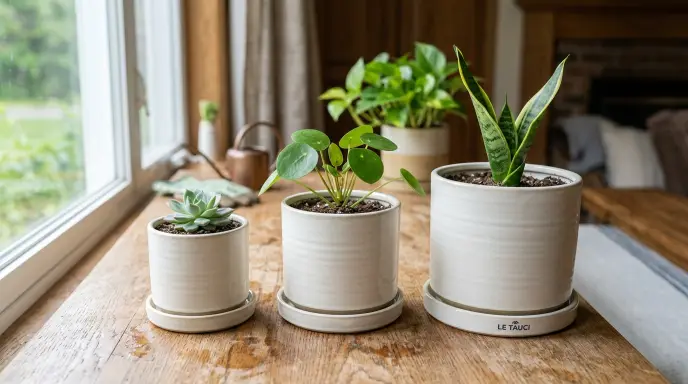
This set covers three common sizes (4.1″, 5.1″, 6.5″) for about $10 a pot, which makes it an easy pick if you’re potting up a few plants at once.
What you get:
- Reactive glaze finish, so no two pots look exactly alike
- A drainage hole and saucer on each pot
- A mesh pad that keeps soil from washing out through the hole
- A footed base that lifts the pot slightly for better airflow underneath
Best for: Matching multiple plants in one styling pass, gifting, general modern decor.
2. Best for Succulents and Cacti: DeeCoo 3 Piece Ceramic Plant Pots
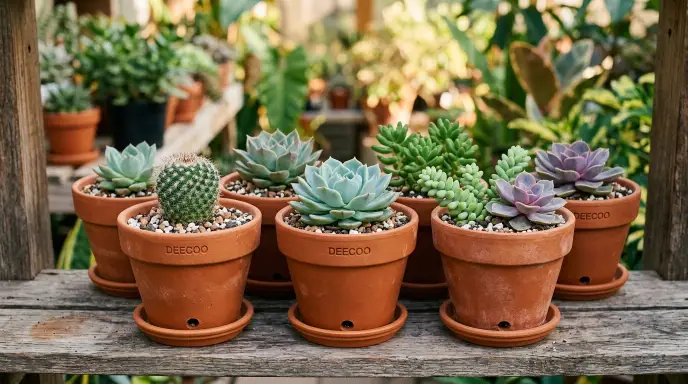
Made from red clay rather than a fully glazed finish, these pots breathe more than a sealed ceramic pot would, which suits plants that want their soil to dry out between waterings.
What you get:
- Three sizes (5.7″, 4.7″, 3.5″)
- Drainage holes on each pot
- A handmade embossed floral pattern
- Roughly $7 per pot
Best for: Succulents, cacti, orchids, snake plants, African violets.
3. Best Statement Piece: Sungmor 9.6 Inch Hand-Painted Ceramic Planter
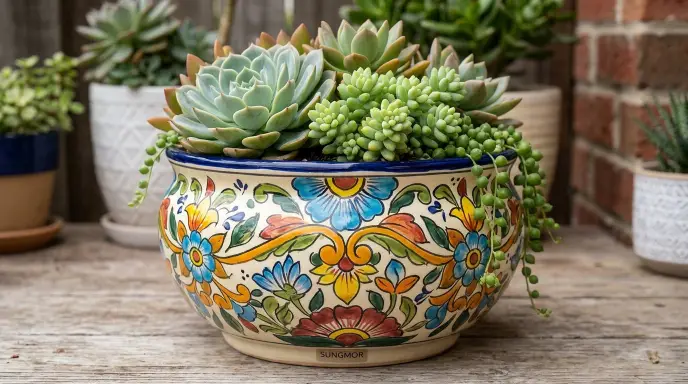
At 9.6 inches wide and just over 5 inches tall, this one is built to be a focal point rather than blend in.
What you get:
- A hand-painted floral pattern
- High-temperature firing, which helps the color hold up over time instead of fading
- A drainage hole
- A price of $45.99, which reflects the larger size and hand-painted detail
Best for: Large succulents, cacti, bonsai, and any plant you want to feature on its own.
4. Best for Propagation and Desktop Displays: T4U 2.5 Inch Ceramic Succulent Planter (Set of 12)
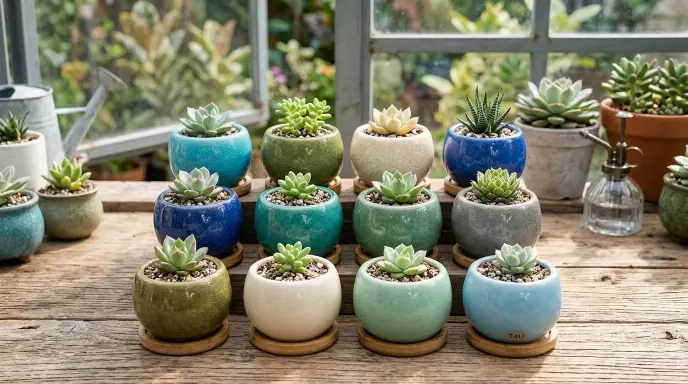
Twelve pots for under $22 works out to roughly $1.82 each, which is hard to beat if you’re propagating cuttings or keeping a windowsill full of small succulents. What you get:
- 12 pots at 2.5″ diameter each
- A drainage hole on every pot
- An ice crack glaze finish, so the set still looks intentional despite the low price
Best for: Succulents, cacti, propagation cuttings, desktop or windowsill displays.
5. Best for Shelf Displays: Yesland Ceramic Flower Plant Pots with Saucer (Set of 3)
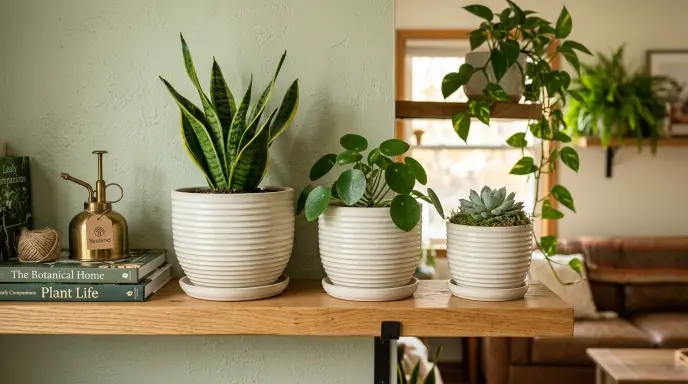
The ribbed design and matching saucers in this set are built to look cohesive when lined up together, which makes them a strong pick for open shelving or a plant table.
What you get:
- Three sizes (roughly 7″, 5.5″, 4″)
- Matching saucers
- A ribbed design for extra texture
- Mid-range pricing, worth checking on Amazon for the current number
Best for: Shelf or table displays with multiple houseplants.
6. Best Unique Glaze: Gepege Ceramic Pots for Plants (Set of 3)

The rainbow pearl glaze on this set gives it an iridescent look that shifts slightly depending on the light, which is a different visual approach than the more common matte or solid-color glazes. What you get:
- Three sizes (6″, 5″, 4″)
- A drainage hole on each pot
- A beaded design for added texture
- Rated for both indoor and outdoor use
Best for: Succulents, orchids, and anyone who wants a pot that doubles as a decor piece on its own.
7. Best Modern Gold Finish: Ceramic for 6 Inch Plant Pot with Saucer
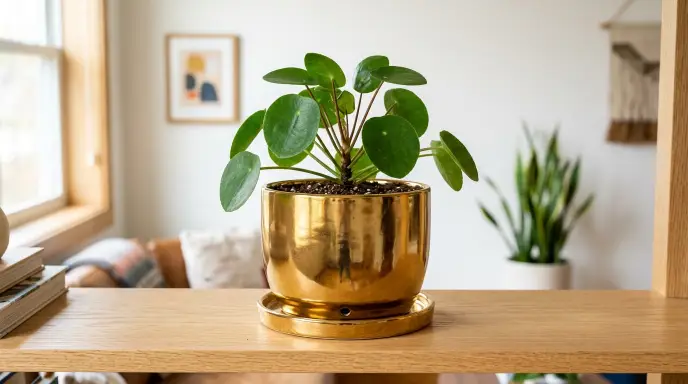
This is a single 6-inch pot in high-temperature-fired stoneware with a modern gold finish.
What you get:
- A 6-inch pot with a matching saucer
- A drainage hole
- Durable stoneware construction
- A price of $25.26
Best for: Medium-sized houseplants in a modern or contemporary space.
8. Best for Large Floor Plants: LE TAUCI 12 Inch Ceramic Planter
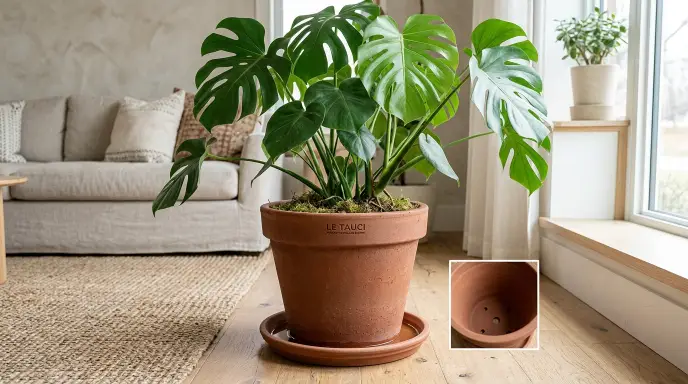
At 12 inches wide, this is sized for a floor plant rather than a tabletop one.
What you get:
- Unglazed, porous clay that lets air and moisture move through the walls, which helps prevent water from sitting around the roots of a large plant
- A detachable saucer
- A drainage hole with a mesh pad
- A price of $89.99 (listed as 22% off $115.99)
Best for: Large houseplants, floor plants, and any spot that needs one big statement pot rather than several small ones.
Ceramic Pots by Room and Light Exposure
Where a pot lives matters almost as much as what’s growing in it:
- Bright, south-facing rooms: Heavier ceramic holds up well here, and glazed finishes won’t dry out as fast under strong light and heat.
- Bathrooms and kitchens: These rooms run more humid, so a glazed or semi-porous pot tolerates the extra moisture better than fully porous unglazed clay, which can stay damp longer than you’d want.
- Low-light rooms: Plants use less water in low light, so pairing them with an unglazed pot can help avoid soggy soil sitting around the roots for too long.
A quick note on material: ceramic and terracotta are often lumped together, but they’re not quite the same thing.
- True terracotta is unglazed and much more porous by default
- Ceramic covers a wider range, from fully glazed to semi-porous stoneware
If you’re deciding between the two materials rather than between finishes, that porosity difference is the main thing to weigh.
Common Mistakes When Buying Ceramic Pots
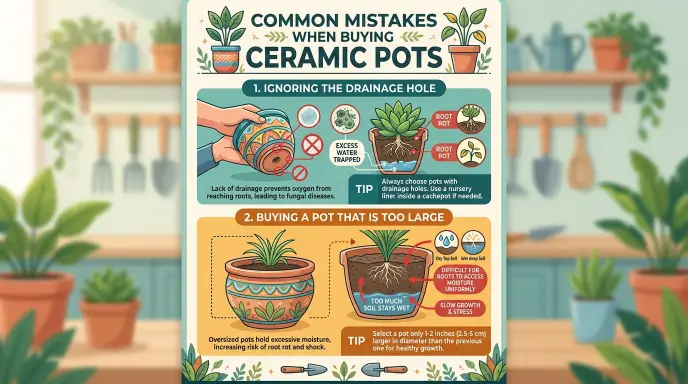
- Not checking the weight before buying for a shelf. A large glazed ceramic pot filled with wet soil can be surprisingly heavy, and shelving isn’t always rated for it.
- Mismatching glaze to plant. Putting a cactus in a fully glazed pot with no drainage is one of the more common ways succulents end up with root rot. Putting a cactus in a fully glazed pot with no drainage is one of the more common ways succulents end up with root rot. For a deeper look at how different plants respond to moisture, check our guide on Guide to identifying and treating heat stress in houseplants to understand how the environment affects plant health.
- Sizing up too much at once. A pot that’s much bigger than the root ball holds excess soil that stays wet far longer than the roots can use, which invites rot.
- Assuming every decorative pot is meant to be planted directly. Some are cachepots by design and were never meant to hold soil against the roots.
I made this mistake myself with a small aloe. I planted it straight into a glazed pot with no hole because it matched my shelf, and within a few weeks the base was soggy and the roots had started rotting. Switching to the cachepot method with a plain plastic liner fixed it, and I haven’t lost a plant to a “pretty pot” since.
Frequently Asked Questions
Do ceramic pots need drainage holes?
Not always, but the plant does better with drainage somewhere in the system. If the ceramic pot itself doesn’t have a hole, keep the plant in a plastic nursery pot inside it (a cachepot) rather than planting directly into the ceramic.
Can I drill a hole in a ceramic pot myself?
Yes, using a diamond-tip masonry bit at a slow speed with the area kept wet. It works better on higher-fired stoneware than on more brittle, low-fire earthenware, which is more likely to crack.
Are ceramic pots better than plastic for indoor plants?
Ceramic is heavier and more decorative, and unglazed ceramic breathes better than plastic. Plastic is lighter and cheaper, and it’s easier to drill or size up over time. Neither is strictly better; it depends on the plant and where the pot is going. Ceramic is heavier and more decorative, and unglazed ceramic breathes better than plastic. If you’re dealing with temperature fluctuations in your home, you might also want to check our Guide to identifying and treating cold damage in houseplants to understand how pot material affects root temperature.
How do I know if a ceramic pot is glazed or unglazed?
Glazed pots have a smooth, often shiny or colored coating over the clay. Unglazed pots look and feel more like raw clay, similar to a plain terracotta pot, and are usually a matte, earthy tone.
Are ceramic pots too heavy for shelves?
It depends on the pot and the shelf. Small to medium ceramic pots are usually fine on standard shelving, but a large pot filled with wet soil can weigh several pounds more than it looks like it should, so it’s worth checking your shelf’s weight rating for anything above 6 to 8 inches wide.
Final Take
Ceramic pots don’t have to be a tradeoff between looking good and keeping your plant healthy. Once you know whether a pot is glazed or unglazed, and whether it has real drainage or needs to work as a cachepot, matching a pot to a plant becomes a quick check instead of a guessing game. If you’re still unsure which pot is right for your plant, start with our complete symptom-by-symptom guide for diagnosing houseplant problems to understand what your plant is telling you, then match the pot to its needs. The right pot prevents many issues, but plants can still struggle. How to Diagnose Indoor Plant Problems helps you identify what’s wrong when things go sideways.
To recap the process:
- Start with the plant you’re potting
- Match its water needs to a glaze type from the table above
- Pick a size and style from the list that fits your space
Our top pick for most people is the LE TAUCI Set of 3 (around $10 per pot), because it covers three common sizes, includes drainage and saucers, and works for most houseplants without overcomplicating things.
Check the latest price on Amazon and see if this set fits your shelf before it sells out—these sets move fast in peak planting season.
For a single statement piece, the Sungmor 9.6″ hand-painted planter or the LE TAUCI 12″ large planter are both strong bets, depending on how much space you’re filling.
Here’s the honest take: I’ve killed plants in pretty pots before—more than once. The fix wasn’t giving up on ceramic. It was understanding how glaze and drainage affect roots, and choosing accordingly. These eight picks are the ones I’d actually buy again.
If you’re still unsure, drop a comment below with what you’re trying to pot and where it’s going, and I’ll point you to the best match.
Ready to upgrade your plant’s home? Check prices and availability on Amazon using the links above. Your plant will thank you.
Note: Product pricing, sizing, and availability are based on Amazon listing data as of this writing and can change. Confirm the current price before purchasing.