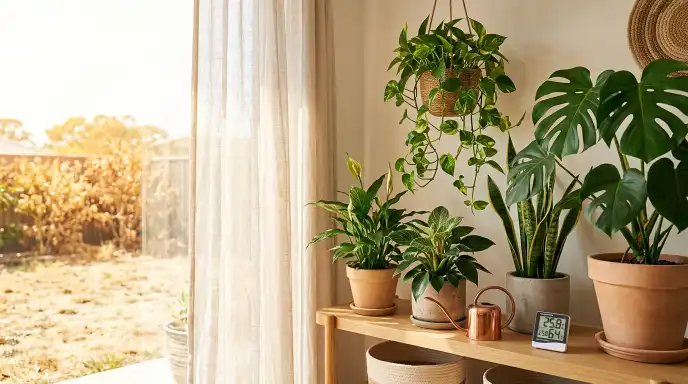
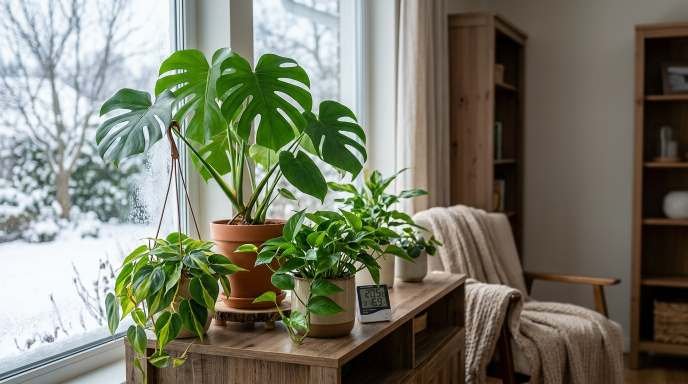
Winter can be surprisingly difficult for indoor plants. Even though your plants are inside, cold window glass, drafts, exterior doors, reduced sunlight, and dry heated air can create stressful conditions. If your plant is already showing signs of stress, use our indoor plant symptom checker to diagnose the problem fast.
The best way to protect indoor plants from winter cold is to keep them in a stable temperature, move sensitive plants away from cold windows and drafts, keep them away from direct heat, adjust watering as growth slows, and provide adequate winter light and humidity.
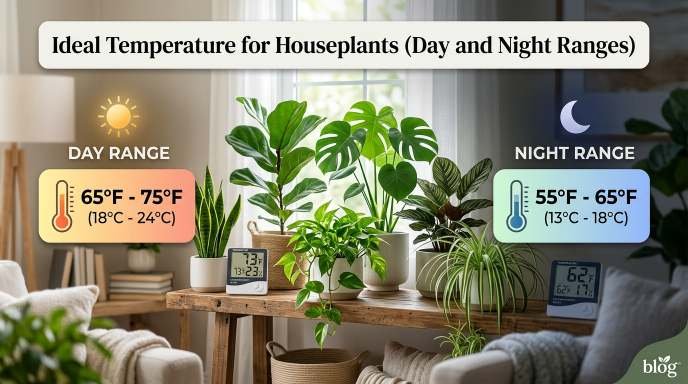
For many common houseplants, temperatures around 65–75°F (18–24°C) are comfortable. Temperatures below approximately 55°F (13°C) can become risky for many tropical houseplants, although the exact tolerance varies by species. Learn about ideal temperatures for plants in this guide.
The goal isn’t to make your plants as warm as possible. It’s to keep their environment stable and free from extreme temperature changes.
Why Indoor Plants Can Get Too Cold in Winter
Being indoors doesn’t automatically protect a plant from cold.
Different areas of your home can have very different temperatures. A plant sitting beside an exterior door may experience repeated blasts of cold air, while a plant pressed against a window can be exposed to much colder glass after sunset.
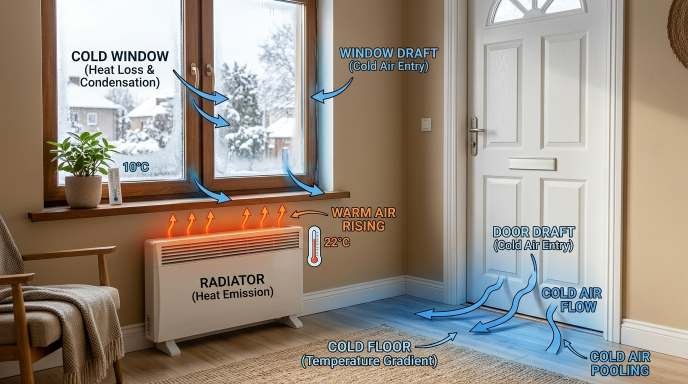
Common sources of winter cold include:
- Cold windows
- Drafty doors
- Open windows
- Unheated rooms
- Cold floors
- Poorly insulated walls
- Plants positioned between curtains and windows
Temperature fluctuations can also be a problem. For example, a plant might become warm from sunlight during the day but experience a sharp temperature drop at night when the window becomes cold.
For tropical houseplants, these repeated changes can eventually lead to stress and leaf damage.
What Temperature Is Too Cold for Indoor Plants?
There is no single temperature that is dangerous for every houseplant.
Many common indoor plants grow well around 65–75°F, while temperatures below about 55°F can become increasingly stressful for tropical species.
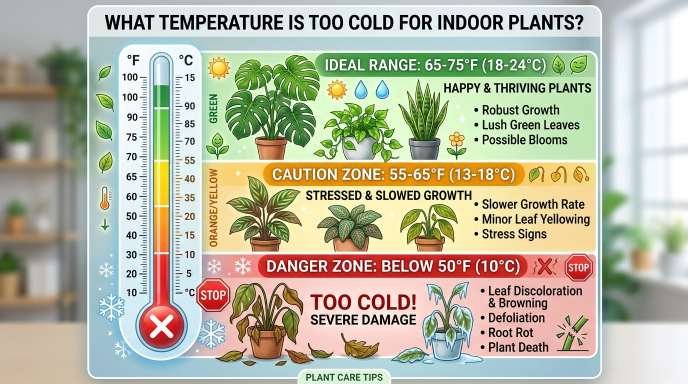
A useful general guide is:
| Temperature | General guidance |
|---|---|
| 70–75°F | Comfortable for many tropical plants |
| 65–70°F | Suitable for many common houseplants |
| 55–65°F | Tolerable for many species |
| Below 55°F | Increasing risk for tropical plants |
| Around 50°F | Cold-sensitive plants may become stressed |
| 32°F or below | Freezing injury becomes a serious concern |
These are only general guidelines. A snake plant, pothos, orchid, and tropical calathea may respond differently to the same temperature.
Species, exposure duration, humidity, light, and temperature changes all matter. Know about all of this in our complete plant care guide.
If you’re concerned about a particular plant, use its recommended minimum temperature rather than relying only on a general number.
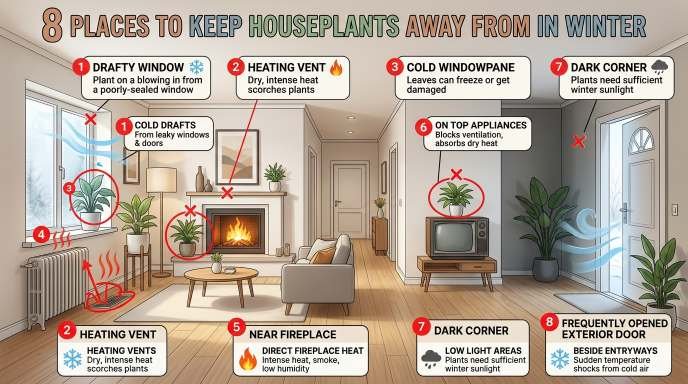
8 Places to Keep Houseplants Away From in Winter
1. Cold Windows
Cold windows are one of the most common sources of winter stress.
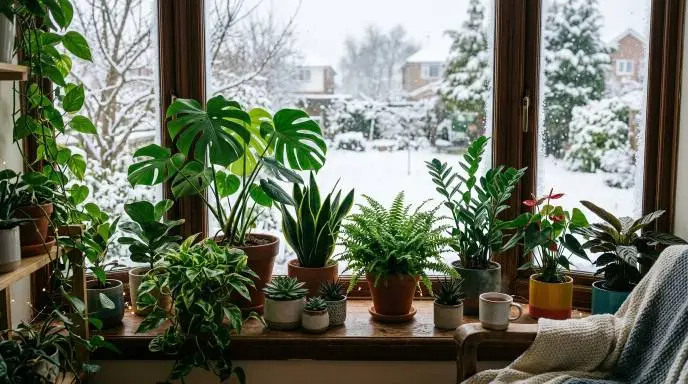
Glass can become significantly colder than the surrounding room at night. If foliage or the pot is touching the glass, the plant can experience much colder conditions than your room thermostat suggests.
Move sensitive plants slightly away from the glass while keeping them close enough to receive adequate light.
2. Exterior Doors
Every time an exterior door opens, cold air enters your home.
Plants placed directly beside frequently used doors may experience repeated cold exposure.
If possible, move sensitive plants farther into the room during periods of very cold weather.
3. Drafty Windows
A window doesn’t need to be open to create a cold problem.
Gaps around window frames can allow cold air to enter and create a localized draft.
If a plant develops problems mainly on the side facing a window, check for drafts before assuming the problem is watering or fertilizer.
4. Unheated Rooms
Spare bedrooms, enclosed porches, basements, hallways, and other poorly heated areas can become surprisingly cold overnight.
Don’t assume that an area is safe simply because it is inside your house.
Use a thermometer to check the actual temperature where your plant sits.
5. Cold Floors
Tile and concrete floors can become particularly cold during winter.
This can create a colder environment around the pot and root zone.
A simple plant stand can help separate the container from the cold floor.
6. Heating Vents
Moving a plant away from a cold window and placing it directly over a heating vent isn’t a good solution.
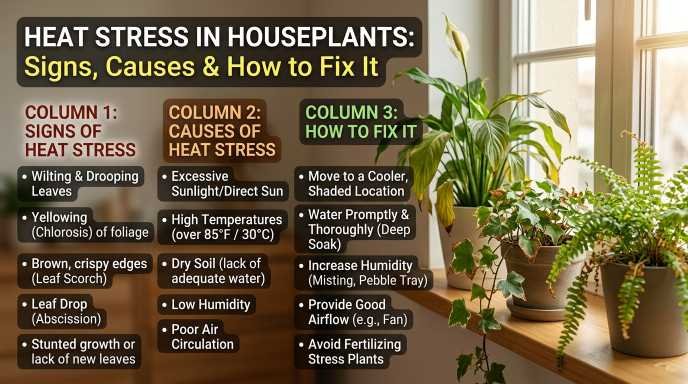
Hot, dry air can increase water loss and stress the foliage.
Try to find a location away from both cold drafts and direct heating.
7. Radiators
Radiators can create a hot, dry microclimate.
Keeping foliage directly beside a radiator can cause excessive drying and temperature fluctuations.
Instead, maintain some distance between the plant and the heat source.
8. Space Heaters and Fireplaces
Don’t use a space heater or fireplace as a direct source of warmth for your plants.
Rapid temperature changes and intense heat can damage foliage.
If the room is too cold, improving the overall room temperature is safer than exposing the plant directly to a heater.
How to Protect Houseplants Near Windows in Winter
You don’t necessarily need to move every houseplant away from a window.
The challenge is finding the right balance between light and temperature. Know how to identify your room’s light level from this guide.
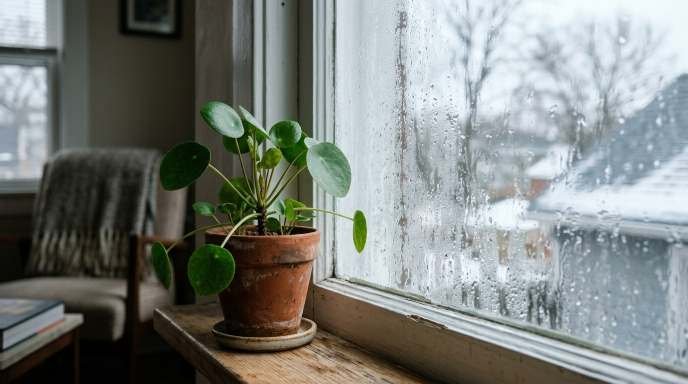
If your window provides excellent winter light but becomes cold at night:
- Move the plant away from direct contact with the glass.
- Check the temperature near the plant after sunset.
- Check for drafts around the frame.
- Avoid trapping the plant between the curtain and cold glass.
- Make sure the plant still receives sufficient light.
Moving a plant too far away from a window can create a light shortage.
Keeping it pressed against cold glass can create temperature stress.
For many plants, the best compromise is a bright location with some distance between the foliage and cold glass.
How to Keep Houseplants Warm Without Overheating Them
The goal is stable warmth, not maximum heat.
A good winter location should generally be:
- Away from exterior doors
- Away from drafty windows
- Away from radiators
- Away from heating vents
- Away from fireplaces
- Bright enough for the plant
- Relatively stable overnight
A small digital thermometer can be extremely useful.
Instead of measuring only the temperature in the middle of your room, place the thermometer near plants that are particularly sensitive to cold.
You may discover that the area beside a window is several degrees colder than the rest of the room.
How Winter Changes Watering
Winter watering should be based on soil moisture and plant activity, not your summer watering schedule.
Many houseplants grow more slowly during winter because of reduced light and cooler temperatures. As growth slows, water use often decreases.
That means a watering routine that worked in summer can leave the soil too wet in winter.
Before watering, check:
- Is the soil still damp?
- Is the plant actively growing?
- How much light does it receive?
- How warm is the room?
- Does the pot drain well?
- What type of plant is it?
Don’t water simply because it’s your normal watering day.
At the same time, don’t assume every houseplant needs dramatically less water. A tropical plant growing under strong light in a warm room may continue using water normally.
The better rule is:
Water according to the plant’s actual growing conditions, not the calendar.
How to Give Houseplants Enough Light in Winter
Protecting plants from cold shouldn’t create another problem: insufficient light.
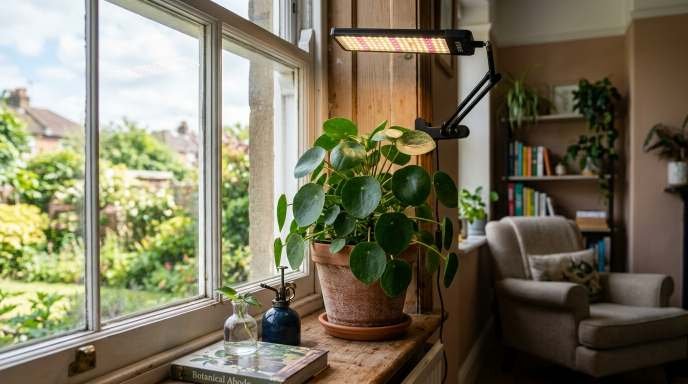
Winter usually means:
- Shorter days
- Lower sun angles
- Less intense sunlight
- More cloudy weather
A plant that received enough light during summer may struggle in the same location during winter.
Improve winter lighting by:
Moving plants toward suitable windows:
Give plants more access to natural light while still protecting them from cold glass.
Cleaning windows:
Dust and dirt can reduce the amount of light reaching the foliage.
Rotating plants:
Rotate plants periodically if they are growing strongly toward one direction.
Using grow lights:
Supplemental lighting can help plants that don’t receive enough natural winter light.
The key is to provide more usable light without exposing the plant to cold stress. Learn about the best grow lights for indoor plants from this article.
How to Protect Houseplants From Dry Winter Air
Heating systems can make indoor air significantly drier during winter.
This can be particularly difficult for tropical houseplants.
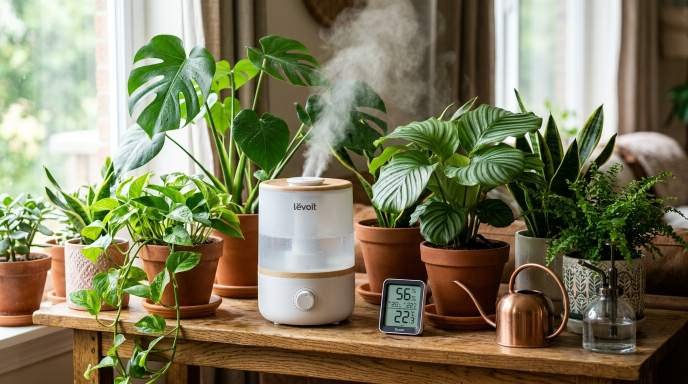
Signs of excessively dry conditions can include:
- Brown leaf tips
- Crispy leaf edges
- Curling leaves
- Increased water loss
- General foliage stress
A hygrometer can help you determine the actual humidity rather than guessing.
If humidity is consistently too low, options include:
- Using a room humidifier. Learn about the best humidifier from this article.
- Grouping plants together
- Moving plants to an appropriate naturally humid location
Occasional misting isn’t a reliable way to maintain consistently higher room humidity. Also learn how to increase humidity without a humidifier from this article.
Should You Fertilize Houseplants in Winter?
Many houseplants don’t need their normal summer fertilizer schedule during winter. Know the best time to fertilize plants in this guide.
When growth slows, nutrient demand generally decreases.
Heavy fertilization when a plant isn’t actively growing can contribute to unnecessary salt buildup in the soil.
A better rule is:
Fertilize according to active growth, not the season.
If a tropical plant remains actively growing because it’s kept warm under adequate light, it may continue to need nutrients.
If it has stopped growing in a cool, dim environment, reducing or stopping fertilizer may be more appropriate. Learn the proper fertilizer process from our Common Fertilizer Mistakes and How to Fix Them guide.
How to Protect Plants Brought Indoors for Winter
Plants that spend summer outdoors need extra attention when they’re moved inside.
Before adding them to your indoor collection:
Inspect for pests
Check underneath leaves, around stems, and near the soil surface.
Check the soil
Look for excessive moisture, insects, and other problems.
Quarantine new arrivals
Keep outdoor plants separated from established houseplants while you monitor them.
Allow them to adjust
A plant moving from outdoor sunlight to indoor conditions is experiencing a major change in light, temperature, airflow, and humidity.
Don’t expect it to grow at the same rate immediately after coming indoors.
How to Transport Houseplants in Cold Weather
A plant can suffer cold damage before you even bring it home.
When purchasing or transporting plants during winter:
- Buy them near the end of your shopping trip.
- Have your vehicle ready.
- Ask for protective wrapping.
- Minimize outdoor exposure.
- Move the plant into a heated vehicle quickly.
- Never leave a tropical houseplant in a cold car.
Even relatively short exposure to severe cold can damage sensitive foliage.
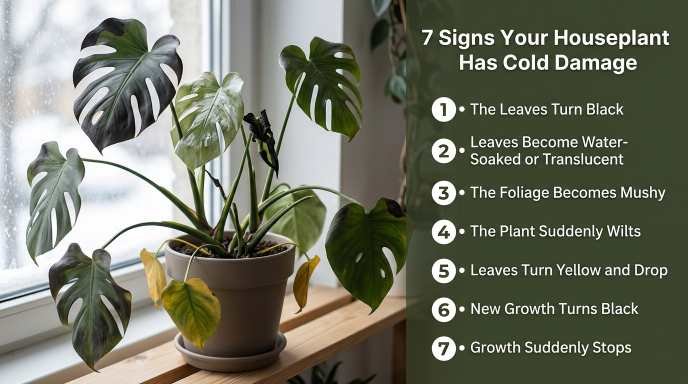
Signs Your Houseplant Is Too Cold
Watch for symptoms that appear after a cold event or after moving a plant into a colder location.
Common signs include:
- Drooping leaves
- Black leaves
- Brown patches
- Water-soaked tissue
- Yellowing
- Sudden leaf drop
- Damaged new growth
- Slowed growth
- General decline
However, these symptoms aren’t proof of cold damage by themselves.
Overwatering, root problems, low humidity, pests, and insufficient light can produce similar symptoms.
If your plant has already developed black, brown, water-soaked, or mushy tissue after cold exposure, see our guide on Cold Damage on Houseplants: How to Identify & Fix It for the next steps.
10 Winter Houseplant Care Mistakes to Avoid
1. Keeping tropical plants against cold glass
Good light doesn’t compensate for severe cold exposure.
2. Following a fixed watering schedule
Winter watering should depend on soil moisture and plant activity. Read how to water plants properly in this article.
3. Placing plants directly beside radiators
Direct heat can create excessive heat and dry air.
4. Ignoring drafts
A room can feel comfortable while an area beside a window or door remains cold.
5. Moving plants away from windows without considering light
Cold protection shouldn’t result in severe light deficiency.
6. Heavy fertilization during slow growth
Plants that aren’t actively growing generally don’t need a summer feeding schedule.
7. Ignoring humidity
Heated indoor air can become very dry.
8. Assuming every plant has the same temperature tolerance
Different species have different temperature requirements.
9. Bringing outdoor plants indoors without checking for pests
Hidden pests can quickly spread throughout your collection.
10. Leaving plants exposed during transportation
A short period of severe cold can cause significant damage.
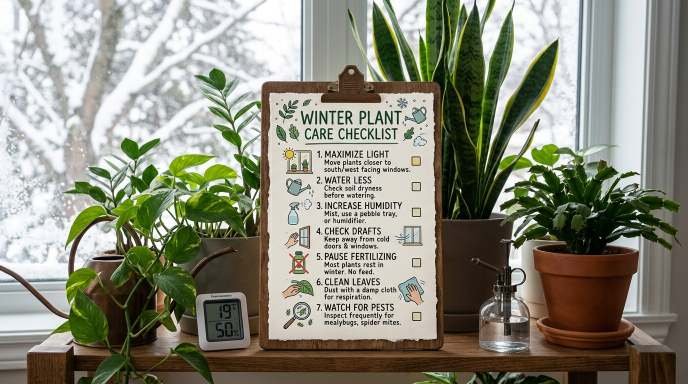
A Simple Winter Protection Routine
You don’t need to constantly monitor your plants.
A simple routine is enough.
Every few days
Check:
- Temperature in sensitive locations
- Obvious leaf damage
- Drafts
- Exposure to heating
Once a week
Check:
- Soil moisture
- Pests
- Humidity when necessary
- Light exposure
- Whether foliage is touching cold glass
Once a month
Review:
- Plant placement
- Winter light levels
- Grow-light positioning
- Humidity
- Temperature fluctuations
If a plant is healthy and growing normally, avoid repeatedly moving it around.
Stable conditions are usually better than constant adjustments. To measure soil moisture, a moisture meter is important. Learn about the best moisture meter from the article.
A Winter Lesson I Learned the Hard Way
Last winter, I kept a pothos right beside a bright window because I thought more light would help it through the darker months. Within days, several leaves turned black and limp. I initially blamed overwatering, but the real problem was the cold glass at night. Moving the plant just a few inches away from the window made a noticeable difference. Sometimes, location matters more than watering.
Frequently Asked Questions
How do I keep indoor plants warm in winter?
Keep them away from cold windows, drafts, exterior doors, and unheated areas. A stable 65–75°F environment works well for many common houseplants.
Should I move plants away from windows?
If the glass becomes very cold, move sensitive plants slightly away while keeping them close enough to receive adequate light.
Can houseplants survive 50°F?
Some can, but many tropical plants may experience cold stress at this temperature. Check the specific plant’s temperature tolerance.
Should I water less in winter?
Often, yes—but don’t follow a fixed schedule. Check the soil and consider the plant’s light, temperature, and growth rate.
Should I fertilize in winter?
Reduce or pause fertilizer when growth slows. Actively growing plants may still need feeding.
What if my plant already has cold damage?
Move it away from the cold source, maintain stable conditions, and avoid direct heat. Don’t rush to heavily water, fertilize, or prune it.
Final Takeaway
Protecting houseplants in winter comes down to stability. Keep them away from cold drafts and glass, avoid direct heat, adjust watering to actual soil moisture, provide enough light, and maintain suitable humidity.
Stable temperature + proper light + careful watering = healthier houseplants through winter.