
Quick Answer
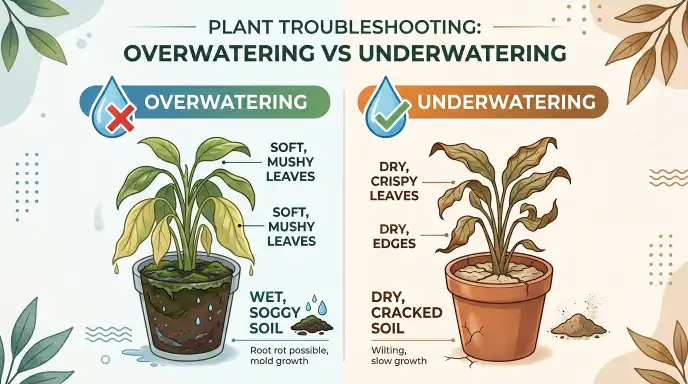
Overwatered plants have soft, yellow, mushy leaves and wet, soggy soil that may smell sour. Underwatered plants have dry, crispy leaves with brown edges and bone-dry soil that pulls away from the pot sides. Learn how to fix root rot from this guide. Overwatering isn’t the only thing that can make your plant look weak; low light can also cause stretched-out, leggy growth. Here’s how to fix leggy growth.
The fastest way to tell them apart:
Stick your finger one to two inches into the soil. If it feels wet, you are overwatering. If it feels dry, you are underwatering.
Key distinction:
Overwatering usually causes yellowing that starts on lower, older leaves and moves upward. Underwatering typically causes wilting or drooping first, with yellowing appearing later on leaf tips and edges.
Critical warning:
Overwatering is the #1 cause of houseplant death. It is frequently misdiagnosed as underwatering because the symptoms look similar, and watering more only makes it worse.
Introduction
I learned the difference between overwatering and underwatering by killing a Peace Lily I had raised for three years. The leaves turned yellow and drooped. Convinced it was thirsty, I doubled the water. Within a week, the roots were black mush. That costly mistake taught me a terrifying truth: overwatering looks exactly like thirst. I never trust the leaves alone anymore. I always check the soil first. If you’re dealing with other symptoms like brown tips, wilting, or leaf drop, this complete symptom-by-symptom guide covers all of them. Not sure if it’s watering or sun damage? Check our sunburn recovery guide to rule out light stress first.
This is the single most common frustration among plant owners. Two opposite problems cause the same symptom. The wrong fix kills your plant faster than neglect ever could. The pot you choose plays a bigger role in overwatering than most people realize. A pot without drainage holes or with the wrong glaze type can trap water against roots. Learn more in our Guide to choosing ceramic pots that prevent overwatering and root rot
This guide gives you a repeatable, foolproof method to tell them apart, every single time. Here is exactly what you need to know. Learn to diagnose other common causes like dry air or sun scorch, or see our full guide on diagnosing crispy leaves.
Why This Confusion Kills More Plants Than Anything Else
Improper watering is the leading cause of houseplant decline. The frustrating part? Overwatering and underwatering can look almost identical at first: drooping leaves, yellowing foliage, and a plant that just looks “off”.
Overwatering is the single most common cause of yellow houseplant leaves, and it is frequently misdiagnosed as underwatering because the symptoms can look similar. People see yellow leaves, assume the plant is thirsty, water more, and the plant dies faster.
Overwatering kills more houseplants than underwatering. Underwatered plants usually recover faster because the roots stay healthy and simply need moisture. Overwatered plants develop root rot, which is much harder to reverse.
The goal of this guide is simple:
Give you a reliable, repeatable method for telling these two problems apart so you can take the right action—every time.
The One Test That Settles It
Before looking at anything else, do this:
Stick your finger one to two inches into the soil.
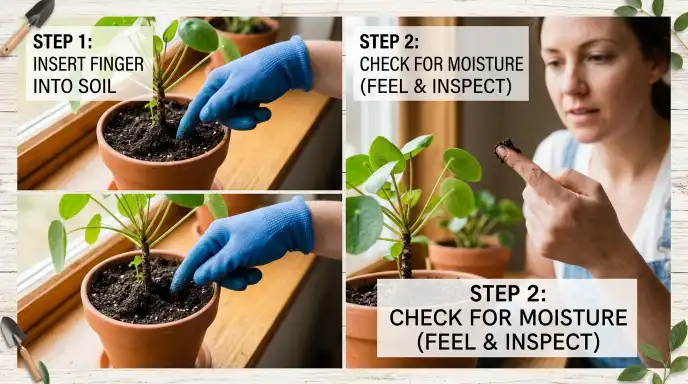
- Wet or soggy soil → overwatering
- Bone-dry soil, pulling away from the pot → underwatering
- Slightly moist → wait a day or two and check again
This single test is more reliable than looking at the leaves alone. Leaves can be misleading. Soil does not lie. For a deeper dive into all the moisture-checking methods, including the lift test, skewer test, and moisture meters, see this complete guide to checking soil moisture.
Pro Tip for Deep Pots:
For containers over 8 inches deep, the top two inches can be bone-dry while the bottom remains soaking wet. If you rely only on the finger test for deep pots, you risk overwatering. Use a wooden skewer pushed all the way to the bottom—if it comes out damp or with soil stuck to it, the bottom is still wet. Hold off on watering.
For a second opinion, lift the pot. A dry pot feels noticeably lighter than a watered one. With practice, you can tell at a glance whether the soil is holding water.
Side-by-Side Comparison: Overwatering vs. Underwatering
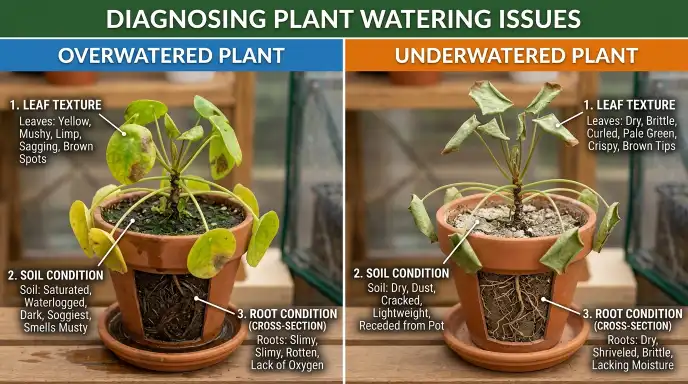
| Diagnostic Factor | Overwatering | Underwatering |
|---|---|---|
| Leaf texture | Soft, limp, mushy | Dry, crispy, brittle |
| Leaf color change | Whole leaf turns yellow uniformly | Edges and tips turn brown/crispy first, then yellow |
| Location of yellowing | Lower, older leaves first; progresses upward | Leaf tips and edges |
| Soil condition | Wet, soggy, may smell sour or musty | Bone dry, pulls away from pot edges |
| Wilting pattern | Wilts but soil is wet; leaves feel soft | Wilts and perks up quickly after watering |
| Root condition | Brown, black, mushy, foul-smelling | Dry or shriveled but not rotten |
| Additional signs | Fungus gnats, mold on soil surface, edema (blisters on leaves) | Leaf curling, very slow growth |
| Pot weight | Heavy | Light |
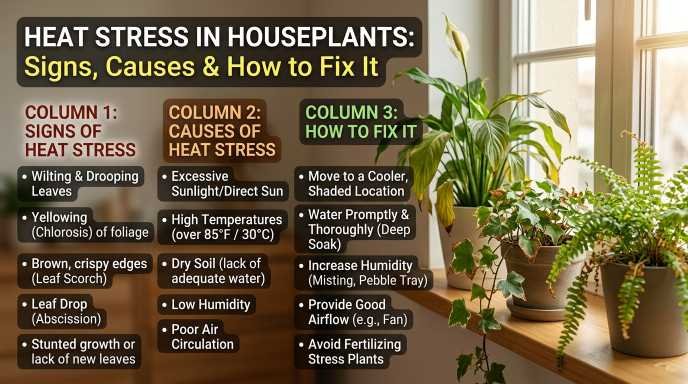
Heat stress can also cause wilting and crispy edges. Here’s how to spot the difference.
Overwatering: The #1 Killer
What Actually Happens
Overwatering does not mean you gave too much water in one watering. It means the soil stays wet for too long. When soil remains saturated, the roots cannot access oxygen. They suffocate. This leads to root rot—the roots turn brown, mushy, and stop functioning.
Here is the irony: when roots rot, they cannot absorb water or nutrients. So the plant shows the same symptoms as a thirsty plant—wilting, drooping, yellow leaves—even though the soil is wet. People see a wilted plant, think it needs water, and pour more on. The plant drowns faster.
Specific Symptoms of Overwatering
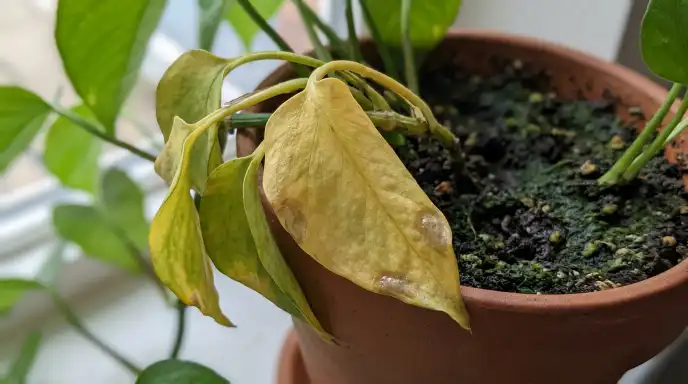
- Yellowing leaves are the most common sign. The yellowing typically starts on the lower, older leaves and moves upward. The whole leaf changes color rather than browning at the edges first. Brown spots can also come from bacterial or fungal infections; read our guide.
- Soft, mushy leaves and stems distinguish overwatering from underwatering. An overwatered leaf feels limp and collapses when you touch it.
- Soil stays wet for days and may develop a sour or musty smell. This smell comes from anaerobic bacteria growing in waterlogged soil.
- Mold or fungus gnats around the soil surface are clear indicators of excess moisture.
- Edema—blisters or lesions on leaves—occurs when plants absorb more water than they can use, causing cells to burst.
- Roots are brown, mushy, and may smell unpleasant rather than firm, white, or pale tan.
How to Fix an Overwatered Plant
- Stop watering immediately.
- Move the plant to a brighter, warmer spot to help the soil dry faster.
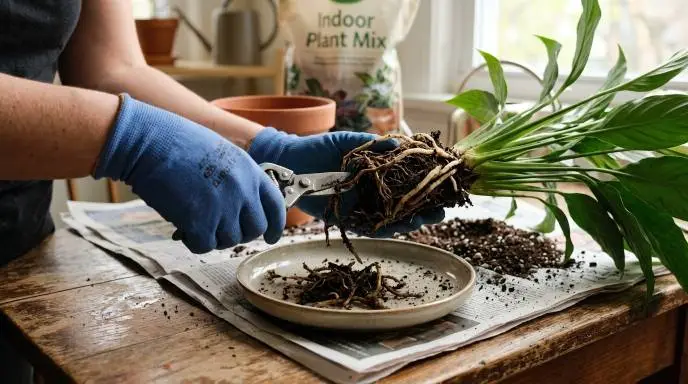
- If the soil stays soggy, carefully remove the plant from its pot and inspect the roots.
- Trim any black, mushy roots with sterilized scissors.
- Repot in fresh, dry, well-draining potting mix. Do not reuse the old soil.
- Do not fertilize for 4 to 6 weeks while the plant recovers.
For a more detailed step-by-step recovery plan, check out this complete overwatered plant recovery checklist. For mild cases, simply letting the soil dry out completely before watering again may be enough. If your overwatered plant needs repotting, avoid these common repotting mistakes that can slow recovery.
Underwatering: The Easier Problem to Fix
What Actually Happens
Underwatering is straightforward: the plant does not have enough water to maintain turgor pressure—the internal water pressure that keeps leaves and stems firm. The plant wilts, leaves become dry and crispy, and growth slows.
Unlike overwatering, underwatered plants usually have healthy roots. They just need moisture. This is why they recover faster.
Specific Symptoms of Underwatering
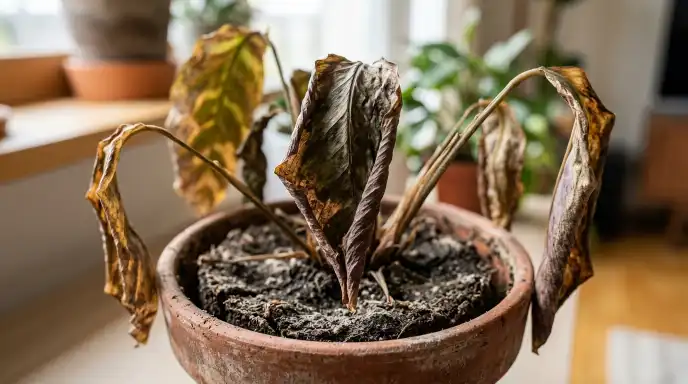
- Wilting or drooping is usually the first sign. The leaves look sad and limp, but they perk back up within hours after watering.
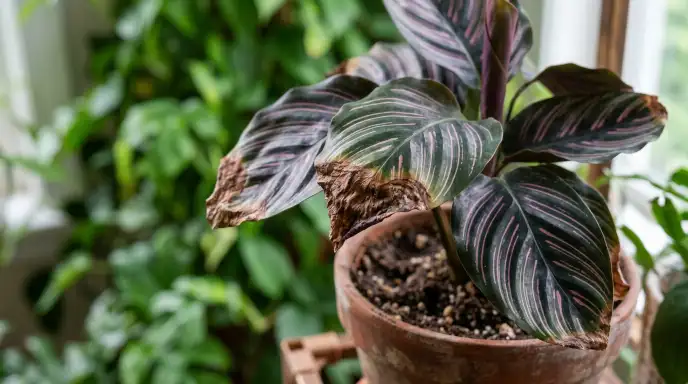
- Dry, crispy leaves with brown edges or tips follow if the drought continues. The brown areas are dry and brittle, not soft or mushy. Brown, crispy edges can also come from low humidity, not just underwatering. Here’s how to increase humidity for your plants.
- Yellowing appears later, only after prolonged dryness. The leaf tips and edges go brown and crispy before the rest of the leaf yellows. Not all yellow leaves come from watering issues. Light problems and nutrient deficiencies can also cause yellowing. This guide helps you tell them apart.
- Soil is bone dry and pulls away from the sides of the pot. The soil may become hydrophobic—it repels water instead of absorbing it.
- The pot feels very light when you lift it.
- Leaves may curl inward.
- Growth slows or stops entirely.
How to Fix an Underwatered Plant
- Water thoroughly, water until it runs freely from the drainage holes at the bottom.
- For very dry soil, use bottom watering. Set the pot in a few inches of water and let it drink from the bottom up for 20 to 30 minutes (or even up to 24 hours for severely dry soil). Dry soil often repels water poured from the top, so bottom watering ensures the root ball rehydrates properly.
- Resume normal watering based on soil moisture, not a calendar schedule.
Most underwatered plants recover within a few hours if the drought has not been extreme. Even a plant that looks nearly dead can often be revived with thorough watering. If your plant is severely dehydrated and the soil has become hydrophobic, this bone-dry plant rehydration checklist walks you through the full rescue process.
Root Inspection: The Definitive Test
When the finger test is not enough, check the roots.
Remove the plant from its pot and examine the root system.
| Root Condition | Diagnosis |
|---|---|
| Firm, white or pale tan roots | Healthy plant—watering issue is elsewhere |
| Brown, mushy, dark roots with foul smell | Overwatering / root rot |
| Dry, shriveled roots (not mushy) | Underwatering |
Overwatered roots are often described as “rusty orange to light brown” for mild cases, or “dark brown to black” for severe rot. If your plant has been in the same pot for years, root binding can also cause yellowing and stunted growth.
If you find root rot, remove the affected roots, dust cut ends with cinnamon (a natural antifungal), and repot into fresh, well-draining mix.
Tools That Take the Guesswork Out
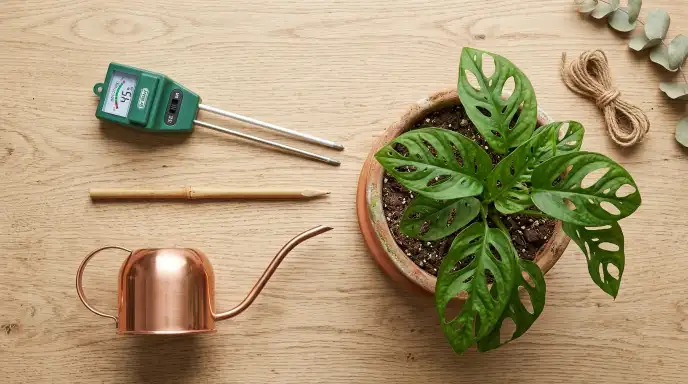
If you struggle to judge moisture by feel, these tools help.
| Tool | How It Works | Best For |
|---|---|---|
| Moisture meter | Probe goes into soil; reads moisture level at root zone | Beginners, deep pots, uncertain diagnosis |
| Wooden skewer | Push into soil, pull out; damp = wet soil, dry = needs water | Quick check, no cost |
| Lift test | Pick up the pot; light = dry, heavy = wet | Small to medium pots, practice makes perfect |
| Finger test | Insert finger 1-2 inches into soil | Most reliable, always available |
For tropical houseplants, most should be watered when a moisture meter reads 3 to 4 out of 10. Not sure which moisture meter to buy? See our top picks.
Plant-by-Plant Diagnostic Reference
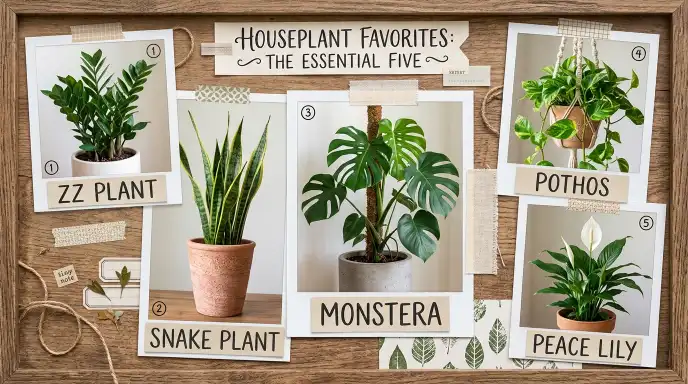
Not all yellow leaves are the same. Different plant species react to overwatering and underwatering in different ways. Use this quick-reference table to see what your specific plant is telling you.
| Plant | Overwatering Signature | Underwatering Signature |
|---|---|---|
| ZZ Plant | Almost always overwatering. Yellowing starts at the base of the stems and progresses upward. Leaves feel soft. | Rare. Leaves curl inward and wrinkle before yellowing. |
| Snake Plant | Soft, mushy, yellowing leaves at the base. The leaves collapse or flop over. | Leaves become thin, wrinkled, and curl inward. Edges turn brown and crispy. |
| Monstera | Yellowing with large brown spots appearing in the middle of the leaf. Lower leaves affected first. | Brown, crispy edges that start at the leaf tips. No brown spots in the middle. |
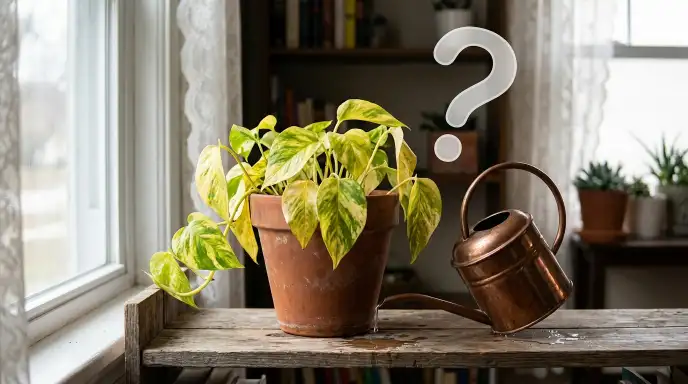
| Pothos | Yellow leaves closer to the base of the vines (older growth). Leaves are soft and limp. | Yellowing starts at the farthest tips of the vines. Leaves become papery and thin. |
| Peace Lily | Dramatic wilting with soil that is still wet. Leaves turn yellow and develop brown spots. | Dramatic wilting with soil that is bone dry. Leaves perk up fast after a drink. |
| Succulents | Bottom leaves turn yellow, translucent, and mushy (water-logged). Leaves drop easily. | Bottom leaves shrivel, pucker, and become thin and wrinkled. |
Why this matters:
A ZZ plant with yellow leaves should trigger an immediate alarm for overwatering. A Monstera with crispy edges, however, likely just needs a consistent watering schedule. Reading your plant’s specific language stops you from making the wrong fix.
Prevention: Stop Yellow Leaves Before They Start
Water the Soil, Not the Schedule
Most houseplant guides say “water every 7 days” or “water twice a week.” These are rough starting points, not rules. Seasonal adjustments matter, here’s how to water in winter. The actual frequency depends on:
- The plant species (succulents vs. tropicals have very different needs)
- Pot size and material (terracotta dries faster than plastic). Choosing the right pot with proper drainage prevents many overwatering problems before they start.
- Season (plants need less water in winter)
- Your home’s humidity and temperature
- Whether the plant is actively growing or dormant
The only reliable method: check the soil before you water.
Build Better Watering Habits
| Do | Don’t |
|---|---|
| Check soil before every watering | Water on a fixed calendar schedule |
| Water thoroughly when you do water | Give small sips of water frequently |
| Empty saucers so roots never sit in water | Leave standing water in the drip tray |
| Adjust frequency with the season | Water the same amount year-round |
| Use pots with drainage holes | Use pots without drainage |
Understand Your Plant’s Needs
Different plants have different tolerances. Succulents and Sansevierias (snake plants) store water in their leaves and are prone to overwatering. Tropical plants need more consistent moisture. Learn your specific plant’s preferences. New to houseplants? Start with the complete beginner’s guide to indoor plant care for foundational knowledge.
When in Doubt, Underwater
Houseplants can tolerate underwatering far better than overwatering. If you are unsure whether to water, wait another day and check again.
The psychology trap: When you see a wilting, yellowing plant, the instinct is to nurture it with water. This is the exact reaction that kills overwatered plants. Instead of following your instinct, follow the soil test.
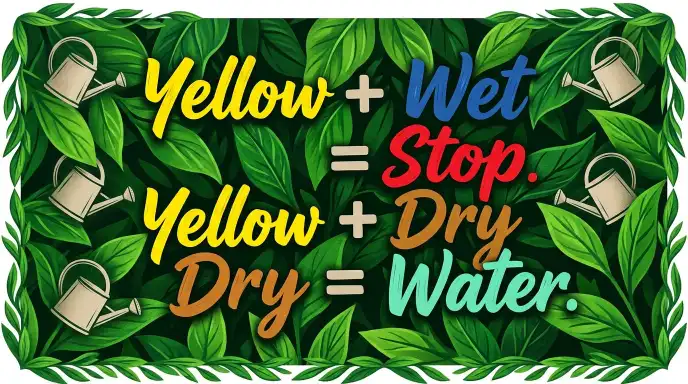
The Golden Rule of Watering: Yellow + Wet = Stop. Yellow + Dry = Water. Memorize this rule. It will save more plants than any watering schedule ever will.
Overwatering kills faster because it causes irreversible root damage. An underwatered plant perks up in hours. An overwatered plant takes weeks to recover—if it recovers at all.
Frequently Asked Questions
Can yellow leaves mean underwatering?
Yes, but underwatered leaves are dry and crispy, while overwatered ones are soft and mushy. The location also differs: underwatering typically affects leaf tips and edges first; overwatering starts with lower leaves.
Which is worse, overwatering or underwatering?
Overwatering is usually worse because it causes root rot, which is harder to reverse. Underwatered plants usually recover quickly once watered.
How do I check soil moisture?
Use the finger test (1-2 inches into the soil), a moisture meter, or a wooden skewer. Always check before deciding to water.
How long can a plant go without water?
It varies widely. Succulents can last weeks; thirsty tropicals may wilt within days. Always judge by soil moisture, not by time.
Why do overwatered and underwatered plants look the same?
Overwatering damages roots so they cannot absorb water, making the plant look dehydrated even though the soil is wet. Both conditions produce wilting, drooping, and yellow leaves—but the soil and leaf texture tell the real story.
My soil is dry on top but wet at the bottom—what do I do?
This is a classic issue with deep pots. Do not water until the bottom has had time to dry out. Use a wooden skewer pushed all the way down to check. If the skewer comes out damp, wait. This prevents the common mistake of overwatering deep pots.