There is no single best houseplant pest control product, and any guide that hands you one bottle for every problem is going to cost you plants.
Fungus gnat larvae live in the top two inches of your potting mix. Thrips lay eggs inside leaf tissue and drop into the soil to pupate. Armored scale sits under a waxy shield most sprays can’t penetrate. A product that solves one is often useless against the other two.
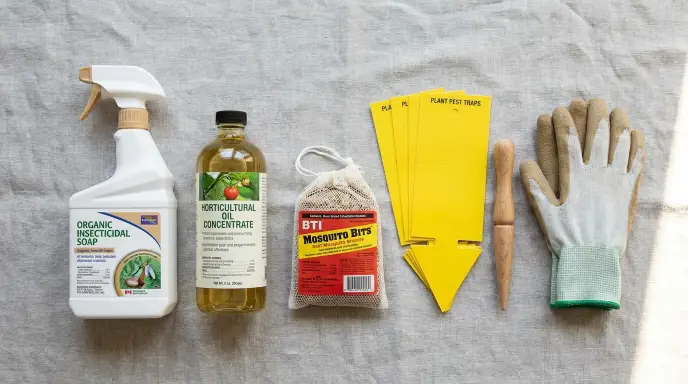
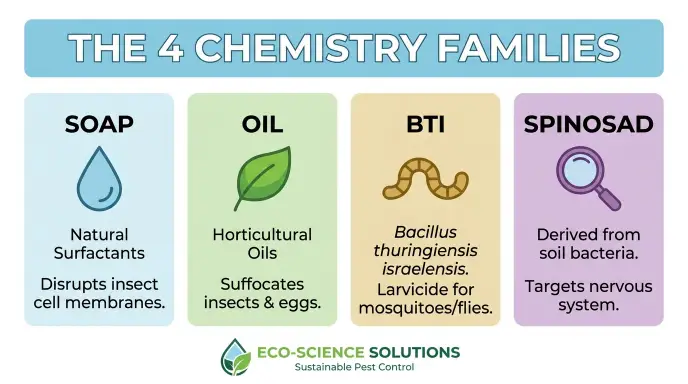
Short answer: three chemistries cover most houseplant pest problems — insecticidal soap (potassium salts of fatty acids) for soft-bodied pests, horticultural oil (mineral oil) because it is the only common product that also kills eggs, and BTI for fungus gnats. Add spinosad only if you have confirmed thrips, and a systemic only for soft scale or whiteflies. Everything else here is a refinement of those four decisions.
Below are the products worth owning, organized by what they actually kill — with a comparison table, honest pros and cons, and a buying guide that tells you which two or three to start with rather than all eight.
We use no affiliate links and earn nothing from any product named on this page — the picks come from extension research, not commissions. Not sure which pest you have? Start with our guide to diagnosing indoor plant problems — treating for the wrong pest wastes two to three weeks.
Before you buy anything, read the back of the bottle. Every product named below is a widely stocked example of a chemistry, not an endorsement — we have no commercial relationship with any of them. Match two things on the ingredient panel: the active ingredient and its percentage. An equivalent store brand at the same concentration does the same job, often for less. Percentage matters as much as the ingredient name, because a 1% ready-to-use spray and a 49% concentrate share an active ingredient and behave nothing alike. The one thing you cannot substitute is the label — it has to list houseplants or indoor use. Photograph the ingredient panel before you shop, then compare backs of bottles in the aisle rather than front-of-label marketing claims.
Table of Contents
Top Picks at a Glance
- Best overall: Bonide Insecticidal Soap RTU — the widest pest coverage for the money
- Best for spider mites: Bonide All Seasons Horticultural Oil — the only common product that kills eggs
- Best for fungus gnats: Summit Mosquito Bits (BTI) — nothing else comes close
- Best for thrips: Monterey Garden Insect Spray (spinosad) — reaches larvae inside plant tissue
- Best for soft scale and whiteflies: Bonide Systemic Houseplant Insect Control
- Best value: Safer Brand Insect Killing Soap Concentrate — makes many gallons
- Safest around pets and kids: Summit Mosquito Bits (BTI)
- Best monitoring tool: Yellow and blue sticky traps — under a few dollars, and the only way to know if treatment is working
Comparison Table
| Product | Active ingredient | Best for | Kills eggs? | Pet-safe once dry | Price tier |
|---|---|---|---|---|---|
| Bonide Insecticidal Soap RTU | Potassium salts of fatty acids | General purpose — aphids, mealybugs, mites, thrips larvae | No | Yes | $ |
| Safer Brand Insect Killing Soap (concentrate) | Potassium salts of fatty acids | Same, but far cheaper per use | No | Yes | $$ |
| Bonide All Seasons Horticultural Oil | Mineral oil | Spider mites, scale crawlers | Yes | Yes | $$ |
| Summit Mosquito Bits | BTI (B. thuringiensis israelensis) | Fungus gnats only | No (kills larvae) | Yes — highest specificity here | $ |
| Monterey Garden Insect Spray | Spinosad | Thrips, caterpillars | No | Yes once dry | $$ |
| Bonide Systemic Houseplant Control | Imidacloprid 0.22% | Soft scale, whiteflies, aphids | No | Caution — see safety section | $$ |
| Captain Jack’s Neem Oil | Clarified neem extract | Low-level pests plus fungal issues | Partial | Yes once dry | $$ |
| Yellow & blue sticky traps | None (physical) | Monitoring and adult interception | — | Yes | $ |
Price tiers are our own editorial categories, not live retail prices: $ = entry level, $$ = mid-range, $$$ = premium. Retail prices change constantly, so check the current price at the retailer before buying.
How we chose these products
We have not run controlled efficacy trials, and we’re not going to pretend otherwise. These recommendations are built from university extension and IPM publications — UC Statewide IPM, Colorado State, Ohio State, Mississippi State, Cornell, Clemson, and the University of Minnesota — and organized by active ingredient rather than brand, because brands get rebranded while the chemistry stays the same. The products named here either appear in extension literature or are widely stocked versions of the same chemistry. No invented ratings, no invented test results, and where a popular recommendation doesn’t hold up against the underlying research, we say so.
The Products, Reviewed
1. Bonide Insecticidal Soap RTU — Best Overall
If you own one product, own this one. Insecticidal soap isn’t soap in the household sense — the active ingredient is potassium salts of fatty acids, which disrupt insect cell membranes and strip the protective waxes off the cuticle, killing by dehydration. It covers aphids, mealybugs and scale crawlers, thrips larvae, whitefly nymphs, and spider mites.
The ready-to-use bottle matters more than it sounds. Mixing errors are the most common reason home applications fail or burn foliage, and RTU removes that variable entirely.
Pros
- Correct chemistry — potassium salts, not sodium
- Explicitly labeled for houseplants and indoor use
- No mixing, no measuring errors
- Safe on edibles up to the day of harvest
- No Flammable solvents
Cons
- Zero residual: stops working the instant it dries.
- Does not kill eggs, so repeat applications are mandatory
- RTU is expensive per application across a large collection
- Label warns against sweet peas, nasturtiums, delicate ferns
- Requires total coverage including leaf undersides
Buy it if you have 1 to 10 plants and want a single reliable bottle for common pests.
2. Safer Brand Insect Killing Soap Concentrate — Best Value
Identical chemistry to the Bonide, in concentrate form. This is the product UC IPM names in its own publications, and it’s OMRI-listed for organic use. One bottle makes many gallons, which changes the economics completely once you’re treating more than a handful of plants on a weekly schedule.
Pros
- Dramatically cheaper per application
- Named directly in UC IPM publications
- OMRI listed
- You control dilution for sensitive plants
Cons
- Requires accurate mixing every time
- Concentrate can irritate eyes and skin while mixing
- Same no-residual, no-egg-kill limitation
- Needs your own sprayer
Buy it if you have a collection rather than a few plants, and you’re comfortable measuring.
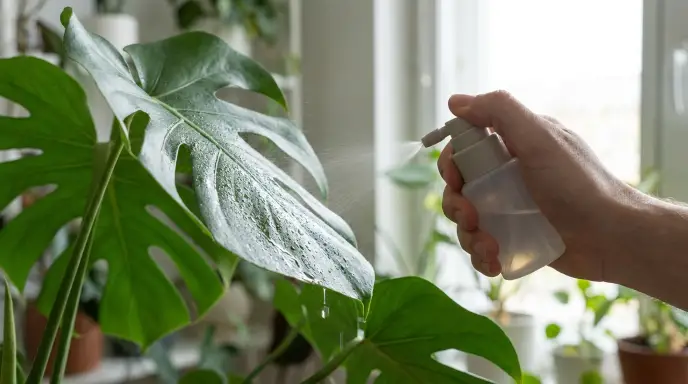
3. Bonide All Seasons Horticultural Oil — Best for Spider Mites
This is the most underrated product in houseplant pest control. Horticultural oil smothers pests by blocking the spiracles they breathe through, but it also works on eggs by disrupting gas exchange through the egg covering. That ovicidal action is the single thing that separates it from soap, and against spider mites — which lay eggs continuously on leaf undersides — it shortens the treatment cycle dramatically.
It’s also a physical mode of action, so pests can’t realistically evolve resistance. That makes it the backbone of any rotation.
Pros
- Kills eggs — soap cannot
- Resistance is a non-issue (physical action)
- Works on mites, scale crawlers, aphids, whitefly nymphs
- Widely stocked and inexpensive per use
Cons
- Must use the summer rate indoors, not the dormant rate
- Phytotoxic to Boston fern, schefflera, gardenia
- Never apply above ~90°F or to a drought-stressed plant
- Leaves a temporary sheen on glossy foliage
Buy it if you have spider mites, scale, or you want a second chemistry for rotation. Monterey Horticultural Oil is an equivalent alternative.
4. Summit Mosquito Bits — Best for Fungus Gnats and Safest Overall
BTI produces toxic crystal proteins only when ingested by fly larvae, dissolving in the larval gut and destroying its lining. This mechanism requires a specific gut chemistry that mammals simply don’t have, making this the lowest-risk product on this page by a wide margin.
Steep the granules in water, strain, and use that water in place of a normal watering.
Pros
- Genuinely safe around pets and children
- Far more effective than any foliar spray for gnats
- One container treats many pots
- Cheap
Cons
- Fungus gnats only — does nothing else
- Requires steeping and straining each time
- Kills larvae, not the adults you can see
- Needs repeating with every watering for 3–4 weeks
Buy it if you have fungus gnats, or if pet and child safety is your first filter. Mosquito Dunks are the same active ingredient in slower-dissolving disc form.
5. Monterey Garden Insect Spray — Best for Thrips
Spinosad is a fermentation product of a naturally occurring soil bacterium. It works by both contact and ingestion, and UC IPM notes it has translaminar activity — it moves short distances into sprayed tissue to reach thrips feeding in protected parts of the plant. That’s why it reaches larvae that contact-only sprays miss.
Pros
- Translaminar — reaches thrips inside tissue
- Roughly a week of residual activity
- Works by contact and ingestion
- Accepted in many organic programs
Cons
- Thrips resistance to spinosad is documented
- Weak on aphids and spider mites
- Toxic to bees and to predatory mites
- Don’t use on flowering plants or alongside biologicals
Buy it if you’ve confirmed thrips. If it worked last season and doesn’t now, that’s resistance — switch chemistries rather than increasing the dose. Bonide Captain Jack’s Deadbug Brew is the same active ingredient.
6. Bonide Systemic Houseplant Insect Control — Best for Soft Scale and Whiteflies
The only true systemic formulated specifically for containerized indoor plants. Granules are absorbed through the roots and move through the vascular system, poisoning sap-feeding pests when they feed. Watering doesn’t wash it off, and protection lasts roughly eight weeks.
Mississippi State Extension notes imidacloprid soil treatments usually do a good job on soft scales, and that soil imidacloprid, foliar horticultural oil, or both are the most effective whitefly treatments.
Pros
- ~8 weeks of protection from one application
- No spraying, no coverage problems
- Excellent on soft scale, whiteflies, aphids
- Formulated for indoor containers specifically
- Granules, so no inhalation risk from spraying
Cons
- Unreliable on mealybugs — UC IPM is explicit
- Weak on armored scale — see the evidence note below
- Ornamentals only — never edibles or hydroponics
- Not sold at retail in California since Jan 2025
- Extra caution if pets chew your plants
The armored scale caveat. Dinotefuran is often recommended as the systemic answer for armored scale, but the supporting research used bark sprays on trees, not soil applications. Cowles (2010) found banded soil application gave poor control while a basal bark spray of the same compound worked well. A Tennessee State trial found a dinotefuran drench ineffective against Japanese maple scale after 90 days. For a potted plant, where soil application is your only option, treat a systemic as a supporting player — not the plan.
7. Captain Jack’s Neem Oil — Best When Pests Come With Fungal Problems
“Neem oil” is two different products sold under one word. Azadirachtin is a botanical growth regulator that reduces feeding and egg-laying, mostly in immature stages. Clarified hydrophobic neem extract is essentially a plant-derived oil with azadirachtin largely removed—it smothers and has genuine fungicidal activity against powdery mildew and leaf spot.
Pros
- Insecticide, fungicide and miticide in one
- Useful when a fungal issue accompanies pests
- Good for low-level recurring problems
- Widely available in RTU and concentrate
Cons
- Slow — suppression, not knockdown
- Azadirachtin content varies enormously by product
- Frustrating on a heavy active infestation
- Can be phytotoxic; patch test first
Buy it if you’re managing an ongoing low-level problem or dealing with pests and mildew together. Check the ingredient panel — cold-pressed neem contains substantially more azadirachtin than clarified extract.
8. Yellow and Blue Sticky Traps — Best Monitoring Tool
The cheapest thing on this list and arguably the most valuable. Traps aren’t a treatment — they’re how you measure whether your treatment is working. A falling catch count across successive weeks is evidence. A rising count means you haven’t broken the cycle.
Yellow attracts fungus gnats and whiteflies. Blue attracts thrips. Keep them out permanently as an early warning system, not just during an outbreak.
Buying Guide: How to Choose
Start with the pest, not the product
This is the whole decision. Buying a general-purpose spray for a pest that lives in soil, or inside leaf tissue wastes three weeks and lets the population double.
| Pest | Where it hides | What works | What fails |
|---|---|---|---|
| Fungus gnats | Larvae in top 2–3 in. of soil | BTI drench + yellow sticky traps | Spraying leaves; keeping soil wet |
| Spider mites | Leaf undersides, eggs on foliage | Horticultural oil rotated with soap | Soap alone — it doesn’t kill eggs |
| Thrips | Eggs in leaf tissue, pupae in soil | Spinosad foliar plus a soil treatment | Any foliar-only program |
| Mealybugs | Leaf axils, nodes, sometimes roots | Alcohol spot-dab, then oil or soap | Systemics alone |
| Soft scale | Stems, leaf undersides | Imidacloprid systemic + oil | Sprays outside the crawler window |
| Armored scale | Under hard shells | Manual scraping + oil, for months | Relying on a soil systemic |
| Aphids | New growth, buds | Insecticidal soap | Heavy nitrogen feeding |
| Whiteflies | Leaf undersides | Imidacloprid systemic; oil on nymphs | Killing adults only |
Read the active ingredient, not the brand name
Two bottles with different names often contain identical chemistry. Two bottles both labeled “neem oil” may behave completely differently. Reading the ingredient panel is the only way to avoid buying the same product twice, and the only way to build a working rotation.
Check that it’s labeled for indoor use
In the US, using a registered pesticide inconsistently with its labeling violates federal law. Plenty of effective garden products are registered only for outdoor use. Look for wording covering houseplants, indoor plants, or indoor container plants. “Natural” and “organic” don’t exempt a product — neem oil is EPA-registered and carries a legally binding label like anything else.
Ready-to-use or concentrate?
Under about ten plants, buy RTU — the convenience is worth more than the savings, and you eliminate mixing errors. Above that, concentrate pays for itself within a couple of treatment cycles, since these products need reapplying every five to seven days.
Buy two chemistries, not one “3-in-1”
Multi-purpose sprays are convenient, but if the only thing you own is one all-in-one product, you have no ability to rotate modes of action — and rotation is the entire strategy against spider mites and thrips, the two pests most likely to beat you. Buy chemistries, not convenience.
Two tools worth more than an extra bottle
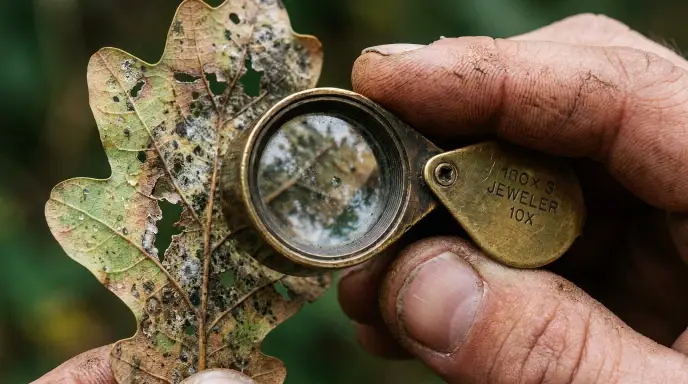
A pump sprayer with a nozzle that sprays upward, because coverage failure rather than chemistry failure is why most treatments underperform. And a 10x hand lens, which turns guesswork into diagnosis — UC IPM notes it increases your chance of spotting the early instars that are most susceptible to treatment. Our indoor gardening tool kits guide covers general equipment.
How to Treat Each Pest
Fungus gnats
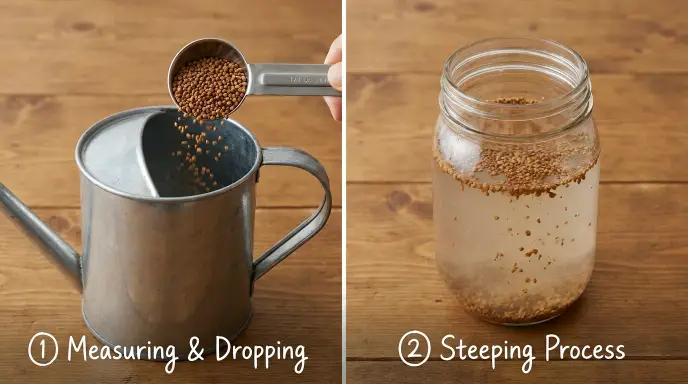
The adults you can see are the least important part. The damage and the next generation are in the larvae feeding in the top few inches of mix — which is why spraying leaves does nothing.
BTI drench with every watering for three to four weeks, yellow sticky traps at soil level, and — most importantly — let the top inch or two dry between waterings. That habit change does more than any product. A layer of coarse sand on the surface discourages egg-laying.
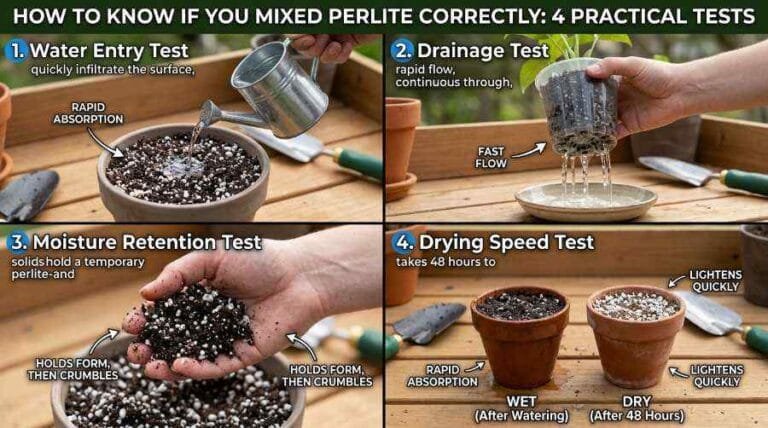
Chronically wet soil is a drainage problem, not a pest problem: how to fix poor soil drainage, how much perlite to add, how to check soil moisture.
Spider mites
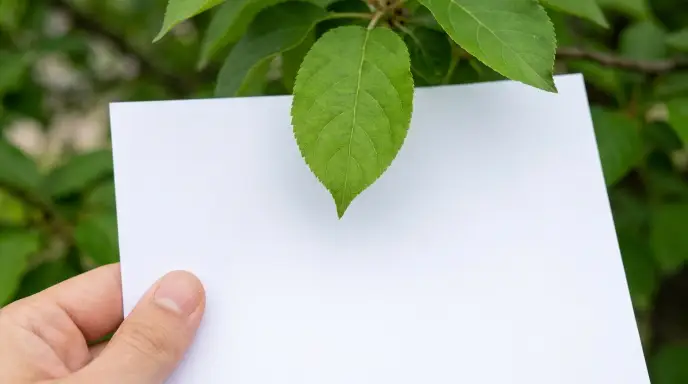
Confirm it: hold white paper under a leaf and tap sharply. Dust doesn’t move. Mites do.
The point almost no Roundup makes: mites are arachnids, not insects. Ohio State states that spider mites are usually not killed by regular insecticides, that products claiming “mite suppression” are typically weak miticides that won’t perform, and that there are currently no true miticides registered for over-the-counter consumer use. Soap and oil genuinely are your tools here — not a compromise.
Rinse the plant physically first to remove the bulk of the population and the webbing that shields survivors. Then use horticultural oil with complete leaf-underside coverage. Rotate to insecticidal soap on the next application. Repeat every 5–7 days for at least three cycles, and raise humidity if you can.
Full walkthrough: how to get rid of spider mites. On conditions: raising humidity and the best humidifiers — note that pebble trays do very little.
Thrips — the hardest one
Females insert eggs inside leaf tissue where no contact spray reaches. After the second larval instar, thrips drop off and burrow into the growing medium to pupate — research on western flower thrips found that roughly 98% of pupating individuals enter the soil, a stage that doesn’t feed and doesn’t respond to foliar treatment. Generations overlap on a two-to-three-week cycle. You clear the leaves, and a new adult generation walks out of the soil a week later.
- Foliar: spinosad every 5–7 days, minimum three applications, getting down inside folded new growth.
- Soil — pick one: replace the top 1–2 inches of mix, drench with beneficial nematodes (S. feltiae), or apply spinosad as a soil drench at label rate. This is the step people skip and the reason infestations return.
- Rotate chemistries between applications.
- Prune the worst growth and bag it immediately.
- Isolate the plant — adults fly.
- Ease off fertilizer. Excess nitrogen pushes the tender growth thrips prefer.
Realistic timeline: four to six weeks. Thrips on a heavily infested, low-value plant are often not worth saving.
Mealybugs
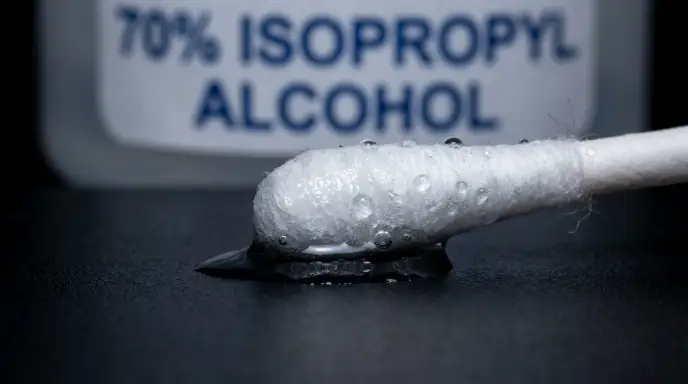
Spot-dab with 70% isopropyl alcohol on a cotton swab, which dissolves the wax and kills on contact. UC IPM advises testing a small area one to two days beforehand, and notes a more diluted solution may be needed on sensitive plants. For a complete 6-week mealybug treatment plan that covers the full life cycle and root mealybugs, see our complete 6-week mealybug treatment plan. Follow with soap or oil. Follow with soap or oil targeting crawlers, which lack the adult’s wax armor. Repeat every 5–7 days for at least four cycles.
Check the roots. Root mealybugs — white powdery clusters inside the root ball — can’t be reached by foliar treatment. A pot that feels abnormally light for its size is a tell. If a plant keeps declining with no visible pest above the soil, unpot it and look. See how to repot without killing it.
Scale — soft vs. armored changes what you buy
Sticky honeydew below the plant points to soft scale. No honeydew, with a hard removable shield, points to armored scale. That distinction decides your whole approach.
Either way, scrape or dab what you can reach first — this isn’t optional; it’s what lets any spray reach anything. Then match the treatment: soft scale responds well to an imidacloprid soil systemic. For armored scale, lead with mechanical removal plus horticultural oil every 7–10 days to catch emerging crawlers.
Keep going far longer than feels necessary — eliminating scale means maintaining coverage across an entire generation, which can mean two to four months. Mississippi State’s advice is to decide upfront whether to treat aggressively or discard, because a badly infested plant becomes a permanent reservoir.
Aphids and whiteflies
Aphids are the easy one — soft-bodied, exposed, highly susceptible to insecticidal soap. Wash them off with water first, bag heavily infested parts, then apply soap or oil. Repeat every 5–7 days for two to three cycles and cut back on nitrogen.
Whiteflies persist because people treat only the adults. Mississippi State is blunt that you have to control the immatures on leaf undersides — and those barely move, so they’ll never wander into a residue. Soil imidacloprid, foliar horticultural oil, or both.
The Reapplication Schedule Almost Everyone Gets Wrong
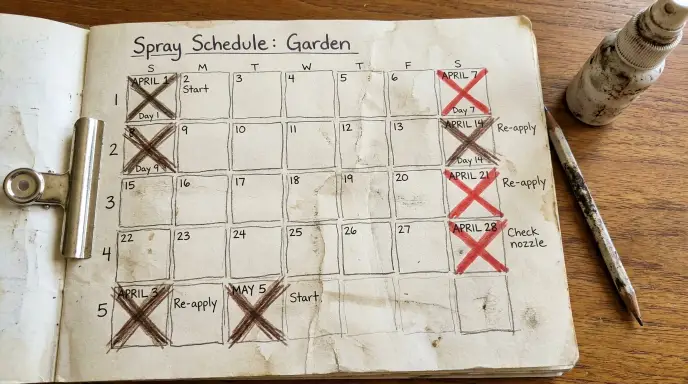
“Reapply as needed” is the most useless instruction in pest control. You need a schedule tied to the pest’s egg-hatch interval, so each new wave dies before reaching reproductive age.
| Pest | Reapply every | Minimum cycles | Total commitment |
|---|---|---|---|
| Aphids | 5–7 days | 2–3 | 2–3 weeks |
| Spider mites | 5–7 days | 3–4 | 3–4 weeks |
| Fungus gnats | Each watering | Ongoing | 3–4 weeks |
| Mealybugs | 5–7 days | 4+ | 4–6 weeks |
| Thrips | 5–7 days | 4+ | 4–6 weeks |
| Scale | 7–10 days | Many | 2–4 months |
Stopping when the plant looks clean is how infestations come back. The absence of visible adults means you killed the adults, and says nothing about the eggs. And missing a scheduled application is worse than starting late — a gap lets a cohort reach adulthood and lay, resetting your clock while nudging the population toward resistance.
Ohio State’s guidance on resistance is direct: if a product has been used correctly and the population isn’t controlled within five to seven days, don’t use it again — switch modes of action. A practical home rotation alternates horticultural oil, insecticidal soap, and spinosad. Note that alternating imidacloprid with acetamiprid is not a rotation: both are neonicotinoids in the same group.
If You Have a Cat, Avoid Pyrethrins and Pyrethroids
This is the most important safety note on this page, and it contradicts advice on gardening sites that don’t account for pets.
Cats lack adequate levels of two metabolic processes — glucuronidation and ester hydrolysis — that other mammals use to clear these compounds, so they accumulate instead of breaking down. Permethrin toxicity is among the most common feline poisonings reported to the ASPCA’s Animal Poison Control Center. Signs include drooling, muscle tremors, facial and ear twitching, incoordination, and seizures, and can appear within 72 hours.
Natural pyrethrin is less toxic than synthetic pyrethroids like permethrin, bifenthrin, and cyfluthrin, but feline welfare organizations advise avoiding both. Read the active ingredient panel on any general-purpose insect killer before it comes indoors. Soap, oil, and BTI cover almost everything without this risk.
On systemic granules and pets: neonicotinoids bind far more strongly to insect receptors than mammalian ones, which is why acute toxicity to dogs and cats is low — imidacloprid is the active ingredient in some veterinary flea products. But the relevant scenario is a cat repeatedly chewing treated leaves, and published data on that chronic route is thin. Don’t use systemic granules on plants your pets actually chew.
Regional note: under Assembly Bill 363, as of January 1, 2025, neonicotinoids including imidacloprid and dinotefuran are no longer sold in retail nurseries and garden centers in California. Maine, New Jersey, several other states, the EU, and Canada have their own restrictions.
If exposure happens: ASPCA Animal Poison Control, (888) 426-4435 (consultation fee applies). National Pesticide Information Center, 1-800-858-7378.
Plants That Soap and Oil Will Damage
This section will save you a plant, and it appears in almost no commercial Roundup.
Cornell and Clemson both publish lists of species that show phytotoxic reactions to insecticidal soap. Among common houseplants: jade plant, maidenhair fern, crown of thorns, corn plant (Dracaena), gardenia, portulaca, and certain varieties of begonia, fuchsia, geranium, and impatiens. Cornell advises testing palms, delicate ferns, ornamental ivies, and succulents before treating a whole plant. For horticultural oils, Cornell notes phytotoxicity on Boston fern, schefflera, gardenia, salvia, ghost plant, and coral bells.
- Never treat a stressed plant — not drought-stressed, newly potted, transplanted, or unrooted cuttings. Water thoroughly first.
- Never treat in heat. Phytotoxicity risk climbs above roughly 90°F — see heat stress in houseplants.
- Patch test and wait 48 hours. Injury may not appear for two days.
If a plant wilts within hours of treatment, rinse it with clean water immediately. Oil injury shows as discoloration, yellowing, browning, black spots, and dieback — if you’re unsure whether you’re seeing pest damage or treatment damage, our guides to brown spots on leaves and crispy leaves cover the difference.
What Doesn’t Work — Save Your Money
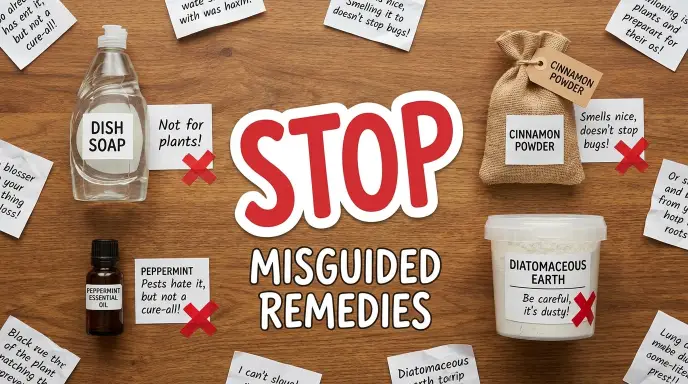
- Dish soap sprays. Sodium-based soaps damage plant tissue, and home-mixing rates are inconsistent. UC IPM’s official position is that homemade pesticides shouldn’t be recommended to the public.
- Hydrogen peroxide for fungus gnats. Kills larvae it directly contacts, then breaks down within minutes. Doesn’t touch eggs or the moist conditions producing the next generation.
- Peppermint oil, cinnamon, and garlic sprays. At best mildly repellent, at worst phytotoxic. Repelling is not killing, and none will clear an established infestation — despite peppermint sprays being the top pick in several popular roundups.
- Vinegar traps. These catch fruit flies, which are drawn to fermentation. Fungus gnats are drawn to moist soil. If a vinegar trap catches a lot, you may have a kitchen problem, not a plant problem.
- Diatomaceous earth on damp soil. DE only works when dry. On regularly watered potting soil, it’s inert most of the time, and it produces a dust you shouldn’t inhale.
- One thorough spray. No product kills eggs, larvae, pupae, and adults in a single pass. Every effective program is a schedule, not an event.
- Treating only the visible plant. Colorado State’s guidance is to treat all susceptible plants at the same time.
Two Things That Cost Almost Nothing
Neither of these is a product, which is exactly why most roundups leave them out. Neither replaces a treatment schedule either — but both make every application that follows work better.
A physical rinse, before you spray anything. UC IPM’s first line of advice for aphids on houseplants is to wash them off with a spray of water. The same logic applies to spider mites: a rinse strips out a large share of the population along with the webbing that shields survivors from spray. It suppresses rather than eliminates, so treat it as step one and not the whole plan. Take the plant to the shower or sink, aim upward at leaf undersides, use lukewarm water, and cover the soil so you don’t waterlog the pot. Skip it on fuzzy-leaved plants such as African violets, where water sitting on the leaves causes its own damage.
70% isopropyl alcohol on a cotton swab. For a handful of mealybugs or scale, a swab does more than any spray on this page, and a bottle costs a couple of dollars. It dissolves the waxy coating that makes these two pests so hard to kill on contact. Spot-dab rather than spraying, and follow UC IPM’s advice to test a small area one to two days ahead — alcohol will burn ferns, African violets, palms, and succulents with a waxy bloom, and sensitive plants may need it diluted. Never apply it in direct sun or on a hot day.
Prevention Beats Every Product on This Page
Quarantine new plants for two to four weeks, physically separated, with a sticky trap in the pot. Most infestations arrive on a new plant, a cutting from a friend, or something that summered outdoors. This single habit prevents more pest problems than everything else combined.
Scout weekly while you water. Thirty seconds looking at leaf undersides while the pot drains catches almost everything early. An infestation caught in week one takes a fortnight to clear; caught in week six it takes two months. Check leaf undersides first, then leaf axils, then unfurling new growth, then stem nodes.
Don’t overwater and don’t overfeed. Chronically wet soil is the biggest single invitation to fungus gnats — see overwatering vs. underwatering and how to water correctly. Excess nitrogen produces the soft growth aphids, mealybugs, and thrips prefer.
Wipe leaves and get the light right. Dust gives spider mites cover and hides early signs. Plants in insufficient light grow weak and stretched, which makes them easier targets — see how to fix leggy growth.
Frequently Asked Questions
What’s the best all-around insecticide for houseplants?
If you can only own one, insecticidal soap covers the widest range of common pests. But it won’t kill eggs, and it won’t solve fungus gnats or armored scale. A second product — horticultural oil — closes most of that gap for a few dollars.
Insecticidal soap or neem oil — which should I choose?
Soap for an active outbreak you need knocked down now, because it works on contact. Neem for persistent low-level problems, and where a fungal issue is present alongside the pests. Neem is slower than most people expect.
How long does it take to get rid of houseplant pests?
Two to three weeks for aphids or spider mites. Four to six weeks for mealybugs or thrips. Two to four months for scale. Anyone promising a one-week fix is selling something.
Are these products safe around cats and dogs?
BTI, insecticidal soap, and horticultural oil are low-risk once dry. Pyrethroids should be avoided entirely in homes with cats. Systemic granules deserve more caution where pets chew plants.
Can I use these on herbs and vegetables?
Insecticidal soap and horticultural oil, generally yes, after checking the label for your specific plant. Systemic granules labeled for houseplants, no — the label explicitly excludes edibles, and they shouldn’t be used in hydroponic systems either.
How do I know it’s working?
Sticky trap counts should drop between applications, and new growth should emerge undamaged. Existing damage never reverses — a stippled leaf stays stippled. Judge by new growth, not old.
Why do my pests keep coming back?
Three usual causes: you treated one plant instead of all of them, you sprayed leaf tops only, or you stopped after one or two applications and the eggs hatched. Occasionally it’s resistance — if three properly applied treatments of the same product haven’t moved the population, change the active ingredient.
When should I just throw the plant away?
When it’s heavily infested with scale or thrips, isn’t rare or sentimental, and sits near plants you care about. Extension services routinely recommend discarding heavily infested plants because they become a reservoir that keeps reinfecting everything around them. Bag it before carrying it through the house.
My Own Experience:
Last year, I learned the hard way just how persistent a serious thrips infestation can be. My Monstera deliciosa was heavily infested, and two weeks of regular neem oil applications made virtually no difference. That experience convinced me that, once thrips are well established, relying on neem oil alone is rarely enough.
I switched to spinosad foliar sprays, applying them every five days, but I also addressed a part of the infestation that is frequently overlooked: the growing medium. Because thrips can pupate in the soil, I removed and replaced the top inch of soil to help disrupt their life cycle.
It wasn’t an overnight solution. It took roughly six weeks of consistent treatment and close monitoring before I was confident the infestation had been brought under control. The biggest lesson I took away was that treating only the visible adults isn’t enough—you have to account for the pest’s entire life cycle.
I also changed my quarantine practices. Any plant showing signs of thrips now goes straight into isolation. And if I encounter a severely infested cutting, I’d rather discard it immediately than gamble with the health of my entire collection. With thrips, isolation isn’t optional—it’s one of the most important parts of effective pest management.